
How Long Does It Take to Firm Your Arms with 5 lb Weights?
There is no single timetable for making arms look firmer with 5 lb weights. This guide explains what affects progress, how to train effectively and what to look for beyond the mirror.
Why there is no fixed timetable
How quickly your arms change depends on your starting strength, current body composition, training routine and recovery. Genetics and natural skin elasticity can also affect how your arms look. For that reason, nobody can give an accurate deadline from the weight of the dumbbells alone.
You may notice better control and greater strength before you see a difference in the mirror. Visible changes tend to take longer because building muscle is gradual, while changes in body fat depend on your overall food intake and activity. Comparing photographs taken under similar lighting can be more useful than checking your arms every day.
- Your current arm and shoulder strength
- How challenging 5 lb feels to you
- How regularly you train
- Whether the exercises become harder over time
- Your overall food intake, activity and recovery
What ‘tightening’ your arms really means
Muscles can become stronger and grow, which may give the arms a firmer shape. Body fat can also decrease when your overall energy intake is lower than your overall energy use. Exercise cannot directly tighten skin or choose exactly where body fat will come off.
Arm exercises train the muscles underneath the area, but they do not remove fat only from the arms. Your body decides where it loses stored fat first. A useful plan therefore combines arm training with whole-body movement and a food intake that suits your goal.
- Build the biceps at the front of the upper arm
- Train the triceps at the back of the upper arm
- Strengthen the shoulders for a more defined outline
- Include whole-body activity rather than relying on arm exercises alone
Make sure 5 lb weights are challenging enough
A 5 lb weight may be demanding for one exercise and easy for another. It can be suitable for controlled raises while feeling too light for rows or presses. The important question is whether the muscle is working hard near the end of a set without your technique falling apart.
If you can keep going comfortably for a long time, the exercise may not provide enough challenge to drive further progress. You can slow the lowering phase, pause at the hardest point or choose a more demanding variation. When those options no longer make the movement challenging, a heavier weight may eventually be more useful.
- Use a controlled pace rather than swinging the weight
- Keep your wrists steady and shoulders away from your ears
- Stop the set when good form starts to break down
- Make the exercise gradually harder as it becomes easier
Build a balanced arm routine
Training only one part of the arm can leave gaps in your routine. Include movements for the biceps, triceps and shoulders, along with pulling and pressing exercises. Give the trained muscles time to recover before working them hard again.
Choose a small group of movements that you can perform with control. Repeat them consistently and record the exercise, sets and repetitions so you can see whether your ability is improving. A simple routine done regularly is more useful than constantly changing exercises.
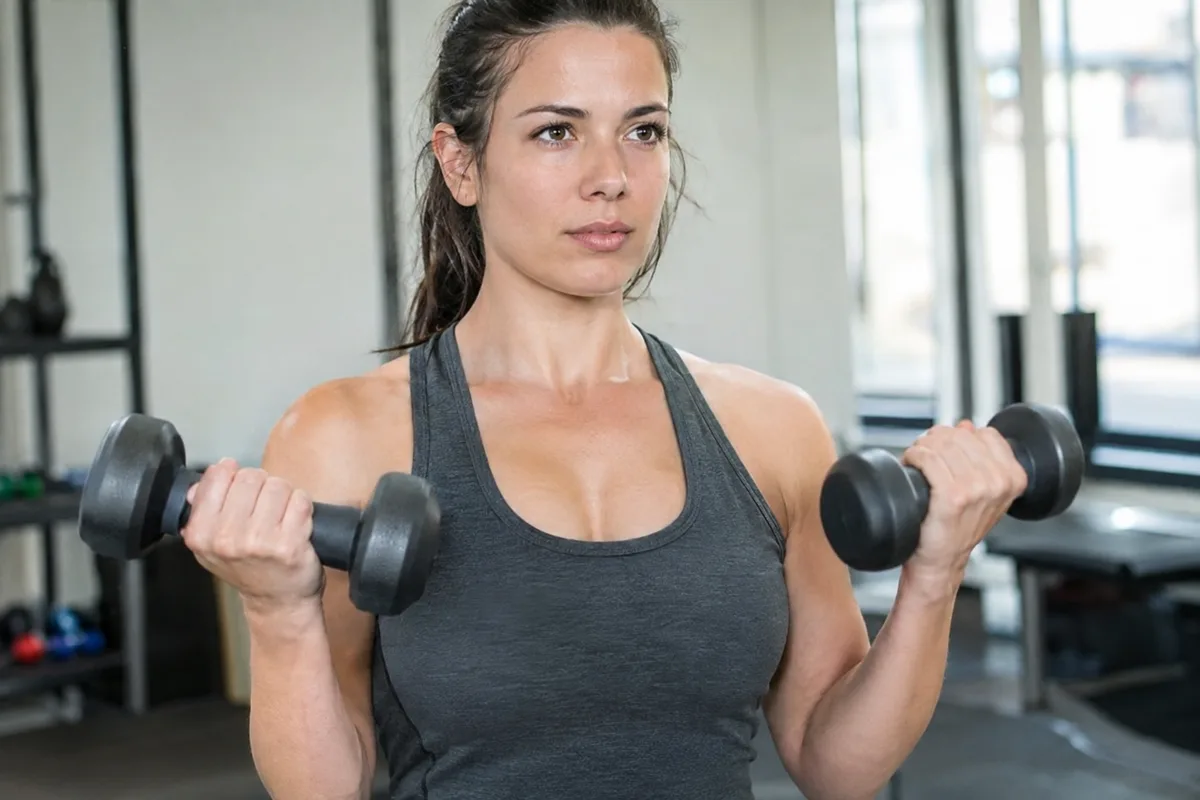
- Biceps curl for the front of the upper arm
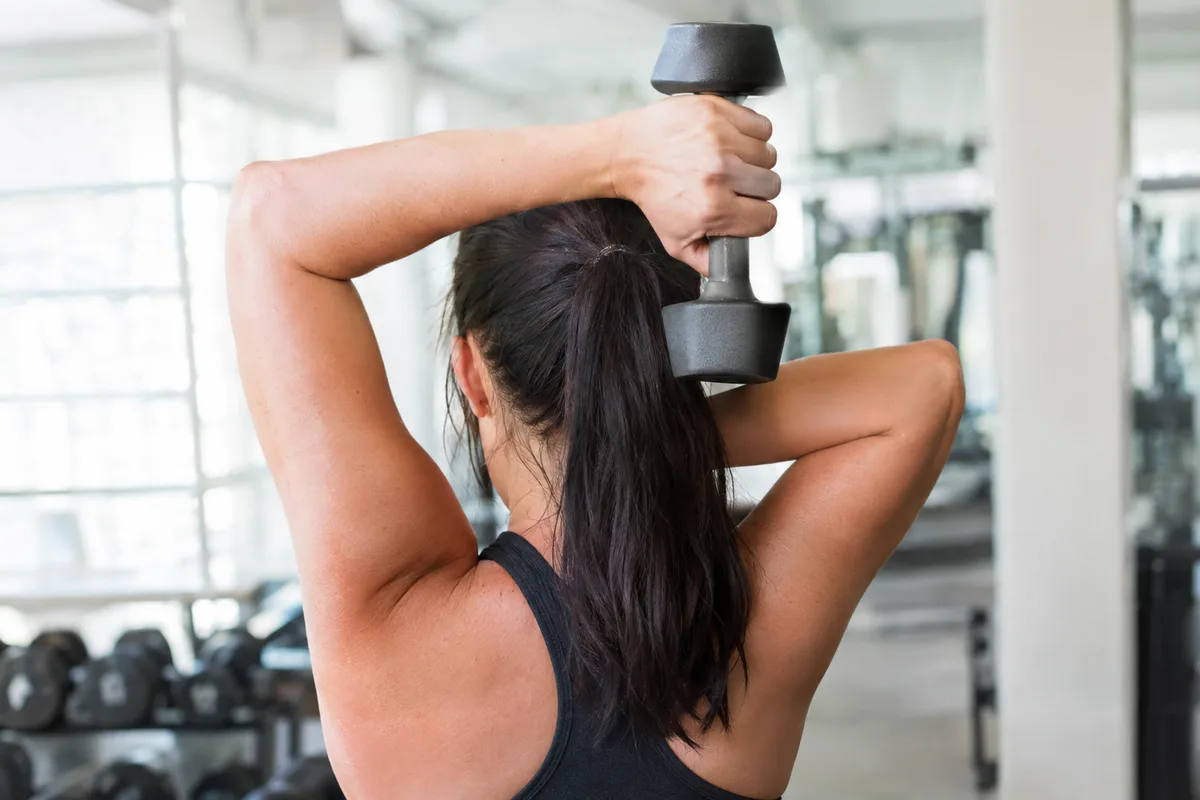
- Overhead triceps extension for the back of the upper arm
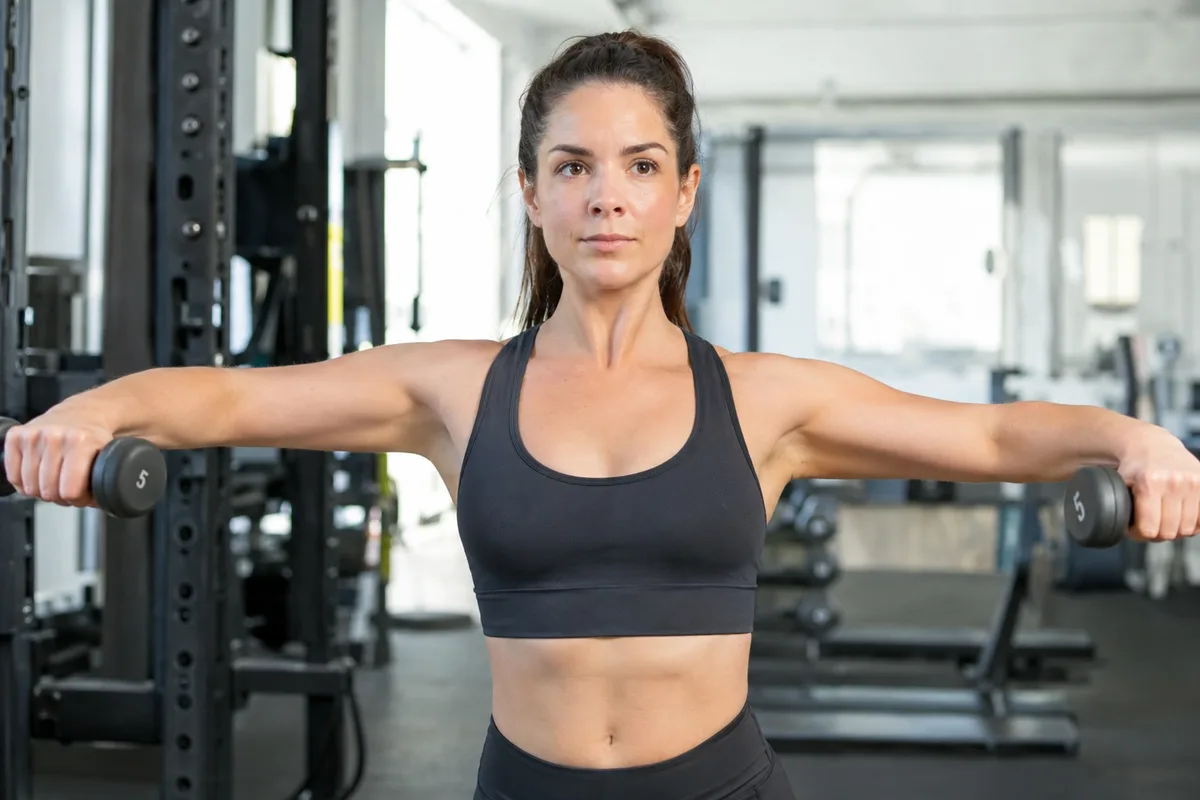
- Lateral raise for the shoulders
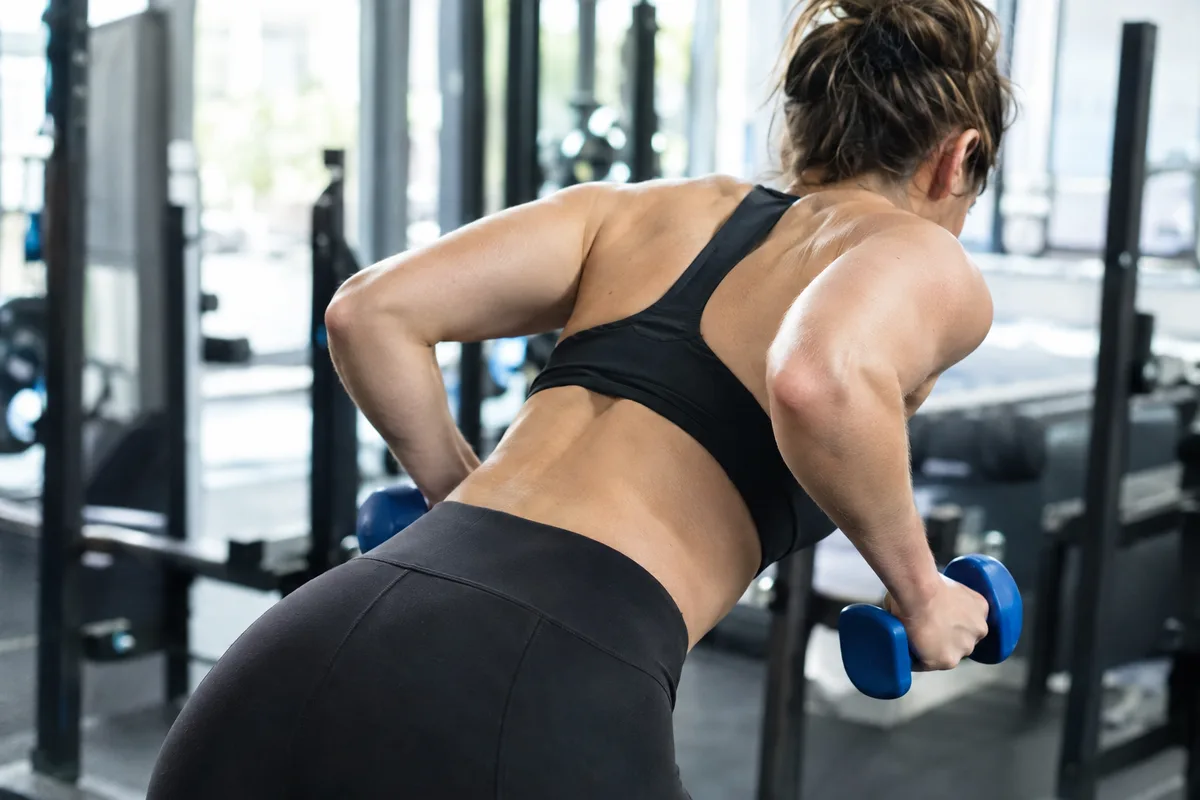
- Bent-over row for the upper back and arms
- Shoulder press for the shoulders and triceps
Use your food log to support the goal
Because you already track your food, look for patterns rather than trying to make drastic cuts. Protein supports muscle repair, while an appropriate overall energy intake determines whether body weight is likely to rise, fall or stay similar. The right amounts depend on your body, activity and goal.
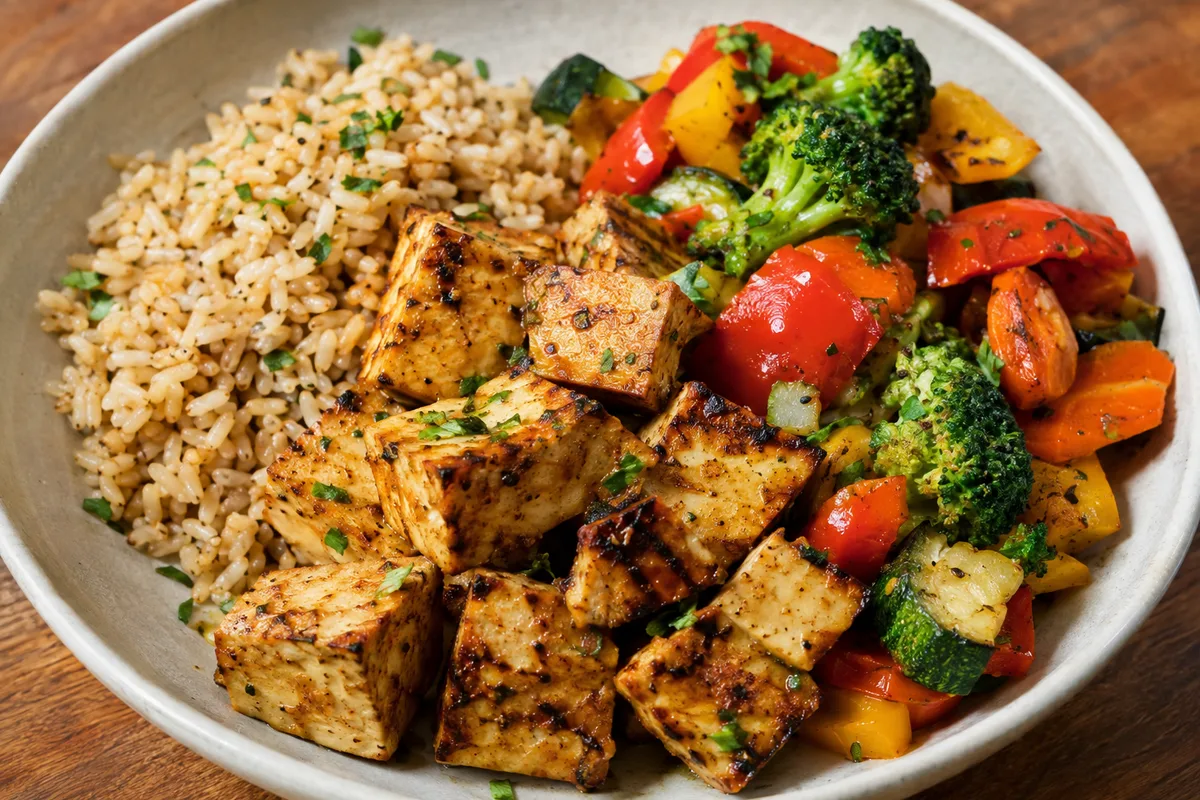
Spread protein-containing foods across your usual meals and include fibre-rich carbohydrates, fruit, vegetables and sources of fat. Your log can help you notice whether skipped meals leave you short of energy for training or whether frequent extras are working against a fat-loss goal. Avoid judging progress from a single day, as consistency matters more than an isolated entry.
- Eggs, yoghurt or beans with breakfast
- Chicken, fish, tofu or lentils with a main meal
- Wholegrain carbohydrates for training energy
- Fruit and vegetables for fibre and variety
Judge progress by more than appearance
Mirror changes can be difficult to spot because you see your arms often and lighting alters their appearance. Record practical signs such as smoother repetitions, better control and the ability to complete a harder variation. These improvements show that training is having an effect even when visible change is subtle.
If nothing is improving over time, review the challenge of the exercises, your consistency and your recovery. The 5 lb weights may still suit some movements while other exercises need a different form of progression. A realistic answer is that arm firming takes sustained effort, and the exact length of time depends on the person.
- More controlled repetitions
- Less swinging or shrugging
- A stronger pause at the hardest point
- Progress to a harder exercise variation
- Consistent photographs under similar conditions