
How to Count Calories in Fresh Fruit and Vegetable Juice
Fresh juice can be harder to track than whole fruit or vegetables because some pulp is removed and each batch produces a different amount. This guide explains how to make a practical calorie estimate and log it consistently.
Why juice calories vary
There is no single calorie count for homemade juice. The total depends on the ingredients, how much of each one you use and how much liquid the juicer extracts. Two drinks that look similar can therefore have different totals.
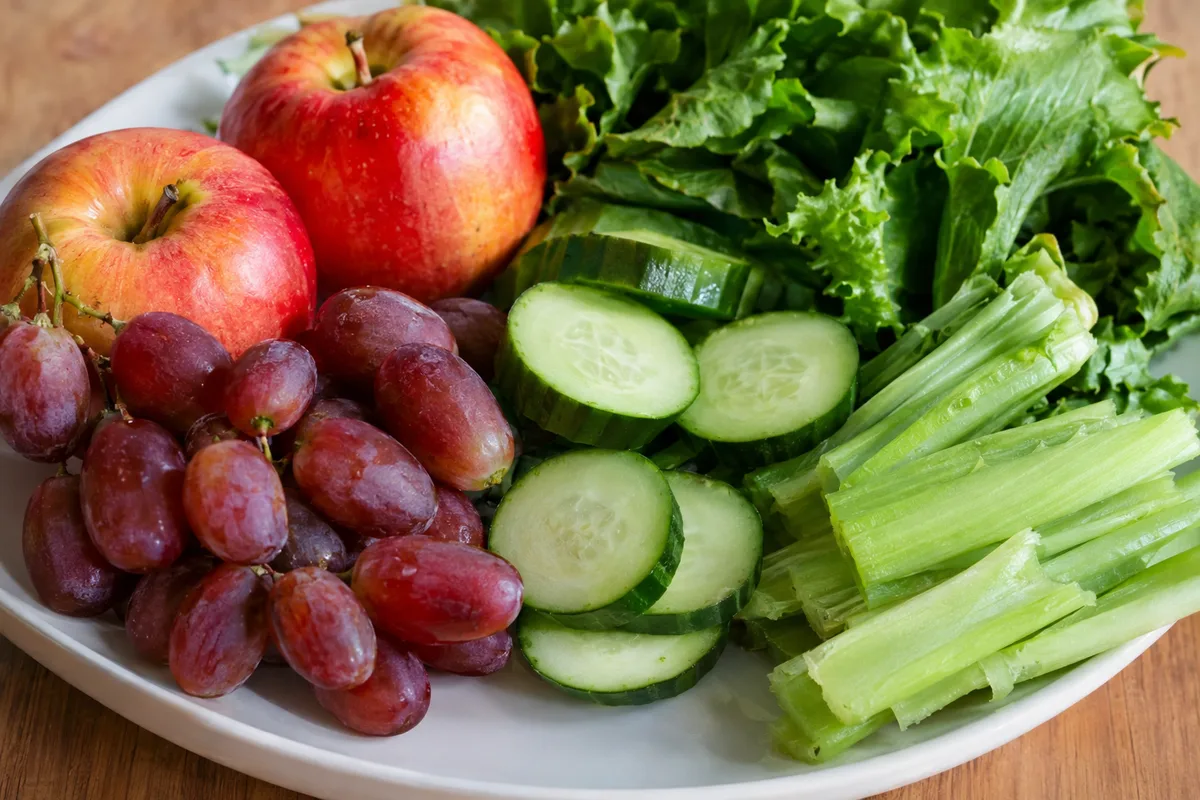
Fruit generally contributes more carbohydrate to a juice than watery vegetables, although the exact amount depends on the variety and ripeness. Ingredients such as cucumber, celery and leafy greens often add more volume without dominating the total. Apples, grapes, pears and other sweet fruits can make a larger contribution when they form most of the recipe.
- The type and amount of produce used
- The edible portion after peels, stones or tough ends are removed
- How much juice is extracted
- How much pulp remains in the drink
- The portion poured from the finished batch
Calculate the whole batch first
Start by recording the edible amount of every ingredient before juicing. Look up each item using the same food database or tracking app that you normally use. Add those entries together to create a starting total for the complete recipe.
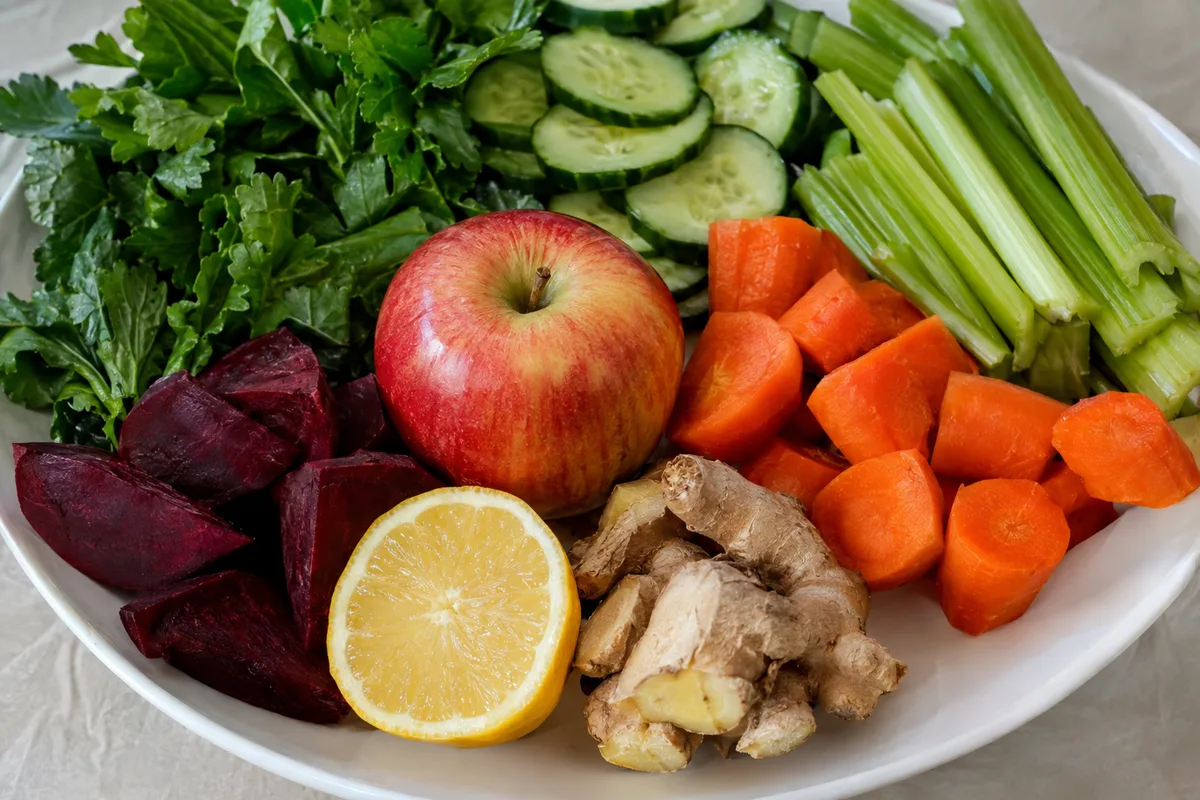
That starting total may be slightly higher than the energy in the finished juice because discarded pulp can retain some carbohydrate, protein and fat. Home equipment does not provide an exact measure of what remains behind, so a perfect calculation is rarely possible. Using the same method each time is usually more useful than changing between several estimates.
- Remove anything you will not put through the juicer
- Record each edible ingredient separately
- Add the ingredient calories for the full recipe
- Note the final juice yield
- Divide the batch according to the amount you drink
Account for fruit and vegetable choices
The balance of ingredients matters more than the colour of the finished drink. A juice based mainly on sweet fruit will usually contain more energy than one based mainly on watery vegetables. A small amount of fruit can still provide sweetness when vegetables make up the rest.
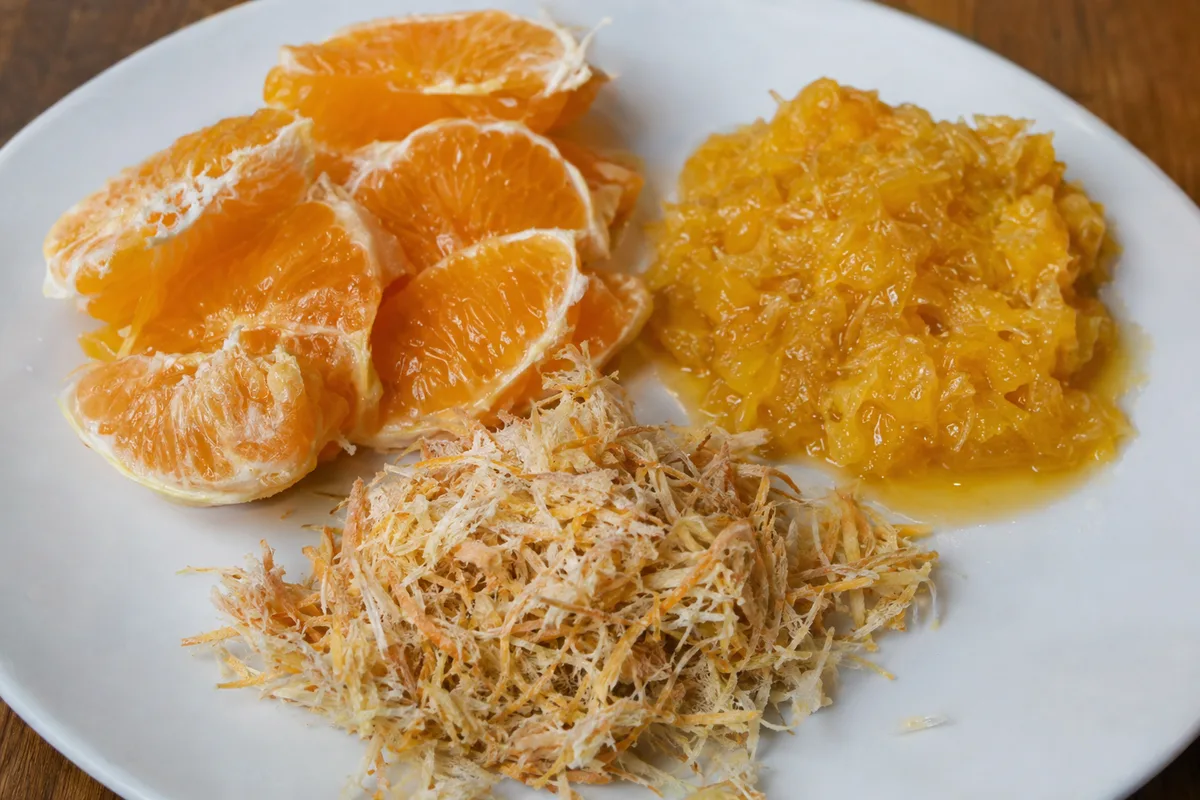
Roots such as carrots and beetroot can also make a meaningful contribution because they contain more carbohydrate than many leafy or watery vegetables. Lemon, lime, herbs and ginger may be used in smaller amounts, but they should still be logged if you want a detailed record. The number always depends on the actual recipe rather than the name given to the juice.
- Use cucumber or celery for a lighter-tasting base
- Add leafy greens for flavour and colour
- Use fruit as one part of the recipe rather than assuming it is the whole drink
- Record carrots and beetroot by their actual amount
- Include citrus flesh when it passes through the juicer
Understand what happens to the fibre
Whole fruit and vegetables contain fibre within their flesh, skins and other edible parts. Juicing removes much of that material as pulp, although some can remain in a cloudy drink. Blending is different because it usually keeps the edible fibre in the finished mixture.
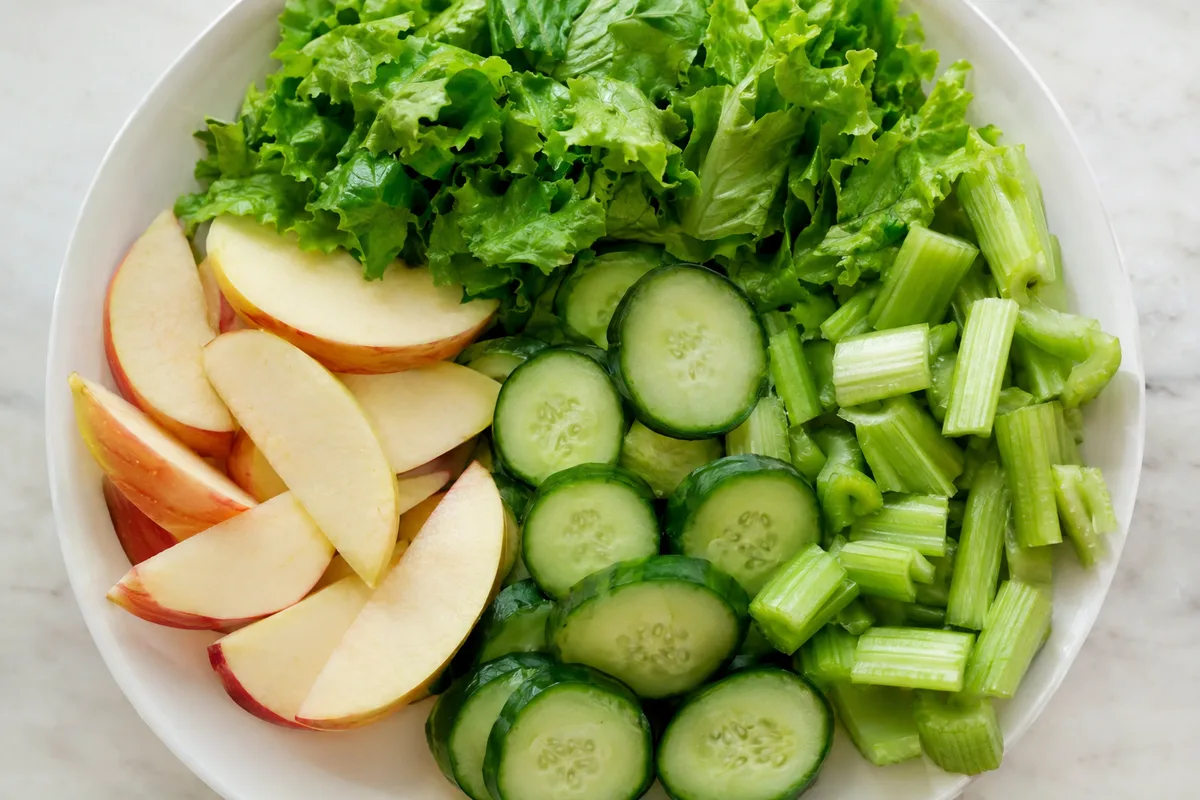
Do not subtract a fixed number of calories for the discarded pulp. The amount left behind changes with the ingredient, the equipment and how wet the pulp is. If you stir some pulp back into the juice, keep your original recipe estimate rather than making an uncertain deduction.
- Clearer juice usually contains less pulp
- Cloudy juice may retain more fine plant material
- Blended drinks keep more of the original edible ingredients
- Wet discarded pulp still contains some juice and energy
Turn the batch into a portion
Once the juice is made, measure the total yield using millilitres or another volume unit available in your tracker. Divide the estimated batch calories by the total volume to find an estimate per millilitre. Multiply that figure by the amount you pour.
Another simple method is to divide the batch into equal servings and log one fraction of the recipe. This works well when each serving is genuinely the same size. If the servings differ, logging by volume gives a more consistent estimate.
- Save the ingredients as one recipe
- Enter the finished batch volume
- Log only the volume you drink
- Update the yield when a later batch produces more or less juice
Make tracking easier next time
A repeatable recipe removes much of the guesswork. Keep the ingredient amounts similar, record the final yield and save the recipe in your food tracker. You can then adjust individual ingredients when you change the mix.
For packaged juice, use the nutrition label and match the entry to the amount consumed. For juice prepared elsewhere without ingredient details, choose the closest plain entry and treat it as an estimate. Add sweeteners, syrups, coconut water or other extras separately when they are part of the drink.
- Save regularly used recipes with clear names
- Record extras separately instead of hiding them in a generic juice entry
- Check whether a database entry is for juice, a blended drink or whole produce
- Use the same measuring and logging method for repeat batches