
How Quickly Can Your Weight Change on a New Diet?
Starting a new diet can bring quick changes at first, followed by a slower and less predictable pattern. This guide explains why that happens, what affects your progress and how to judge whether your approach is working.
There is no single timetable
Weight loss happens when your body uses more energy than it receives from food and drink over time. The size of that gap helps shape the pace, but it is not the only influence. Your starting point, daily movement, appetite, sleep and usual eating pattern all matter.

Even when two people follow similar meal plans, their results may look different. Body weight can also move up and down from one day to the next, hiding gradual fat loss. For that reason, a longer-term trend is more useful than any single reading.
- Look for the direction of change over several weeks
- Compare progress under similar conditions
- Keep logging meals consistently rather than only on selected days
- Notice changes in hunger, energy and how clothes fit
Why the first change can seem fast
A new diet often changes the amount of carbohydrate, salt and food in your digestive system. These changes can alter how much water your body holds. An early drop therefore does not represent body fat alone.

The opposite can happen after a salty meal, a larger portion or a change in routine. Your weight may rise temporarily even when your overall intake still supports fat loss. This is normal variation rather than clear evidence that the diet has stopped working.
- A change in carbohydrate intake
- More or less salt than usual
- Different meal sizes or meal times
- Changes in hydration
- Food still being digested
The energy gap shapes the pace
Your food log can help you understand the energy gap created by your new diet. A larger gap may produce faster loss, but it can also make meals harder to sustain if portions become too small or favourite foods disappear. The right level depends on the person and should still support everyday life.
Tracking accuracy matters because oils, sauces, drinks and small bites can be easy to miss. Portion estimates can also drift, especially with foods eaten straight from a packet or served by someone else. Improving the log is often more useful than making an immediate, large cut.
- Record cooking oils and spreads
- Include drinks, sauces and dressings
- Log snacks and tastes while preparing food
- Check whether saved portions still match what you serve
- Use consistent entries for foods you eat regularly
Daily changes can hide the real trend
Body weight is affected by more than changes in body fat. Water, digestion, sleep, travel and changes in activity can all shift a reading. These short-term movements can make steady progress look uneven.
Choose a consistent way to review your progress and avoid reacting to every rise or fall. If you record weight, using similar circumstances each time makes comparisons more meaningful. Focus on the pattern across several entries rather than the highest or lowest result.
- Review a weekly or longer-term trend
- Note unusual meals, travel or routine changes
- Avoid cutting food sharply after one higher reading
- Use the same progress measure consistently
A diet must work beyond the first week
A plan may create quick early change but still be difficult to maintain. Constant hunger, rigid rules and meals that do not suit your routine can make consistent tracking and eating harder. A steadier approach may produce a clearer trend because you can follow it for longer.
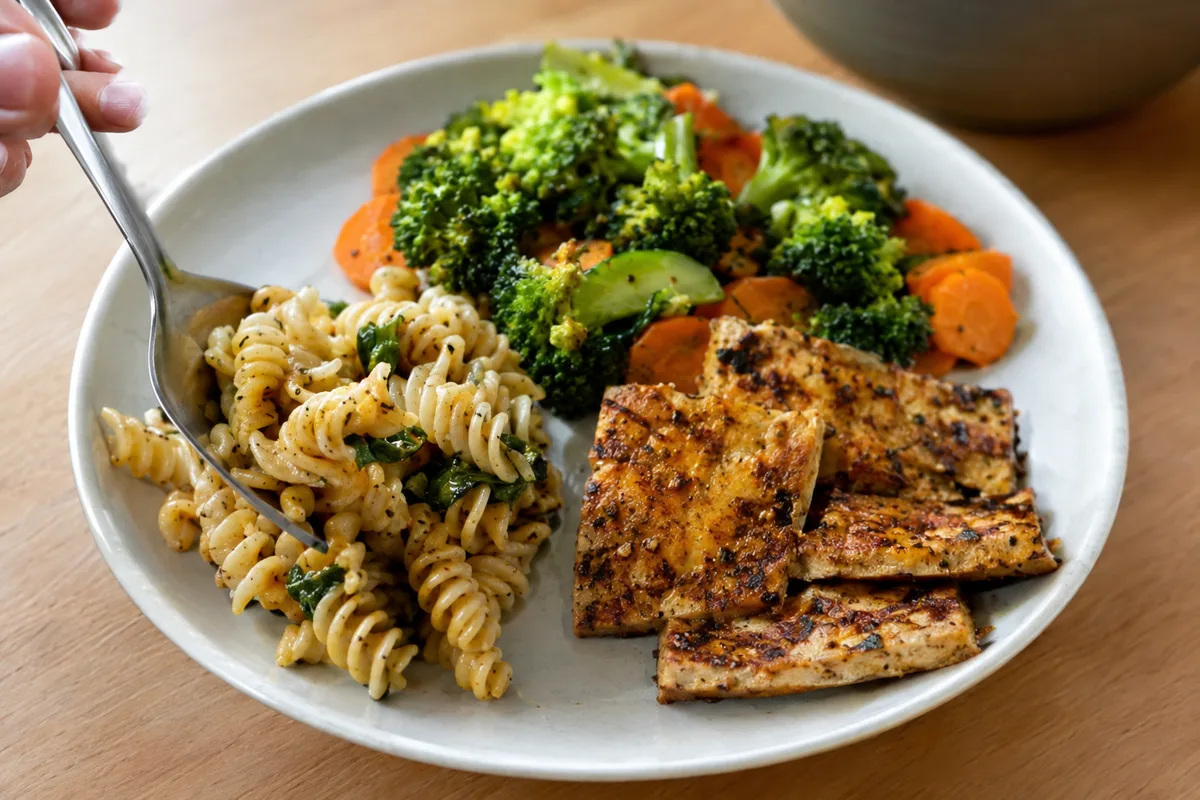
Build meals around foods that help you feel satisfied while fitting your energy target. Protein-rich foods, fibre-rich carbohydrates, vegetables and some fat can all play a part. There is no required combination for everyone, so use your food log to see which meals work well for you.
- Add vegetables or fruit to meals where practical
- Choose protein-rich foods you enjoy
- Include fibre-rich carbohydrates in suitable portions
- Keep room for favourite foods
- Plan meals around your actual schedule
When to review the plan
Give the trend enough time to become visible before deciding that nothing is happening. If your records show no downward movement over a sustained period, first check whether the log reflects what you are actually eating and drinking. The exact review period depends on how often you track and how much your weight normally varies.
Make small, practical adjustments rather than changing everything at once. You might alter a regular portion, replace an energy-dense extra or add movement that fits your day. Keeping most of the routine stable makes it easier to see whether the change helped.
If eating less leaves you persistently weak, dizzy, distressed or unable to manage normal activities, stop trying to push the pace. Seek guidance from a suitably qualified health professional who can consider your personal circumstances. Faster loss is not automatically better progress.
- Check the completeness of your food log
- Adjust one frequent meal or snack
- Keep the change manageable
- Review the longer-term trend again
- Ask for professional guidance when needed