
Does Fibre Have Calories?
Fibre is a carbohydrate, but your body does not use it in the same way as sugars and starches. Here is how fibre contributes to calories and how to record it without double-counting.
The short answer
Fibre can provide calories, but not always as much as other carbohydrates. Some fibre passes through the body largely unchanged, while some is broken down by microbes in the gut. This means its energy contribution depends on the type of fibre and how it is digested.
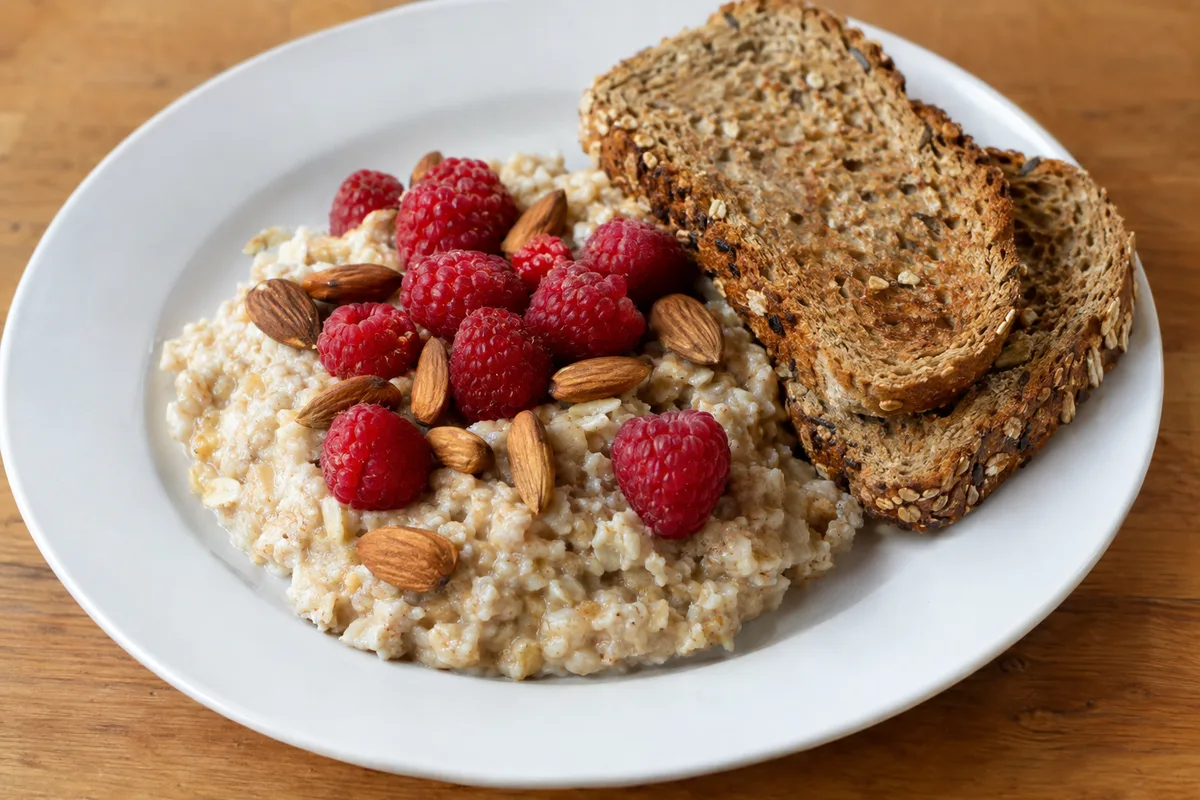
Protein and digestible carbohydrate provide about 4 kcal per gram, while fat provides about 9 kcal per gram. Fibre does not fit neatly into either figure because different fibres behave differently. For food labelling, a standard average may be used rather than measuring exactly what each person absorbs.
- Some fibre provides a small amount of usable energy.
- Some fibre contributes very little energy.
- The exact amount absorbed depends on the fibre and the person.
- A food's listed calories usually already account for its fibre.
Why different fibres provide different amounts of energy
Fibre is a broad name for several kinds of carbohydrate that resist digestion in the small intestine. Insoluble fibre tends to remain more intact as it moves through the digestive system. Fermentable fibre can be broken down by gut microbes, producing compounds that the body can use for some energy.
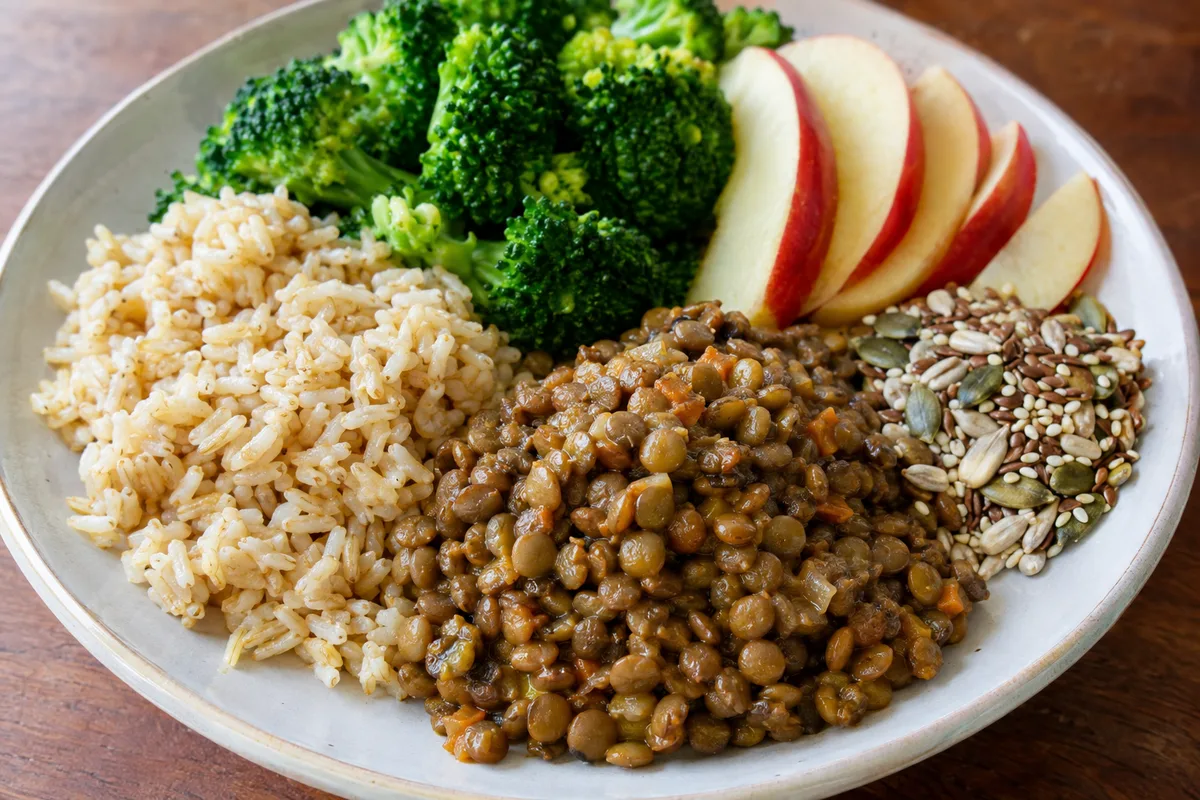
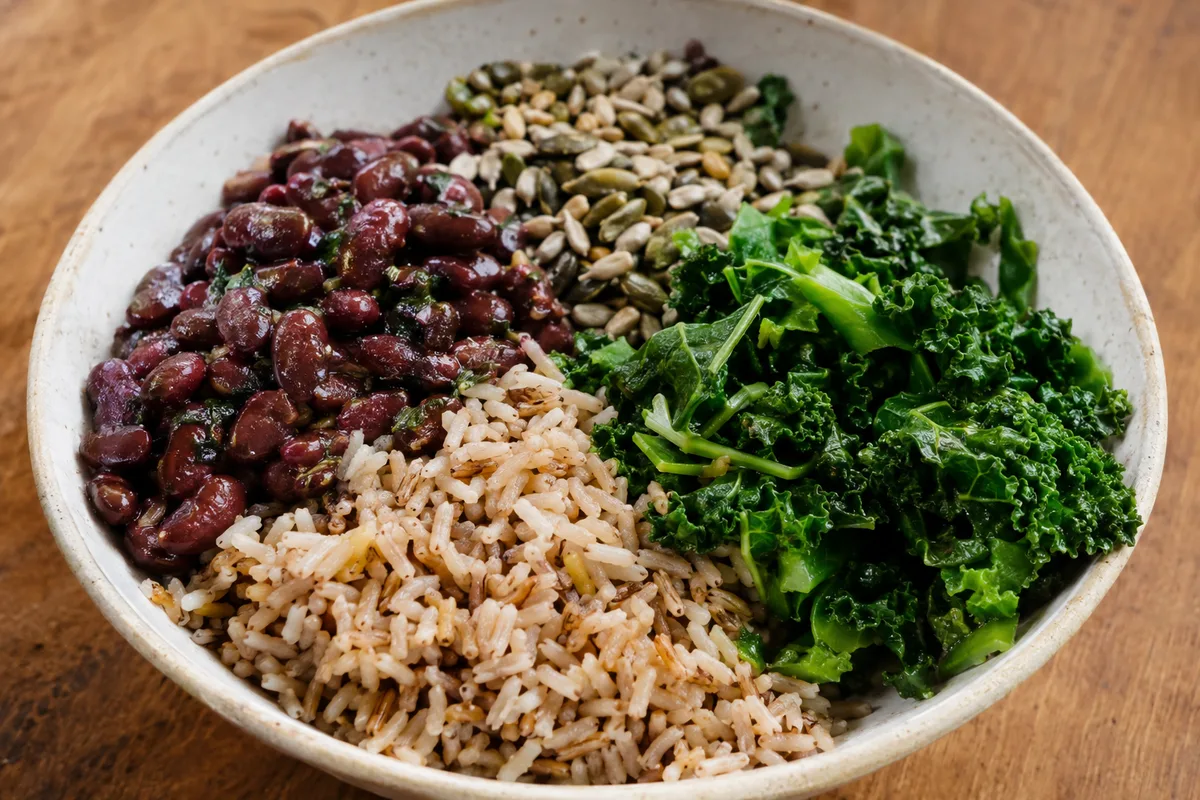
Foods often contain a mixture of fibre types rather than just one. Oats, beans, vegetables, fruit, nuts, seeds and wholegrain foods therefore cannot be assigned a precise fibre calorie value from appearance alone. Their total calorie figures are based on standard methods that account for the food as a whole.
- Wholegrain bread and brown rice contain a mixture of fibres.
- Beans and lentils contain fibre alongside digestible carbohydrate and protein.
- Fruit and vegetables contain fibre, water and naturally occurring sugars.
- Nuts and seeds contain fibre alongside fat and protein.
How fibre appears on UK food labels
On a UK nutrition label, fibre is normally listed separately from carbohydrate. The carbohydrate line generally covers digestible carbohydrate, including sugars and starches, rather than adding fibre to that figure. This differs from some labelling systems used elsewhere, where total carbohydrate may include fibre.
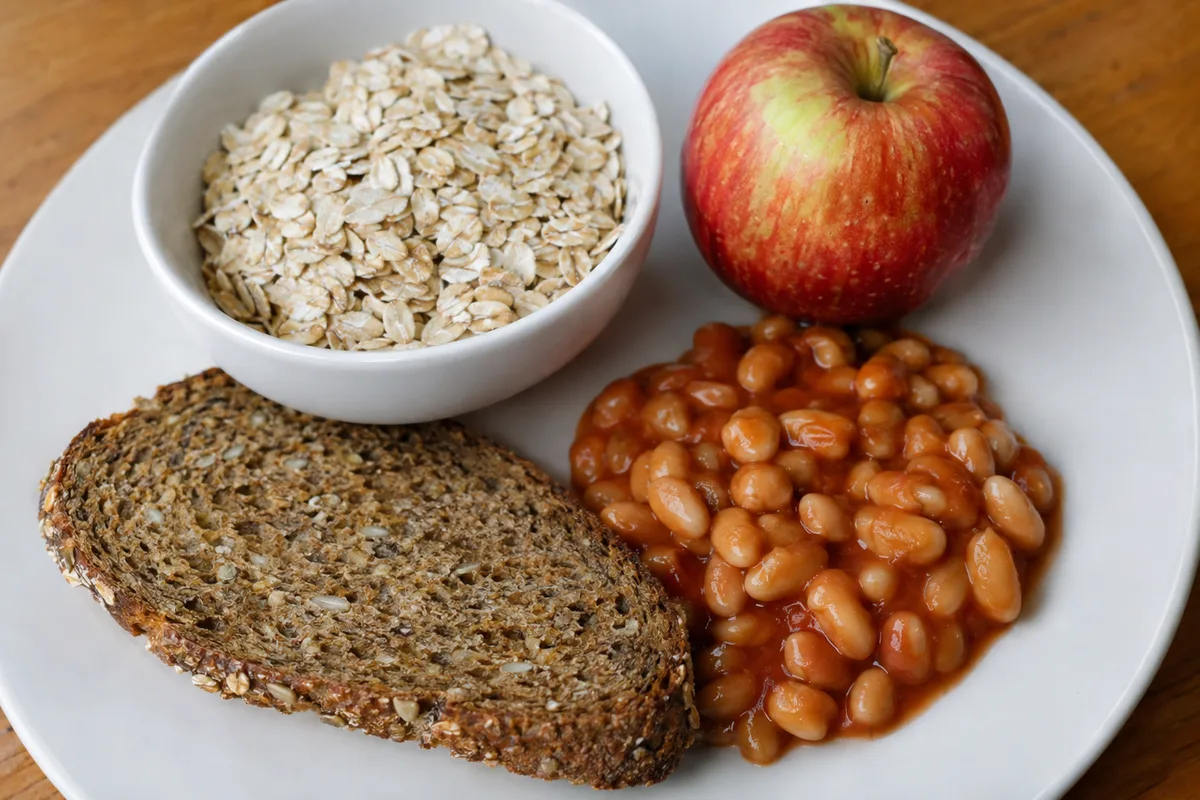
The energy value shown on the packet is intended to cover the whole food, including any standard energy contribution from fibre. You should not take the fibre grams, multiply them by 4 kcal and add the result to the listed calories. Doing that would treat fibre like fully digestible carbohydrate and could also count its energy twice.
- Use the stated energy value when logging a packaged food.
- Enter fibre separately if your tracker has a fibre field.
- Check whether an imported entry follows UK or another labelling format.
- Avoid adding extra calories for fibre on top of the label total.
What this means when you track food
For packaged foods, the simplest approach is to copy the energy and nutrient information from the label. If you scan or search for an item, compare the app entry with the packet because database records can be outdated or entered under a different labelling system. Fibre should be logged as a nutrient, not converted into extra calories by hand.
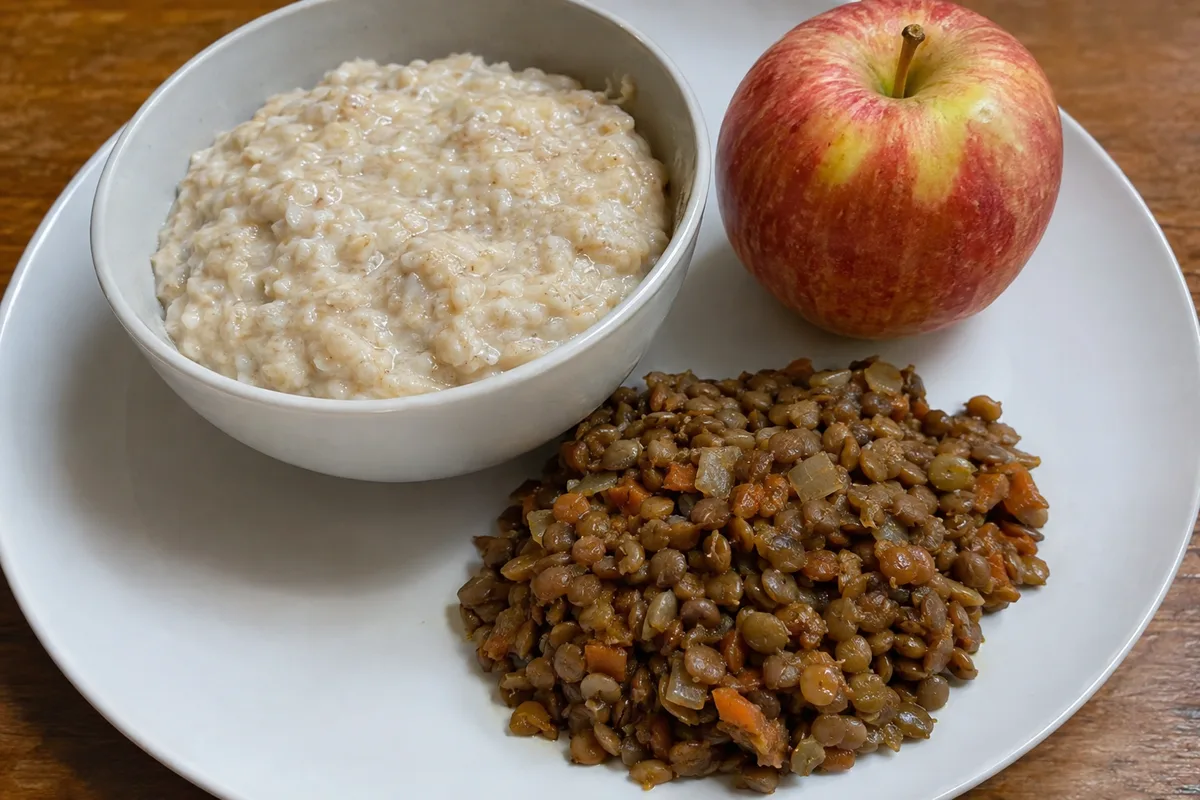
For basic foods such as an apple, porridge oats or cooked lentils, use a reliable database entry that matches the food and its preparation. Raw and cooked entries may differ because cooking changes water content and therefore the calories per gram. Choose one consistent entry rather than adjusting its calories according to the fibre amount.
- Match the exact food and preparation method.
- Check whether the entry is for raw or cooked food.
- Compare packaged-food entries with the current label.
- Do not subtract fibre calories from the listed total.
- Do not add fibre calories when they are already included.
The useful takeaway
Fibre is not completely calorie-free in every case, but it is not equivalent to sugar or starch either. Different fibres supply different amounts of usable energy, and individual digestion also varies. That is why labels and food databases rely on standard calculations rather than a personal fibre formula.
When tracking, use the total calorie value supplied for the food and record fibre in its own field. Treat fibre as useful information about the make-up of your meals, not as a number that needs to be added to or removed from the calorie total. Consistent entries matter more than trying to calculate the exact energy absorbed from each gram of fibre.
- Use the total calories already provided.
- Track fibre separately when that information is available.
- Keep your database choices consistent.
- Avoid treating every gram of fibre as 4 kcal.