
Can Mushroom Coffee Support Weight Loss?
Mushroom coffee combines coffee with mushroom powders or extracts, but the ingredients vary between blends. Here is what it may change, what it cannot do on its own and how to record it accurately.
What mushroom coffee actually is
Mushroom coffee is usually ordinary coffee mixed with powder or extract made from particular mushrooms. It does not normally taste like a cup of cooked mushrooms, although the flavour may be earthier than standard coffee. The type and amount of mushroom ingredient depend on the blend.
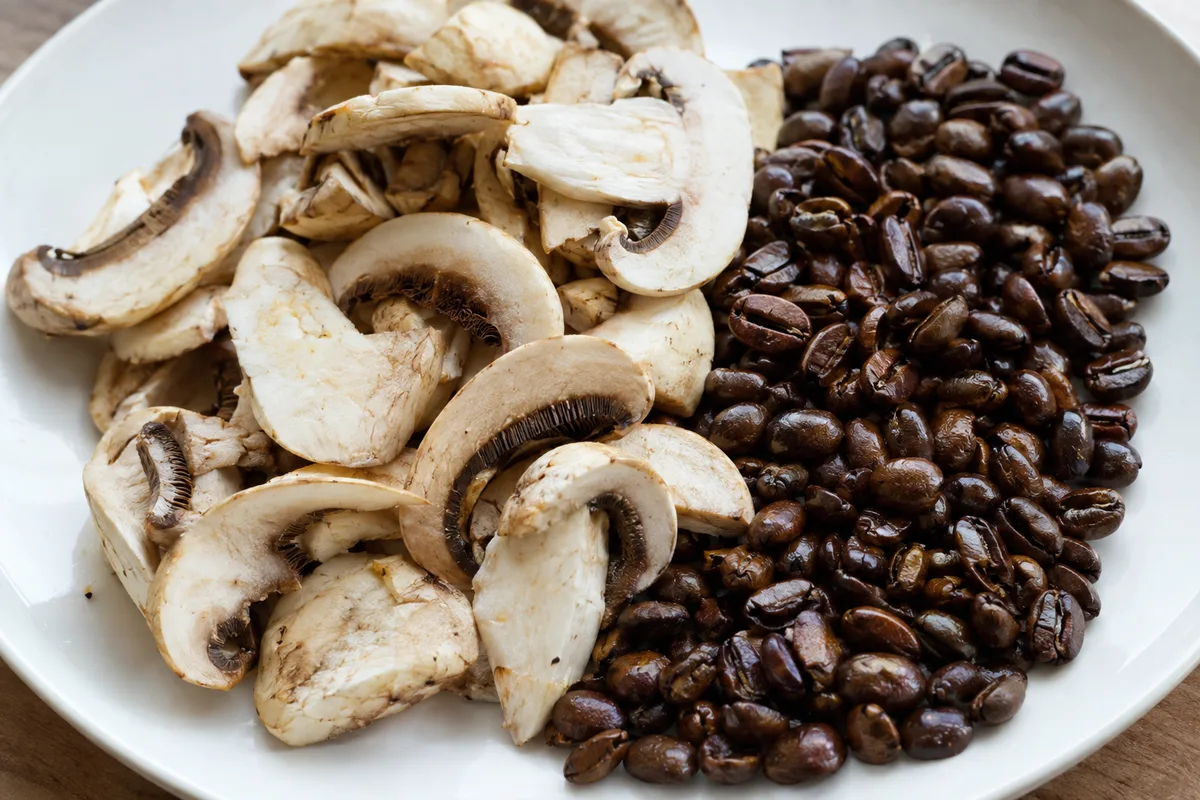
A mushroom extract is not nutritionally identical to a serving of whole mushrooms. Processing changes what remains in the final powder, and the portion used in a drink may be small. Claims about whole mushrooms therefore do not automatically apply to mushroom coffee.
- Coffee may be the main ingredient or only one part of the blend
- The mushroom component may be a powder, an extract or a mixture
- Some versions include milk powder, sweeteners or flavourings
- Serving sizes and preparation instructions vary
Does it directly cause weight loss?
There is not enough reliable evidence to say that mushroom coffee directly causes weight loss. Adding mushroom powder to coffee does not remove body fat or cancel out energy eaten elsewhere. Any change in weight still depends mainly on your overall pattern of eating, drinking and activity over time.

Coffee contains caffeine unless it is decaffeinated or naturally low in caffeine. Caffeine may briefly affect alertness, appetite or the desire to move, but these effects are inconsistent and can become less noticeable with regular use. They should not be treated as a dependable weight-loss method.
- Do not count the drink as a fat-burning food
- Separate short-term alertness from lasting weight change
- Judge it as part of your full eating pattern
- Be cautious with claims that promise a particular result
The drink only helps if it changes your overall intake
Mushroom coffee could fit into a weight-management plan if you enjoy it and it suits your usual intake. For example, a lightly prepared drink may replace a more energy-dense coffee or snack. The useful change would come from that replacement, not from a special property of the mushrooms.
It could also work in the opposite direction. Sugar, syrups, cream, milk powders and toppings can make a coffee contribute more energy than expected. Having the drink alongside your usual snack rather than instead of it may add to your total intake.
- Record the complete drink rather than only the coffee powder
- Include milk, cream, sweeteners, syrups and toppings
- Check whether the entry represents the prepared drink or the dry mix
- Use the serving amount you actually prepared
- Notice whether the drink replaced anything or was an addition
How to compare it with your usual coffee
Compare mushroom coffee with the drink you would normally have at the same time. Look at the full preparation, including anything stirred in or added on top. A label entry for dry powder will not always match the drink in your cup.
Taste and satisfaction matter as well as the recorded energy. If you dislike the drink or find it leaves you wanting something else, it may not be a useful swap. A familiar coffee that fits your plan can be just as practical.
- Compare equal prepared portions where possible
- Check for added sugar and powdered creamers
- Match your tracking entry to the exact product label
- Keep your usual milk or sweetener in the comparison
- Consider whether either drink changes your snacking
A sensible way to test it in your routine
If you want to try mushroom coffee, treat it as an ordinary tracked drink rather than a weight-loss aid. Keep the rest of your routine reasonably consistent for a while and note hunger, enjoyment, sleep and any changes in snacking. This gives you more useful information than relying on marketing language.
You do not need mushroom coffee to lose weight, and replacing standard coffee with it does not guarantee a different result. Choose it if you like the flavour, ingredients and way it fits your day. Your longer-term eating pattern matters more than the particular type of coffee you drink.
- Log every ingredient in the prepared cup
- Pay attention to whether it affects later food choices
- Avoid using extra cups to replace regular meals
- Consider caffeine timing if it disrupts your sleep
- Stop using it if it leaves you feeling uncomfortable