
The best magnesium-rich foods for everyday meals
Magnesium comes from a wide range of plant foods, with smaller amounts in some animal foods. This guide covers useful sources, simple meal ideas and sensible ways to track them.
What magnesium does and where it comes from
Magnesium is a mineral used throughout the body. It supports normal muscle and nerve function and helps the body release energy from food. Eating a varied diet can provide it from several sources rather than relying on one food.
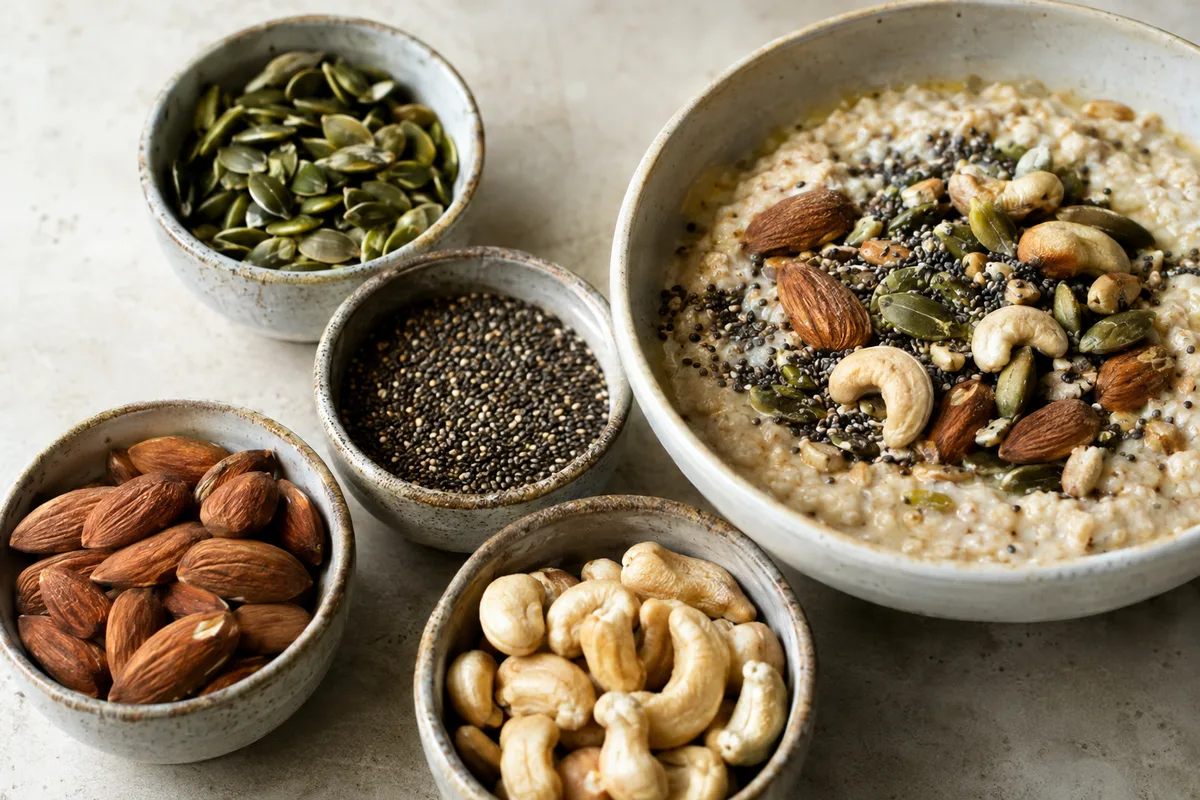
Seeds, nuts, beans, lentils, wholegrains and leafy green vegetables are particularly useful sources. Some fish, dairy foods and fortified products can also contribute. The exact amount varies with the food, portion, brand and method of preparation.
If you already log your meals, look beyond calories and check whether your tracker records magnesium. Database entries can differ, so use the food label when it lists the mineral. For foods without a label, choose an entry that closely matches whether the food is raw, cooked, canned or dried.
Seeds and nuts pack plenty into a small serving
Seeds and nuts are among the most concentrated food sources of magnesium. Pumpkin seeds, chia seeds, sesame seeds and almonds are useful choices, while cashews, peanuts and other nuts also contribute. Their compact size makes them easy to add without changing the whole meal.
These foods also contain fat, so their energy content can rise quickly as the portion grows. Weighing or measuring the amount before eating can make your log more accurate. Record nut butter and seed paste separately, because spoonfuls can vary and some products contain added ingredients.
Use seeds and nuts as part of a meal or snack rather than treating them as a special extra. A small measured portion can add texture and flavour to foods you already track. Choose plain or lightly seasoned versions when you want more control over salt and other additions.
- Stir chia seeds into porridge or yoghurt
- Scatter pumpkin seeds over soup or salad
- Add almonds or cashews to a grain bowl
- Spread measured peanut or almond butter on toast
- Mix sesame seeds into cooked vegetables
Beans, lentils and soya foods are practical staples
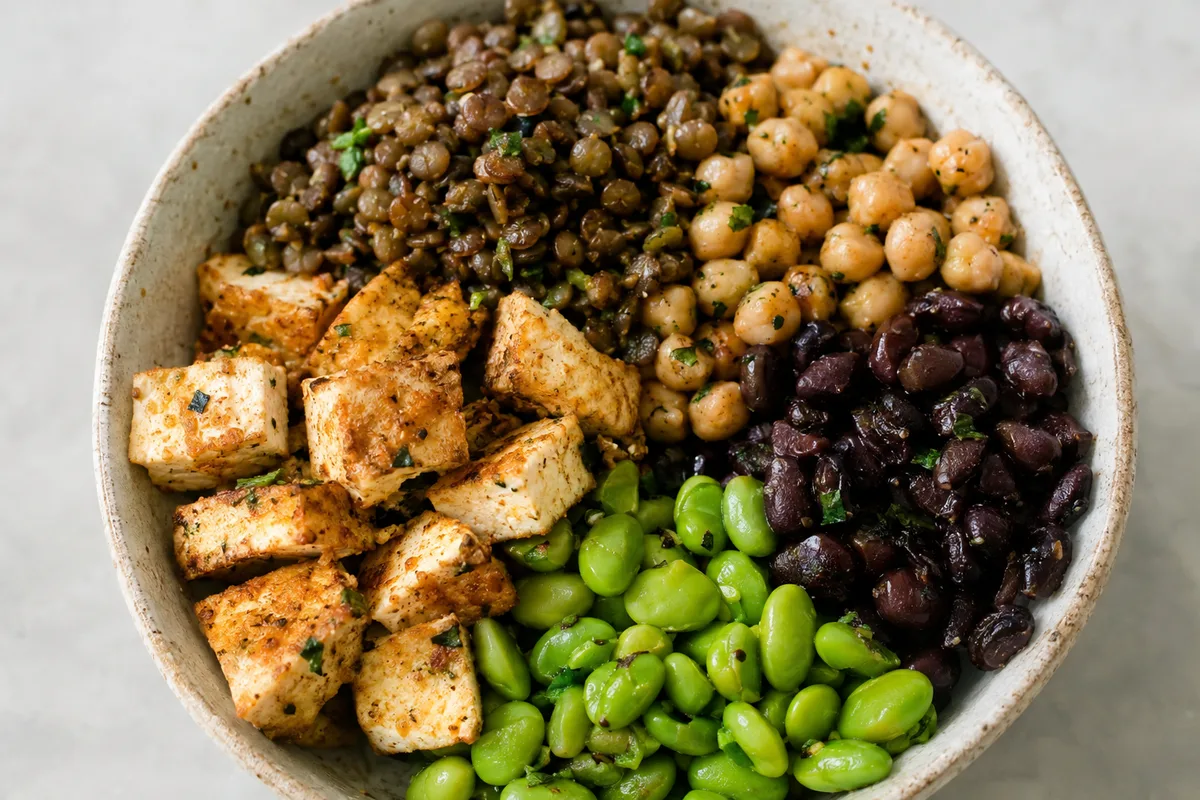
Beans, lentils and soya foods provide magnesium alongside protein and fibre. Black beans, kidney beans, chickpeas, lentils, edamame and tofu can all help. They work in both quick lunches and larger cooked meals.
Canned beans and lentils are convenient, but the logged weight should match what you eat. If you drain them, use a drained entry where possible rather than the full can weight. Rinsing can remove some of the salty liquid without removing the food's main nutritional value.
Dried pulses change weight as they absorb water during cooking. Log either the dry weight before cooking or the cooked weight afterwards, but use the matching database entry. This avoids comparing a dry serving with nutrition data for a cooked one.
- Add chickpeas to a chopped salad
- Use lentils in a vegetable soup or curry
- Serve black beans with brown rice and salsa
- Add edamame to noodles or a grain bowl
- Use tofu in a stir-fry with green vegetables
Wholegrains can contribute across the day
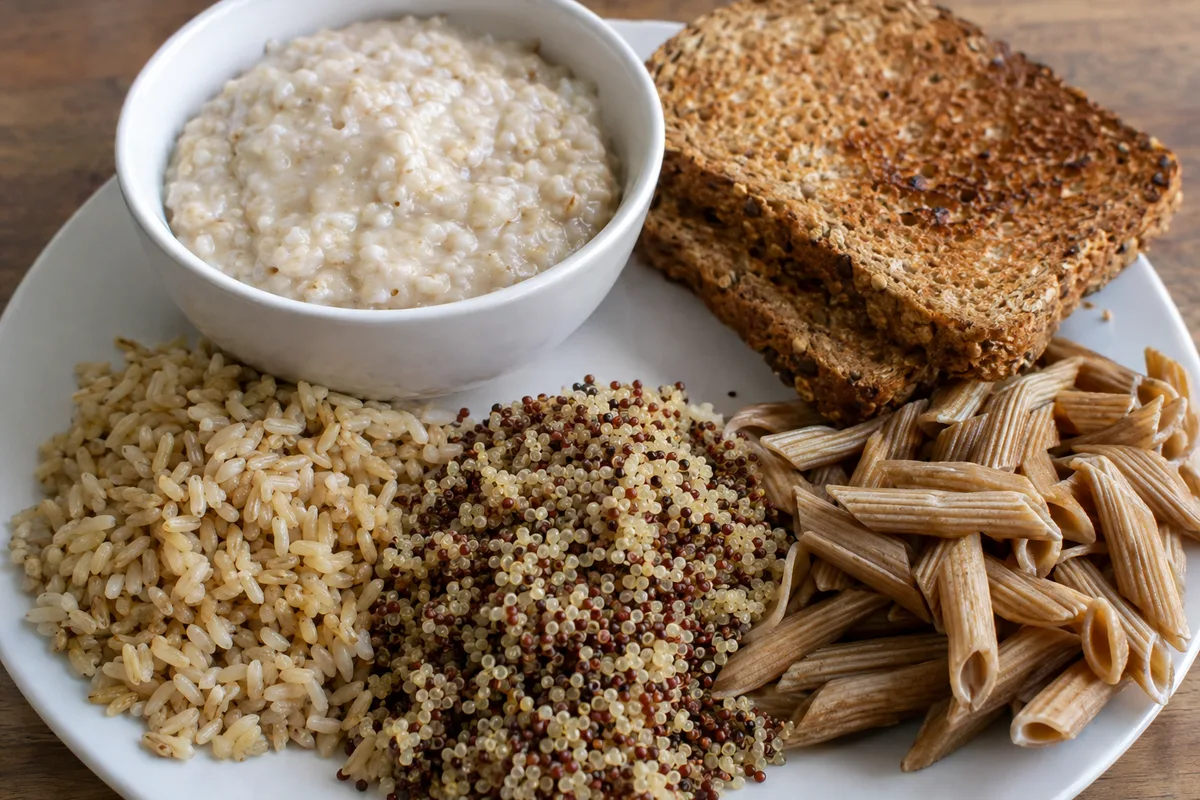
Wholegrains retain more of the grain than refined versions, including parts that contain magnesium. Oats, wholemeal bread, brown rice, quinoa and wholewheat pasta are useful everyday options. No single choice is essential, so pick grains that fit your meals and preferences.
A breakfast based on oats or wholegrain toast can start the day with some magnesium. Brown rice, quinoa or wholewheat pasta can provide another source later on. Combining grains with beans, seeds or vegetables brings several magnesium-containing foods into one meal.
Check whether your tracker entry refers to cooked or uncooked grain. Water changes the weight and volume during cooking, although it does not add energy or magnesium. For packaged bread and cereal, the label is usually the clearest source for serving size and nutrition details.
- Make porridge with oats and add seeds
- Choose wholemeal bread for toast or sandwiches
- Pair brown rice with beans and vegetables
- Use quinoa as the base of a salad
- Swap refined pasta for wholewheat pasta when it suits the dish
Leafy greens and other vegetables add variety
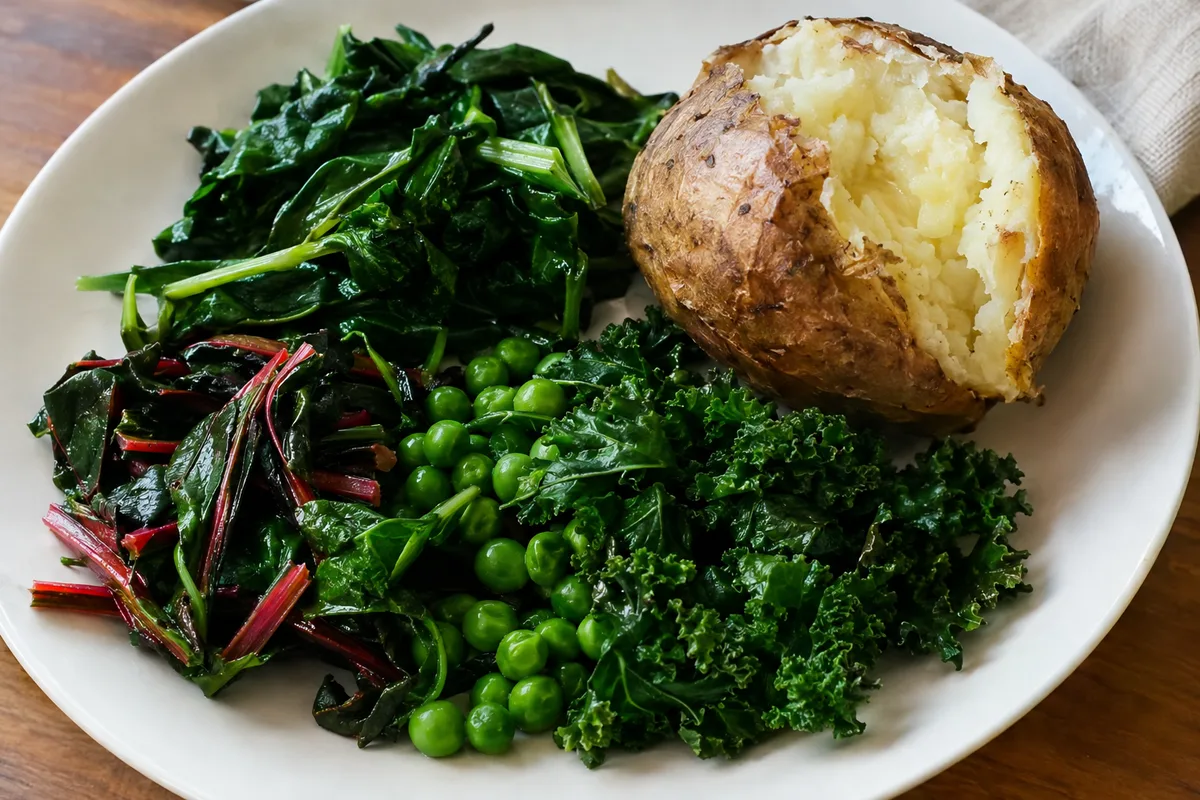
Leafy green vegetables contain magnesium because the mineral forms part of chlorophyll, the pigment that gives plants their green colour. Spinach, chard and kale can contribute, especially when eaten regularly. Peas, sweetcorn and potatoes also provide some magnesium.
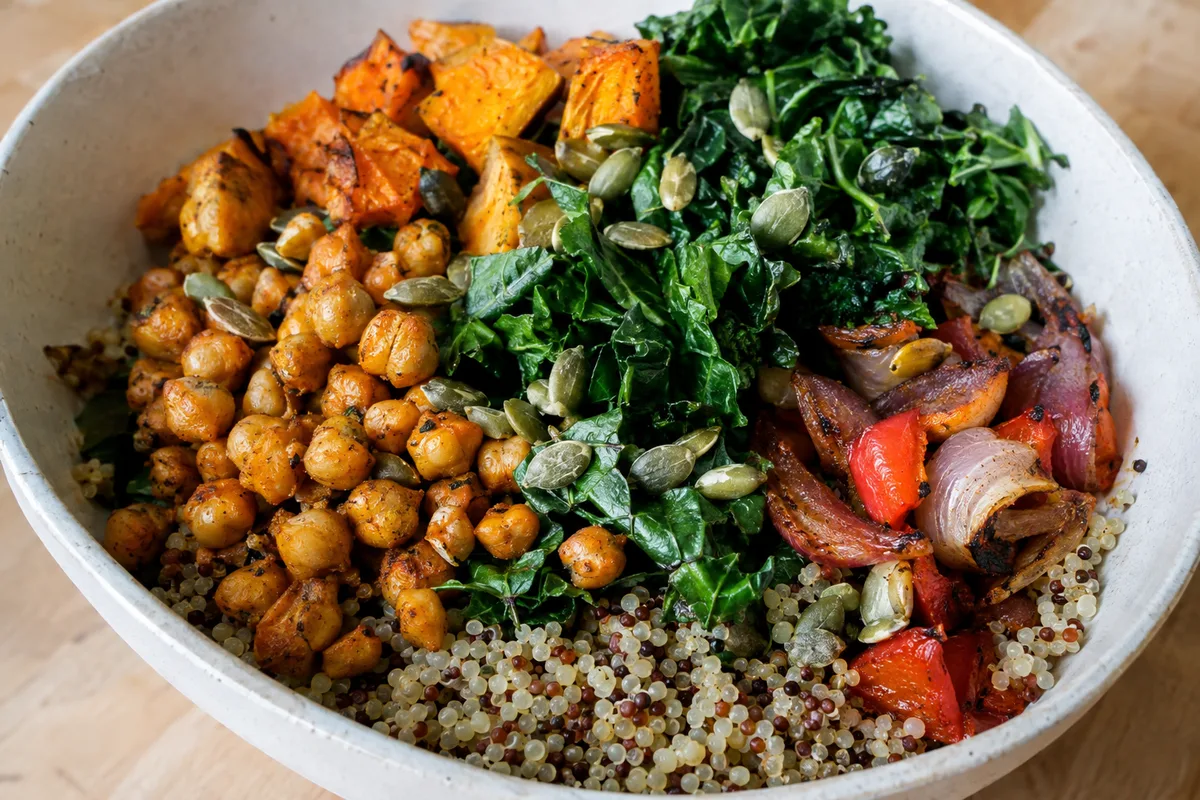
Cooking reduces the volume of leafy greens, so a serving of cooked spinach may contain more leaves than the same spoonful of raw spinach. This is why raw and cooked entries can show different values for an apparently similar portion. Choose the database description that matches what was on your plate.
Vegetables may not always be as concentrated as seeds or nuts, but they can be eaten in larger portions and across many meals. Pairing greens with beans, grains or seeds creates a more substantial source. Variety also keeps meals from depending on the same ingredient every day.
- Fold spinach into an omelette or tofu scramble
- Stir chard or kale into a bean stew
- Add peas to rice, pasta or soup
- Top a baked potato with beans and greens
- Combine leafy greens, quinoa and pumpkin seeds in a salad
Build a magnesium-rich day without overcomplicating it
The best magnesium-rich foods are the ones you can include regularly in meals you enjoy. Rather than chasing one ideal ingredient, spread several sources through the day. This can be as simple as oats and seeds at breakfast, beans and wholegrains at lunch, then greens with an evening meal.
When reviewing your food log, look for patterns across several days instead of judging one meal. Notice whether nuts, seeds, pulses, wholegrains and green vegetables appear regularly. Your personal target depends on factors such as age and sex, so use an appropriate trusted reference rather than guessing a number.
Food labels do not always show magnesium, even when a food contains it. A missing figure can mean the data are unavailable rather than that the amount is zero. If precise tracking matters to you, use consistent entries from a reputable food composition database and keep portion methods consistent.
- Include a seed or nut in one meal
- Choose a bean, lentil or soya food
- Use a wholegrain in place of a refined grain
- Add a leafy green or another vegetable
- Check that logged entries match the food's cooked state