
What the Sacred Heart Diet Really Involves
The Sacred Heart Diet is a short, restrictive eating plan built around vegetable soup and a changing list of permitted foods. This guide explains how it works, why its claims deserve caution and what your food log may reveal.
What is the Sacred Heart Diet?
The Sacred Heart Diet is usually presented as a one-week eating plan. It centres on a homemade vegetable soup, accompanied by selected foods that change from day to day. Some days focus on fruit or vegetables, while others introduce foods such as meat, milk or rice.

Despite its name, there is no reliable basis for treating it as an official hospital or specialist programme. Versions have circulated under several institutional-sounding names, and their instructions vary. The impressive name should not be mistaken for evidence that the plan has been formally developed or approved.
The diet is commonly promoted as a fast way to change body weight. Any short-term change depends on the person and may reflect shifts in stored carbohydrate, water and the amount of food being digested, as well as body tissue. A brief result therefore says little about whether the approach is useful or sustainable.
- A short, fixed eating schedule
- Vegetable soup eaten frequently
- Different permitted foods on different days
- Strict limits on foods outside the plan
What do you eat on the plan?
Most versions begin with a soup made from vegetables such as cabbage, onions, tomatoes, celery and peppers. The exact recipe differs, as do the suggested portions and seasonings. Soup can be a useful way to eat several vegetables, but its presence does not make the whole plan balanced.
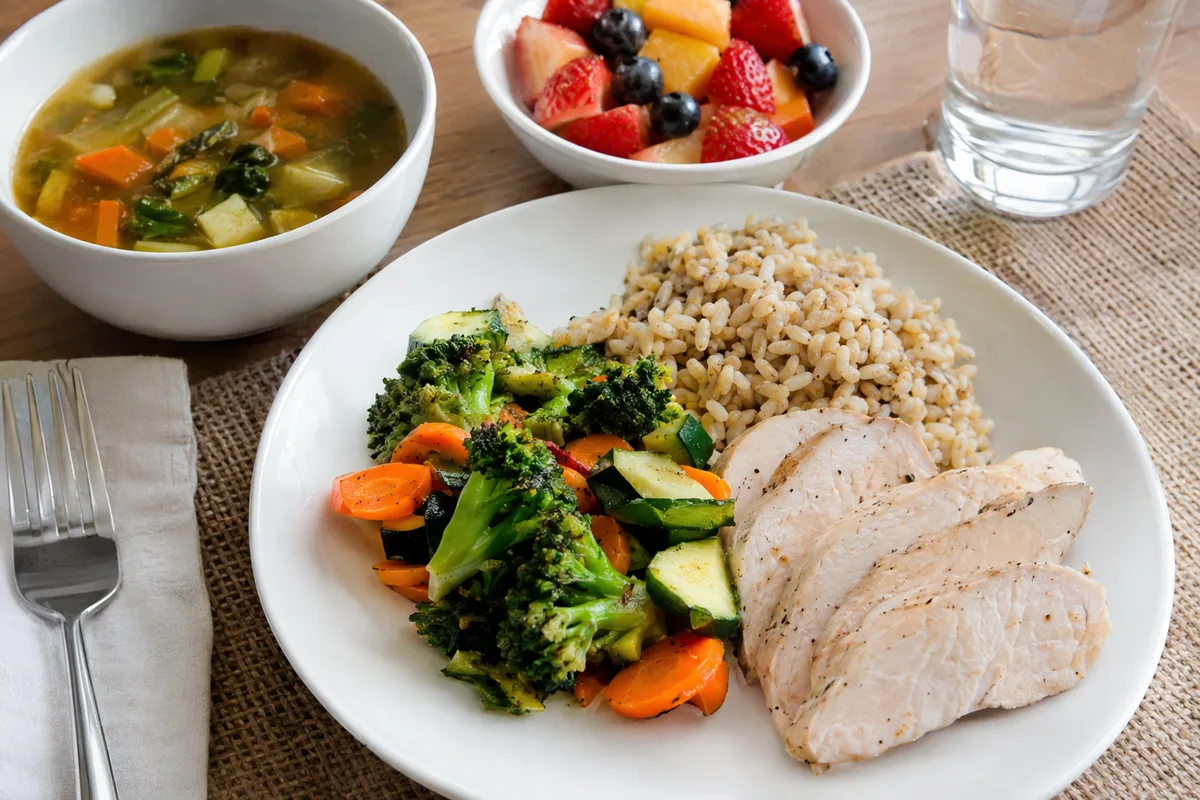
Alongside the soup, each day normally has its own narrow food theme. One version might allow fruit on one day and vegetables on another, followed later by foods such as meat, milk or brown rice. Because there is no single recognised version, check the particular rules you are assessing rather than assuming every online menu is the same.
The plan removes many ordinary combinations, such as cereal with milk, a filled sandwich or pasta with vegetables and protein. This can make meals repetitive and socially awkward. It may also leave some days low in protein, fat or overall energy, depending on the menu and the portions eaten.
- Vegetable-based soup
- Fresh fruit on selected days
- Plain vegetables or potatoes on selected days
- Meat or another listed protein later in the plan
- Milk or brown rice in some versions
Why can the scale change quickly?
A restrictive menu can provide less energy than your usual food intake, particularly when much of it consists of vegetables and broth. The body may then use some of its stored carbohydrate for energy. Water is stored alongside that carbohydrate, so changes in these stores can affect body weight over a short period.
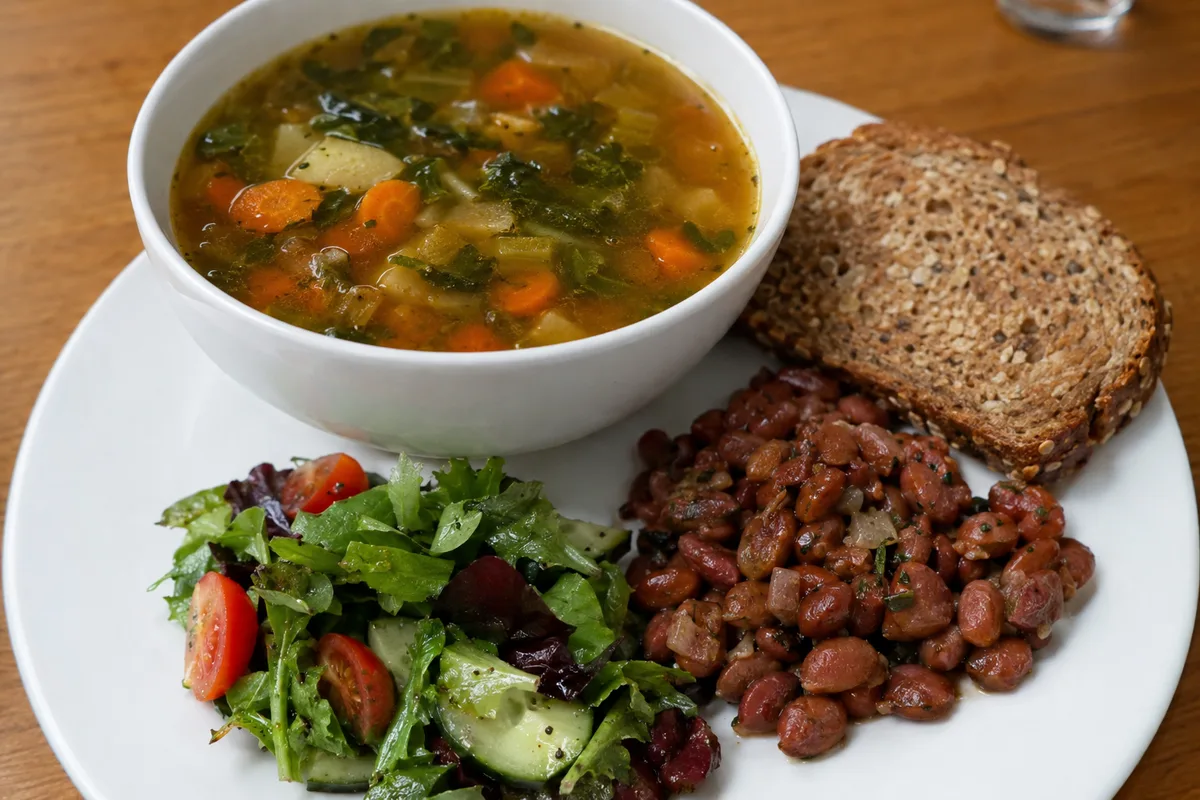
Soup, fruit and vegetables can also change the amount of water, fibre and food moving through the digestive system. These shifts can appear on the scale without representing the same amount of change in body fat. Salt content, fluid intake and portion size add further variation.
This is why a dramatic claim attached to the diet should be treated cautiously. No fixed result applies to everyone, and a short weigh-in cannot explain what has changed inside the body. Looking at longer-term patterns in your log is more informative than judging the plan by a single reading.
- Lower energy intake than usual
- Changes in stored carbohydrate and water
- Different amounts of food being digested
- Variation in salt and fluid intake
What your food log may show
If you already track your food, the log can reveal more than a daily energy total. Compare the plan with your usual pattern and look at which food groups disappear on particular days. Also note whether your meals contain a dependable source of protein, carbohydrate, fat and fibre.
Pay attention to how the menu affects ordinary life. Record hunger, concentration, energy, mood and satisfaction in simple words beside each day. These notes can show whether the structure is practical, even when the numbers appear to fit a target.
Recipe entries need care because vegetable soup can vary greatly. Oil, starchy vegetables, stock and serving size all affect the log. Enter the ingredients used in your actual pot and divide the finished recipe by the number of portions you genuinely serve.
- Meals or snacks you keep wanting to add
- Days with little protein or fat
- Repeated foods and missing food groups
- Hunger and energy between meals
- Ingredients and portions in the soup recipe
The main limitations
The Sacred Heart Diet relies on rigid rules rather than helping you build repeatable meals. Its day-by-day restrictions do not teach much about choosing portions, handling meals out or adapting familiar recipes. Once the schedule ends, there is little guidance for what comes next.
Variety matters because different foods provide different nutrients and eating experiences. A few days based heavily on fruit, vegetables or soup can crowd out other useful foods. Depending on the version, the menu may also be difficult to adapt for personal preferences, cultural meals or higher energy needs.
Restrictive plans can encourage an all-or-nothing view of eating. A food may be labelled permitted on one day and excluded on the next without a clear nutritional reason. If the plan makes tracking more stressful or leads you to ignore strong hunger, stepping back from its rules is reasonable.
- Little support for long-term meal planning
- Uneven balance from one day to the next
- Limited flexibility for shared meals
- Rules that are not clearly linked to nutrition
- No dependable outcome for every person
A more practical way to use the underlying idea
You do not need to follow the Sacred Heart schedule to enjoy vegetable soup or simpler meals. Soup can sit alongside a source of protein, a starchy food and a little fat rather than replacing a complete meal. The right portions depend on your appetite, activity and wider eating pattern.
Use your existing log to make small adjustments that you could repeat. You might add vegetables to a regular lunch, choose a filling protein source or plan a meal before a busy evening. This keeps the useful part of the idea, preparing straightforward food, without adopting arbitrary daily restrictions.
Judge changes over a meaningful stretch of time rather than expecting a rapid transformation. Look for meals that satisfy you, fit your routine and provide variety across the week. If you need individual guidance because your nutritional needs are complex, seek advice from a suitably qualified nutrition professional.
- Pair vegetable soup with beans, eggs, fish, meat or tofu
- Add bread, potatoes, rice or another starchy food as needed
- Include a source of fat such as seeds, nuts or olive oil
- Keep fruit and yoghurt available for a simple snack
- Repeat meals that are satisfying and practical