
How to Find the Lowest-Calorie Breakfast Cereals
The lowest-calorie cereal depends on the serving size, recipe and what you add to the bowl. This guide explains how to compare your usual options fairly and build a breakfast that suits your calorie target.
What makes one cereal lower in calories
Dry cereal is mainly made from grains, with recipes varying widely between products. Added sugar, oils, nuts, chocolate and dried fruit can raise the calories in a given weight. Plain cereals with fewer added ingredients often contain less energy than rich granolas or clusters, but the label gives the clearest answer.
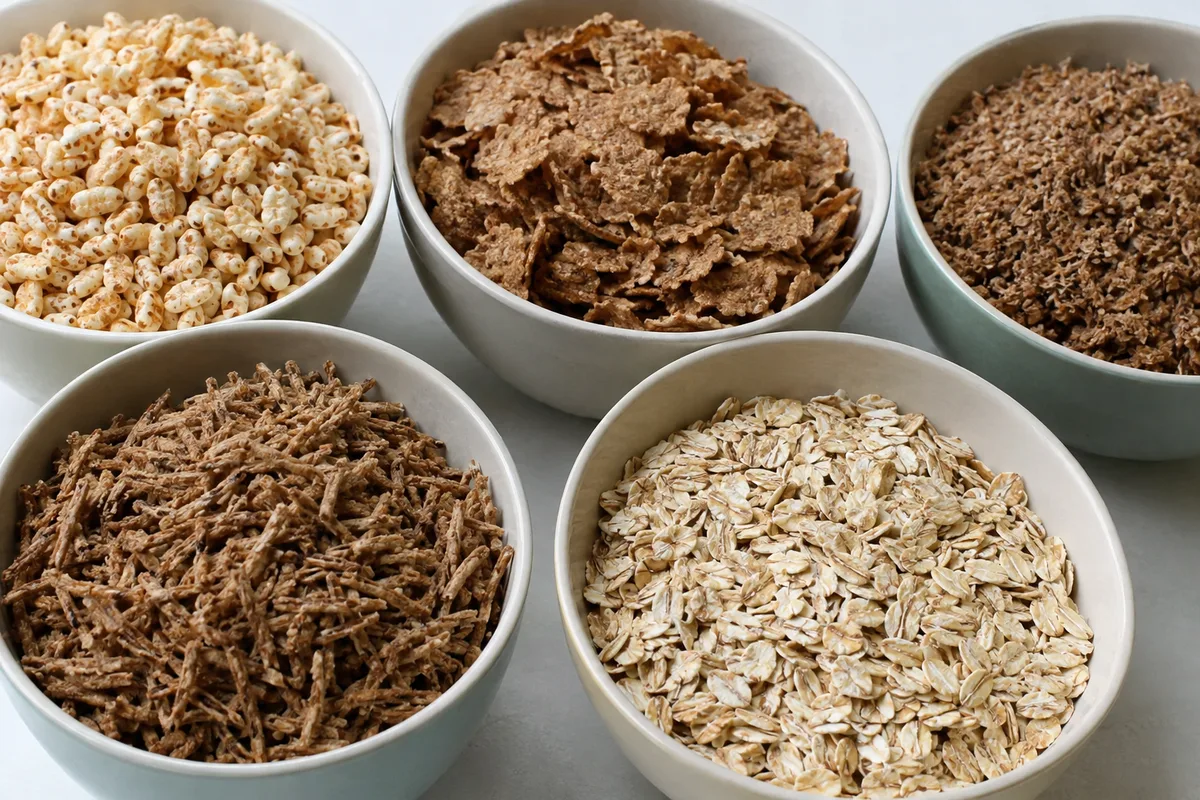
How airy or compact a cereal is also matters. Puffed cereals may fill more of a bowl for the same weight, while dense flakes, clusters and muesli can look like a smaller portion. This is why comparing bowls by sight can be misleading.
- Plain puffed wheat, rice or other grains
- Simple wholegrain flakes
- Unsweetened bran-based cereals
- Plain shredded wholegrain biscuits
- Porridge oats prepared with water
Compare cereals by the same weight
Nutrition labels may use different suggested portions, so the calories per serving are not always directly comparable. Check the energy per 100 grams to compare the cereals themselves on equal terms. Then use the portion you actually eat to work out what goes into your diary.
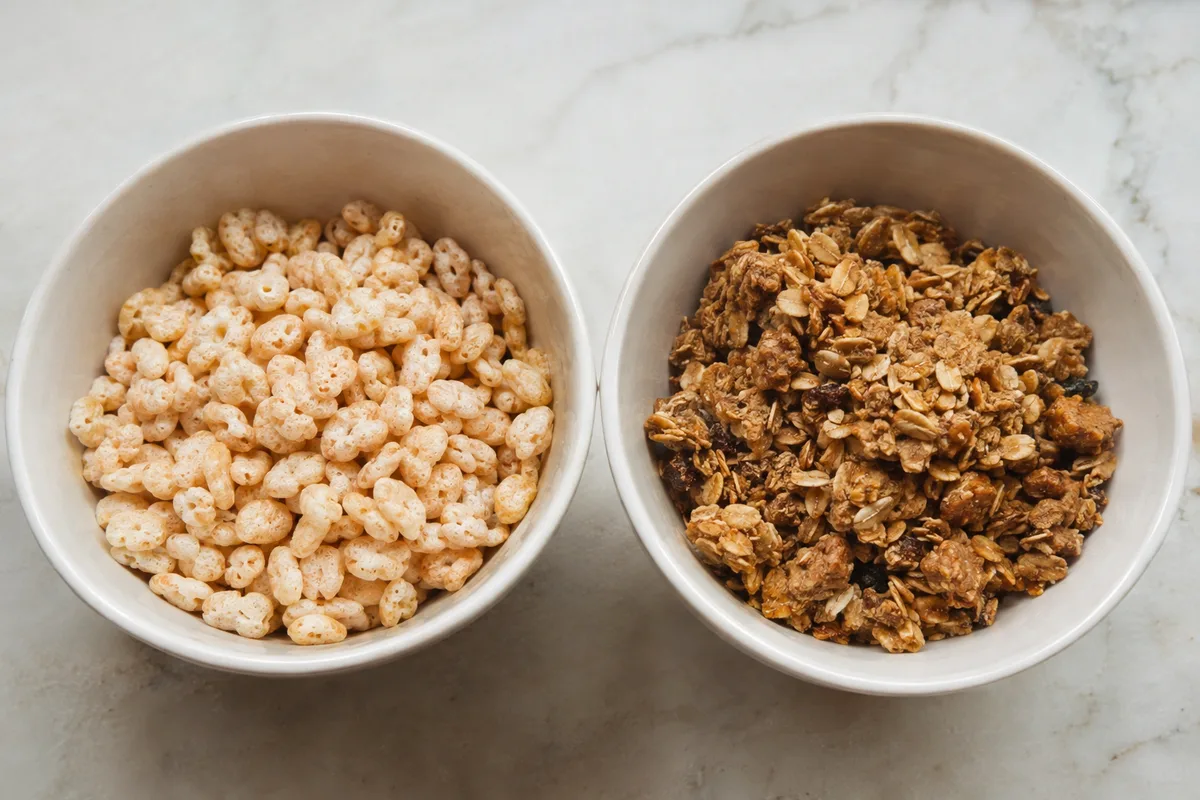
A cereal with a low suggested serving can appear lighter simply because the stated portion is small. Your normal bowl may contain more than that serving, particularly with compact cereals. Logging the amount you pour gives you a more useful figure than relying on the front of the packet.
- Use the per-100-gram column for a fair product comparison
- Check whether the listed serving resembles your normal portion
- Log your actual portion rather than automatically accepting the suggested one
- Compare plain versions before flavoured or coated versions
Look beyond the lowest number
The cereal with the fewest calories is not automatically the one that will suit your morning best. Protein and fibre can help make a breakfast feel more substantial, while sweetness, crunch and portion size affect how satisfying it seems. A very light cereal may leave room in your calorie target, but it may not feel like enough on its own.
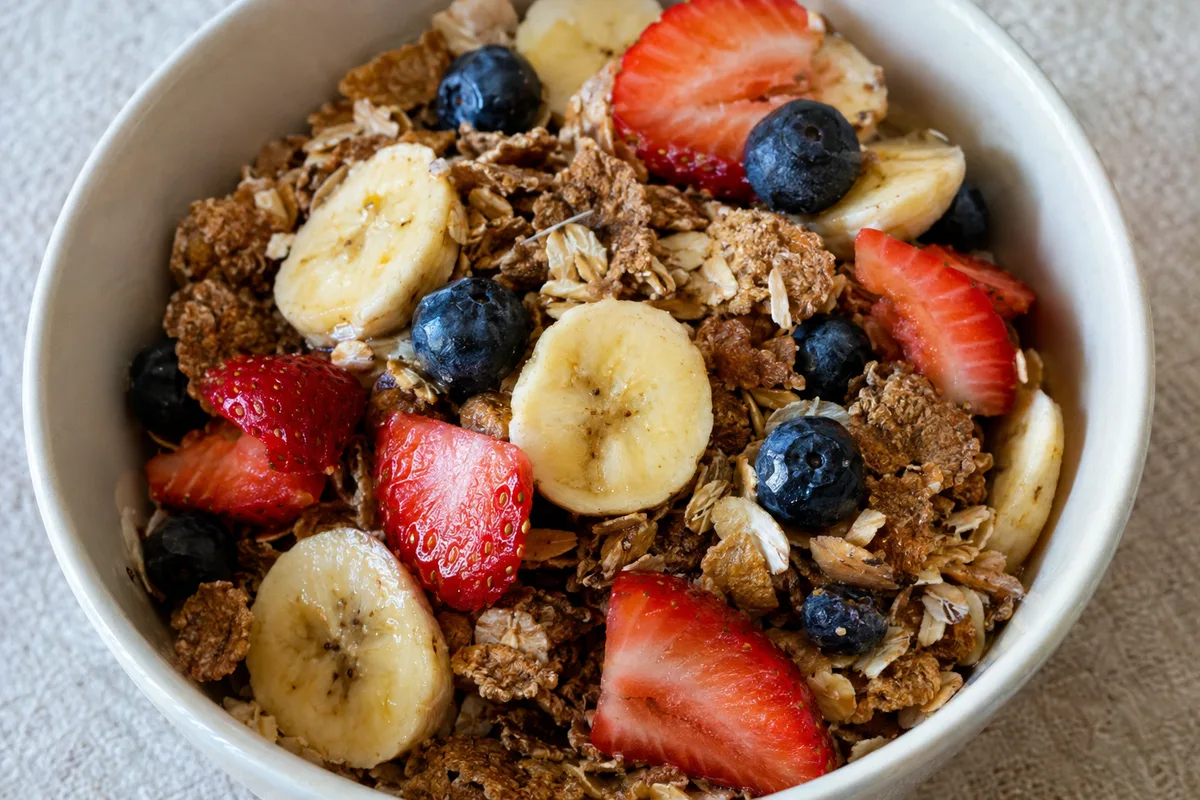
Check fibre, protein and added ingredients alongside energy. Wholegrain flakes, bran-based cereals and plain oats may offer more substance than highly refined, sweetened choices. The best option is one you enjoy, can portion realistically and find satisfying until your next planned meal or snack.
- Fibre per 100 grams
- Protein per 100 grams
- Added sugar or sweet coatings
- Oils, nuts and chocolate pieces
- A portion size that feels realistic
Remember what goes into the bowl
Milk, yoghurt, fruit, nuts, seeds and sweeteners all contribute to the total breakfast. A low-calorie cereal can become a much higher-calorie bowl when several generous toppings are added. That does not make those foods unsuitable, but they need to be included when you track the meal.
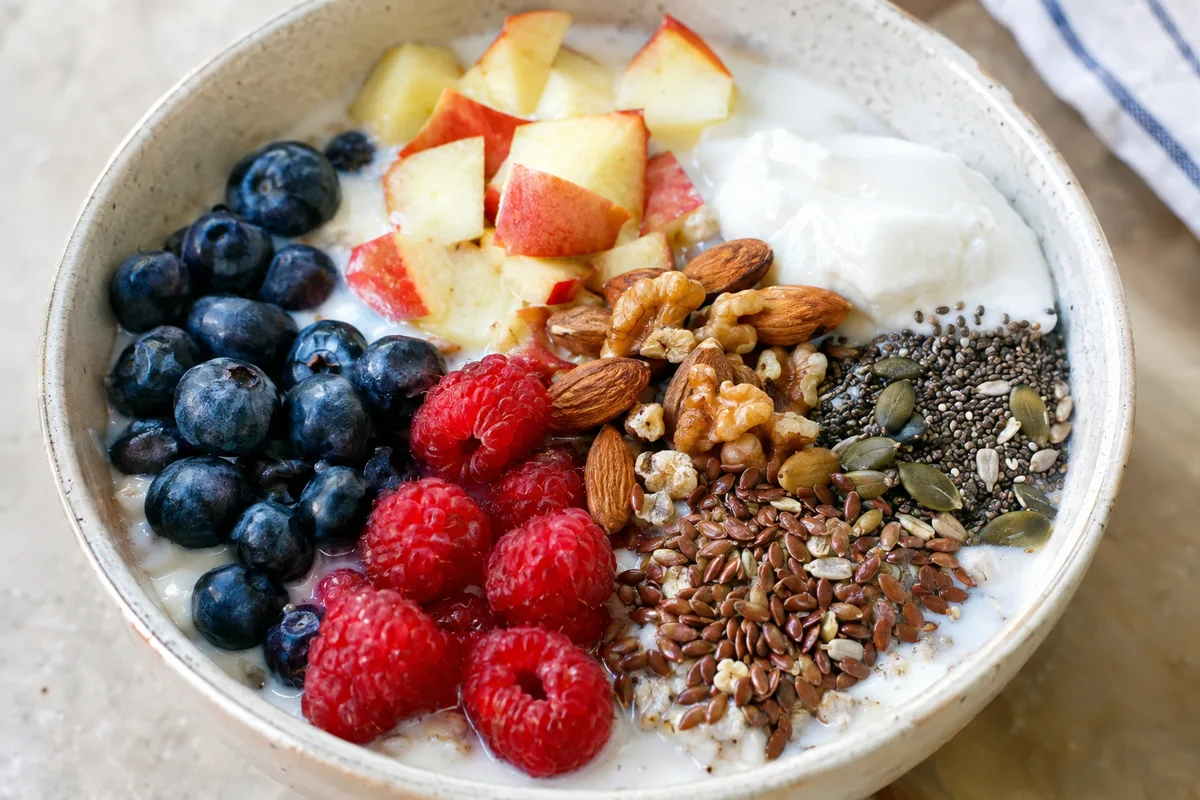
Choose additions according to what you want from breakfast. Fruit can add sweetness and volume, while yoghurt or milk can add protein and make dry cereal more satisfying. Nuts and seeds add texture and flavour, but their energy is concentrated, so a modest amount may fit more easily.
- Fresh berries or chopped apple instead of dried fruit
- Plain milk or yoghurt measured as part of the meal
- Cinnamon or sliced banana for sweetness
- A small sprinkle of nuts or seeds rather than a large handful
- No added syrup if the cereal already tastes sweet
Lower-calorie cereal combinations
You do not have to eat a plain cereal by itself. Mixing a light, airy cereal with a smaller amount of a denser favourite can create a larger-looking bowl while keeping the flavour you enjoy. The exact total depends on the products and portions you use.
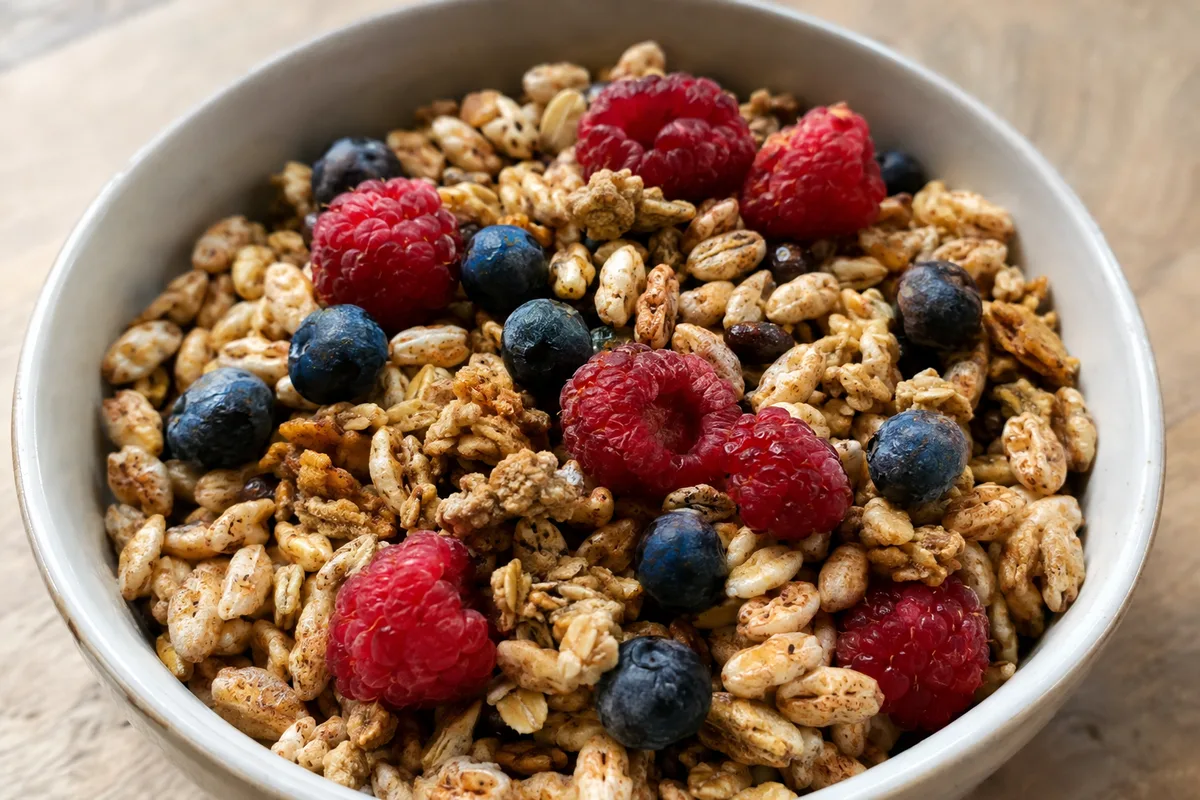
Another option is to start with a plain cereal and add flavour yourself. Fresh fruit, spices and a measured spoonful of yoghurt can make a simple base more interesting. Track each part of the bowl so you can repeat combinations that work for you.
- Puffed wholegrain cereal with milk and berries
- Bran flakes with chopped apple and cinnamon
- Plain shredded wholegrain biscuits with banana
- Porridge made with water and finished with yoghurt
- Plain flakes mixed with a smaller portion of granola
A practical way to choose
Begin with cereals you already like rather than searching for one universal winner. Compare their energy per 100 grams, then note how much you normally pour and what you add. This shows which breakfast is lowest in calories in the way you actually eat it.
Try changing one part at a time, such as the cereal portion, the milk or the topping. Keep taste and satisfaction in mind as well as the total in your food diary. A repeatable breakfast that fits your day is more useful than the lowest possible number in an unrealistically small bowl.
- Shortlist a few cereals you would genuinely eat
- Compare each one per 100 grams
- Log your usual cereal portion
- Include milk and every topping
- Save the combinations that suit your target and appetite