
How Many Steps a Day Can Support Weight Loss?
Daily walking can increase how much energy you use, but there is no universal number of steps that guarantees weight loss. This guide explains how to choose a realistic target, build it up and use it alongside food tracking.
There is no magic daily step number
The right number of steps depends on the person. Your usual activity, walking pace, body size, available time and food intake all affect what happens to your weight. A target that challenges one person may be normal daily movement for someone else.

Weight loss generally requires you to use more energy than you take in over time. Walking can contribute by increasing daily movement, but a step total cannot show the whole energy balance. It also does not account for hills, pace, carrying loads or other forms of activity.
- Treat any standard step target as a reference point, not a rule.
- Start with what you currently do rather than copying someone else's total.
- Look at your overall routine, including food, sleep and other movement.
- Expect your useful target to change as your routine changes.
Find your starting point
Before setting a higher target, look at your normal daily steps across several typical days. Include workdays, quieter days and weekends if your routine varies. This gives you a personal baseline rather than an arbitrary number.
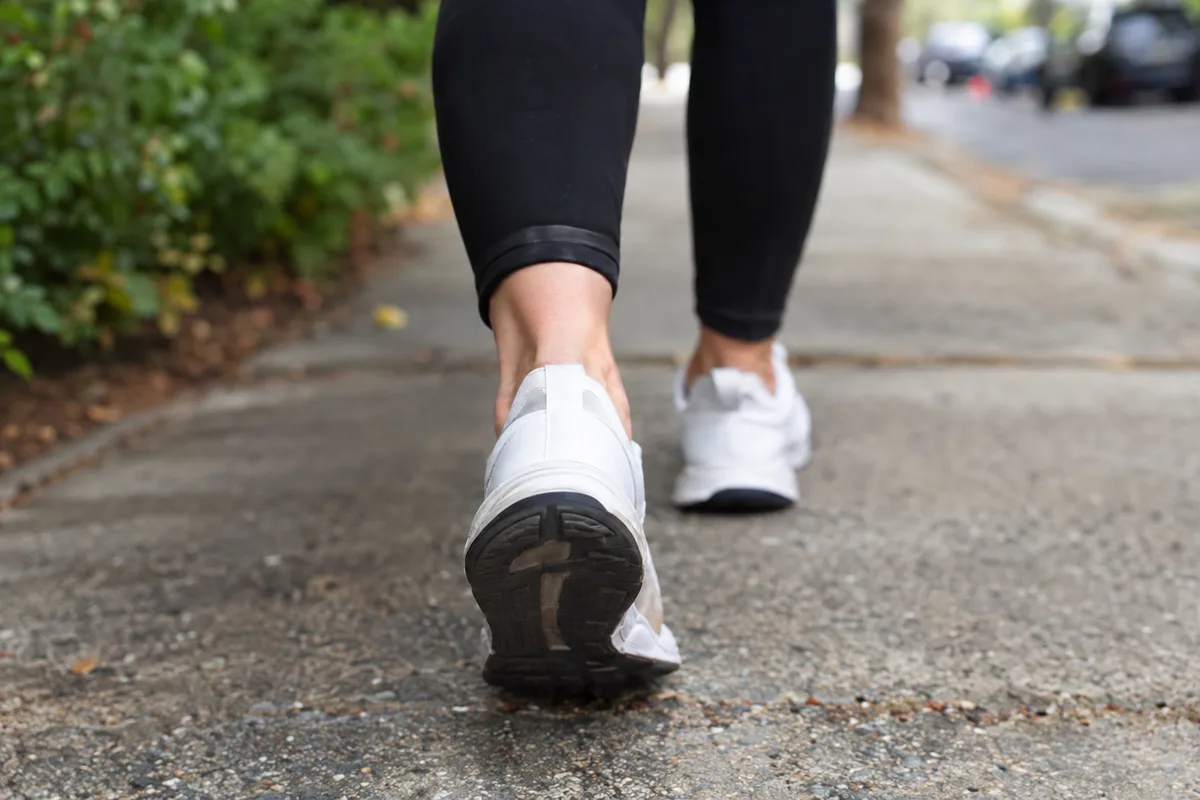
Once you know your baseline, choose an increase that feels manageable. The exact addition depends on your fitness, schedule and how your body responds. A gradual rise is often easier to maintain than a sudden jump.
- Notice which days naturally include more walking.
- Identify long periods when you usually sit.
- Separate ordinary days from unusually active or inactive ones.
- Choose a first target that fits your current routine.
Build more walking into ordinary days
Extra steps do not have to come from one long walk. Short bouts spread through the day can be easier to fit around work, meals and other commitments. They still add to your daily movement.

Attach walking to things you already do so it becomes part of your routine. You might walk after a meal, take a longer route or move during a break. Choose options that feel practical enough to repeat regularly.
- Walk part of a familiar journey.
- Take a short walk during a work break.
- Use stairs when that is comfortable and practical.
- Walk while having an in-person conversation.
- Add a loop around the block before going indoors.
Use pace and terrain as well as step count
Not every step requires the same effort. Brisk walking, slopes and stairs usually demand more energy than slow walking on flat ground. This means two days with the same step total can feel very different.

You do not need to make every walk harder. A mixture of comfortable walking and more purposeful bouts may be easier to sustain. Increase one part at a time, such as duration, pace or hills, rather than changing everything together.
- Keep some walks relaxed for everyday movement.
- Add a brisk section when it feels manageable.
- Choose a gentle incline for extra effort.
- Slow down when tired or when the ground is uneven.
Connect your steps with your food log
Because you already track what you eat, compare your walking pattern with your food log over time. Look for broad trends rather than trying to match each meal with a particular walk. Daily body weight and appetite can vary for reasons that are not captured by step count alone.
Walking may change your hunger, but the effect is individual. Avoid assuming that a higher step total automatically cancels out extra food. Keep logging portions, drinks, snacks and cooking ingredients as consistently as you can.
- Review food intake and activity over a run of ordinary days.
- Note whether longer walks affect your appetite or meal timing.
- Keep portions consistent when testing a new walking routine.
- Do not add food automatically just because you walked more.
Adjust the target by what you can sustain
A useful step target is one you can repeat without it taking over your day. If the target regularly leaves you very tired or keeps getting abandoned, reduce it and rebuild more gradually. Consistency matters more than reaching a fashionable number occasionally.
Review your progress after you have followed the routine for a while. If your weight trend is not moving in the direction you want, examine both your food log and your activity pattern before making a small adjustment. The number of steps needed will still depend on you, so treat the target as a flexible tool rather than a guarantee.
- Keep the target steady long enough to judge the routine.
- Raise it gradually when the current level feels comfortable.
- Lower it when recovery or scheduling becomes difficult.
- Review walking and food intake together.
- Focus on a routine you can maintain.