
How to Keep Pasta on the Menu While Losing Weight
Pasta does not need to disappear when you are trying to lose weight. The key is to track it consistently, build a satisfying meal around it and notice what affects your total intake.
Pasta can fit into your overall intake
Weight loss depends on your overall pattern of eating, not on avoiding one particular food. Pasta provides carbohydrate and therefore contributes energy, but that does not make it unsuitable for your goal. What matters is how much you serve, what you add and how the meal fits into the rest of your day.
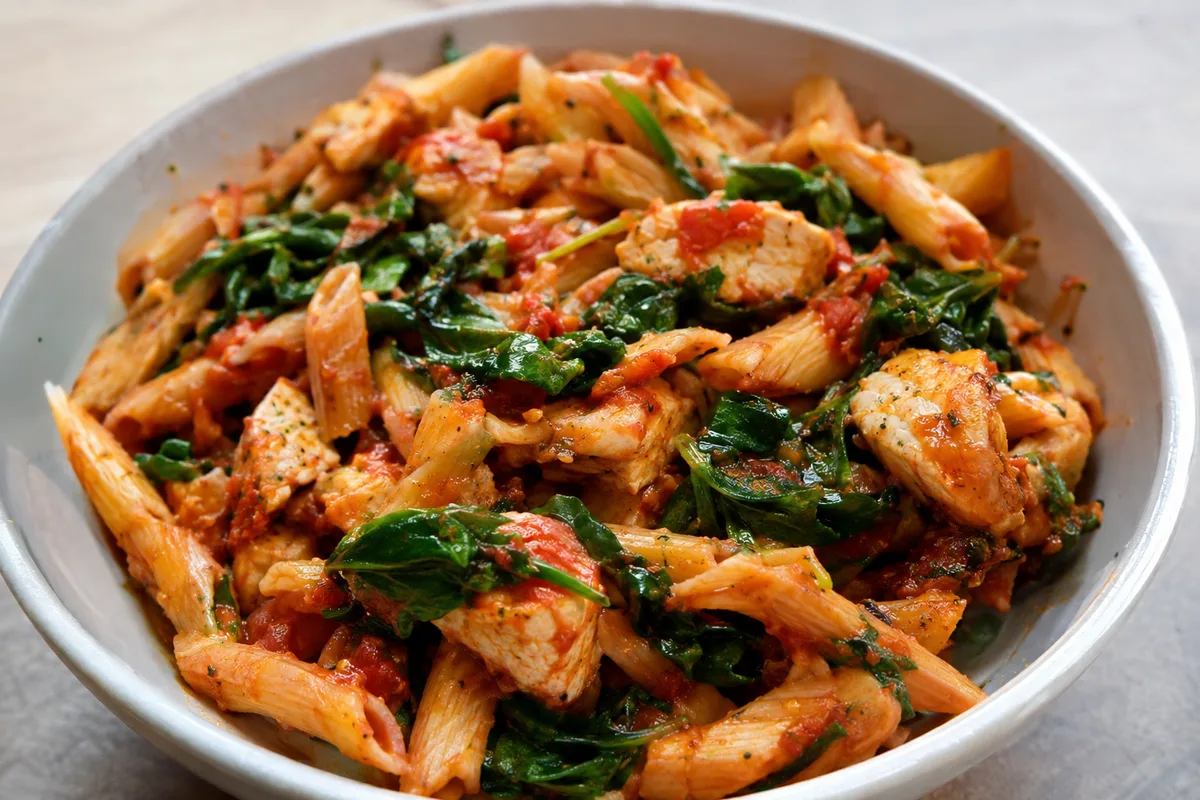
Because you already track your food, look at pasta as one part of the daily picture. A larger serving may leave less room for other foods, while a moderate serving can sit alongside vegetables and a source of protein. The right amount depends on your appetite, activity and chosen energy target.
- Plan the meal before serving rather than logging it afterwards
- Check how the portion fits with the rest of your day
- Adjust the amount using your own tracking history
- Keep favourite pasta meals in your routine if they fit your plan
Track the portion in a consistent way
Pasta changes weight when it cooks because it absorbs water. This can cause confusion if you sometimes log the dry weight and sometimes log the cooked weight. Use the entry that matches the state in which you measured it.
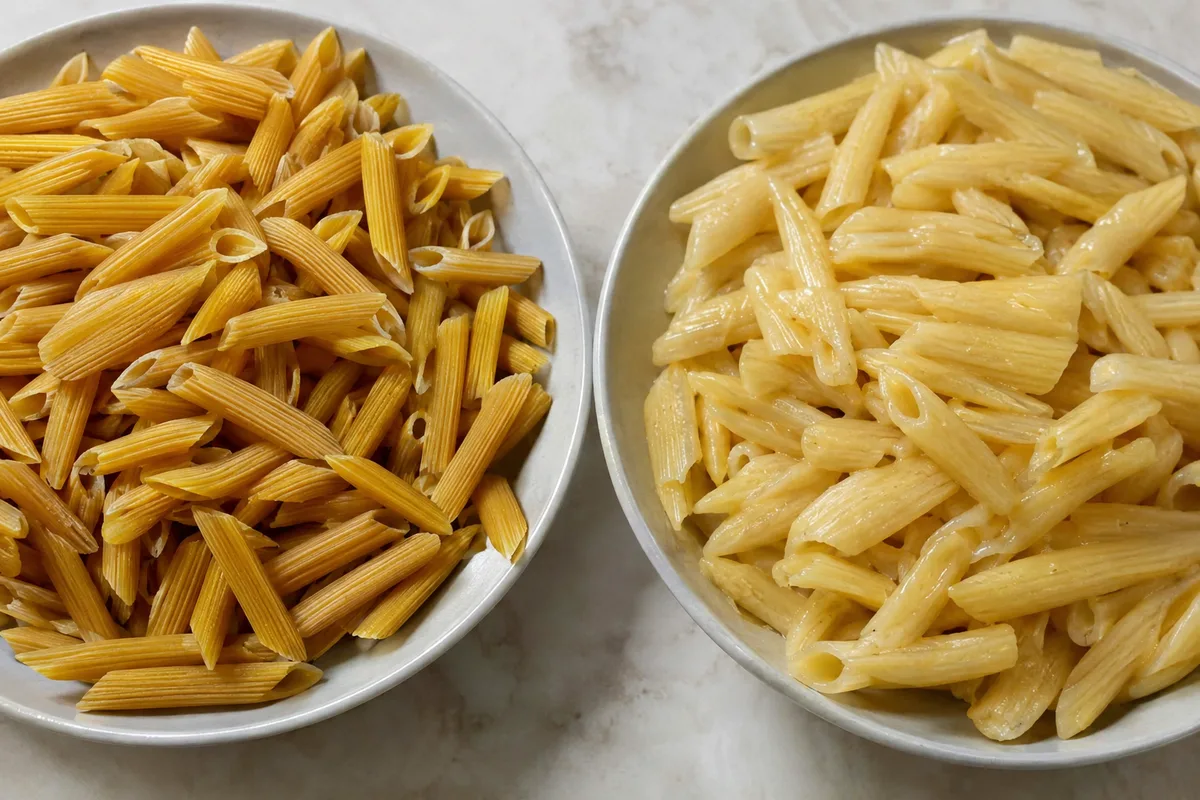
Food labels commonly describe dry pasta, while tracking databases may include both dry and cooked entries. Read the entry carefully and avoid switching between methods without noticing. Consistency matters more than choosing one method over the other.
- Measure dry pasta and select a dry pasta entry
- Or measure cooked pasta and select a cooked pasta entry
- Log only the amount you actually put on your plate
- Save your usual meal combination if that makes repeated tracking easier
Build volume with vegetables
A bowl containing only pasta and sauce can be easy to eat quickly without feeling especially substantial. Adding vegetables increases the amount of food on the plate and brings fibre, texture and colour. This can make a moderate pasta portion feel more like a complete meal.
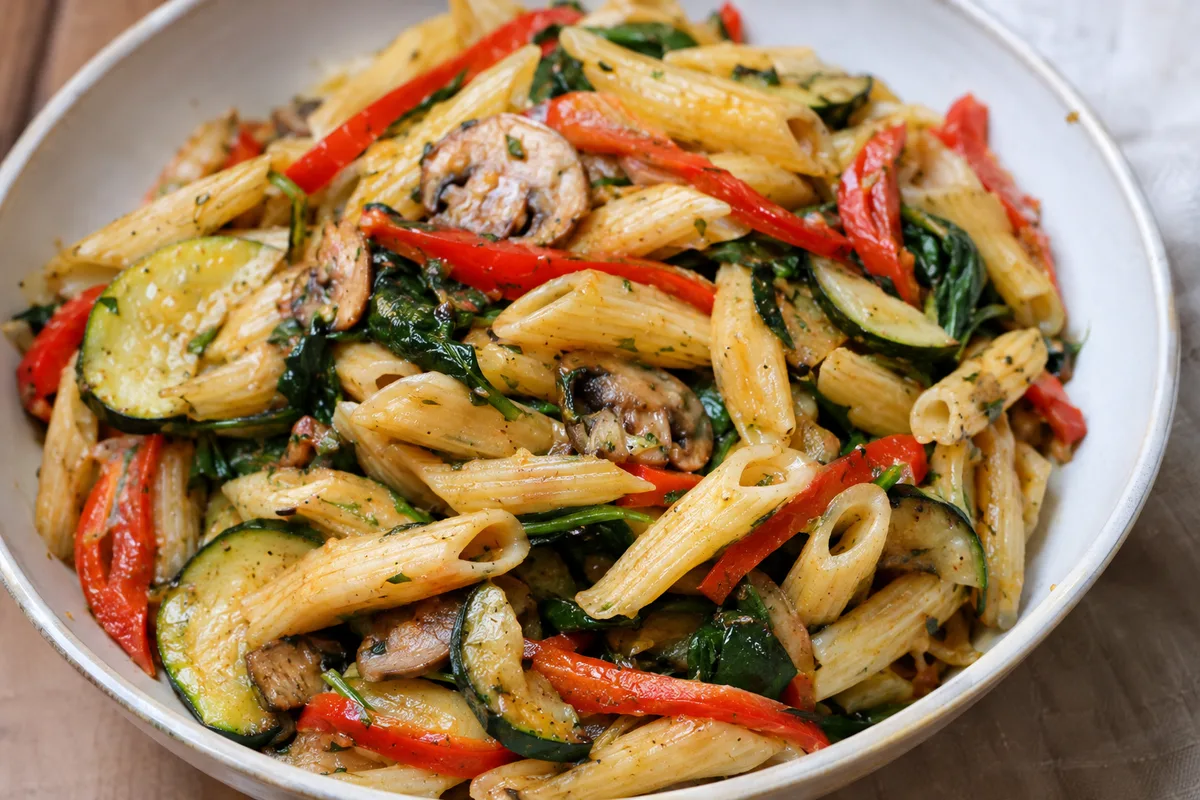
Choose vegetables that suit the sauce rather than treating them as a separate obligation. Tomatoes, mushrooms, spinach, courgette, peppers, broccoli and aubergine can all work in pasta dishes. Fresh, frozen and tinned options can be useful, provided you log any oil or rich sauce added during cooking.
- Stir spinach or peas into the pan near the end
- Roast peppers, courgette or aubergine and fold them through
- Add mushrooms to a tomato-based sauce
- Serve pasta with broccoli, green beans or a leafy salad
Include a source of protein
Protein can help make a pasta meal more satisfying and balanced. Instead of relying on a very large mound of pasta, combine a moderate portion with a protein food and vegetables. The best choice is one you enjoy and can track reliably.
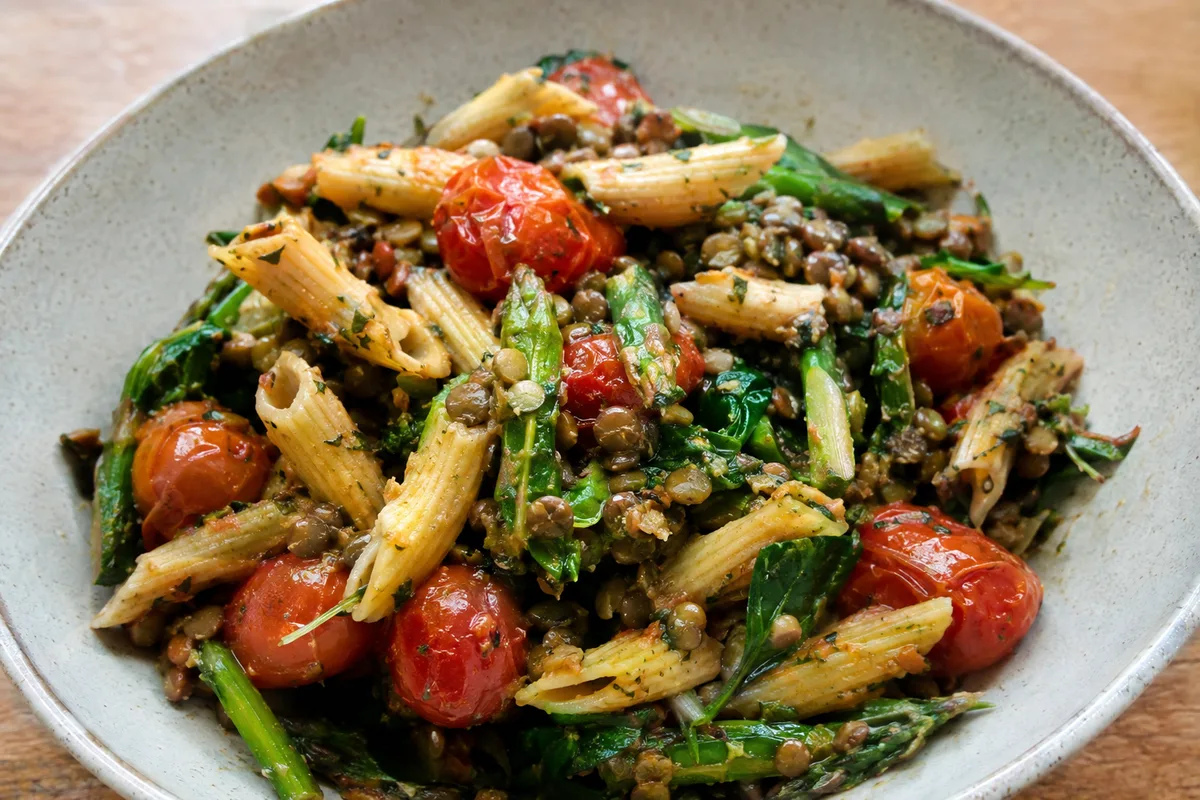
Chicken, fish, eggs, beans, lentils, tofu and lower-fat dairy foods can all work with pasta. Some protein foods also bring a notable amount of fat, which is not automatically a problem but may affect the meal's energy content. Enter each ingredient so the full dish is represented in your log.
- Add chicken and roasted vegetables to tomato pasta
- Mix beans or lentils into a vegetable sauce
- Serve pasta with fish, tomatoes and greens
- Use tofu with noodles, vegetables and a measured dressing
- Add egg to a pasta dish with peas and spinach
Pay attention to sauces and extras
The pasta itself may not be the most energy-dense part of the meal. Oil, butter, cream, cheese, pesto and dressings can add a great deal in a small volume. These foods can still fit, but pouring or sprinkling without noticing makes the meal harder to track.
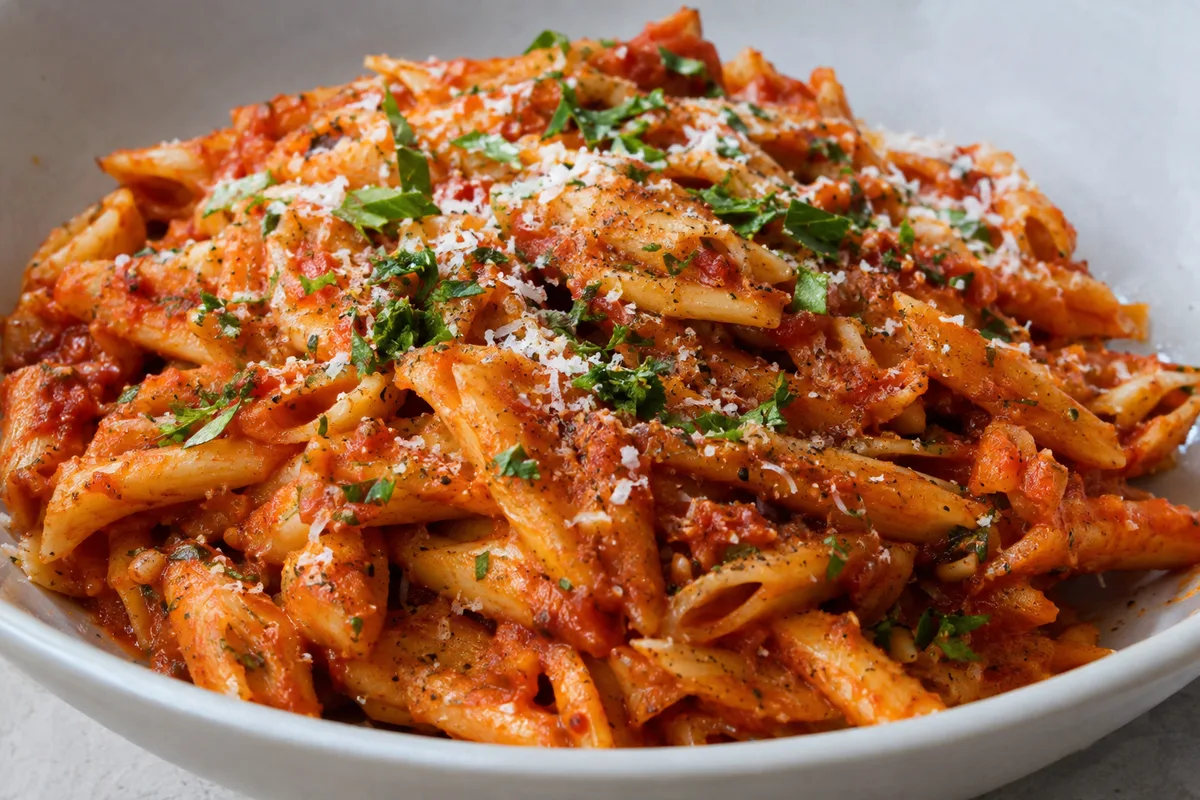
You do not have to replace every rich ingredient with a lighter one. Decide which additions contribute most to the taste, then use them deliberately. A flavourful sauce, herbs, garlic, chilli, lemon or black pepper can help the dish feel complete without relying on several rich extras at once.
- Measure cooking oil before it goes into the pan
- Log cheese, pesto and creamy sauces separately
- Use pasta cooking water to loosen a thick sauce
- Choose one rich finishing ingredient rather than adding several automatically
- Taste before adding more oil or cheese
Use your food log to refine the meal
Your tracking record can show whether a pasta meal works well for you. Notice how satisfied you feel afterwards, whether you tend to add unplanned extras and how the meal affects your choices later in the day. One meal does not need to be perfect for the overall pattern to support your goal.
If you are often hungry soon afterwards, try changing the structure before deciding pasta is the problem. You might add more vegetables or protein, reduce a rich extra, or adjust the pasta portion in either direction. Review several similar meals because appetite and activity vary from day to day.
- Note whether the meal kept you satisfied
- Compare dry or cooked entries for consistency
- Look for forgotten oil, cheese, bread or drinks
- Repeat combinations that are enjoyable and easy to track
- Make one adjustment at a time so its effect is clearer