
Does drinking magnesium citrate help you lose weight?
Magnesium citrate can affect digestion and fluid balance, which may look like weight loss for a short time. This article explains what that change means and what to focus on when tracking food for fat loss.
What magnesium citrate actually does
Magnesium citrate is a form of magnesium that mixes readily with water. It draws water into the bowel and can make stools softer or easier to pass. This effect is about digestion, not about burning body fat.

After drinking it, you may pass more stool and water than usual. That can make your body weight lower at the next check, but the change is usually temporary. As you eat and drink normally, some or all of that weight is likely to return.
- It moves water into the bowel
- It can speed up bowel movements
- It does not block calories from food
- It does not make stored body fat disappear
Why the scale can move without fat loss
Body weight includes much more than body fat. It also reflects water, food being digested and waste waiting to leave the body. Changes in any of these can move the scale even when your amount of body fat has not changed.
Magnesium citrate mainly affects water and bowel contents. It does not create the sustained energy gap needed for fat loss. A lower reading soon after taking it should therefore not be treated as evidence that your eating plan is working faster.
- Less water held in the digestive system
- Less stool in the bowel
- Normal day-to-day changes in hydration
- Different amounts of food still being digested
What drives a reduction in body fat
Body fat tends to decrease when your body uses more energy than it receives over time. Your food log can help you see whether your usual intake supports that pattern. One meal or one day matters less than the habits repeated across many days.

Magnesium citrate does not meaningfully change the energy in the food you record. Protein and carbohydrate provide about 4 kcal per gram, while fat provides about 9 kcal per gram. Those energy values remain the same whether or not you take magnesium citrate.
- Look at trends rather than a single weigh-in
- Record drinks, oils, sauces and small bites
- Keep portions consistent enough to compare days
- Review patterns across several days
Why using it for weight loss can backfire
Taking magnesium citrate to force a lower scale reading can lead to frequent loose stools and fluid loss. It may also cause stomach discomfort, cramping or nausea. These effects do not represent extra body fat being used for energy.
Repeated use can also disrupt the balance of water and minerals in the body. If you are already losing a lot of fluid, adding strenuous exercise or restricting drinks can make you feel worse. Follow the product directions and speak with a qualified healthcare professional if you are unsure whether it is appropriate for you.
- Stop treating short-term fluid loss as fat loss
- Do not take more to chase a lower reading
- Pay attention to dizziness, weakness or ongoing discomfort
- Get prompt medical help for severe pain, fainting or persistent vomiting
Getting magnesium from everyday foods
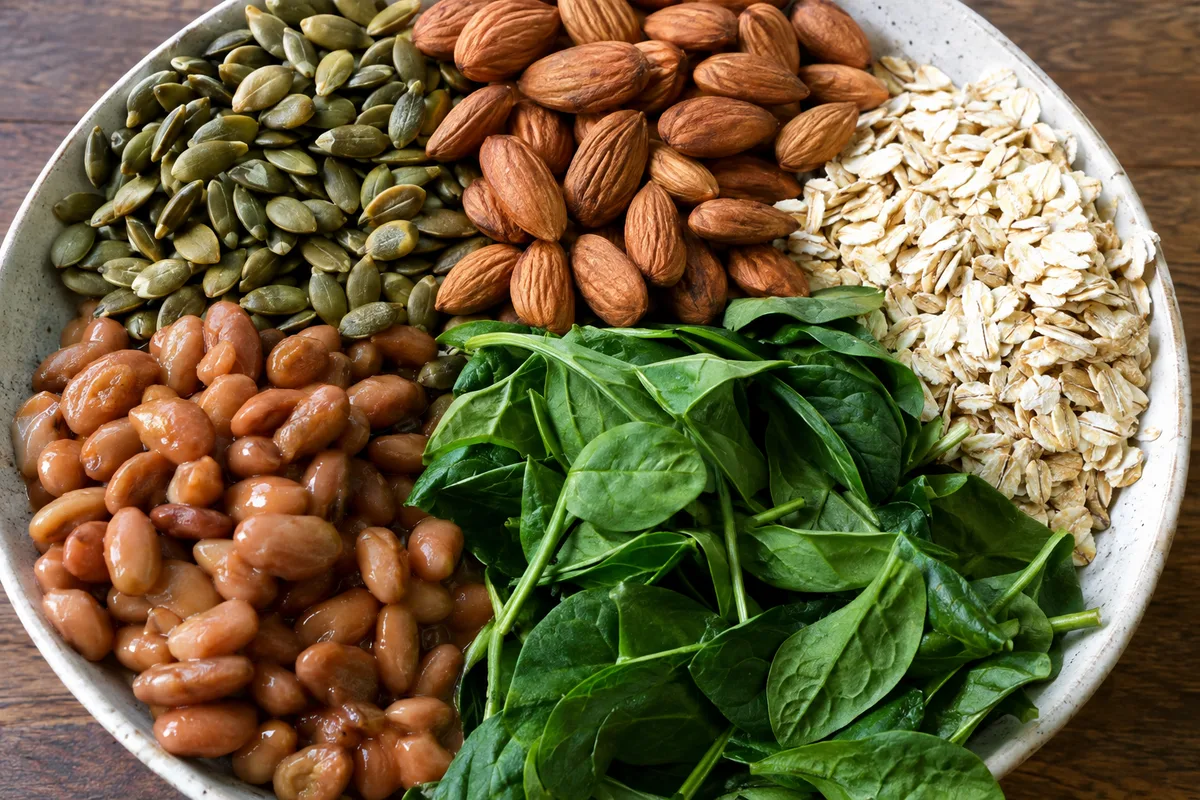
Magnesium is naturally present in a range of foods, so a varied diet can contribute to your intake. Sources include nuts, seeds, beans, wholegrains and leafy green vegetables. These foods provide other nutrients as well, including fibre and protein in some cases.
When logging these foods, record the portion you actually eat. Nuts and seeds are compact sources of energy, while beans and vegetables can add volume and fibre to a meal. The right amount depends on your overall intake, preferences and goals.
- Pumpkin seeds or other seeds stirred into yoghurt
- Beans or lentils added to soups and salads
- Wholegrain bread, oats or brown rice
- Spinach and other leafy green vegetables
- Almonds, cashews or other nuts
A more useful way to judge progress
If your goal is fat loss, keep magnesium citrate separate from your progress assessment. Continue logging meals honestly and use consistent conditions when reviewing body-weight trends. This makes ordinary changes in food, fluid and digestion less distracting.
It also helps to track signs that are not tied to a single number. Consider how your routine fits your appetite, energy and daily life. A sustainable plan should not depend on deliberately emptying the bowel or losing fluid.
- Compare weight trends under similar conditions
- Check whether meals contain protein, fibre and satisfying portions
- Choose regular movement you can repeat
- Adjust your food plan from patterns in your log, not one reading