
Bungee fitness: benefits, limits and what to expect
Bungee fitness uses a harness and elastic cord to support jumps, runs and floor-based exercises. This guide explains its possible benefits, how a class feels and how to approach energy tracking without relying on inflated calorie estimates.
What bungee fitness involves
In bungee fitness, you wear a padded harness attached to an elastic cord above you. The cord takes some of your weight and stretches as you squat, jump, lean or travel across the floor. Its tension also helps pull you upwards, which creates the floating feeling associated with the activity.
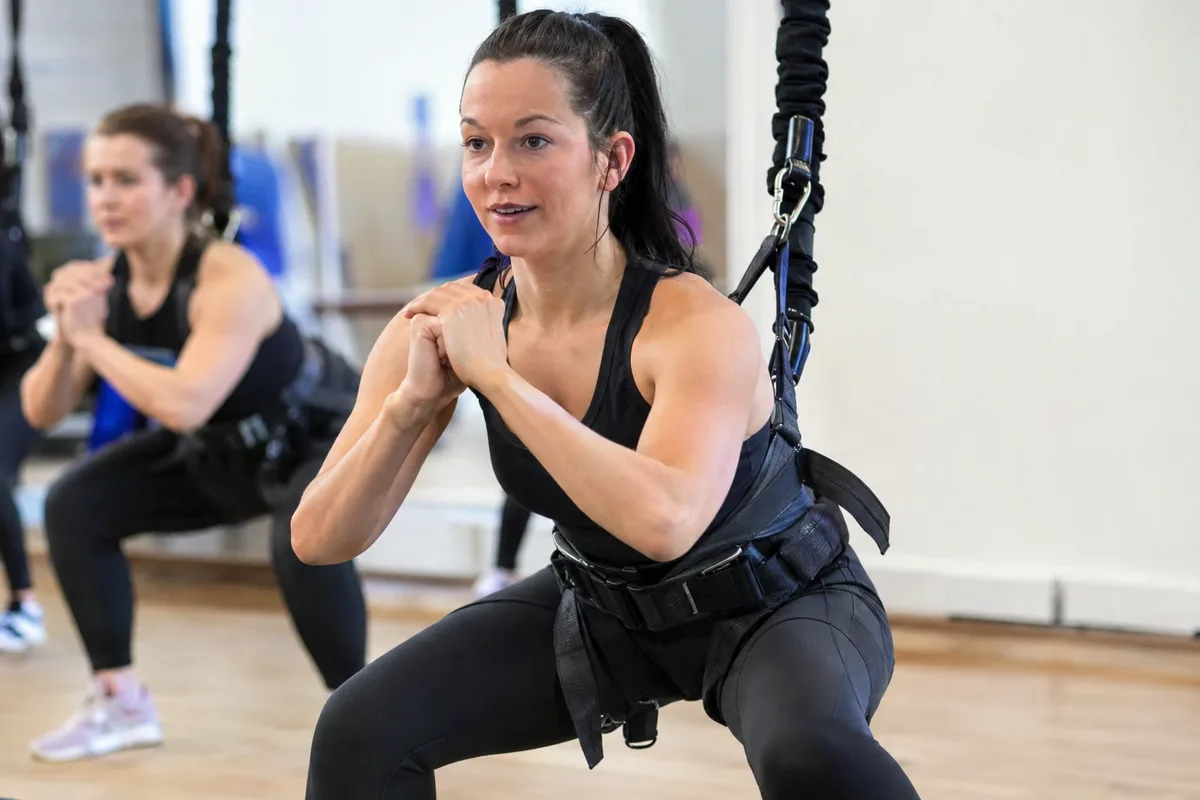
Classes usually combine repeated movements into short routines, often set to music. You might practise supported squats, lunges and running steps before learning larger jumps or forward leans. The exact exercises depend on the space, equipment and instructor.
Although the cord provides support, it does not do all the work. You still need to control your body, keep your balance and return to the floor steadily. Learning how the harness and cord respond is an important part of the session.
- Supported squats and lunges
- Running or skipping steps
- Small jumps and controlled landings
- Forward leans and push-off movements
- Short movement sequences
A lively form of cardio
Repeated jumps, running steps and quick changes of direction can raise your breathing and heart rate. The cord may make larger movements feel more approachable because it helps lift you away from the floor. However, the effort can still build quickly when a routine has few pauses.
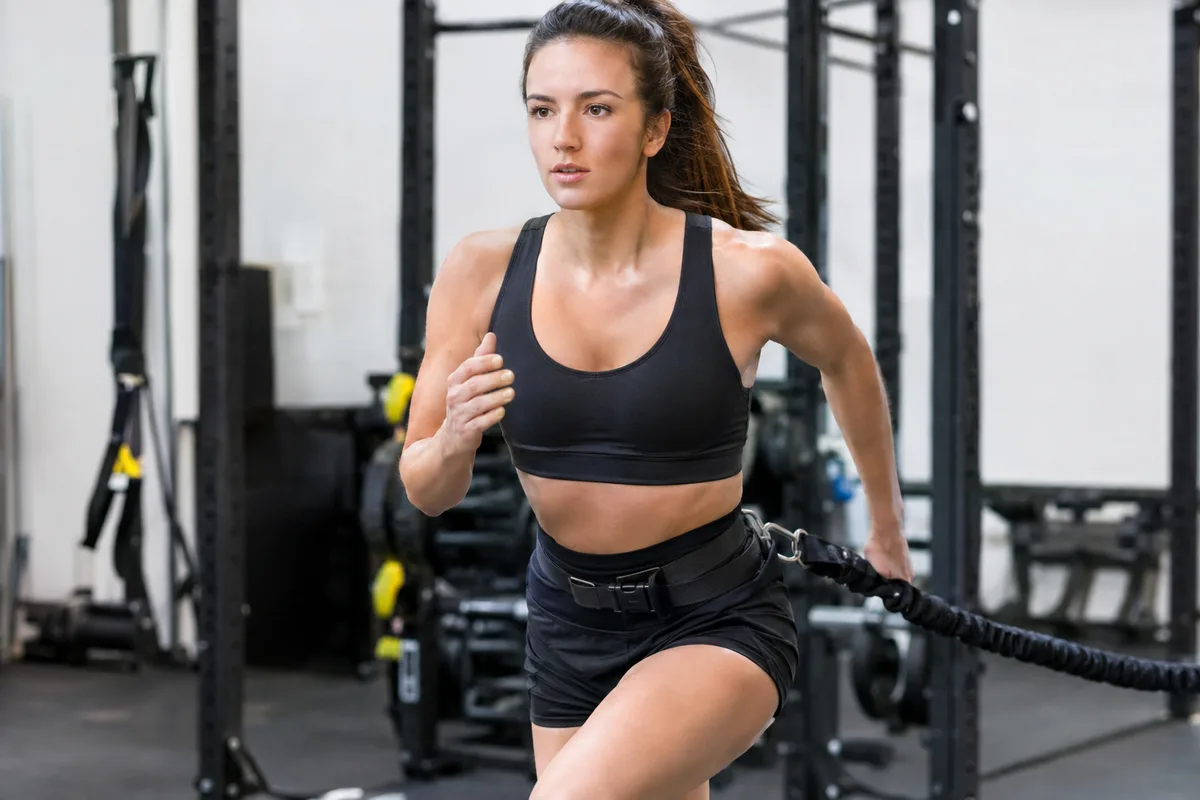
Bungee fitness may appeal if you find conventional cardio repetitive. Following a sequence gives you something to focus on besides how long you have been moving. Music and group timing can also make a session feel more like learning a routine than completing a standard workout.
How demanding the class feels depends on the pace, cord tension, movement range and rest periods. A beginner session may spend more time on technique, while a more advanced class may link movements together for longer. Taking smaller steps or jumps is a practical way to reduce the intensity while learning.
- Use smaller movements when a routine feels too fast
- Pause between sequences rather than losing control
- Keep landings quiet and steady
- Build speed only after learning the movement pattern
Support for strength and control
Bungee routines often include squats, lunges, plank-like positions and repeated pushes from the floor. These movements ask your legs and trunk to produce force while the cord pulls in another direction. Your shoulders and arms may also work when you reach, press or support part of your body weight.
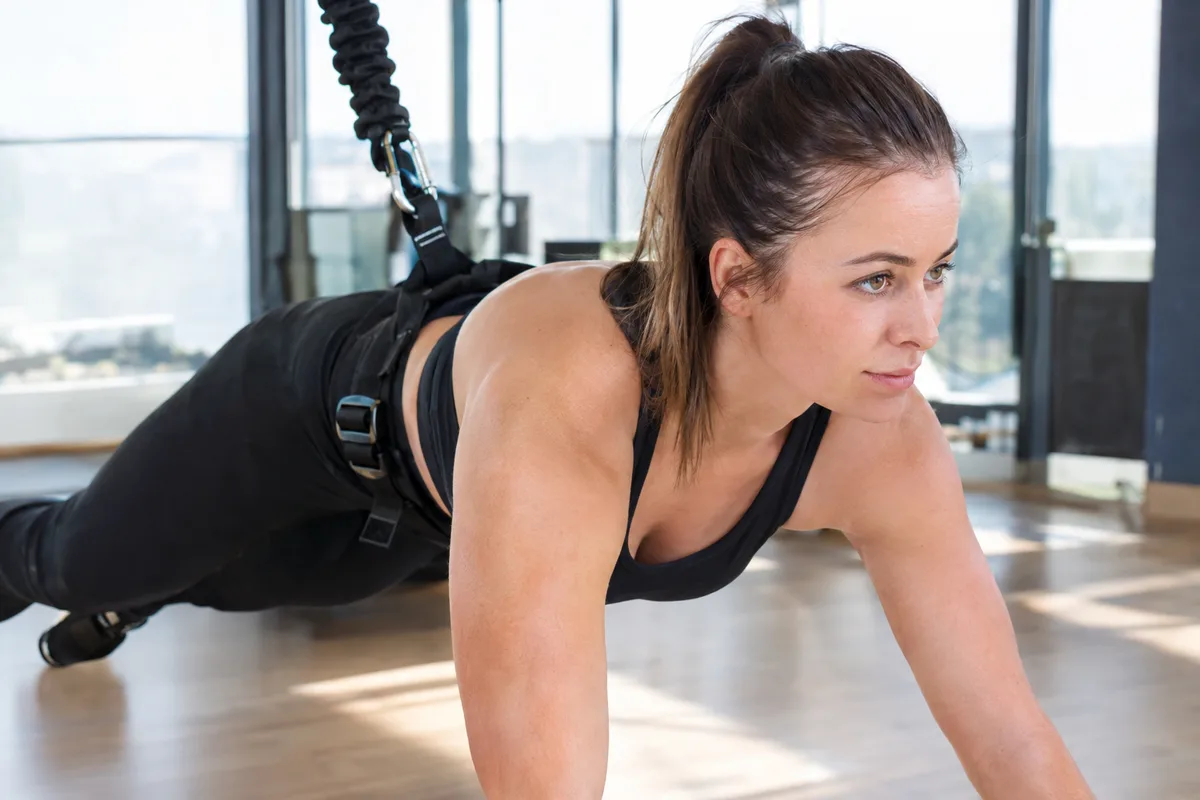
The changing pull of the cord creates a balance challenge. You need to brace your middle, control your position and adjust as the cord stretches or recoils. This can help you practise coordination and body awareness alongside strength.
The harness can make some body-weight movements feel different rather than simply easier. For example, it may assist the upward phase of a squat while requiring control as you move back down. Clear instruction matters because rushing against the cord can make technique less stable.
- Legs work during squats, lunges and push-offs
- The trunk helps control leaning and rotation
- Arms contribute during reaches and floor work
- Balance is challenged as cord tension changes
Less force on some landings
The upward pull of the bungee can reduce some of the force you experience when returning to the floor. That can make jumping movements feel gentler than performing the same jumps without support. The effect depends on how the equipment is adjusted and how you land.
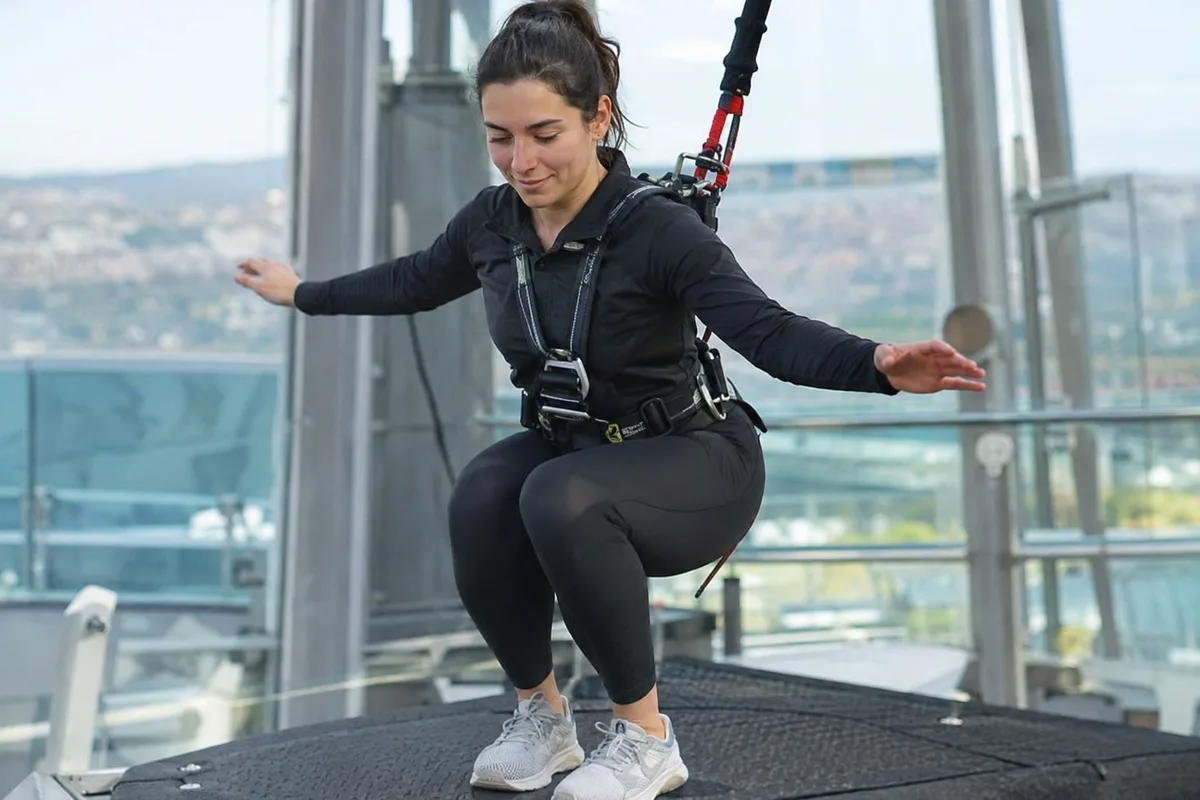
Lower force does not mean no force. The harness creates pressure around the hips and waist, and repeated movement can still feel demanding. Controlled technique, suitable cord tension and enough space remain important.
A well-run introductory class should include time to check the harness and practise basic positions. Tell the instructor if the harness pinches, rubs or shifts while you move. Stop if you feel pain, faintness or a loss of control rather than trying to finish the routine.
- Check that the harness sits securely before moving
- Practise small bounces before larger jumps
- Land with control rather than relying on the cord
- Keep clear of other cords and participants
Enjoyment can support consistency
A useful workout is one you are willing and able to repeat. Bungee fitness offers novelty, music and skills to learn, which some readers may find more engaging than steady exercise. Enjoyment is personal, so trying an introductory session can help you judge whether the format suits you.

Progress is not limited to jumping higher. It can mean following a sequence more smoothly, using better control or completing a movement with fewer pauses. These practical signs may be more helpful than comparing your performance with others in the class.
Bungee fitness does not need to replace every other kind of activity. It can sit alongside walking, strength work, mobility practice or other movement you enjoy. Allowing time between demanding sessions can also help you return with better control.
- Notice whether your technique feels steadier
- Track which movements you can complete comfortably
- Record the session length and general effort
- Plan recovery around how demanding the class felt
How it fits with food and calorie tracking
A bungee session uses energy, but there is no single reliable calorie figure for every class. The amount depends on your body, the session length, the pace, the exercises and how much rest you take. Even classes with the same name can involve very different levels of effort.
Wearable devices and exercise machines can only estimate activity energy. It is sensible to treat any displayed figure as a rough guide rather than an exact amount to eat back. Logging the type of class, duration and perceived effort may give you more useful context over time.
Exercise can also affect hunger differently from one day to another. Keep tracking your usual meals and notice patterns without assuming that every class requires a fixed food adjustment. If you need extra fuel around a session, familiar options containing carbohydrate and some protein can be practical.
- Banana with yoghurt
- Toast with egg
- Oats with milk
- Rice with beans or chicken
- Fruit with a small handful of nuts