
Burdock Root Tea: Possible Benefits, Side Effects and What to Track
Burdock root tea is an earthy herbal drink, but many claims about it go further than the available evidence. This guide explains what it may offer, what can go wrong and how to record it accurately.
What burdock root tea is
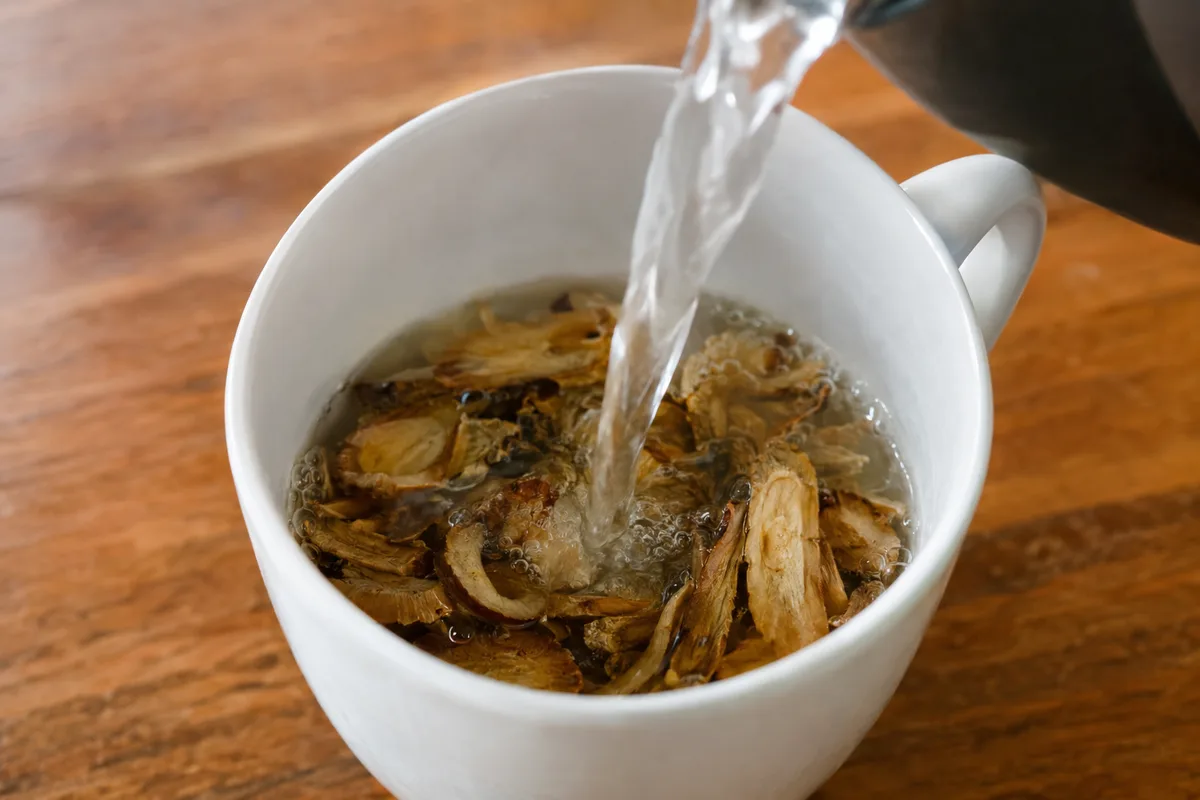
Burdock root tea is made by steeping dried or fresh burdock root in hot water. It has an earthy, slightly sweet flavour that can become bitter when brewed for longer. Pure burdock tea does not naturally contain caffeine, although blends may include other ingredients.
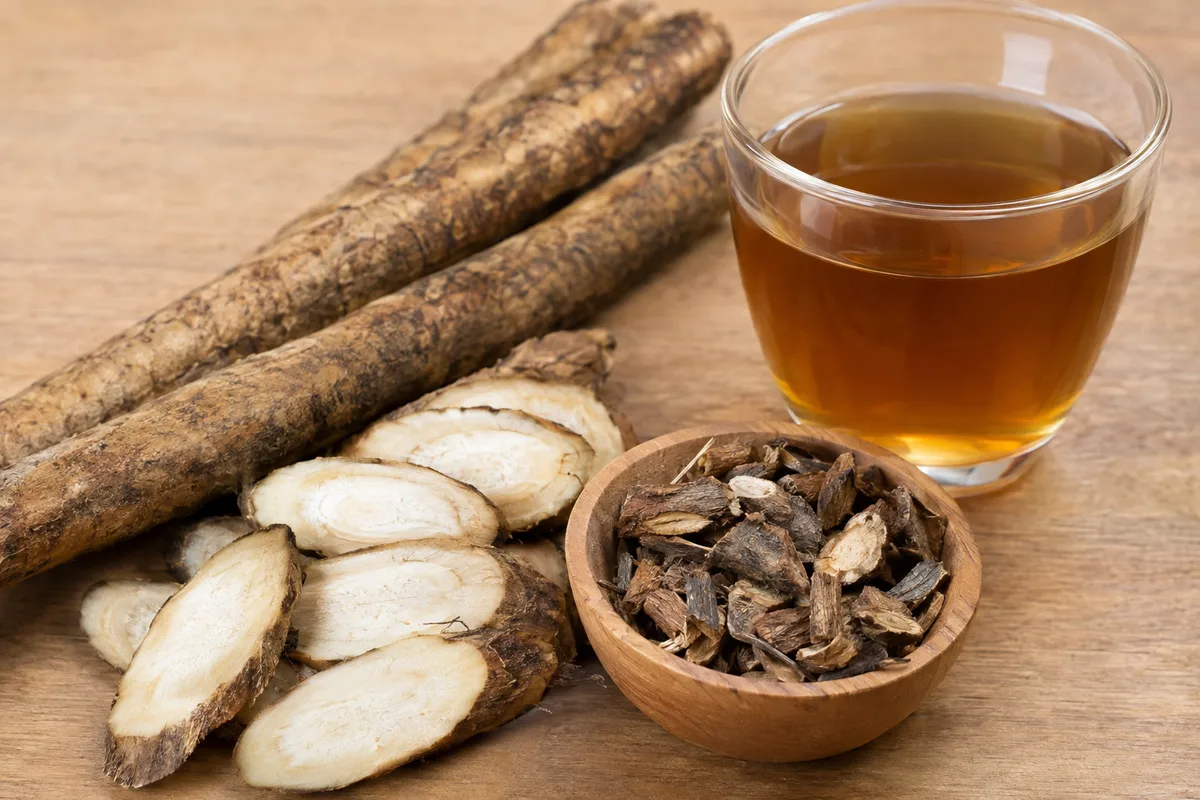
Burdock is also eaten as a root vegetable in some cuisines. A tea infusion is different because the solid root is removed, so most of its fibre stays behind. The strength and composition of the drink depend on the amount of root, the water temperature and the brewing time.
- Check whether the tea contains burdock alone or a blend of herbs
- Expect a woody, earthy taste rather than the flavour of ordinary tea
- Remember that an infusion does not provide the same fibre as eating the root
- Read the preparation instructions because brewing strength varies
What the possible benefits really mean
The clearest practical benefit is that burdock tea adds variety to fluid intake. A warm, caffeine-free drink can also suit an evening routine or replace a drink containing added sugar. These benefits come from the way the tea is used rather than from a guaranteed special effect of burdock.
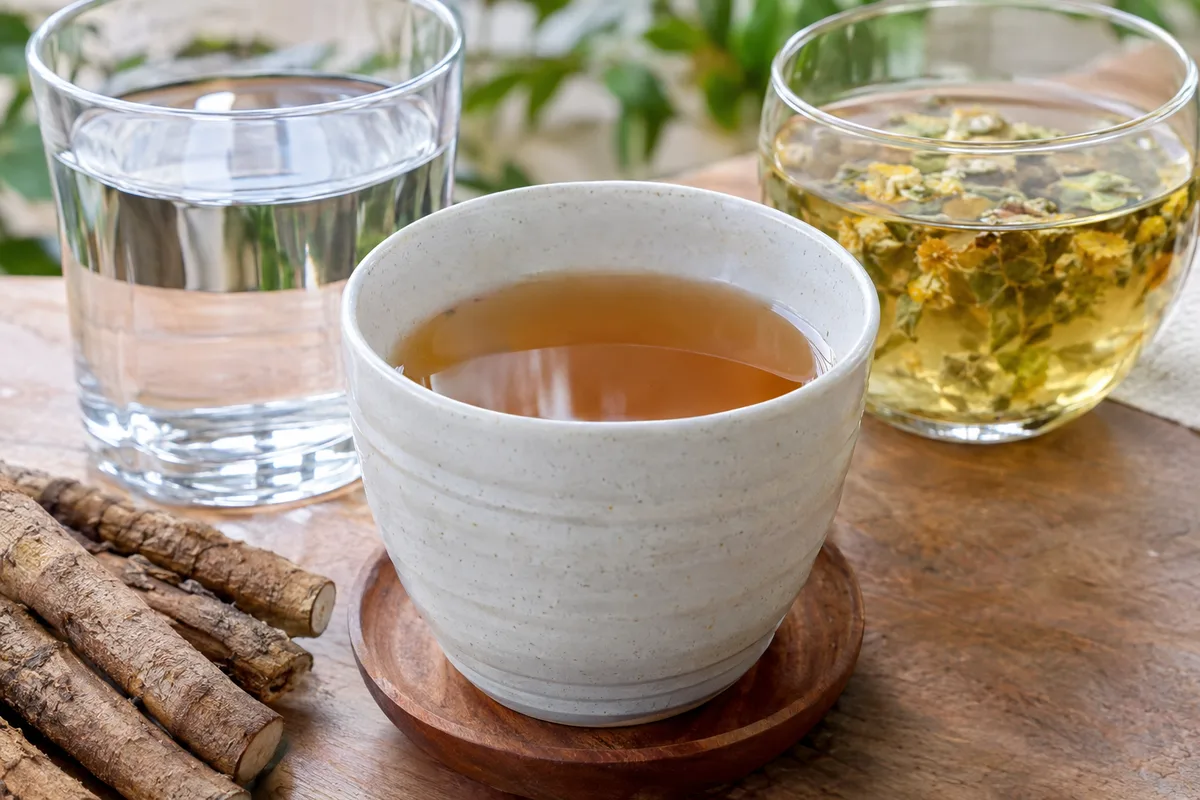
Burdock contains plant compounds that can pass into an infusion in varying amounts. However, finding a compound in a plant does not prove that a cup of tea will produce a noticeable benefit in the body. Claims about cleansing, rapid physical changes or broad health improvements should therefore be treated cautiously.
Enjoyment matters too. If the flavour encourages you to choose an unsweetened drink that fits your eating pattern, that is a reasonable benefit. It is still a beverage rather than a shortcut around varied meals, sleep and regular movement.
- Offers a naturally caffeine-free option when made only from burdock
- Can contribute to everyday fluid intake
- May replace a sweetened drink if served without sugar or syrup
- Provides a warming drink with a distinctive flavour
How to record it in your food diary
Plain burdock root tea usually contributes little energy because the root is strained out. The exact amount depends on the product and preparation, so use the label when one is available. Do not log cooked burdock root as though it were the strained tea, because they are nutritionally different.
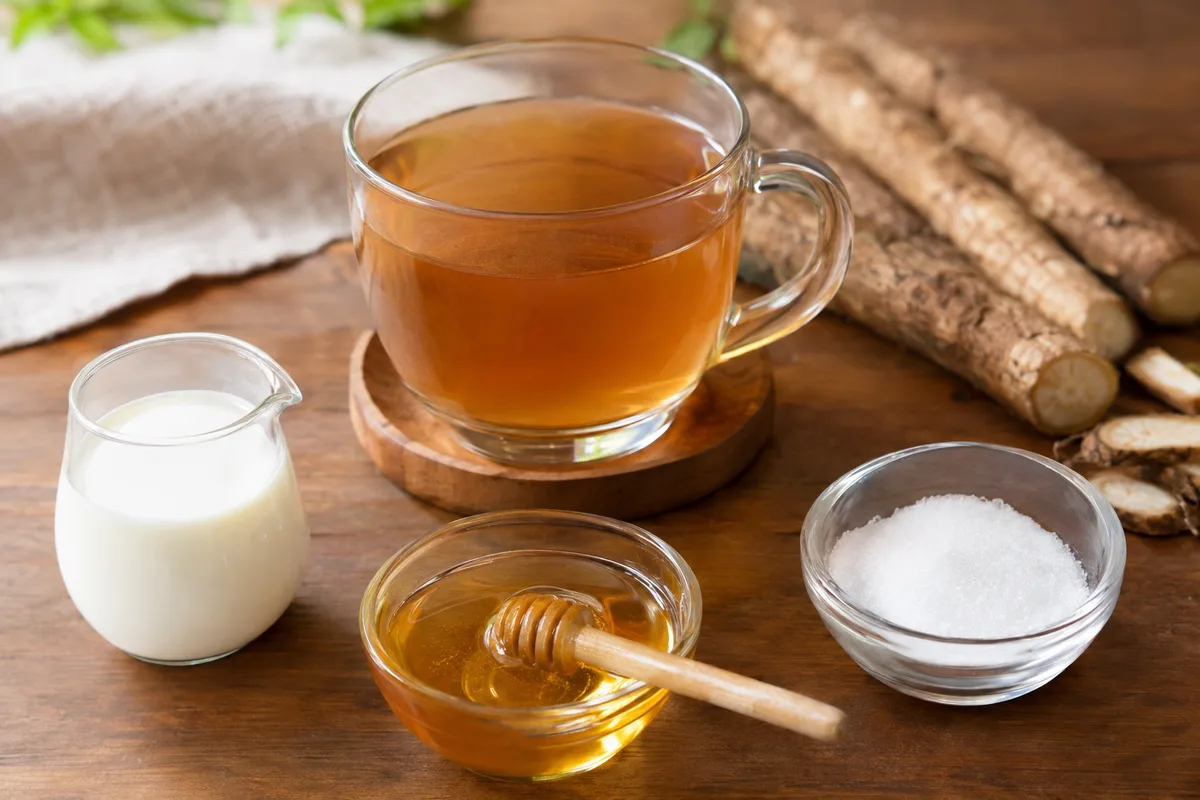
Milk, honey, sugar and syrups can change the drink's energy and carbohydrate content. Record these additions separately if your tracking app does not include them in the tea entry. For a packaged blend, check for fruit pieces, sweeteners or powdered ingredients that remain in the cup.
Consistency is more useful than chasing a perfectly exact entry. Use the same suitable listing for the same drink and serving method. If you prepare a concentrated brew or consume pieces of the root, create a recipe from the actual ingredients instead.
- Log plain strained tea using the product label where possible
- Add milk or a plant-based alternative separately
- Record honey, sugar or syrup in the amount used
- Create a recipe entry for homemade blends or concentrated preparations
Possible side effects
Burdock tea can cause unwanted effects even though it is sold as a herbal drink. Some people may notice stomach discomfort, loose stools or nausea after drinking it. A larger or stronger serving may not be better tolerated than a mild one.
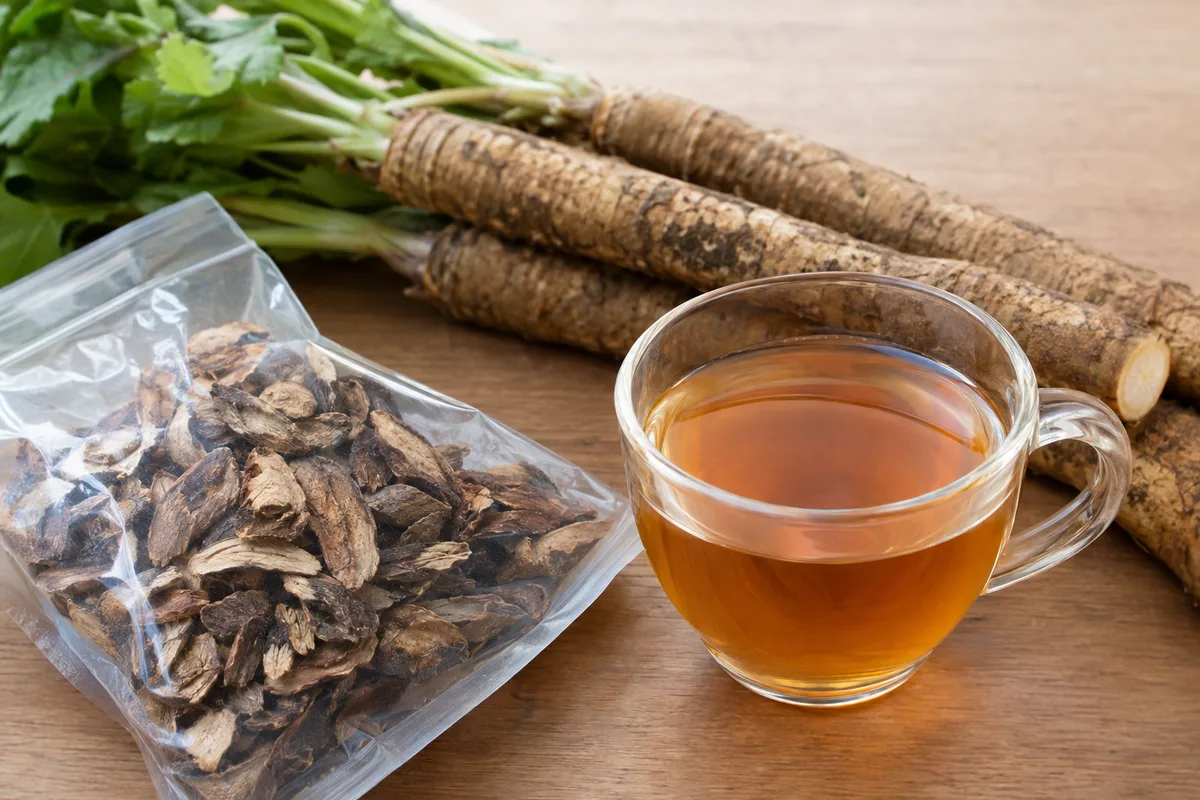
Plants related to burdock can trigger a reaction in sensitive individuals. Warning signs can include itching, swelling, a rash or difficulty breathing. Stop using the tea and seek urgent professional help if a severe reaction occurs.
Burdock tea may also increase urination for some people, which can be inconvenient and may affect fluid balance. Evidence about the frequency and strength of this effect is limited. Pay attention to how you feel rather than assuming every response is a sign that the tea is working.
- Stomach discomfort
- Nausea or loose stools
- Itching, swelling or a rash
- More frequent urination
- Difficulty breathing, which requires urgent help
When extra caution makes sense
Herbal products can affect the body and may not suit every circumstance. Ask a qualified health professional before using burdock tea regularly if you take regular medicines, are pregnant or breastfeeding, or have been advised to manage your fluid intake. Bring the ingredient list so the advice can cover the actual blend rather than burdock in general.
Correct identification and clean processing are important because roots can be confused with other plants or pick up unwanted substances from soil and handling. Avoid brewing a wild root unless it has been identified by someone with suitable botanical expertise. Choose sealed products with a clear ingredient list and storage instructions.
Do not use the tea to replace professional care or a prescribed routine. Marketing words such as detox, cleanse and purify do not explain a measurable benefit. If a claim sounds broad but gives no clear evidence or context, treat it as advertising rather than established fact.
- Check the complete ingredient list for added herbs
- Follow the stated storage and use-by guidance
- Avoid unidentified or casually foraged roots
- Discuss regular use with a qualified professional when personal circumstances make interactions more likely
A sensible way to try it
Start with the preparation directions on the packet and make a mild cup rather than a concentrated brew. Drink it without additions first so you can judge the flavour and how you respond. There is no universal serving amount that suits everyone.
If you enjoy it and tolerate it well, burdock tea can sit alongside water and other everyday drinks. Keep expectations modest and focus on taste, routine and accurate tracking. Stop using it if it repeatedly makes you feel unwell.
Burdock root tea is best viewed as an optional beverage, not a necessary health habit. Its most dependable advantages are variety, warmth and a caffeine-free choice when the blend is pure. Stronger benefit claims remain uncertain, while side effects and individual sensitivities are still worth taking seriously.
- Follow the product's brewing directions
- Begin with a mild infusion
- Try it without sweeteners before changing the recipe
- Notice any unwanted response
- Record all additions in your food diary