
What Does the Average Weight for a Man Really Mean?
A national average can describe a population, but it cannot tell you what one man should weigh. Understanding how the figure was calculated makes it easier to use without turning it into a goal.
There is no single worldwide average
Average weight for men differs between countries, age groups and survey years. A figure from one population may therefore be a poor comparison for someone living elsewhere or at a different stage of life.
The source matters too. Large official surveys may use measured weights, while other reports rely on figures supplied by participants, so two apparently similar statistics can produce different results. Check the location, age range, collection method and date before using any average.
Mean and median tell different stories
The mean is found by adding everyone’s weight and dividing by the number of men included. A smaller number of particularly high or low measurements can pull that result away from what is typical for most of the group.

The median is the middle measurement when all results are placed in order. It can give a different view of the same population, so a report should state clearly which average it uses rather than presenting one number without explanation.
Why an average is not a target
An average describes a group; it does not decide the best weight for an individual. Height, frame, age, muscle mass and everyday activity all affect what the scale shows, which is why the right context depends on the person.

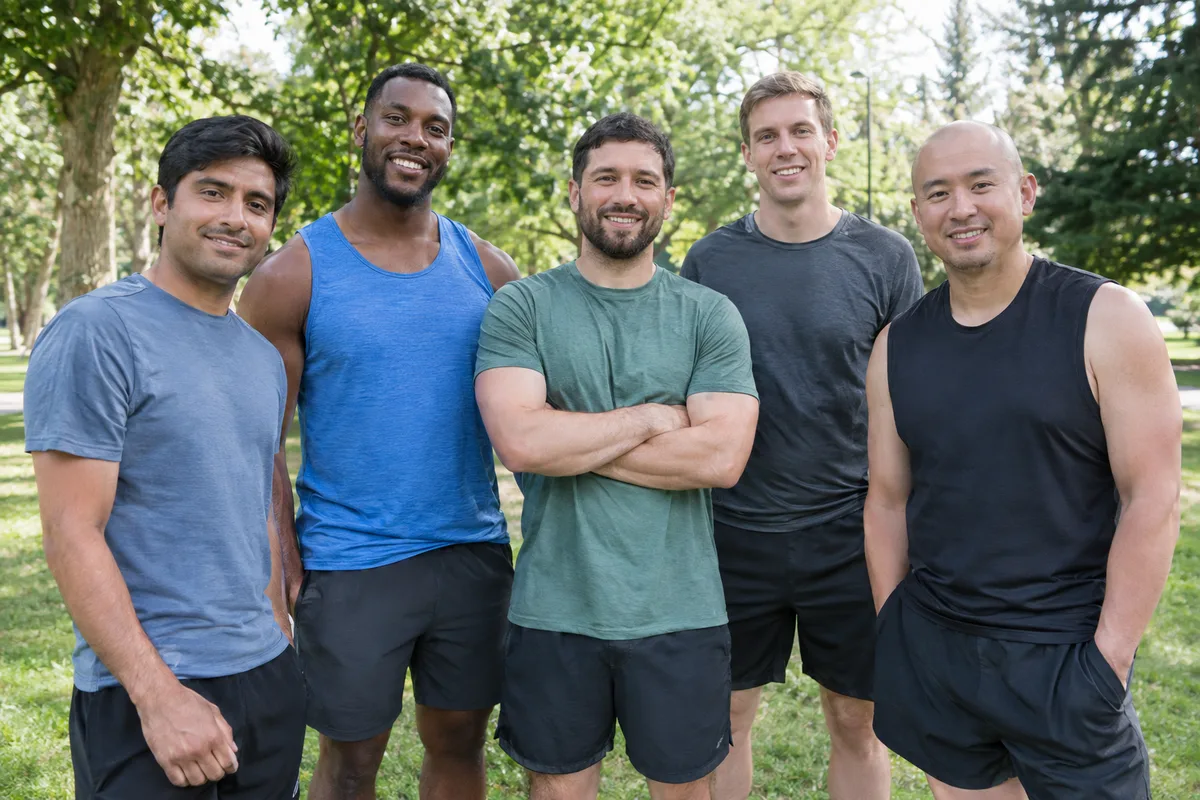
Weight also cannot show how much of the body is muscle, fat, bone or water. Two men with the same weight may have very different builds, routines and nutritional needs, making a direct comparison less useful than it first appears.
Using weight data alongside food tracking
If you already track what you eat, treat population statistics as background information rather than a daily benchmark. Look at your own weight trend over time under reasonably consistent conditions, as individual readings can shift with hydration, meal timing and clothing.
Food logs can help you notice patterns between intake, activity, hunger and gradual changes on the scale. Focus on repeated observations and personal context instead of trying to match a national average, and seek guidance from a qualified professional if you need an individual assessment.