
Barley tea: benefits, side effects and what to track
Barley tea is a roasted grain drink with a mild, nutty flavour that can be served hot or cold. This guide explains its practical benefits, possible drawbacks and how to include it in your food log.
What barley tea is
Barley tea is made by steeping roasted barley grains in water, then straining them out. Roasting gives the drink a toasted, slightly bitter flavour without needing tea leaves. It is commonly served warm, chilled or over ice.
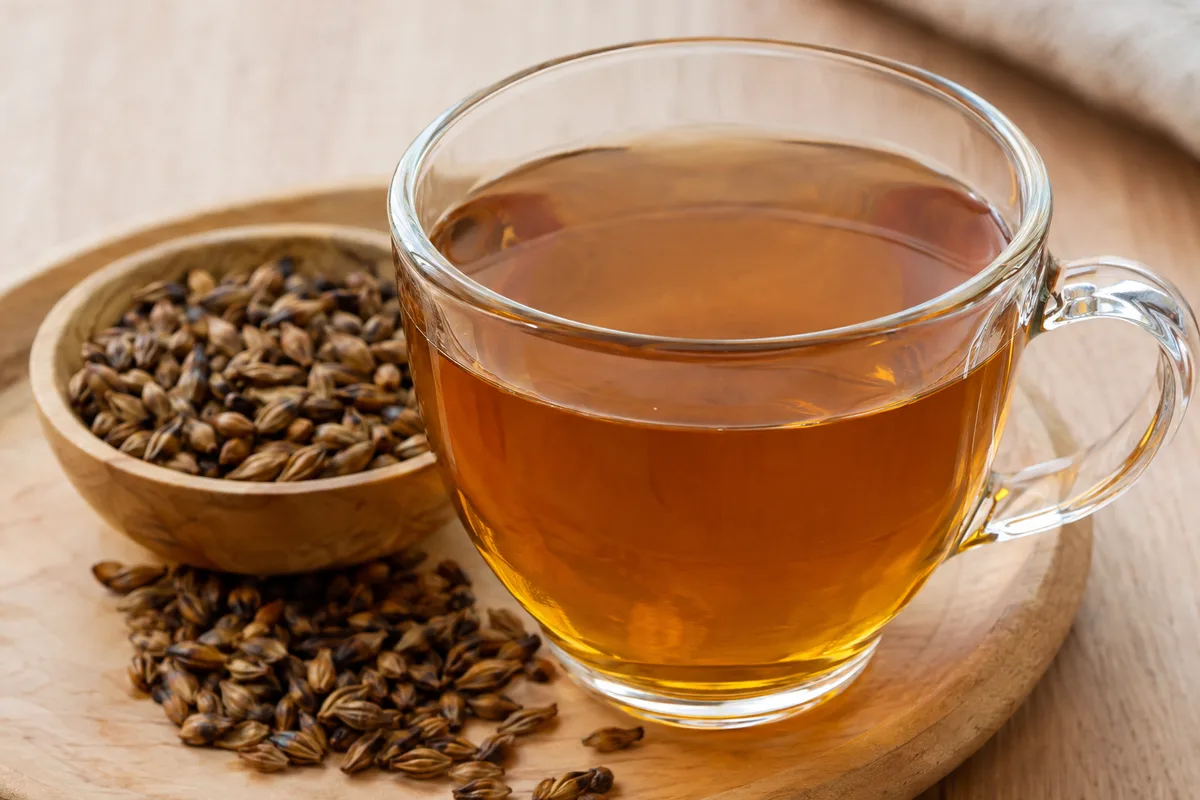
Plain barley tea is usually caffeine-free because barley does not naturally contain caffeine. However, some packaged blends include tea leaves or other ingredients that change this. Check the ingredient list rather than assuming every version is the same.
- Roasted barley grains steeped in hot water
- Barley tea bags made with crushed roasted grain
- Cold-brewed barley tea left to infuse in the fridge
- Blends containing barley alongside tea leaves or flavourings
Its main practical benefits
The clearest benefit of barley tea is that it provides fluid and can make plain water feel more varied. Its roasted taste may suit meals where a sweet drink would feel out of place. Choosing it unsweetened also avoids adding sugar to your drink.
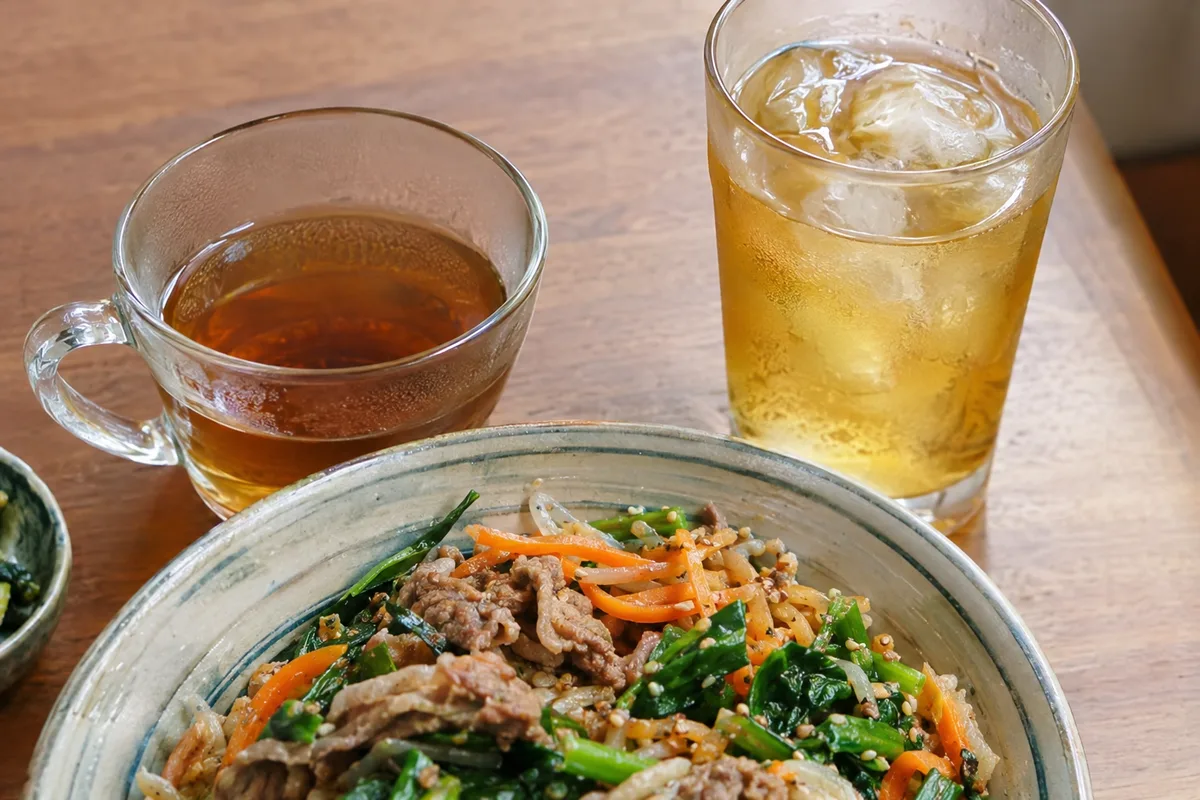
Barley contains useful nutrients as a whole grain, but a strained infusion is not the same as eating barley. Much of the fibre and other material remains in the grains after brewing. Barley tea should therefore be viewed mainly as a flavourful drink, not as a replacement for whole grains, vegetables or other nourishing foods.
Some traditional claims about barley tea go much further than the evidence allows. A pleasant flavour, hydration and a naturally caffeine-free option are reasonable benefits to focus on. Effects beyond these depend on the ingredients, preparation and individual.
- Adds variety to daily fluid intake
- Can be enjoyed hot or cold
- Usually caffeine-free when made only from barley
- Can be prepared without sugar or syrup
Calories and food tracking
Plain strained barley tea generally contributes little energy because the grains are removed. The exact amount depends on how it is brewed and whether grain particles remain in the drink. A label is the best source when you use a packaged version.
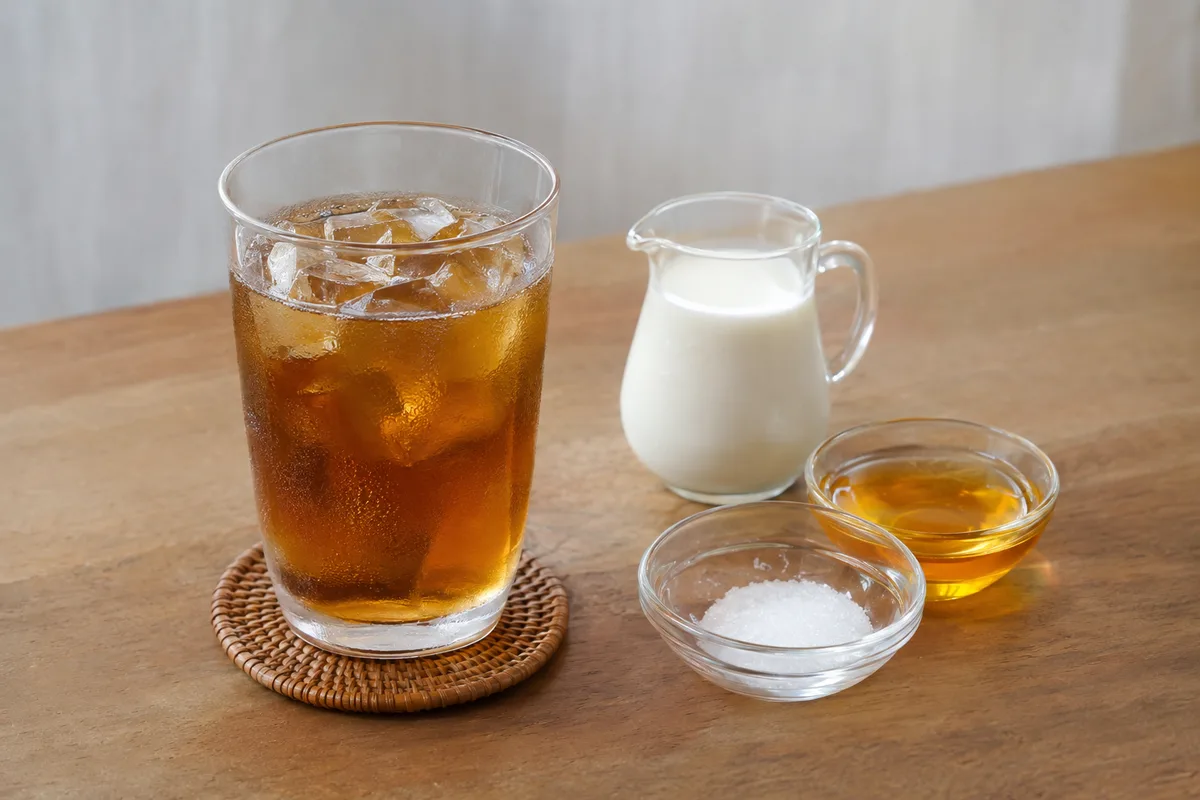
Sugar, honey, milk, cream and flavoured syrups can make a larger difference to the log than the barley infusion itself. Record these additions separately when possible. This gives you a clearer picture than treating every cup of barley tea as identical.
If you drink a homemade unsweetened brew, use the closest matching entry in your tracker and keep the method consistent. There is no need to log the dry barley as though you had eaten it when the grains were strained out. If you eat the softened barley, log that portion as food.
- Note whether the drink was sweetened
- Record milk or cream separately
- Check blends for added tea, sugar or flavourings
- Log eaten barley grains as food rather than as an infusion
Possible digestive side effects
Some individuals may notice fullness, wind or stomach discomfort after drinking barley tea. This may be more likely when grain particles remain in the drink or when the softened barley is eaten. A well-strained infusion contains less of the grain itself, but individual responses still vary.
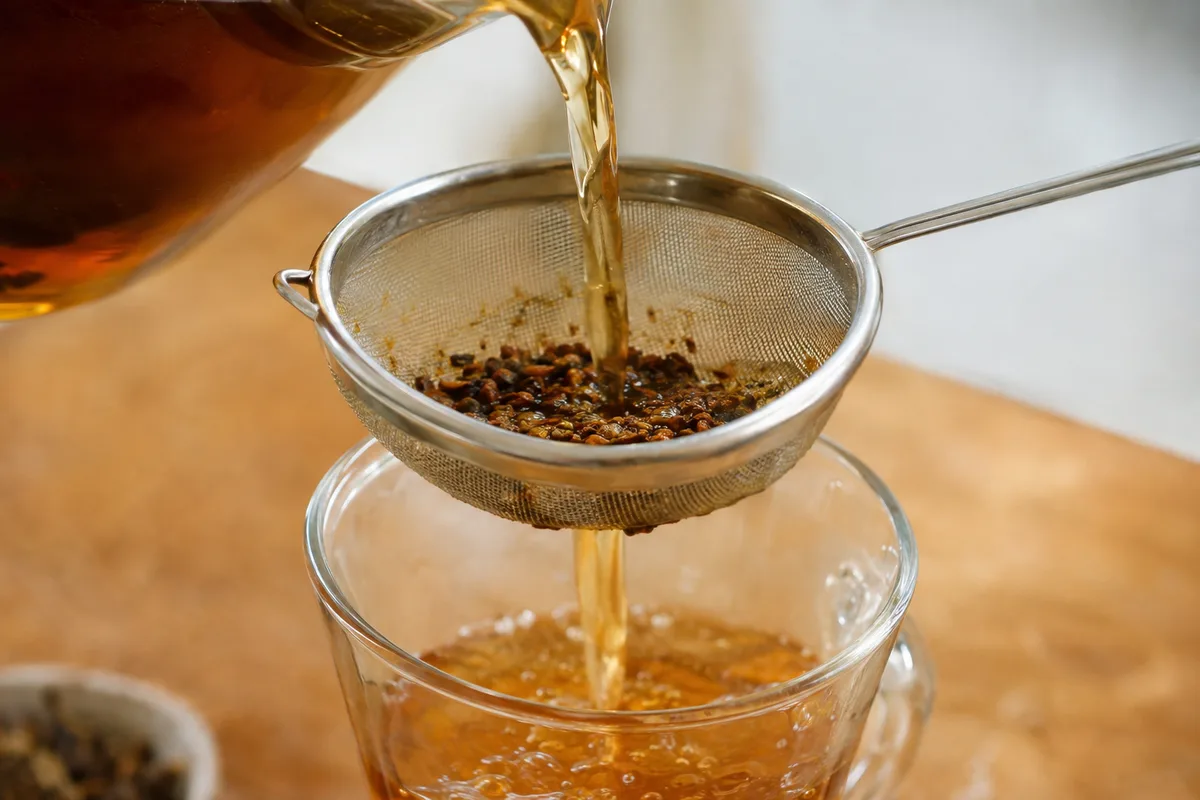
Serving size and brewing strength can also matter. If the drink repeatedly feels uncomfortable, stop having it rather than assuming that discomfort is part of a useful effect. You can also check whether another ingredient in a blend is the more likely cause.
Sweeteners and milk may affect digestion independently of the barley. When trying to identify what caused discomfort, keep the recipe simple and note each ingredient. Your food log can help reveal whether the same response follows repeated servings.
- Start with a modest serving if barley tea is new to you
- Strain loose grains thoroughly
- Check every ingredient in blended tea bags
- Note the serving size and any discomfort in your log
Barley, gluten and ingredient safety
Barley contains gluten, so barley tea is not suitable for anyone who needs to avoid barley or gluten. Straining the drink does not guarantee that it is free from barley proteins. Products labelled only as roasted grain tea may also contain barley, so the full ingredient list matters.
Do not use barley tea if barley has caused a reaction for you before. Shared preparation areas can also matter when strict avoidance is necessary. Choose drinks made from ingredients that are already known to suit you.
Packaged products sometimes combine barley with green tea, black tea, sweeteners or flavourings. These additions may introduce caffeine or ingredients you had not planned to consume. Labels can change, so check the current pack rather than relying on a previous purchase.
- Look for barley or malt in the ingredient list
- Check whether tea leaves add caffeine
- Review warnings about shared preparation
- Avoid vague grain blends when you need to know every ingredient
How to prepare and enjoy it
For a hot drink, steep roasted barley or a barley tea bag in freshly boiled water until the flavour suits you. A longer brew generally tastes stronger and more roasted. Remove the grains or bag before drinking.
For a chilled version, brew it in hot water and cool it promptly, or follow the pack directions for cold infusion. Keep prepared tea covered in the fridge and make only an amount you expect to use while fresh. Discard it if the smell, taste or appearance changes unexpectedly.
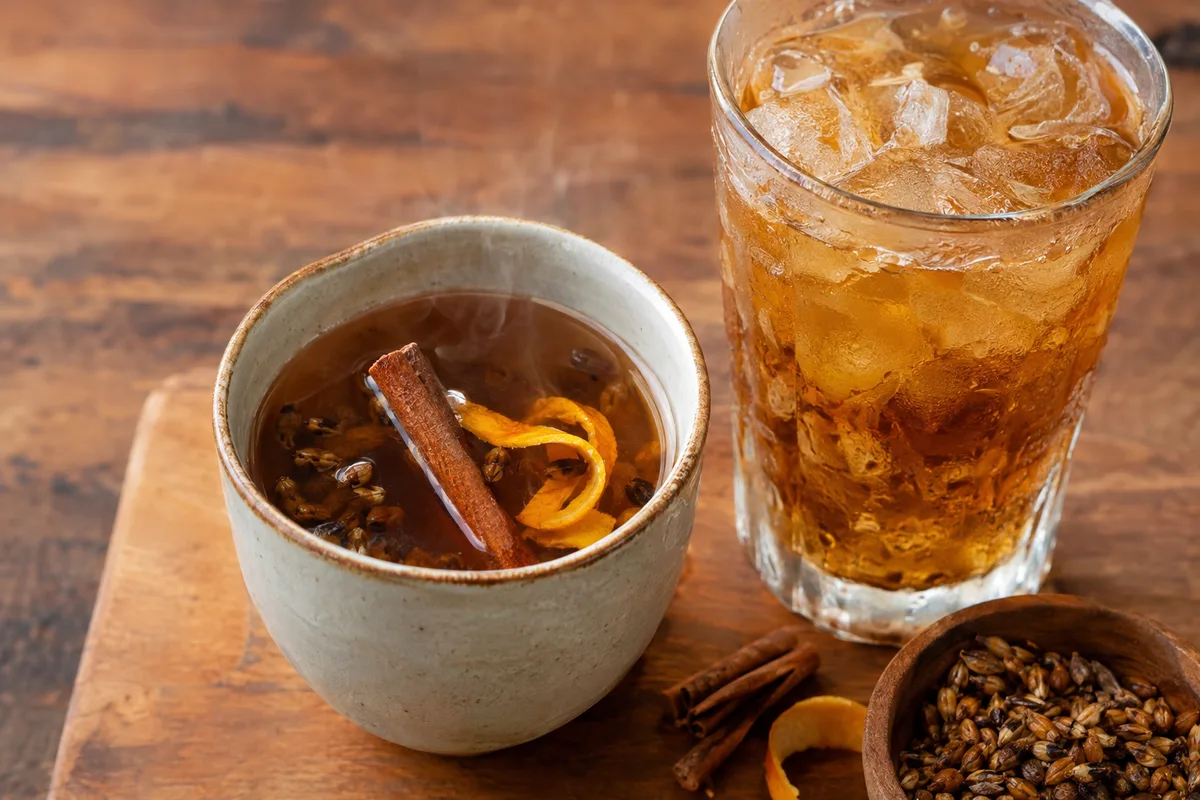
Try the tea plain before adding sweetness. Citrus peel, cinnamon or a small amount of milk can change the flavour, but each addition may alter what you record. Consistent recipes make tracking easier and help you understand which version you prefer.
- Serve warm with a meal
- Cool and pour over ice
- Add a strip of citrus peel while brewing
- Use cinnamon for a warmer flavour
- Keep added sweeteners visible in your food log