
How to Choose the Best Salad Ingredients
The best salad ingredients are the ones that make your bowl enjoyable, balanced and filling enough for its purpose. Your food log can help you adjust the mix to suit your appetite and daily targets.
Start with a varied vegetable base
Leafy vegetables such as lettuce, spinach, rocket and cabbage create a fresh base with plenty of volume. Add cucumber, tomatoes, peppers, carrots or radishes for a mixture of colours, flavours and textures.
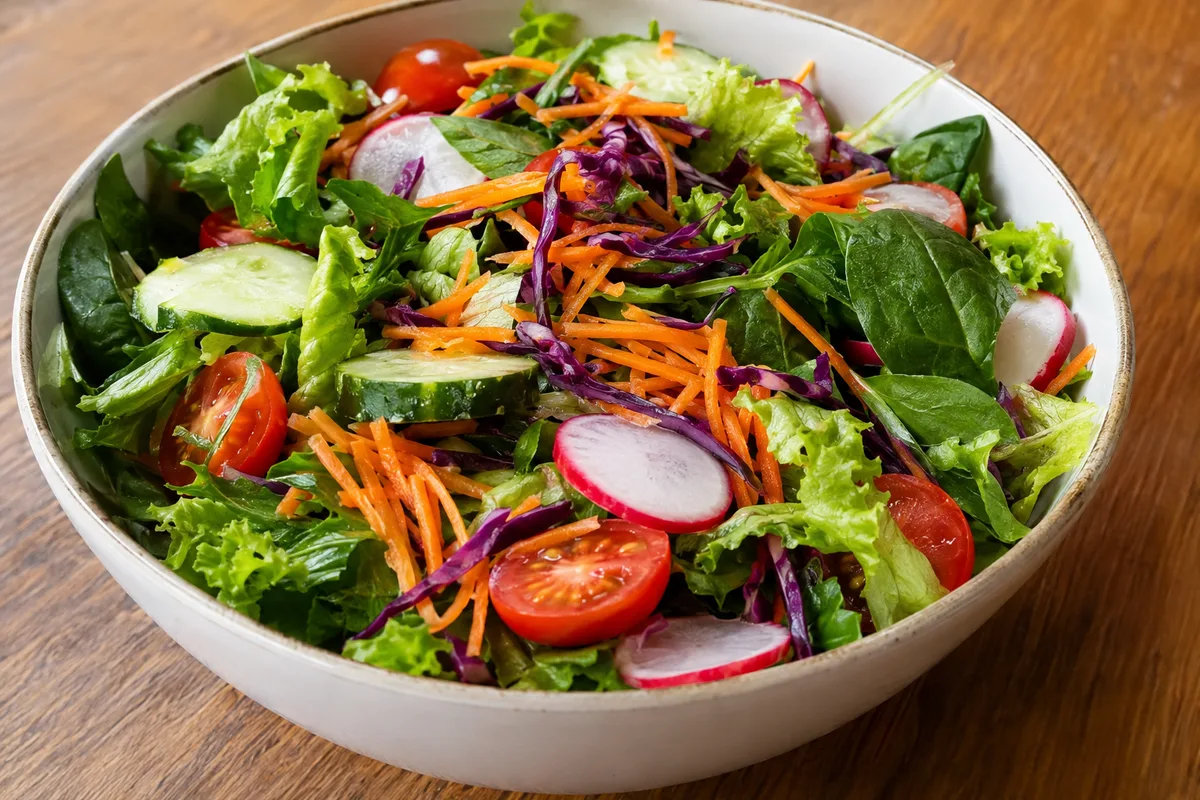
There is no single ideal combination, so use vegetables you genuinely enjoy and can find easily. If you track fibre, rotating leafy greens, crunchy vegetables and cooked vegetables can also make your entries more varied.
Add a protein source
A salad intended as a main meal usually feels more complete with a clear protein source. Eggs, chicken, fish, tofu, beans, lentils and cottage cheese are practical options, although the right choice depends on your preferences.
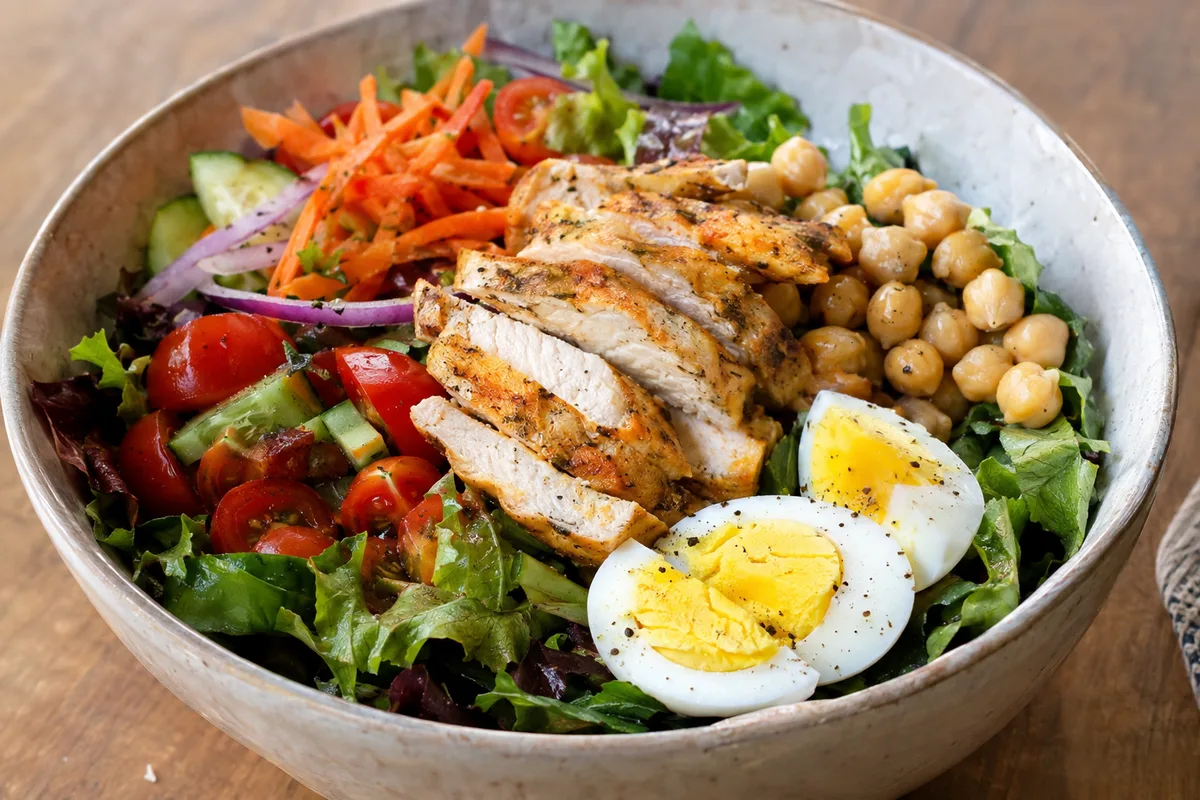
Log the portion rather than assuming every salad contains a similar amount of protein. A light scattering and a full serving can look alike once mixed through a large bowl, but they contribute differently to your daily totals.
Include carbohydrates and fats with purpose
Potatoes, rice, pasta, quinoa, couscous, beans or bread can turn a vegetable salad into a more substantial meal. The amount that fits best depends on your appetite, activity and the rest of your day.
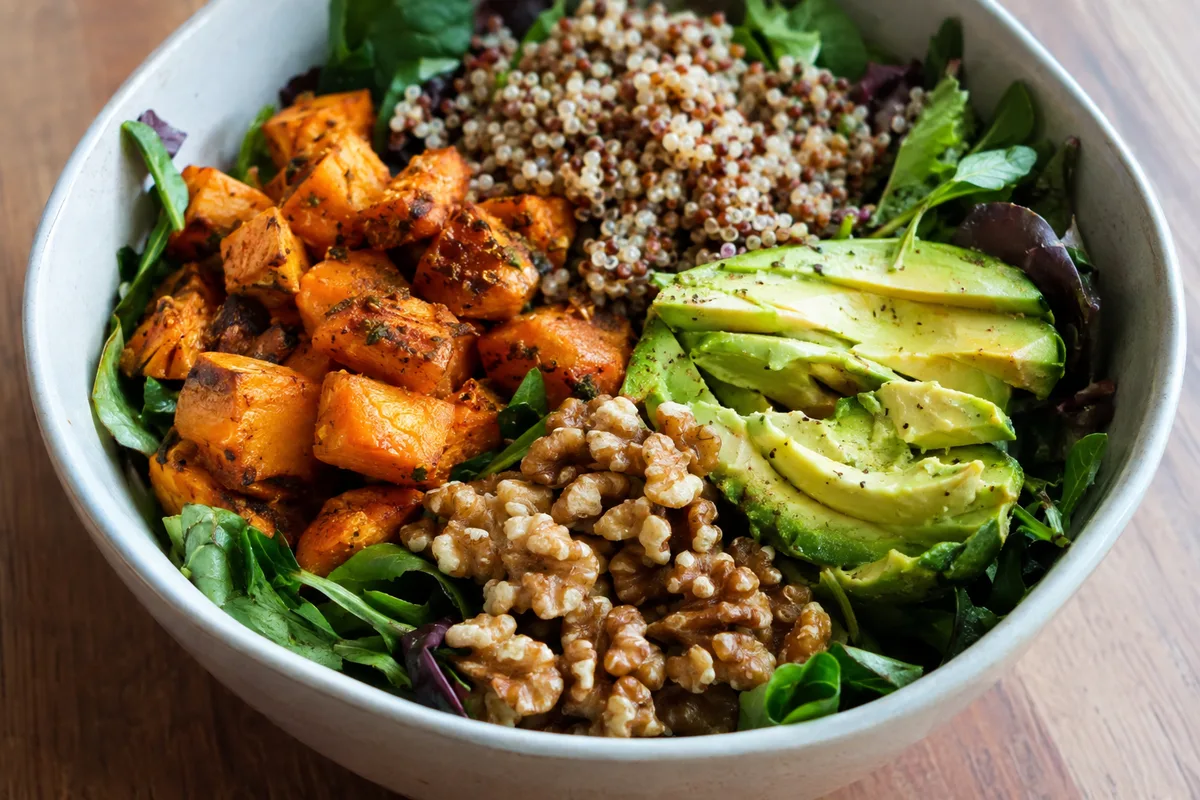
Fats bring flavour and help ingredients feel less dry, with olive oil, avocado, nuts, seeds and cheese among the common choices. Because fat provides about 9 kcal per gram, compared with about 4 kcal per gram for protein or carbohydrate, measuring dressings and toppings can make your log more accurate.
Finish with flavour and crunch
Fresh herbs, spring onions, citrus juice, vinegar, mustard and spices can brighten a salad without making it complicated. Choose a few flavours that work together rather than adding every possible topping.
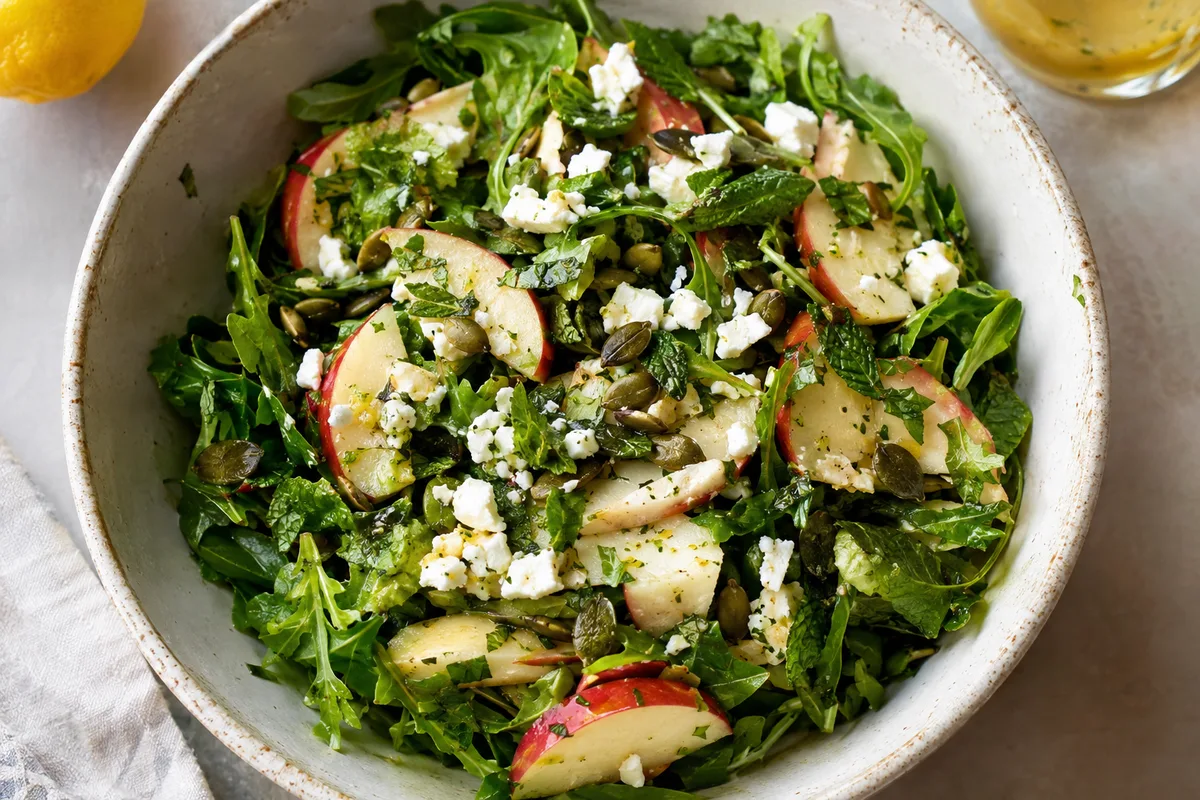
Crunch can come from cabbage, radishes, toasted seeds or nuts, while roasted vegetables can add softness and warmth. Save combinations you enjoy in your tracker, then adjust individual portions when you want a lighter side salad or a more filling main meal.