
How to choose a balanced meal at McDonald’s
McDonald’s can fit into a balanced way of eating when you choose portions and sides with your wider day in mind. This guide explains how to compare meals, make useful swaps and log your choice accurately.
Start with what healthy means for you
There is no single healthiest McDonald’s order because your needs depend on your appetite, goals and the rest of your diet. A useful meal might provide protein, some carbohydrate and fruit, vegetables or another source of fibre. It should also be satisfying enough that you are not immediately looking for more food.
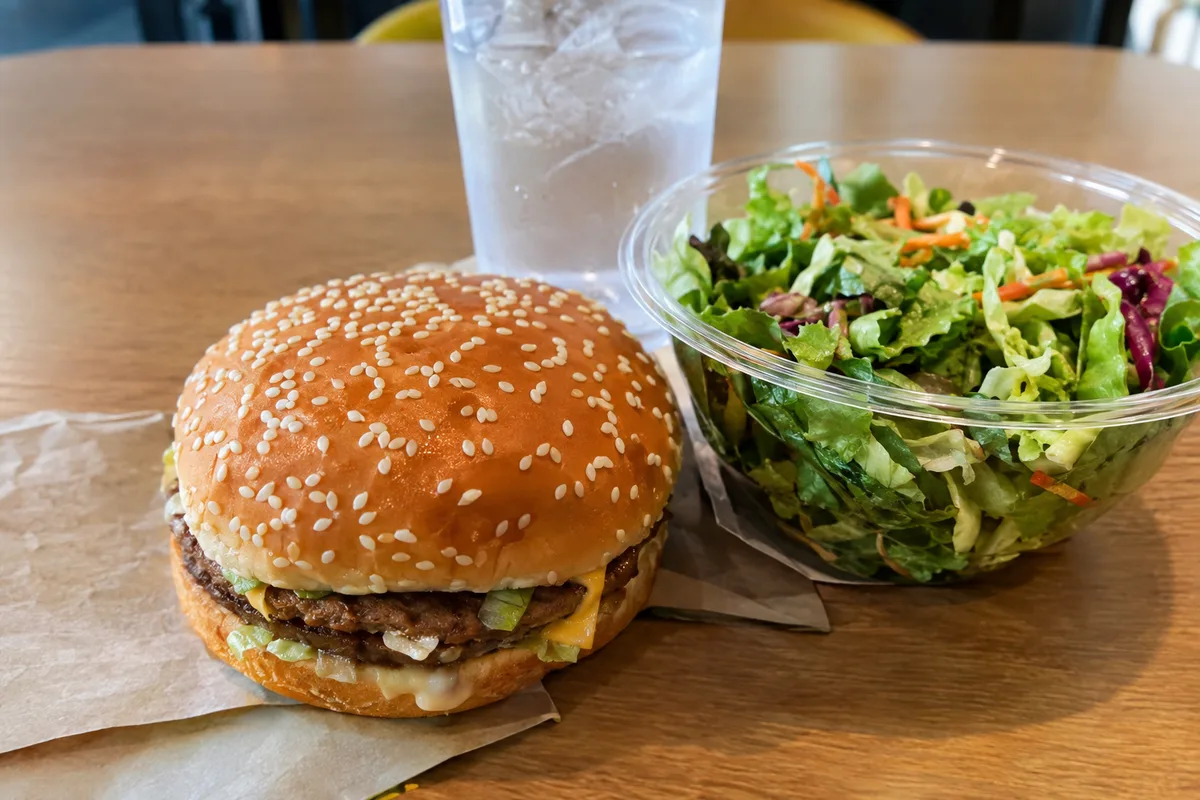
Since you already track what you eat, consider how the meal fits into your whole day rather than judging it on its own. You might prioritise protein after being active, choose a lighter meal before a large dinner or add fruit when your day has been low in fibre. The right portion depends on the person, so use your own targets and hunger as guides.
- Decide whether you want a meal, snack or drink before ordering
- Check what nutrients are less well covered in the rest of your day
- Choose a portion that matches your current hunger
- Leave room in your diary for additions such as sauces and drinks
Build the meal around a filling main
A burger, chicken item or breakfast sandwich can form the centre of the meal. Protein generally helps make a meal more satisfying, while buns and wraps provide carbohydrate. The exact nutrition varies with the filling, coating, cheese and sauce.
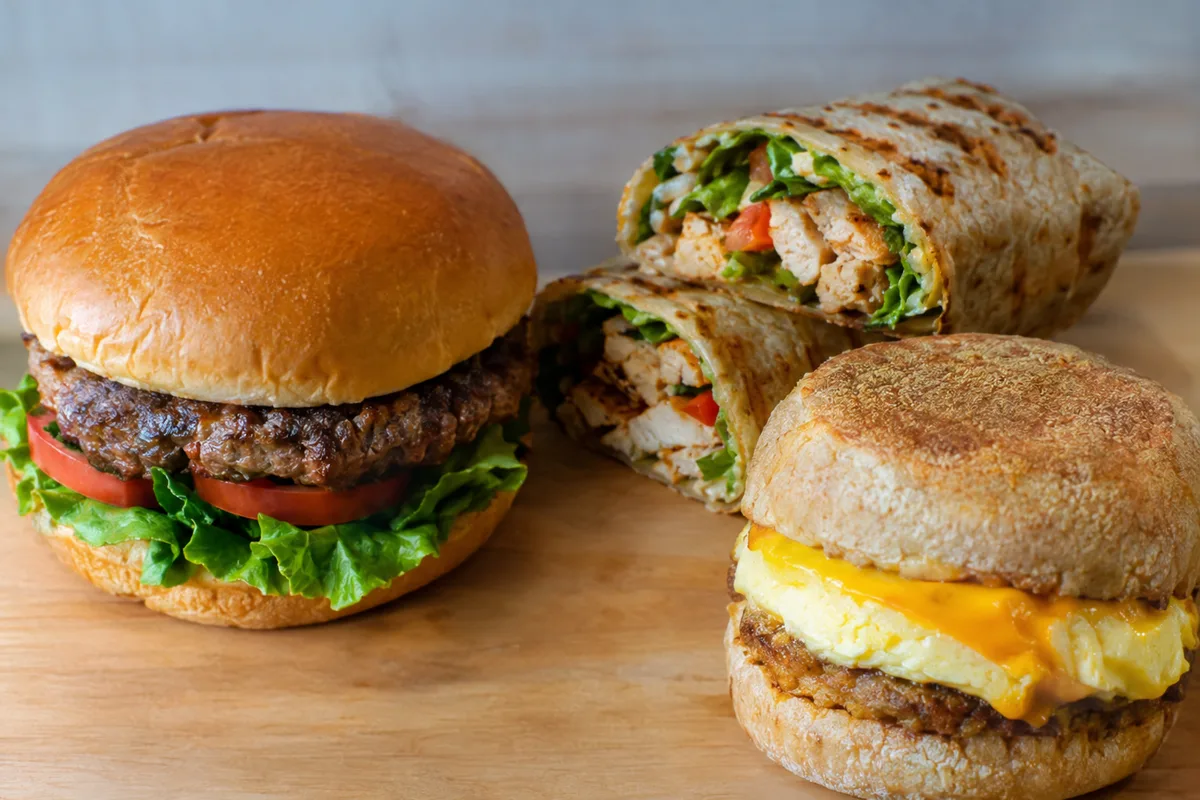
Simple mains are often easier to track because they contain fewer layers and extras. A regular hamburger or cheeseburger may fit more easily than a larger stacked burger, while grilled chicken can be a useful option where it is available. Compare the current nutrition information because recipes and menus can change.
- Regular hamburger or cheeseburger
- Grilled chicken burger or wrap, where available
- Egg-based breakfast sandwich
- Chicken pieces in a portion suited to your appetite
Use sides to add balance
Fries are not forbidden, but they are only one possible side. A smaller portion may suit you when the main is already substantial, while fruit or a side salad can add variety and fibre where offered. Availability differs between restaurants and countries.
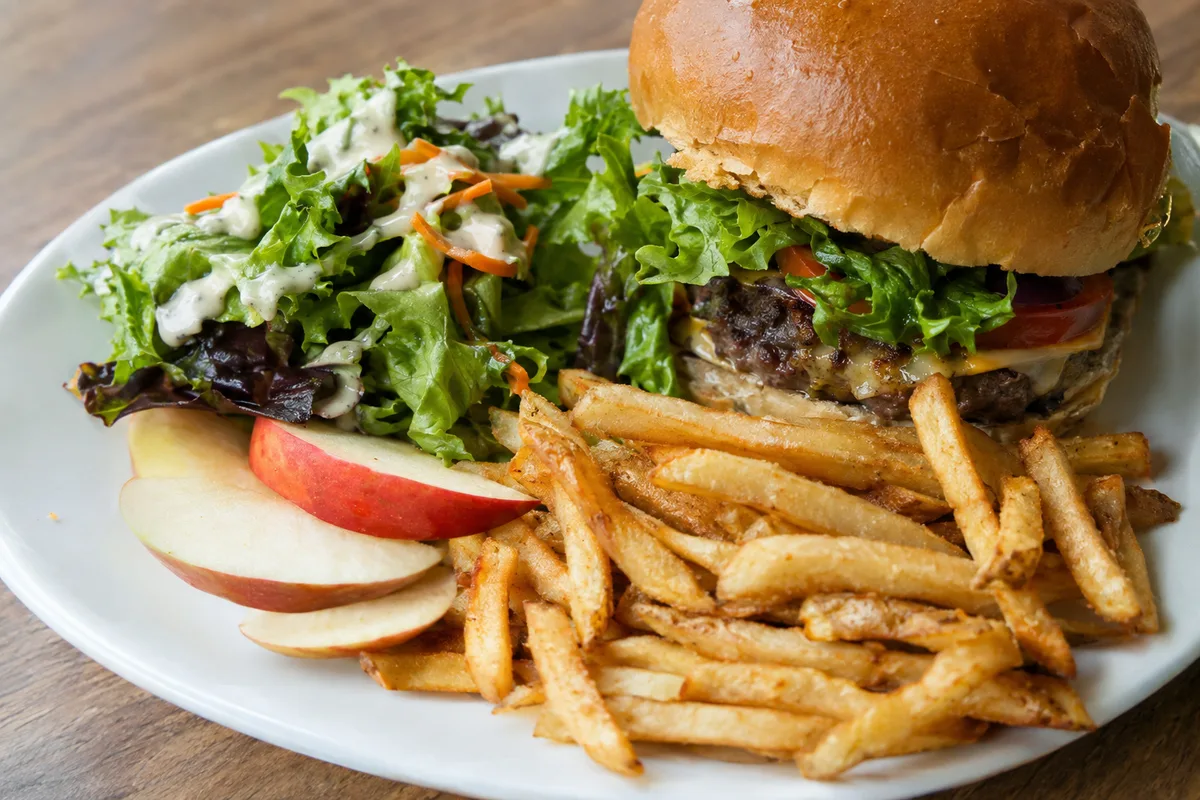
Think about the full combination rather than labelling one side as good or bad. A small burger with fruit may serve a different purpose from chicken pieces with fries, yet either could fit your day. If you particularly want fries, choosing them deliberately may be more satisfying than ordering an alternative you do not enjoy.
- Choose a smaller fries portion when that matches your plan
- Add a fruit bag where available
- Choose a side salad and include the dressing in your log
- Skip the side when the main is enough
Notice sauces, cheese and coatings
Sauces, cheese and fried coatings can meaningfully change the energy, fat, sugar or salt in a meal. That does not mean they need to be removed, but they should be counted when you track the order. Several small additions can be easy to overlook.
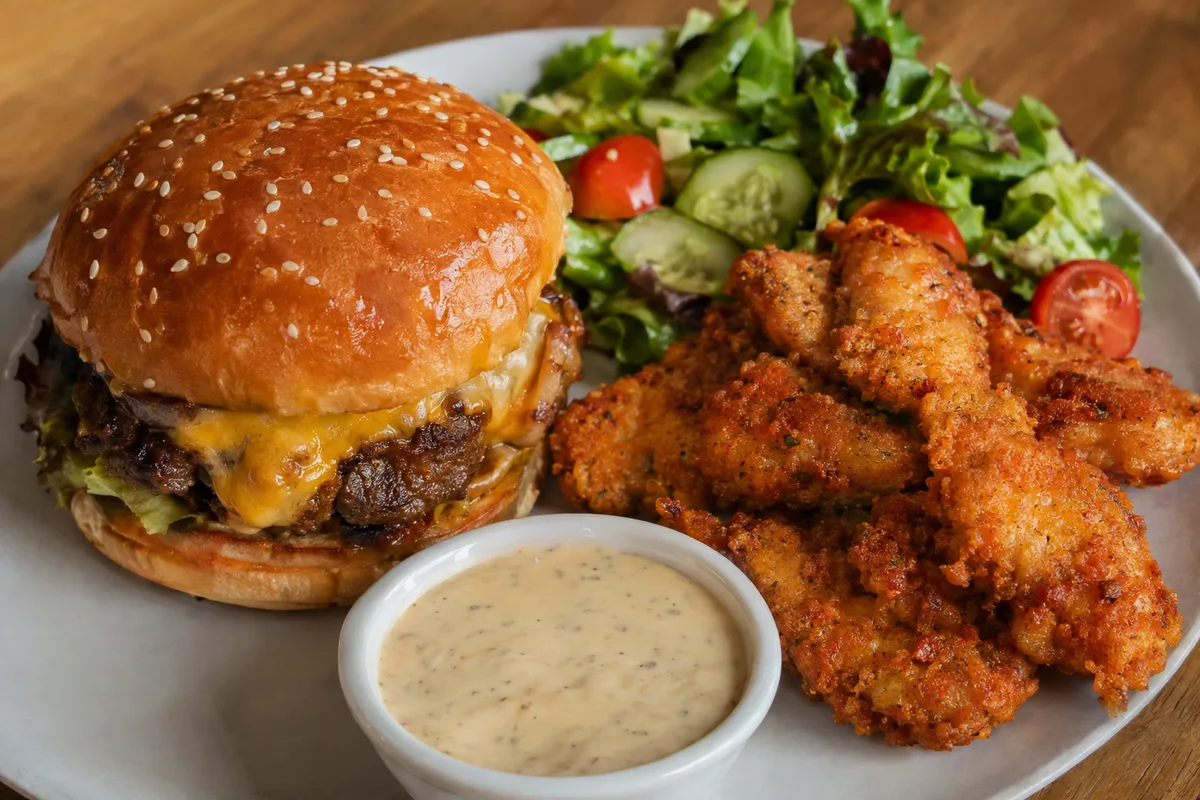
Choose the extras you care about most and simplify the rest. For example, you might keep the cheese but ask for less sauce, or enjoy a coated chicken item with a lighter side. Customisation options vary, so check what the restaurant can change before relying on a particular swap.
- Log dipping sauces separately
- Ask for a sauce to be left off when you do not particularly want it
- Choose one favourite extra rather than adding every option
- Check whether your logged entry includes cheese, bacon or dressing
Choose a drink on purpose
Drinks can be part of the meal or simply provide hydration. Water and no-added-sugar soft drinks usually make the meal easier to fit into a tighter energy target. Coffee and tea can also be straightforward choices, depending on the milk, syrup and sugar added.
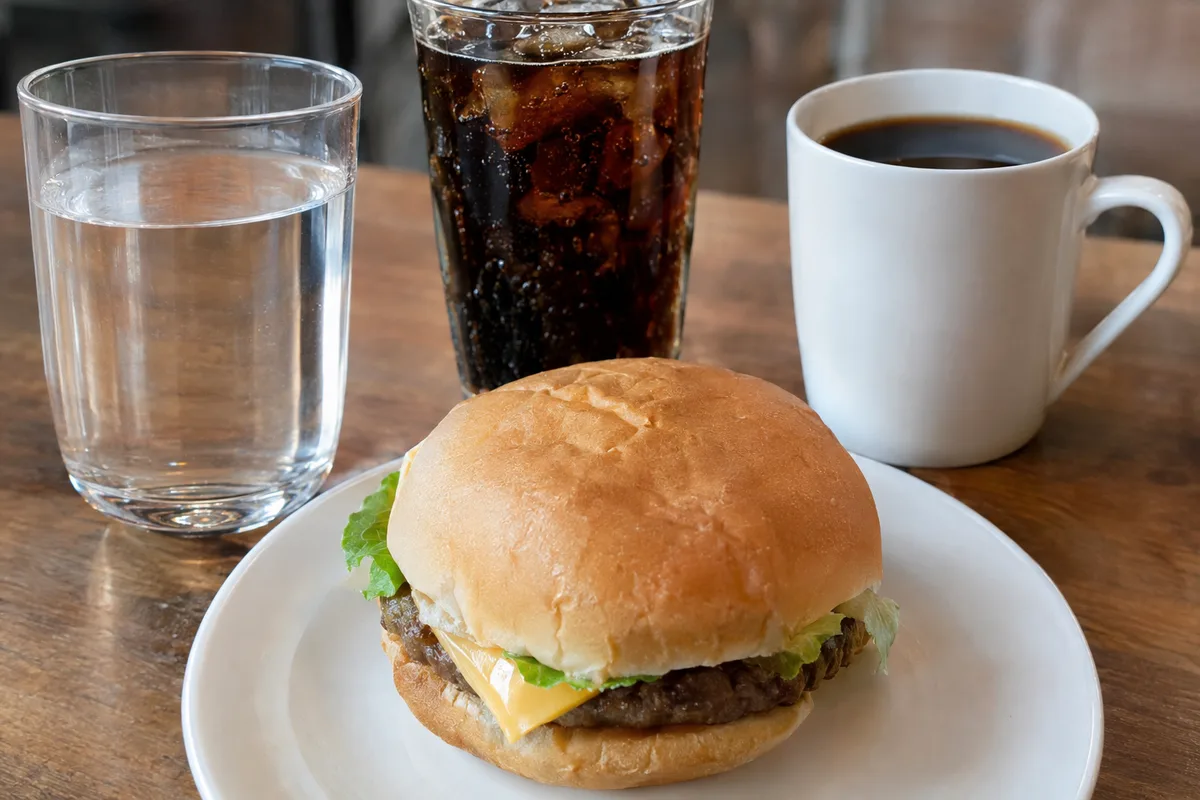
A milkshake, sweetened coffee or regular soft drink can still fit when you want one. Treat it as part of the order rather than an unnoticed extra, and enter the correct size in your diary. If the drink is the main treat, you may prefer to keep the food order simpler.
- Water
- No-added-sugar soft drink
- Tea or coffee with your chosen milk and sugar logged
- A sweet drink in a size that fits your plan
Log the order accurately without chasing perfection
Use the nutrition information for your country and select the exact item and portion where possible. Check whether the diary entry matches the current product, as similarly named burgers and drinks may differ. Include sauces, sides, milk, sugar and any other additions.
Restaurant portions and preparation can vary slightly, so your log will still be an estimate. Consistency is more useful than trying to make every entry perfect. Record what you actually ate, including anything left over, and then return to your usual eating pattern at the next meal.
- Match the item name and portion size
- Adjust the entry for removed or added ingredients where possible
- Enter sides, sauces and drinks separately
- Save a frequent order only after checking its details
- Review the whole day rather than reacting to one meal