
Essential Yoga Poses for Beginners
Yoga does not need to begin with complicated shapes or long sessions. A few steady poses can help you learn how your body moves while adding a calm, active habit alongside food tracking.
Start with a steady foundation
Mountain pose may look like ordinary standing, but it teaches balance and body awareness. Stand with your feet comfortably apart, soften your knees and let your arms rest by your sides. Keep your shoulders relaxed as you breathe slowly.
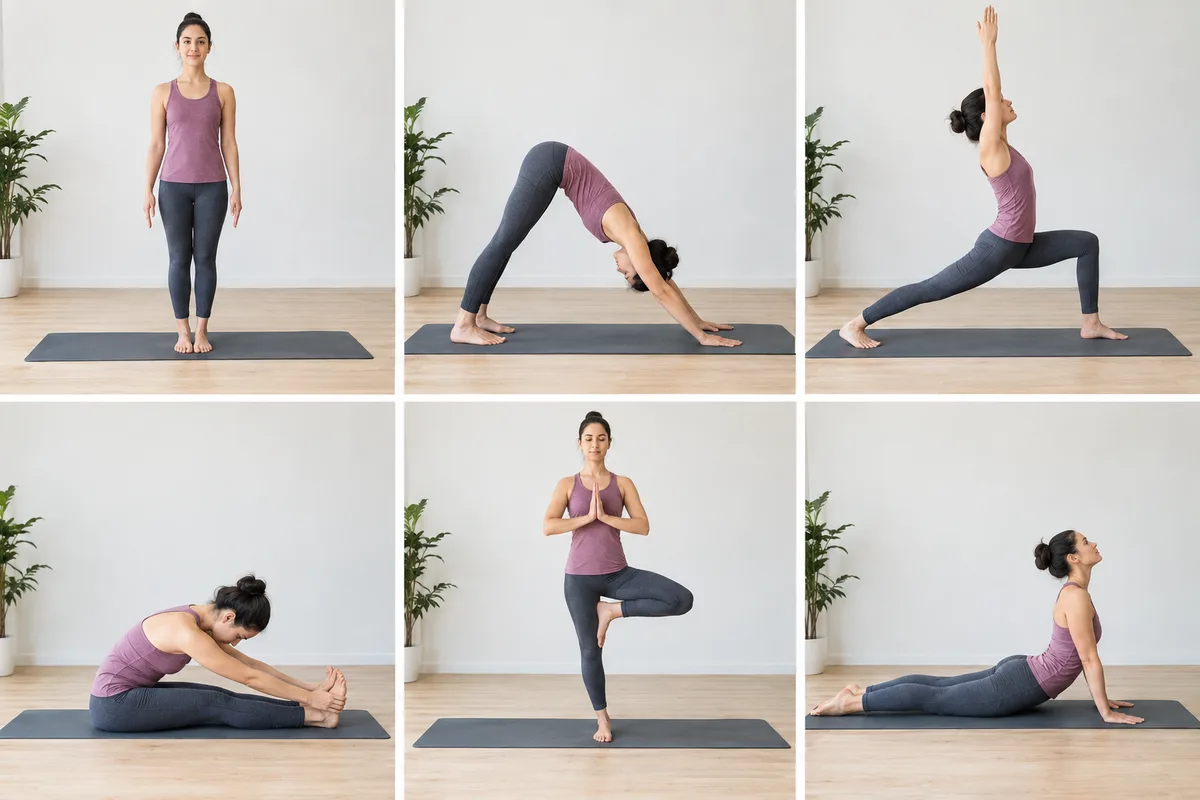
From mountain pose, move into chair pose by sending your hips back as though you are about to sit down. Keep your chest comfortably lifted and place your weight through your feet. Rise again if your knees, back or breathing feel strained.
Build strength with simple shapes
For downward-facing dog, begin on your hands and knees, then lift your hips up and back. Bend your knees if that helps you keep your spine long, and avoid forcing your heels towards the floor. Spread your fingers and share the effort between your hands and legs.
Warrior II begins with a wide stance, one foot facing forwards and the other turned slightly inwards. Bend the front knee, extend your arms at shoulder height and look over your front hand. Keep the pose short at first, then repeat on the other side.
Add gentle mobility and rest
Cat-cow is a useful way to explore movement through your spine. From hands and knees, round your back gently as you breathe out, then ease your chest forwards as you breathe in. Move within a range that feels smooth rather than trying to make the shapes larger.
Child's pose offers a quiet pause between more active movements. Bring your hips towards your heels, reach your arms forwards or rest them beside you, and support your head if needed. If the position feels cramped, widen your knees or choose another comfortable resting shape.
Make yoga fit your routine
Begin with a few poses and repeat them until the transitions feel familiar. The right session length and frequency depend on your schedule, experience and how your body feels that day. Consistency matters more than squeezing every pose into one practice.
Food tracking can show what you eat, while a brief yoga note can record another part of your routine. You might write down which poses felt steady, where you adjusted your stance and how your energy felt before and afterwards. Stop if you feel sharp pain, dizziness or unusual discomfort, and seek qualified guidance before continuing if you are unsure.