
How to Choose the Best Tennis Shoes for Women
The best tennis shoe is the one that fits your foot securely and supports the way you move on court. This guide explains fit, court surfaces, cushioning, stability and signs that a pair needs replacing.
Start with tennis-specific footwear
Tennis involves quick stops, side steps and changes of direction. A tennis shoe is designed to handle these movements, with support around the sides and a sole made for repeated contact with the court. A general running trainer is mainly built for forward movement, so it may feel less secure during lateral play.
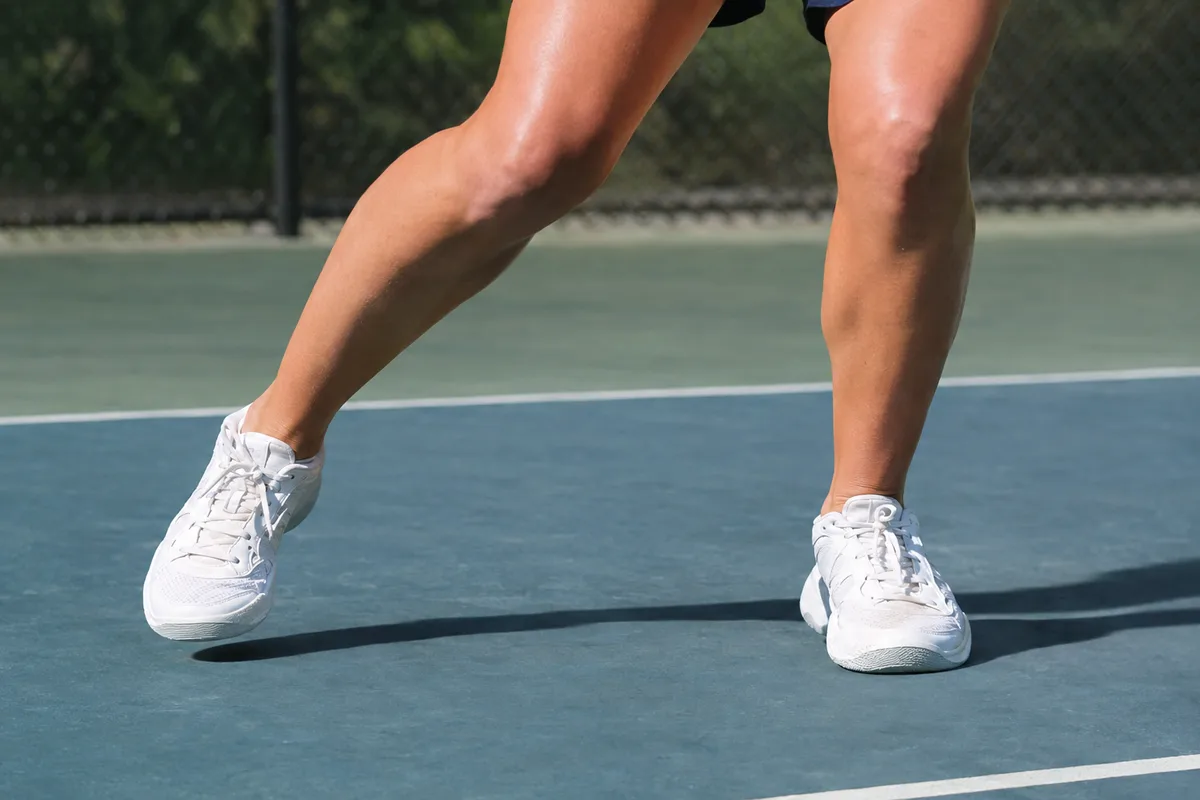
The right design depends on how you move and where you play. Some players want a lighter, more flexible feel, while others prefer a firmer shoe with more structure. There is no single model that is best for every woman.
- A secure upper that holds the foot during side-to-side movement
- A sole designed for the court surface
- Enough cushioning for comfortable stops and landings
- A stable base that does not feel overly soft or unsteady
Make fit the main priority
Your heel should feel held in place without rubbing or lifting as you walk. The middle of the shoe should feel secure, but it should not squeeze the sides of your foot. Your toes need room to spread and move without sliding forwards.

Foot shape varies, and a shoe labelled for women will not automatically suit every woman. Width, arch shape, heel shape and foot volume can all affect comfort. Try shoes with the socks you normally wear for tennis, as sock thickness changes the fit.
Check both feet because one may be slightly larger than the other. Walk, stop, rise onto your toes and make a few controlled side steps if the space allows. Any pinching, slipping or pressure is worth noticing straight away rather than assuming it will disappear.
- Heel stays in place during movement
- Toes do not touch the front when stopping
- Upper feels snug without pressing or folding into the foot
- Forefoot can spread naturally
- Laces hold the foot without needing to be pulled painfully tight
Match the outsole to the court
The outsole is the part of the shoe that meets the court. Its tread and rubber affect grip, sliding and durability. Choosing for your usual playing surface can make movement feel more predictable.
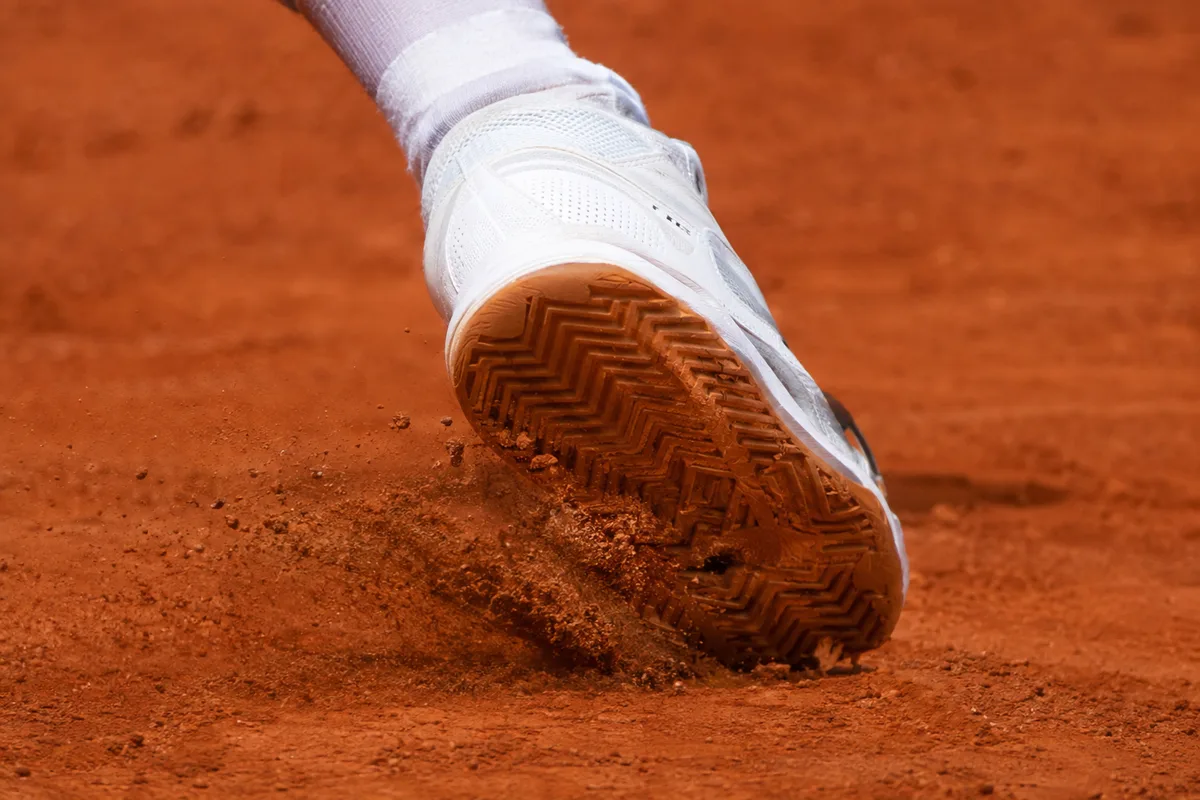
Hard courts generally call for a durable outsole that balances grip with some give. Clay-court shoes usually have a tread that helps manage loose material and allows controlled sliding. Grass-court designs focus on traction on a softer, potentially slippery surface.
An all-court shoe can be practical if you play on more than one type of court. However, the best choice still depends on which surface you use most often and how much you slide. Check the rules at your venue, as some courts restrict certain outsole patterns.
- Hard court: look for durable rubber and a supportive build
- Clay court: choose tread that releases loose court material
- Grass court: use an outsole intended to provide suitable traction
- Mixed surfaces: consider an all-court design that suits your main venue
Balance cushioning, stability and weight
More cushioning can soften the feel of repeated landings, but softness alone does not make a shoe supportive. If the midsole compresses too easily, the foot may feel less controlled during sharp changes of direction. A firmer platform can feel more stable, although personal comfort still matters.
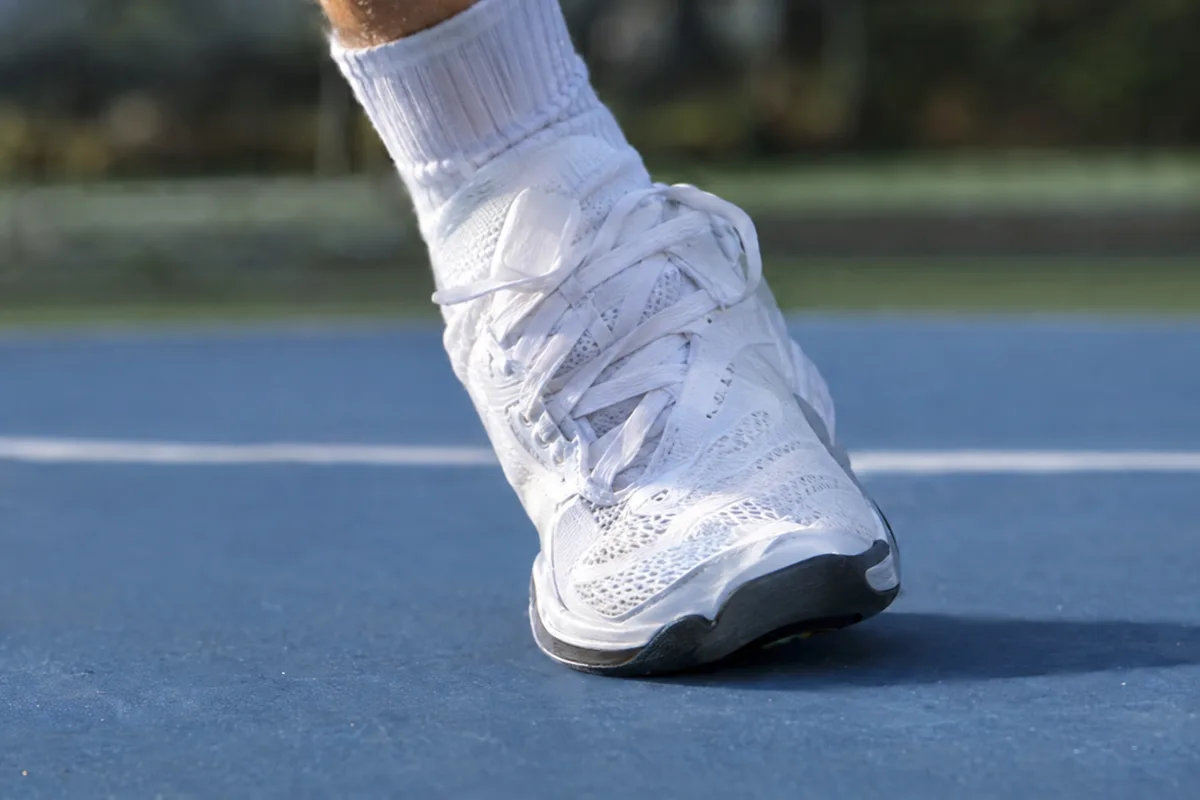
Some shoes add structure around the heel and sides to limit unwanted movement inside the shoe. This can be useful for players who make forceful lateral cuts or spend a lot of time near the baseline. Players who value speed and court feel may prefer a lighter, more flexible design.
Think about your usual movement rather than choosing the thickest or lightest option. The shoe should bend near the forefoot while resisting excessive twisting through the middle. When you move side to side, your foot should remain over the sole rather than spilling across its edge.
- Baseline play: prioritise lateral support and outsole durability
- Frequent net play: look for secure grip during quick forward stops
- Fast, agile movement: consider a lighter shoe that still feels stable
- Forceful changes of direction: choose a broad, secure platform
Test shoes with tennis movements
Standing still reveals only part of the fit. Tennis shoes should also feel secure during a split step, side shuffle and controlled stop. If possible, test these movements gently on an appropriate surface without marking the shoes.
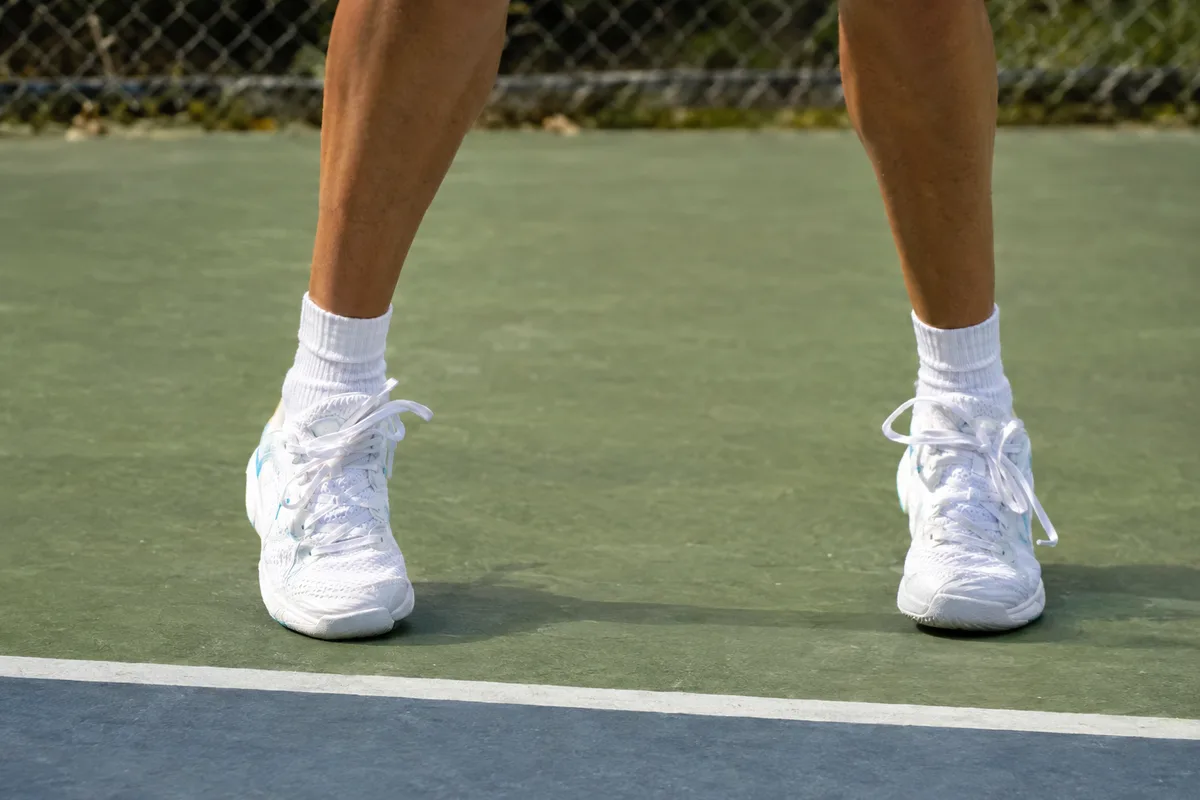
Notice whether your heel lifts, your toes strike the front or your foot slides over the edge of the sole. The upper should hold your foot without creating sharp pressure. The shoe should also return to a comfortable position after the sole bends.
Do not rely on appearance or size alone. Sizing can vary between designs, and two shoes marked with the same size may fit differently. A comfortable walking fit is useful, but secure lateral movement is the more important tennis test.
- Perform a small split step
- Shuffle a few steps in each direction
- Move forwards and stop under control
- Rise onto the balls of your feet
- Check the fit again after relacing
Know when your shoes need replacing
Tennis shoes wear according to court surface, playing style, movement and frequency of use, so there is no replacement schedule that suits everyone. Inspect them regularly instead of relying only on age. Wear may be uneven, particularly around the heel, forefoot or outer edge.
A smooth outsole can reduce predictable grip, while compressed cushioning may make the shoe feel flatter or harsher than before. A stretched upper can also allow more movement inside the shoe. Changes in comfort or stability matter even when the outside still looks tidy.
Let shoes dry naturally after play and loosen the laces before taking them off. This helps the upper keep its shape and avoids unnecessary strain around the heel. Replace the pair when the tread, structure or fit no longer supports controlled movement.
- Tread has become smooth in high-contact areas
- Midsole feels noticeably flatter than before
- Upper no longer holds the foot securely
- Sole is separating from the upper
- Movement feels less stable or predictable