
8 Empty-Calorie Foods and Simple, Healthier Swaps
Empty-calorie foods provide energy but relatively little fibre, protein, vitamins or minerals. These eight swaps can make tracked meals and snacks more nourishing without demanding a perfect diet.
What ‘empty calories’ really means
No food is literally empty if it contains calories. The phrase describes food or drink that provides energy but offers relatively little fibre, protein, vitamins or minerals. It often applies to products high in added sugar or fat that do not keep you satisfied for long.
The label is a useful shortcut, not a reason to divide food into good and bad categories. A biscuit can fit into an enjoyable eating pattern, while a piece of fruit may not always be the snack you want. The aim is to notice where a simple swap could give you more nutritional value.
How to spot less nourishing choices in your log
Start with the foods and drinks that appear regularly in your tracker. Look at their ingredients and nutrition information rather than judging them by packaging claims. Products with plenty of added sugar or fat but little fibre and protein may be worth reviewing.

Context matters because the same food can play different roles. A sugary drink used occasionally for enjoyment is different from one that appears several times each day. Your preferred portions and energy needs depend on you, so there is no single target that suits everyone.
- Check whether sugar or syrup appears near the start of the ingredients list.
- Compare fibre and protein between similar products.
- Notice drinks that add energy without making a meal more filling.
- Look for repeated snacks that leave you hungry again soon.
Four swaps for sweet foods and drinks
Sweet foods can provide quick energy while contributing little fibre or protein. A useful swap keeps some sweetness but adds fruit, whole grains, dairy or another nourishing ingredient. You can also combine a smaller amount of the original food with a more filling option.
The best choice depends on what you like and why you are eating it. A planned dessert does not need to be replaced simply because it is sweet. These ideas are most useful for routine drinks, breakfasts and snacks that you would be happy to change.
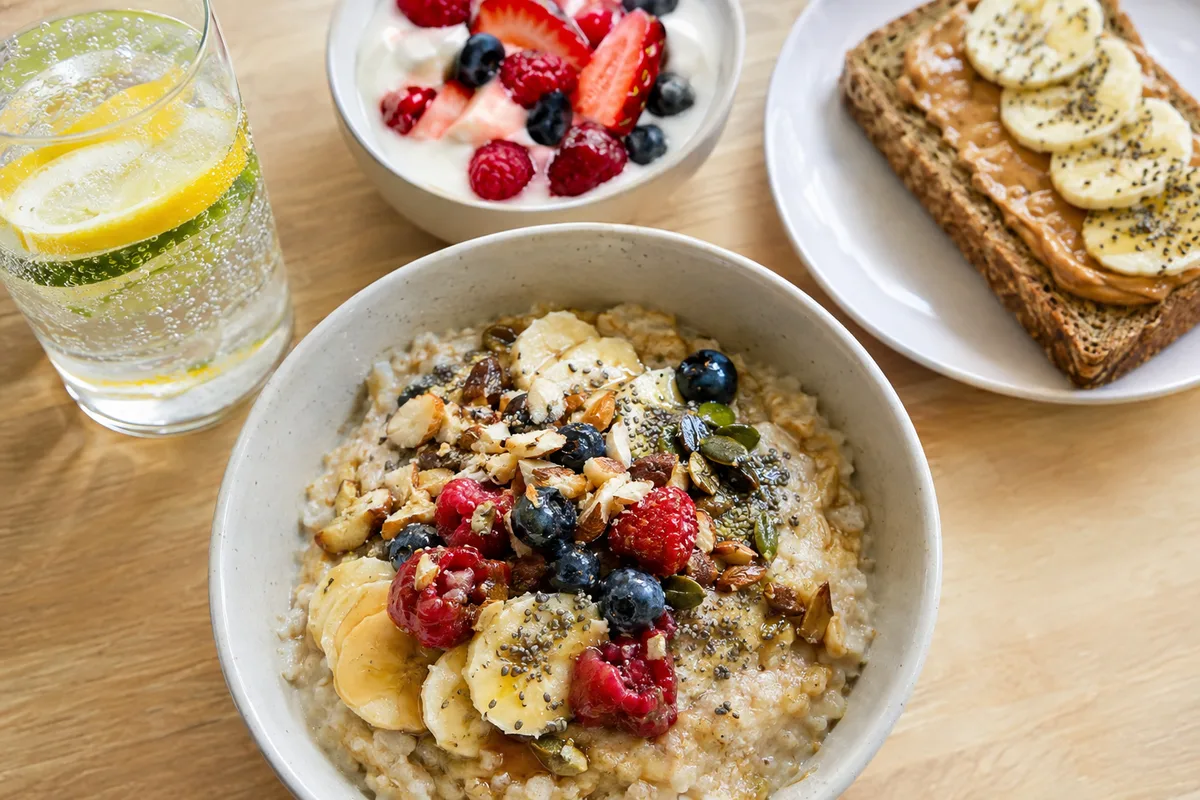
- Sugary fizzy drink: swap it for sparkling water with sliced citrus or crushed berries.
- Sweets: swap them for fresh fruit, or pair a smaller portion with plain yoghurt.
- Iced doughnut: swap it for wholegrain toast topped with peanut butter and banana.
- Heavily sweetened breakfast cereal: swap it for porridge with fruit, nuts or seeds.
Four swaps for savoury snacks and everyday sides
Some savoury foods are easy to eat quickly but provide little fibre or protein. Swapping the base ingredient or cooking method can make the food more substantial. Flavour can still come from herbs, spices, garlic, citrus or a modest amount of salt.
These alternatives are not automatically lower in calories, and they do not need to be. Nuts, seeds and nut butter, for example, are energy-dense but also provide protein, fibre and useful nutrients. The point is to get more from the food you record, not simply to choose the smallest number.
- Crisps: swap them for lightly seasoned popcorn, or crunchy roasted chickpeas.
- Sweet biscuits: swap them for oatcakes with nut butter and sliced fruit.
- Deep-fried chips: swap them for skin-on potato wedges baked with herbs.
- Syrup-heavy flavoured coffee: swap it for coffee with milk and cinnamon, using less syrup if you still want sweetness.
Make swaps that work in your food tracker
Use your existing log to find one repeated choice rather than changing everything at once. Record the swap in the same way you record any other food, including the portion and additions. This gives you a fair comparison between what you usually eat and the alternative.
Look beyond the calorie total when comparing entries. Check whether the swap adds fibre, protein, fruit, vegetables, whole grains, nuts, seeds or dairy. Also notice whether it feels satisfying and practical, because a nutritionally strong option is not helpful if you dislike it.
- Compare similar portions rather than a tiny serving with a large one.
- Include toppings, sauces, oils and milk in both entries.
- Note how hungry you feel before and after the food.
- Keep swaps that suit your taste, routine and available time.
Leave room for foods you enjoy
A healthier pattern does not require removing every sweet drink, biscuit or portion of chips. Food can provide pleasure, comfort and a way to share time with others as well as nutrients. Tracking should help you see patterns, not turn each entry into a judgement.
Think of these swaps as options for foods you eat often. You might replace a routine snack while keeping a favourite dessert, or alternate between the original food and its swap. A flexible approach makes it easier to build meals that are both nourishing and enjoyable.
- Choose the original food when it is the experience you genuinely want.
- Use a swap when you want a more filling snack or meal.
- Pair a favourite treat with fruit, yoghurt or another nourishing food.