
Nopal Benefits: What Cactus Pads Can Add to Your Diet
Nopal is the edible pad of the prickly pear cactus, valued for its fresh flavour, fibre and versatility. This guide explains its practical benefits, how to prepare it and what to record in your food log.
What nopal is
Nopal means the flat, fleshy pad of the prickly pear cactus. It is treated as a vegetable and has a fresh, slightly sharp flavour that becomes milder with cooking. The texture can be crisp when raw and tender when grilled, boiled or fried.
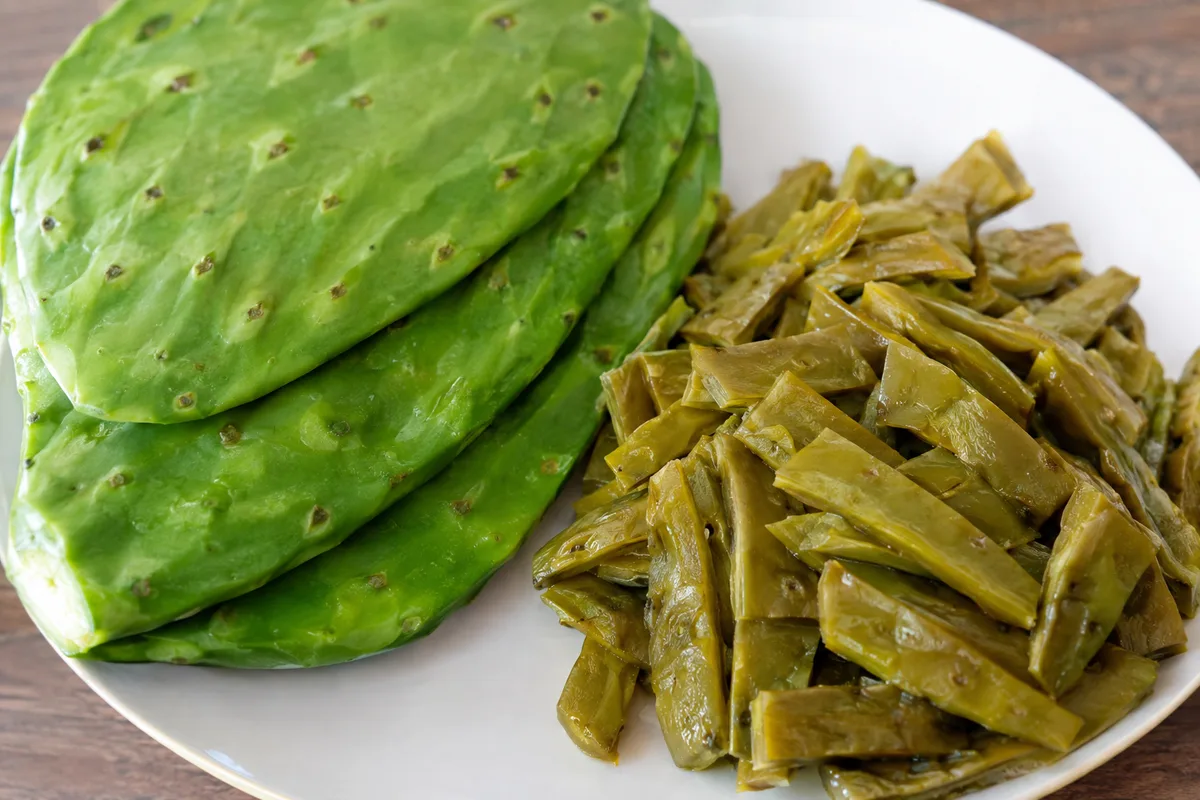
The pads contain plenty of water as well as fibre and a range of micronutrients. Their exact nutritional content varies with the variety, age of the pad, portion and preparation method. Nopal can be useful mainly because it adds plant variety without needing to be the centre of a meal.
- Choose firm, evenly coloured pads without soft or badly bruised areas.
- Look for pads that have already had their spines removed, or clean them carefully before eating.
- Use fresh nopal raw only after it has been thoroughly cleaned and trimmed.
- Find it fresh, cooked or preserved, checking the label when using a packaged version.
A practical source of fibre
Nopal contains both insoluble fibre and a gel-forming type of fibre often called mucilage. Fibre adds structure to meals and supports regular digestion. The gel-like texture is natural, rather like the texture released by okra when cooked.
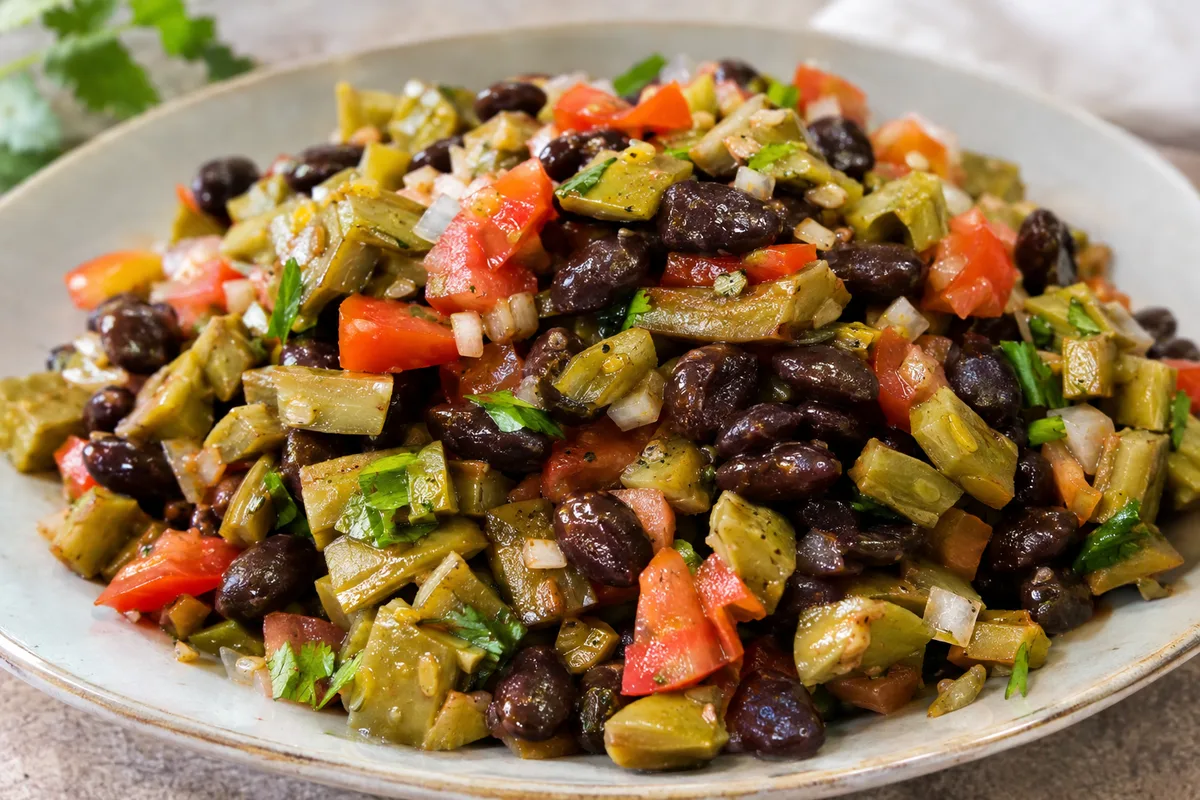
A fibre-containing food may also help a meal feel more substantial, especially when paired with protein and other vegetables. The effect depends on the portion and the rest of the meal, so nopal is not a guaranteed answer to hunger. If your current diet is low in fibre, introduce it gradually and drink according to your usual needs.
- Add diced nopal to eggs, beans or a grain bowl.
- Mix cooked strips into a vegetable soup.
- Serve grilled nopal beside chicken, fish, tofu or pulses.
- Combine it with tomatoes, onion and herbs for a simple salad.
Vitamins, minerals and plant compounds
Nopal provides vitamin C and small amounts of several minerals, although the exact levels depend on freshness and cooking. Vitamin C supports normal body functions and helps with the absorption of iron from plant foods. Long cooking or boiling in plenty of water can reduce some water-soluble nutrients.
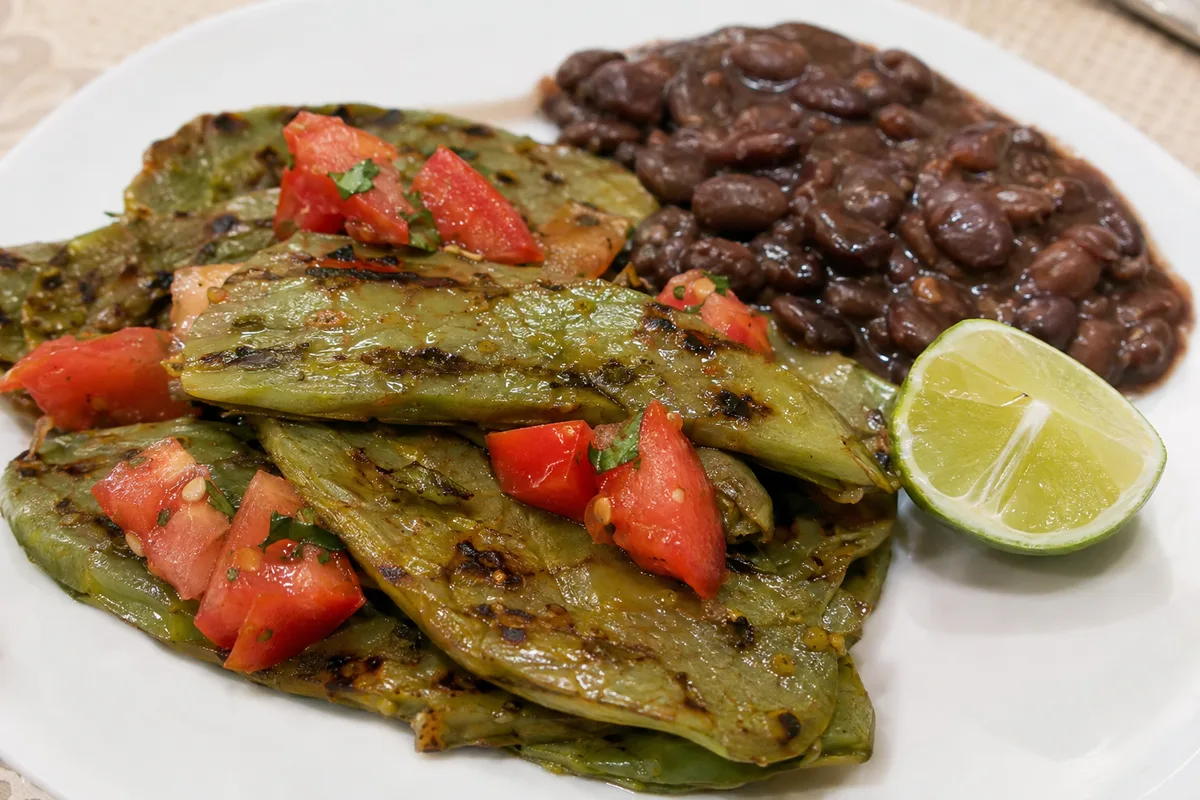
The pads also contain naturally occurring plant compounds that contribute to their colour and flavour. It is more useful to see these as part of an overall varied diet than as special ingredients with guaranteed effects. Eating a range of vegetables remains more important than relying on one food.
A useful way to bring variety to meals
Nopal can change the texture and flavour of meals you already track without requiring an entirely new eating pattern. Its mild sharpness works with tomatoes, citrus, chillies, herbs, eggs, beans and grilled foods. This makes it suitable for breakfasts, salads, soups and main meals.
Preparation matters because added oil, cheese, creamy sauces and salty preserves can change the nutritional profile of the dish. Plain grilled or boiled nopal will log differently from nopal fried in oil. Track the full recipe rather than recording only the cactus pad.
- Swap some of the meat in a mixed filling for cooked nopal and beans.
- Use grilled nopal in place of part of a bread-based side.
- Stir chopped nopal into scrambled eggs with tomatoes.
- Add cooled cooked nopal to a pulse and vegetable salad.
How to prepare nopal safely
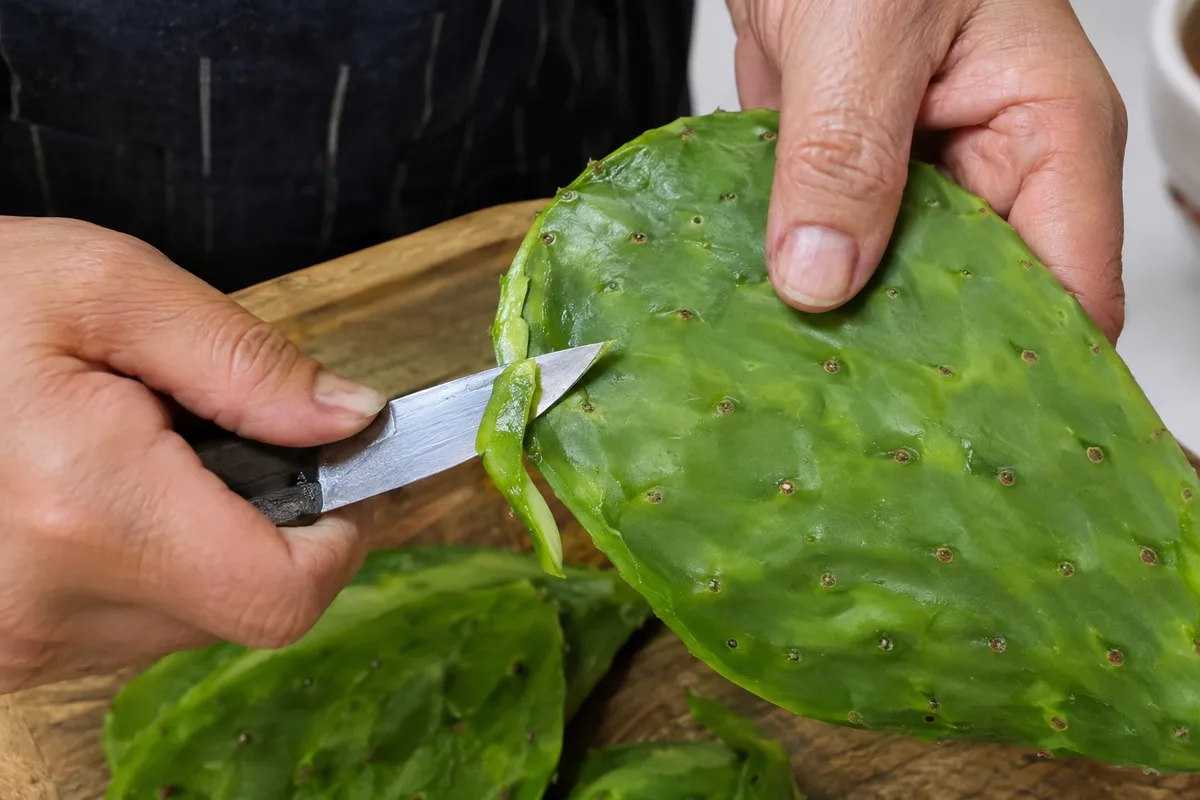
Fresh cactus pads must be free from spines and the small, fine bristles around them. Even pads sold as cleaned should be checked closely, then rinsed well. Trim the outer edge and the tough base before slicing or cooking.
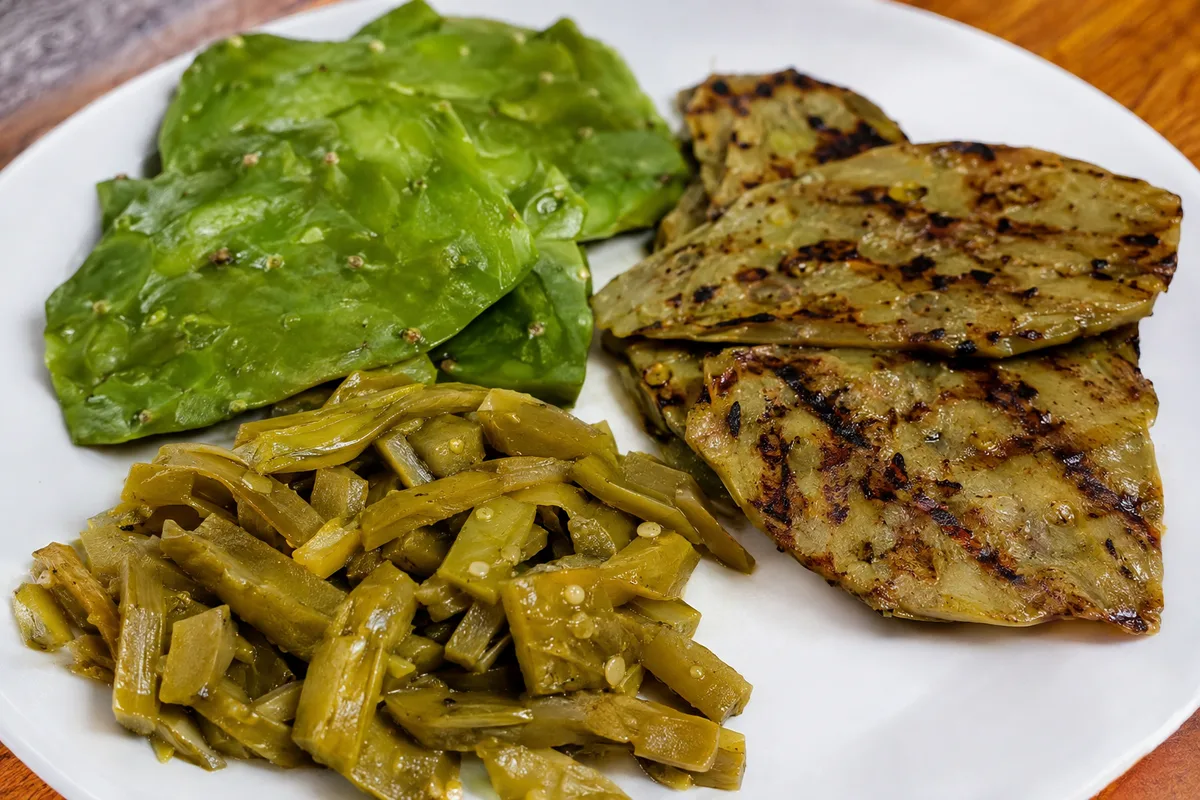
Boiling, grilling and pan-cooking all soften the pads, while raw nopal stays firmer. To reduce the slippery texture, rinse cooked pieces, grill them over a dry heat or cook them with an acidic ingredient such as lime or tomato. Avoid tasting a pad until you are sure every spine and bristle has been removed.
- Hold the pad securely and inspect both sides under good light.
- Remove any remaining spines and raised nodes with care.
- Trim the edge and base, then rinse the pad thoroughly.
- Slice or dice it before boiling, grilling or pan-cooking.
- Clean the work surface after handling untrimmed pads.
Tracking nopal accurately
When logging nopal, check whether your food database entry refers to raw, cooked, drained or preserved pads. Water loss during cooking can change the weight without adding energy, while oil and other ingredients add to the total. A preserved version may also contain more salt than a fresh one.
Use the entry that most closely matches what you ate and record added ingredients separately. For a mixed dish, saving your usual recipe can make later entries more consistent. Treat the nutrition figures as estimates, because pad size, cooking and database sources vary.
- Record whether the nopal was raw, boiled, grilled, fried or preserved.
- Include cooking oil, dressing, cheese and sauces.
- Use drained weight for preserved nopal when that matches the database entry.
- Save repeat recipes with the same ingredients and preparation method.