
How to Eat Dates in Meals and Snacks
Dates can be eaten on their own or used to add sweetness and a chewy texture to meals. This guide covers preparation, serving ideas and practical ways to record them in your food diary.
Start with the stone
Dates are sweet fruits with soft or chewy flesh and a long stone in the centre. Some are sold with the stone removed, while others need to be opened before eating. Check each date rather than assuming a pack is completely stone-free.
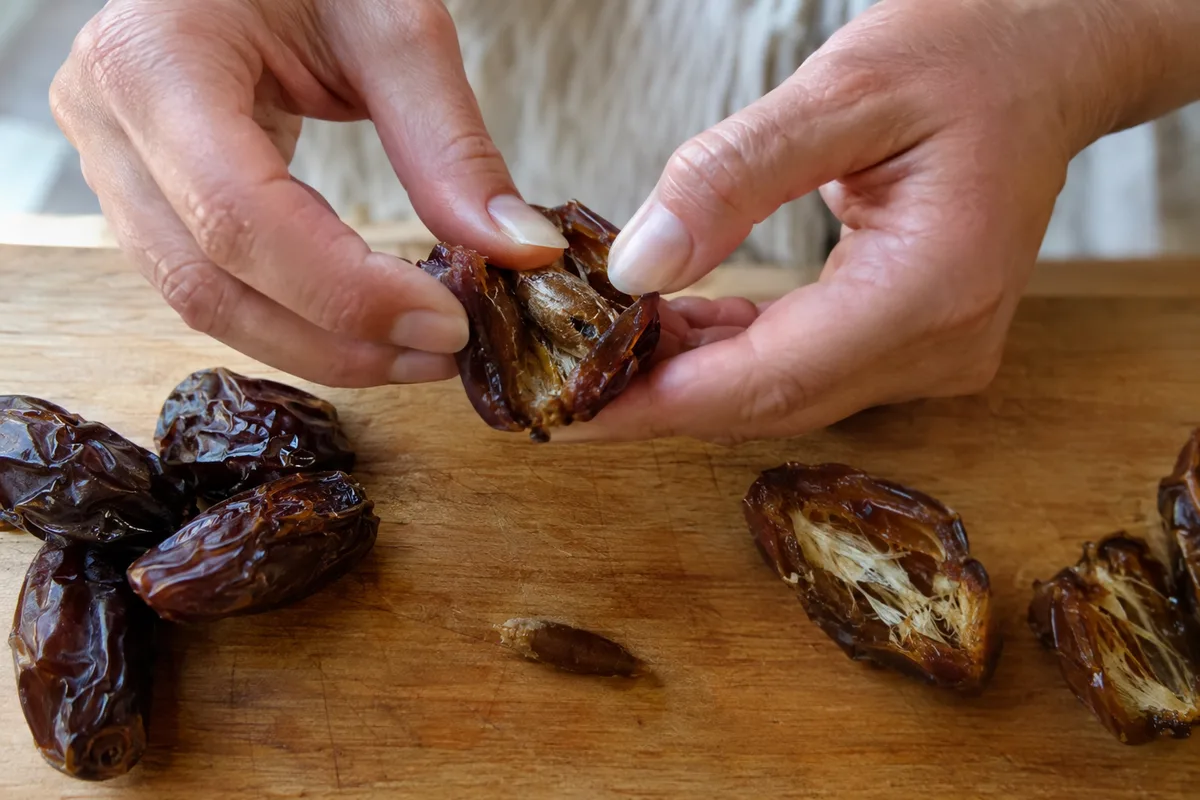
To remove the stone, split the date lengthways with your fingers or a small knife. Pull out the stone and check that no hard pieces remain. The date can then be eaten whole, chopped or opened out for a filling.
Dates vary in size, moisture and firmness according to the variety and how they have been stored. Firmer dates can be chopped with a sharp knife, while softer ones are easy to tear or mash. If the flesh is too firm for your recipe, a short soak in warm water can soften it.
- Eat a stoned date as it is
- Slice it into rings or strips
- Chop it finely for mixing
- Open it lengthways for filling
Turn dates into a balanced snack
A date on its own is a quick, sweet mouthful, but it may not feel substantial. Pairing it with a source of protein or fat adds contrasting flavour and texture. The amount to serve depends on your appetite and the rest of your day.
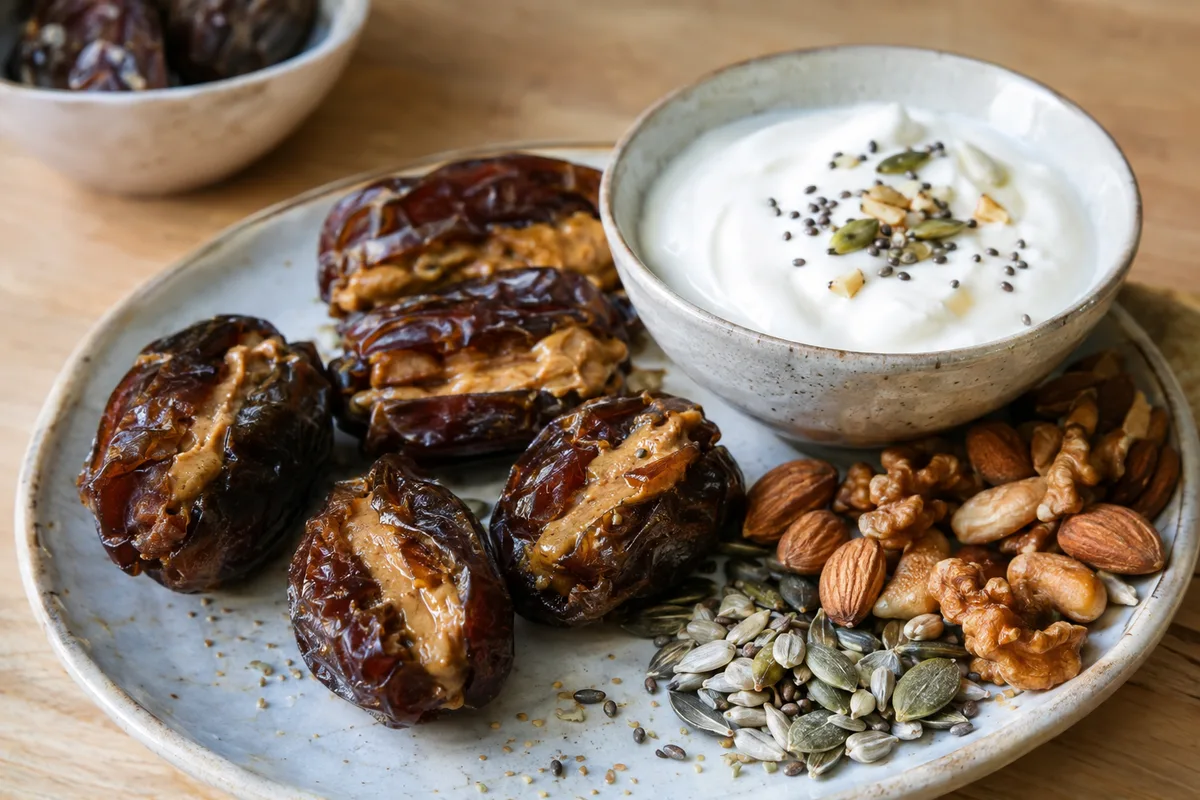
Try filling an opened date or serving chopped dates alongside another food. Nut or seed butter adds creaminess, while yoghurt gives a cool contrast to the sticky fruit. Cheese works well when you prefer a savoury edge.
Dates are easy to keep eating straight from a packet, especially when your attention is elsewhere. Put the amount you intend to eat on a plate or in a bowl before sitting down. This also makes the portion easier to record accurately.
- Dates filled with nut or seed butter
- Chopped dates with plain yoghurt
- Dates served with cheese
- Dates with nuts or seeds
Add them to breakfast
Chopped dates can sweeten breakfast without needing to be the main ingredient. Their chewy texture suits porridge, overnight oats and cereal. Slice them thinly so the sweetness is spread through the bowl.
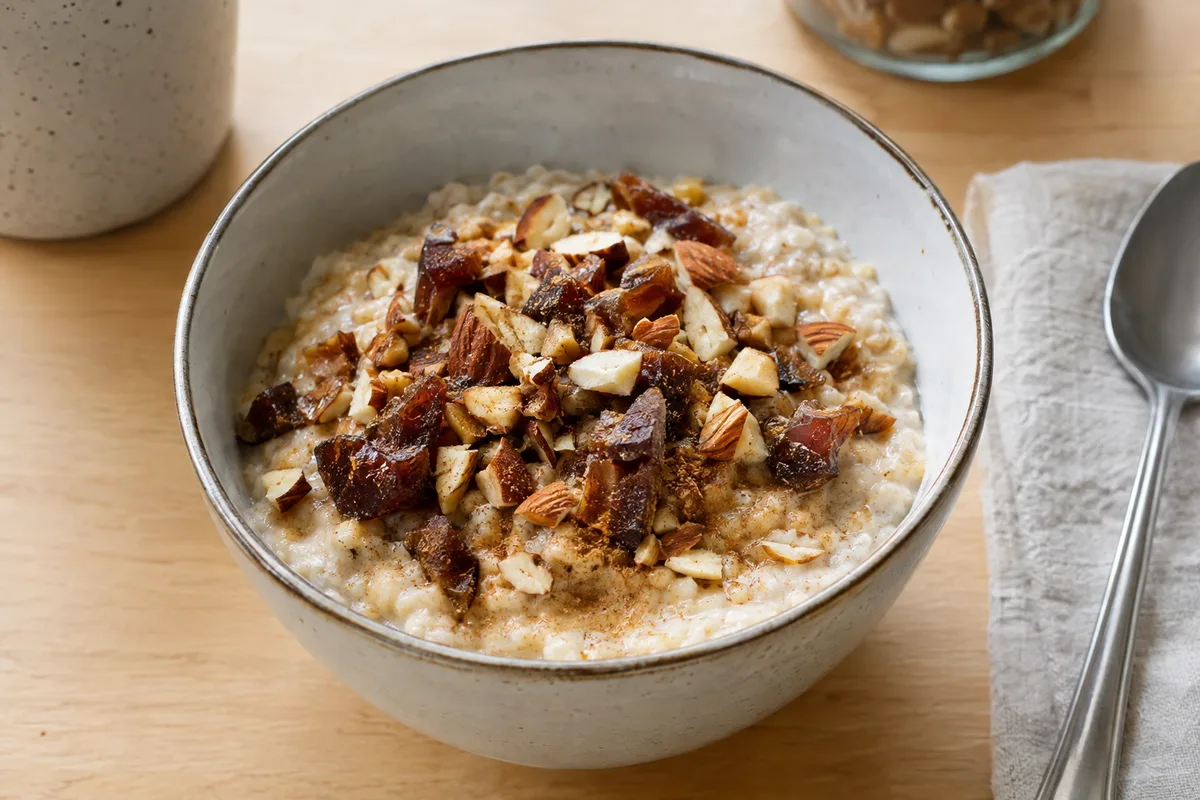
For a softer result, stir dates into porridge while it cooks. They will absorb moisture and begin to break down. You can also soak chopped dates with oats overnight so they are tender by morning.
Dates pair well with ingredients that are less sweet, including plain yoghurt, oats and nuts. Spices such as cinnamon or cardamom can bring out their caramel-like flavour. Taste the finished bowl before adding any other sweetener.
- Stir chopped dates into hot porridge
- Soak them with overnight oats
- Mix them into plain yoghurt and fruit
- Scatter them over cereal with nuts
Use dates in savoury meals
Dates can provide small pockets of sweetness in savoury food. Chop them finely so they mix through a dish rather than dominating each bite. Their soft texture works particularly well with crisp vegetables, grains and salty ingredients.
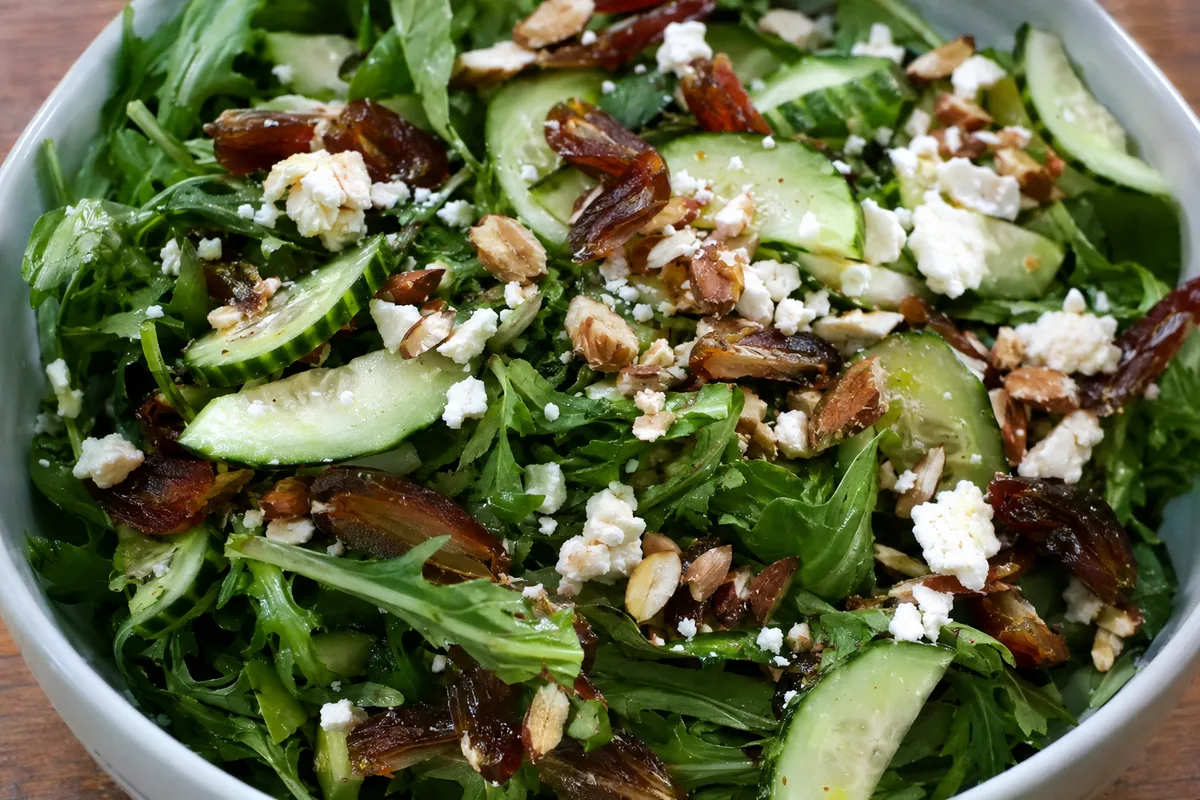
In a salad, combine date pieces with leaves, cucumber, nuts or crumbled cheese. In a grain dish, stir them through couscous, rice or bulgur with herbs and roasted vegetables. They can also be added near the end of cooking to a gently spiced stew.
Start with a small amount and taste before adding more. Dates become more noticeable when a dish has few other strong flavours. Acidic ingredients such as lemon juice or vinegar can help balance their sweetness.
- Chopped dates in a leafy salad
- Dates mixed through couscous or bulgur
- Finely sliced dates with roasted vegetables
- Date pieces in a gently spiced stew
Blend or mash them for recipes
Soft dates can be mashed into a thick paste for baking, sauces or spreads. Remove the stones, soak firm dates in warm water, then drain them before mashing. Add a little of the soaking water only if the mixture needs loosening.
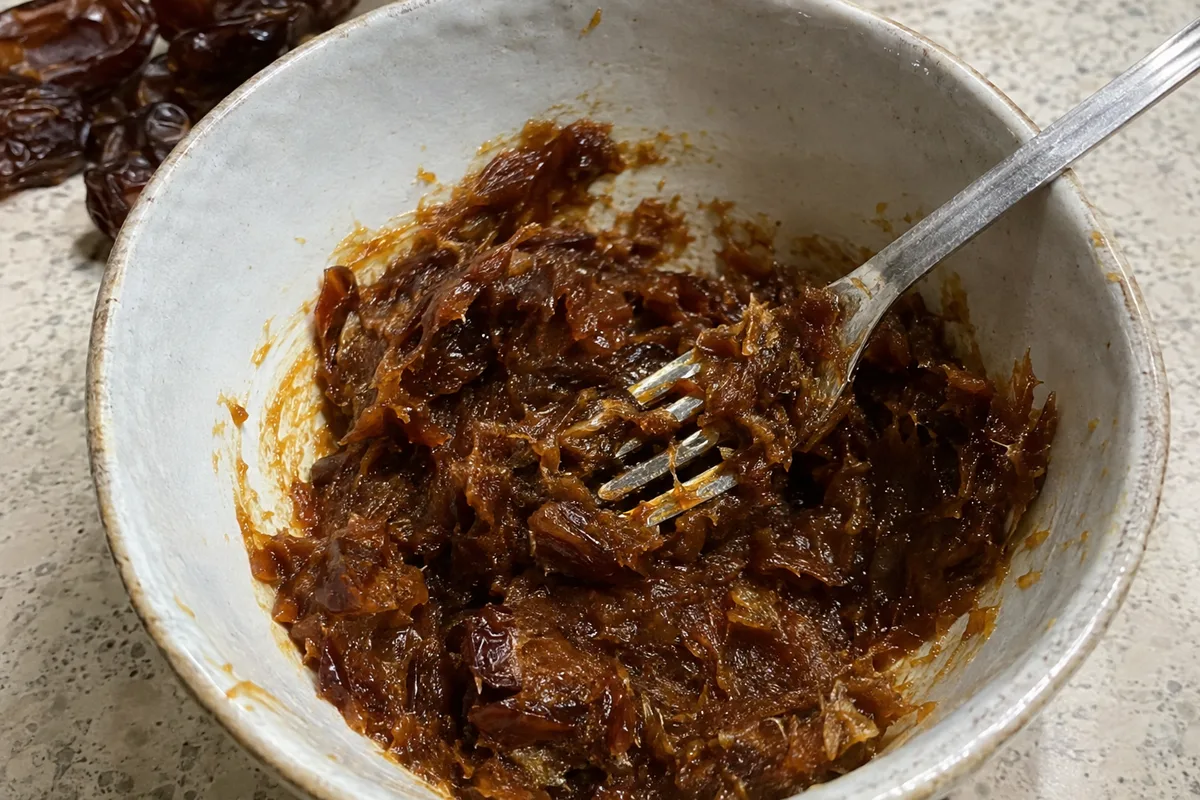
Date paste adds sweetness as well as moisture, so it does not always behave like dry sugar in a recipe. Replacing ingredients without adjusting the rest of the mixture can change the texture. For reliable results, use a recipe written specifically for whole dates or date paste.
Chopped dates can also be mixed into oat bars, muffins or energy bites. They help ingredients stick together and add a chewy finish. When tracking a homemade batch, record all the ingredients and divide the total between the portions you actually make.
- Mash softened dates into a spread
- Stir date paste into a sauce or dressing
- Mix chopped dates into muffins or oat bars
- Combine dates with oats, nuts or seeds for snack bites
Record dates in your food diary
Dates contain carbohydrate and fibre, and their concentrated sweetness means a small serving can make a clear difference to a food log. The exact energy and carbohydrate content depends on the variety, size and moisture level. Use the information from your packet when it is available.
Check whether the diary entry describes one date, a stated serving or a weight. A generic entry may not match the dates you are eating because individual fruits differ in size. Choose the closest description and record the number or weight you used.
Include dates that are blended, chopped into meals or eaten while preparing food. For filled dates, record both the fruit and the filling. Consistent entries are more useful than trying to make every estimate perfect.
- Match the diary entry to the variety where possible
- Check whether stones are included in the listed weight
- Record fillings and toppings separately
- Divide homemade recipes by the number of portions made