
Can You Eat a Mango Seed? A Practical Guide
A mango seed is not something to bite into whole: the hard outer husk surrounds a softer kernel. This guide explains the simplest way to eat the fruit left on the stone and what to consider before preparing the kernel.
What people mean by a mango seed
After cutting a mango, the large flat piece in the middle is often called the seed. More precisely, it is a hard, fibrous husk containing a kernel. The husk itself is not eaten and can be difficult to open safely.
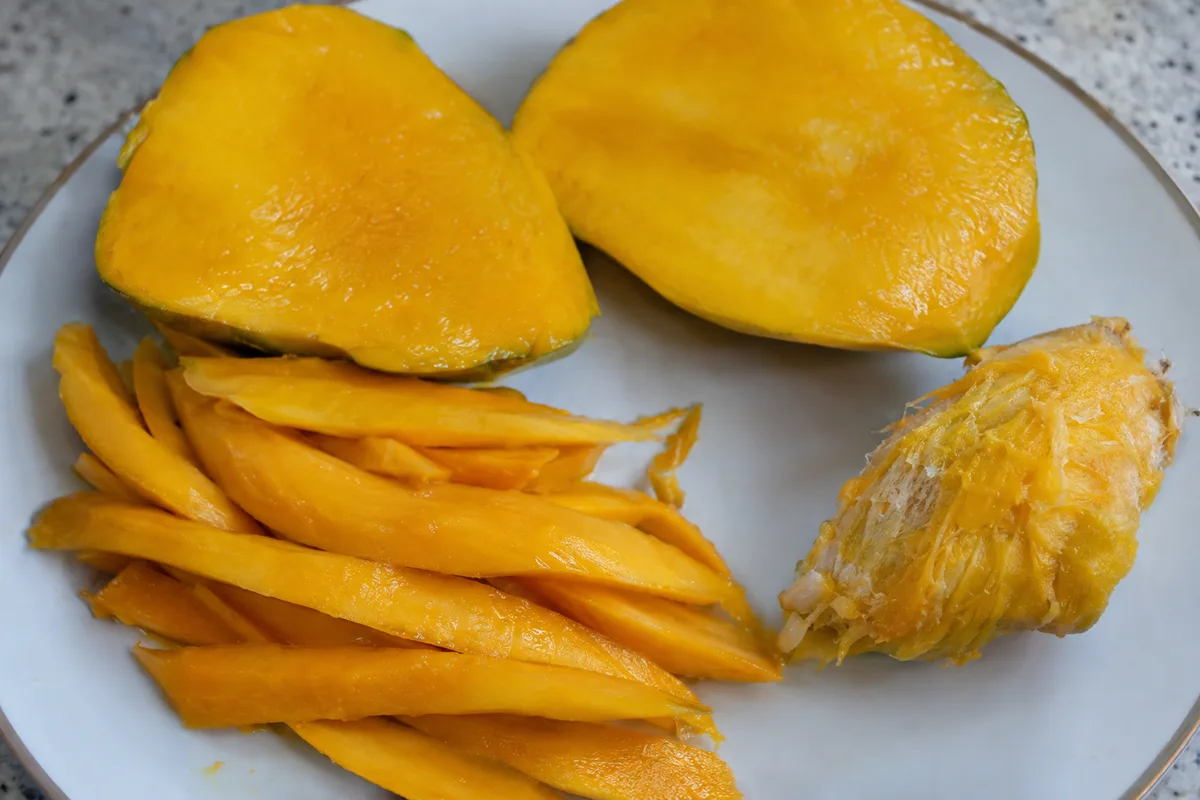
The soft mango flesh clinging to the outside is edible. The inner kernel is also used as food in some culinary traditions, but it needs careful preparation and is not usually eaten straight from the fruit. Its flavour and texture are quite different from sweet mango flesh.
- Mango flesh: sweet, soft and ready to eat
- Outer husk: hard, fibrous and not edible
- Inner kernel: pale, firm and normally processed before eating
The easiest option: eat the flesh around the stone
You do not need to open the husk to make use of the mango seed. Once the two fleshy cheeks have been removed, trim away any remaining strips of fruit. You can then hold the stone by one end and eat the soft flesh around it.
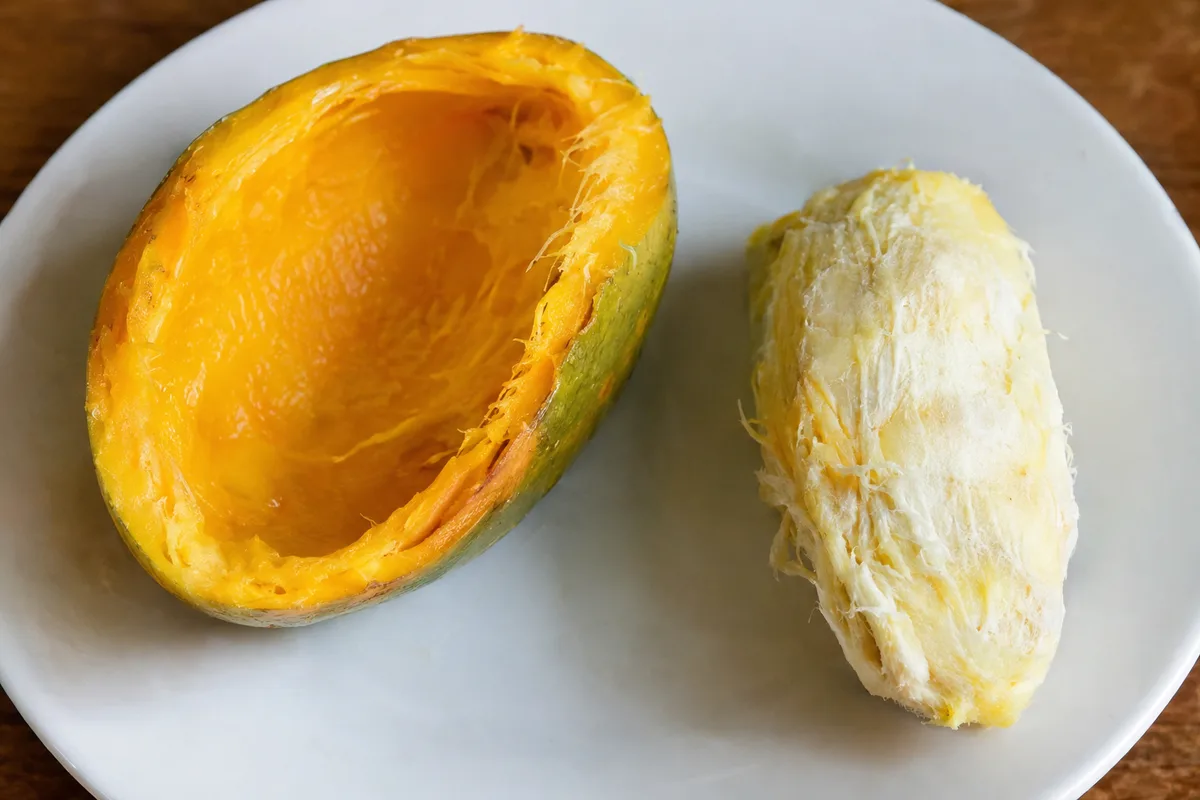
Ripe mango can be slippery, so work over a plate and keep your fingers away from the knife. Remove any loose, stringy husk fibres before eating. Discard the clean stone when no usable flesh remains.
- Wash and dry the whole mango
- Cut off the two fleshy cheeks
- Trim fruit from the narrow sides
- Eat or scrape off the flesh attached to the stone
- Discard the hard husk
Why the kernel needs more thought
The kernel inside the husk is not a smaller version of the mango fruit. It may taste bitter or astringent, and its texture can be dense. Raw kernels are not a familiar everyday food in many places, so it is sensible not to experiment casually.
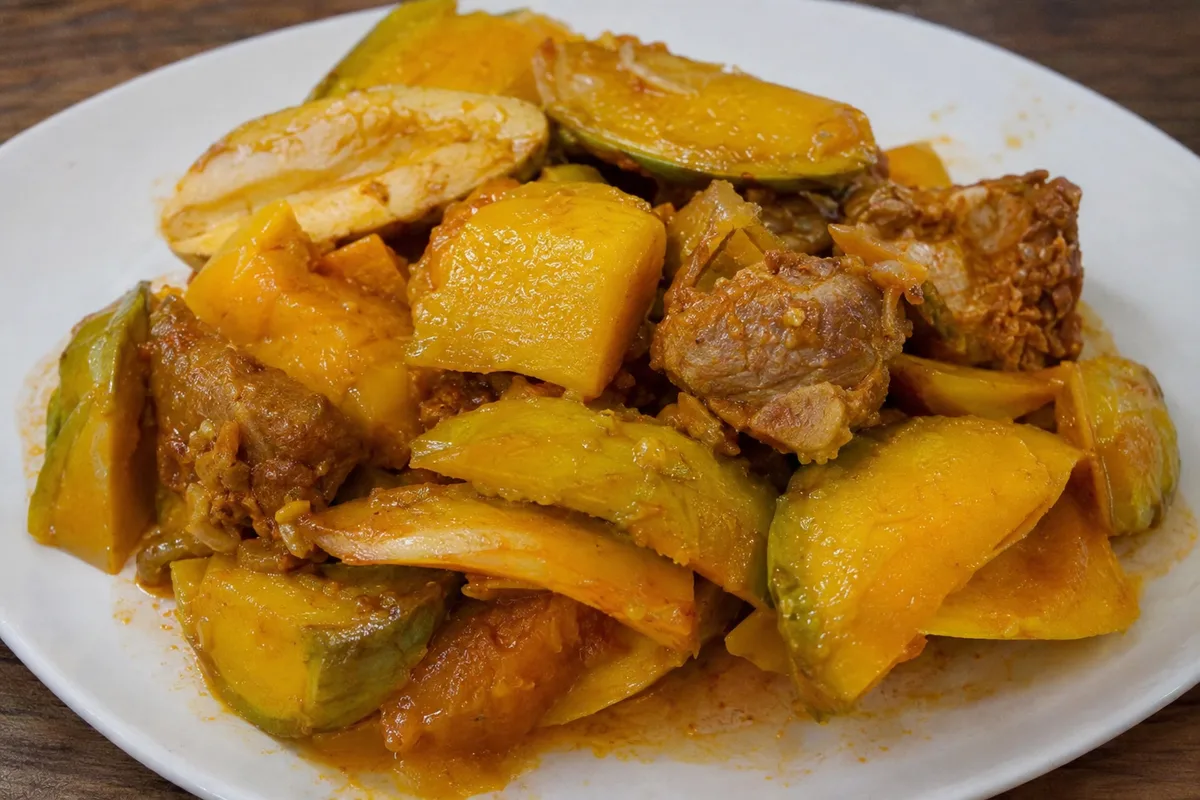
Traditional preparation can include peeling, soaking, boiling, roasting, drying or grinding. The method depends on the mango variety and the recipe being followed. There is no single home method that can be assumed suitable for every kernel.
- Do not bite through or chew the outer husk
- Do not assume a raw kernel is ready to eat
- Use an established food recipe with clear preparation steps
- Discard a kernel that smells unpleasant, looks mouldy or has spoiled
If a recipe uses mango kernel
Follow a trusted recipe written specifically for edible mango kernel rather than adapting instructions for mango flesh. Some recipes use a cooked kernel, while others use properly processed and ground kernel as one ingredient. Follow the stated soaking, heating and drying stages rather than skipping them.
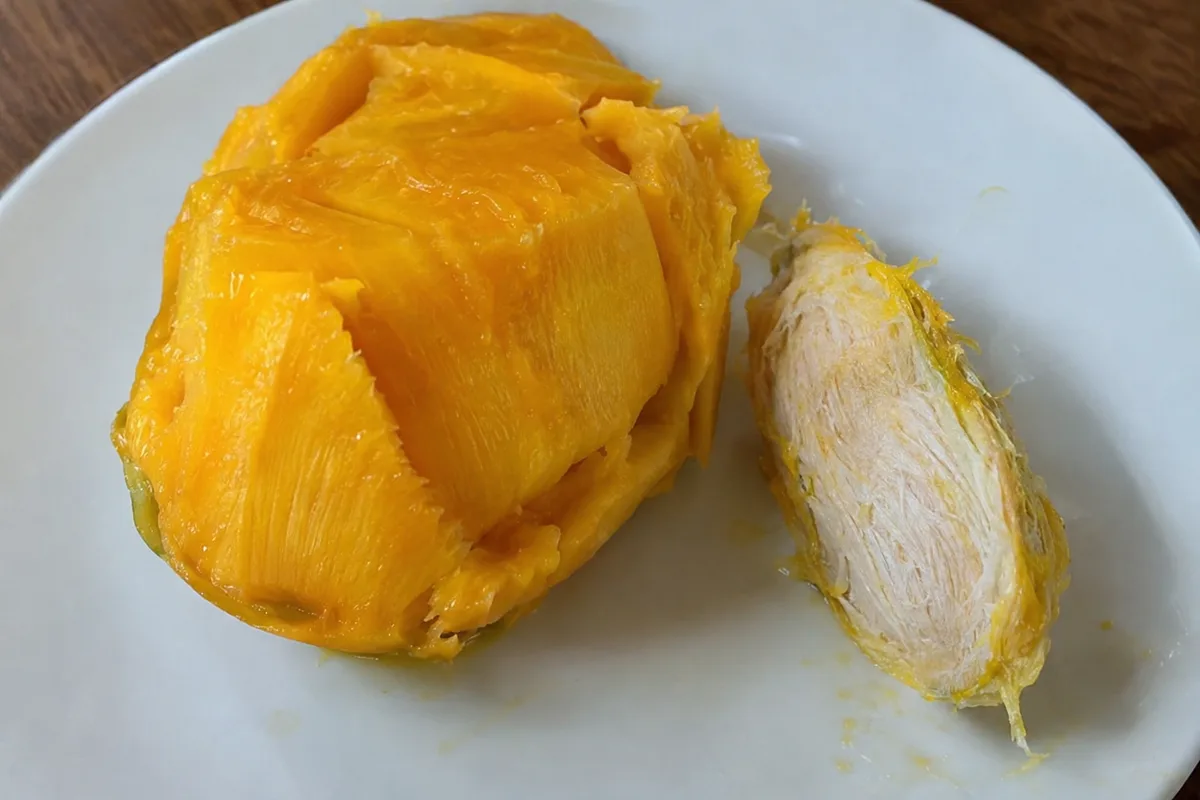
Opening the husk can be awkward because it is tough and may slip. Avoid forcing a knife towards your hand or holding the stone in your palm while cutting. If the recipe does not clearly explain safe opening and preparation, choose a different recipe.
- Start with a sound, clean mango stone
- Follow the recipe's opening method
- Remove the hard husk completely
- Carry out every stated soaking or heating step
- Use the prepared kernel only as directed
How to track it in your food diary
If you only eat the fruit attached to the stone, record it as mango flesh. The edible amount depends on the fruit, how closely it was trimmed and how much remained on the husk. Weighing or estimating only the flesh avoids counting the discarded stone.
Prepared mango kernel may not appear as a separate entry in every food database. If it is part of a documented recipe, record the recipe and the amount you ate from the finished dish. Do not log the weight of the whole stone as though every part were edible.
- Count only the portion you swallowed
- Exclude the husk and other discarded parts
- Keep flesh and kernel entries separate
- Use recipe information when the kernel is one ingredient
When it is better to discard the seed
Throw the stone away if the mango is spoiled, the husk is cracked and dirty inside, or the kernel has an unusual smell or visible mould. Cooking does not make spoiled food suitable to eat. When you are uncertain about its condition, discarding it is the safer choice.
Stop eating if the mango flesh or prepared kernel causes an immediate unpleasant reaction. Anyone who already knows they react badly to mango should avoid experimenting with the kernel. For most home cooks, enjoying the flesh around the stone is the simplest approach.
- Visible mould or decay
- A sour, rotten or otherwise unusual smell
- Contamination inside a cracked husk
- No reliable preparation instructions
- Any immediate unpleasant reaction