
How to Do the Upright Row with Control
The upright row trains the shoulders and upper back using a weight pulled close to the body. This guide explains the technique, common errors and simple ways to adjust the exercise.
What the upright row involves
The upright row is a standing pulling exercise, usually performed with dumbbells, a barbell or a cable. You pull the weight upwards in front of your body while your elbows move out to the sides. The shoulders and upper-back muscles do most of the work, while your hands mainly connect you to the weight.
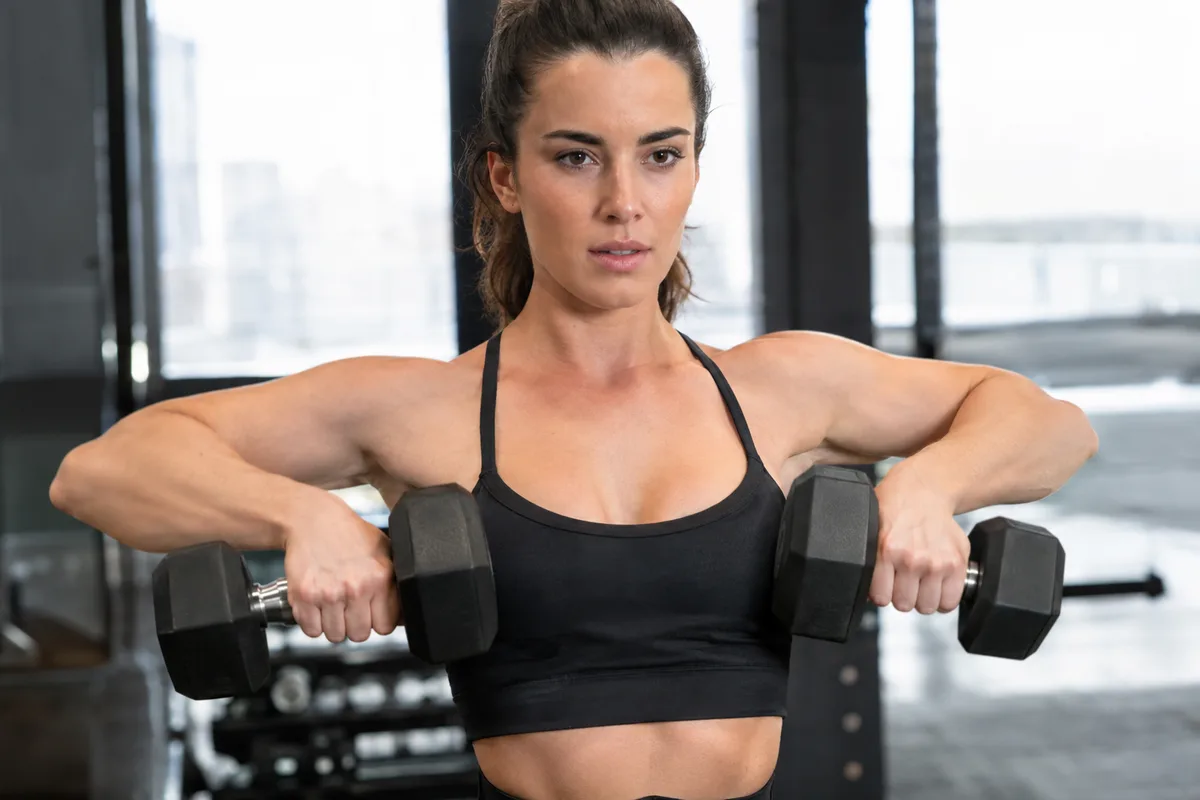
The movement does not need to finish with the weight near your chin. For many lifters, stopping around the lower chest or when the upper arms approach shoulder height feels more natural. Your comfortable range depends on your build, grip and shoulder movement.
- Stand tall with the weight in front of your thighs.
- Use an overhand grip with relaxed but secure hands.
- Keep the weight close to your body as it rises.
- Lead with your elbows rather than pulling with your hands.
Set up your starting position
Stand with your feet in a stable position and hold the weight in front of your thighs. Keep a slight softness in your knees rather than locking them. Your ribs should remain stacked over your pelvis, without leaning backwards.
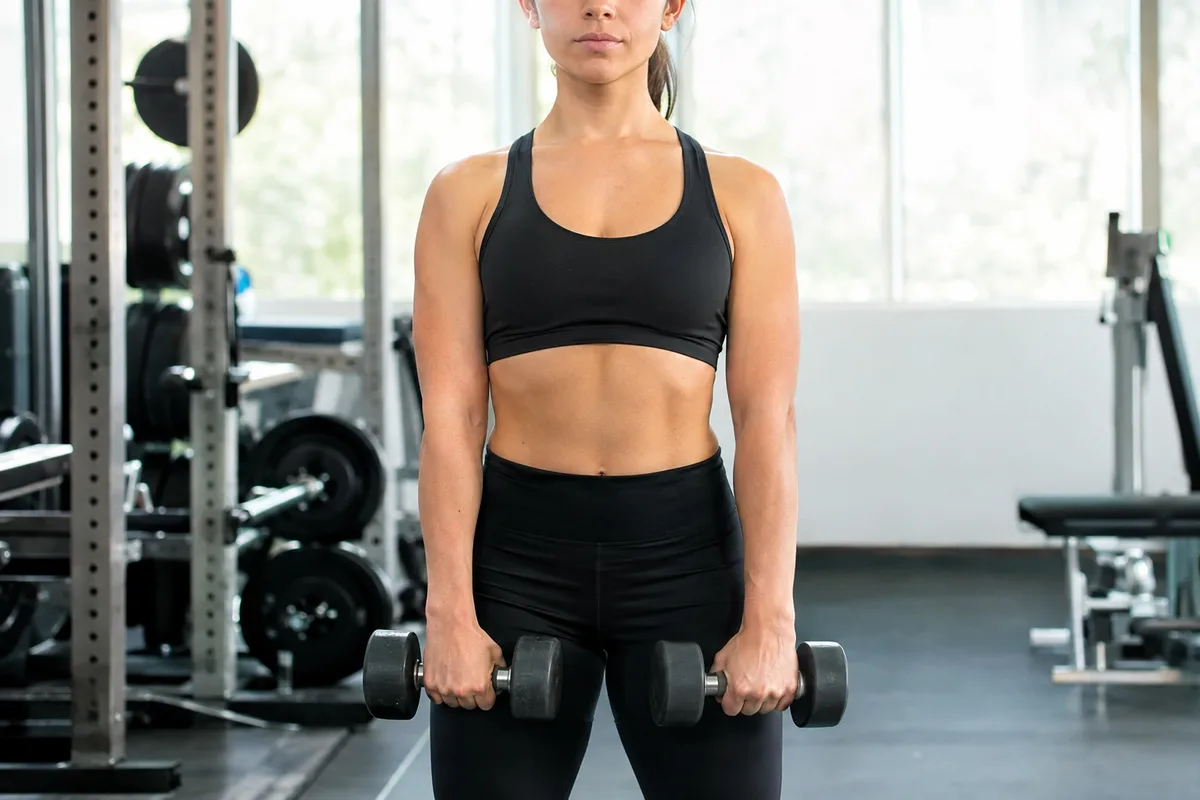
Choose a grip that lets your arms move comfortably. A shoulder-width grip is a practical starting point, but moving the hands slightly wider may feel better. Before lifting, gently brace your middle and let your shoulders rest away from your ears.
- Plant your whole foot on the floor.
- Face forwards with your neck in a neutral position.
- Hold the weight with straight wrists.
- Start with your arms long but not forcefully locked.
- Use a load you can move without swinging.
Perform the upright row step by step
Breathe in and steady your body before beginning the repetition. Pull the weight upwards along the front of your body, allowing your elbows to travel out and up. Keep your torso still so the shoulders and upper back create the movement.
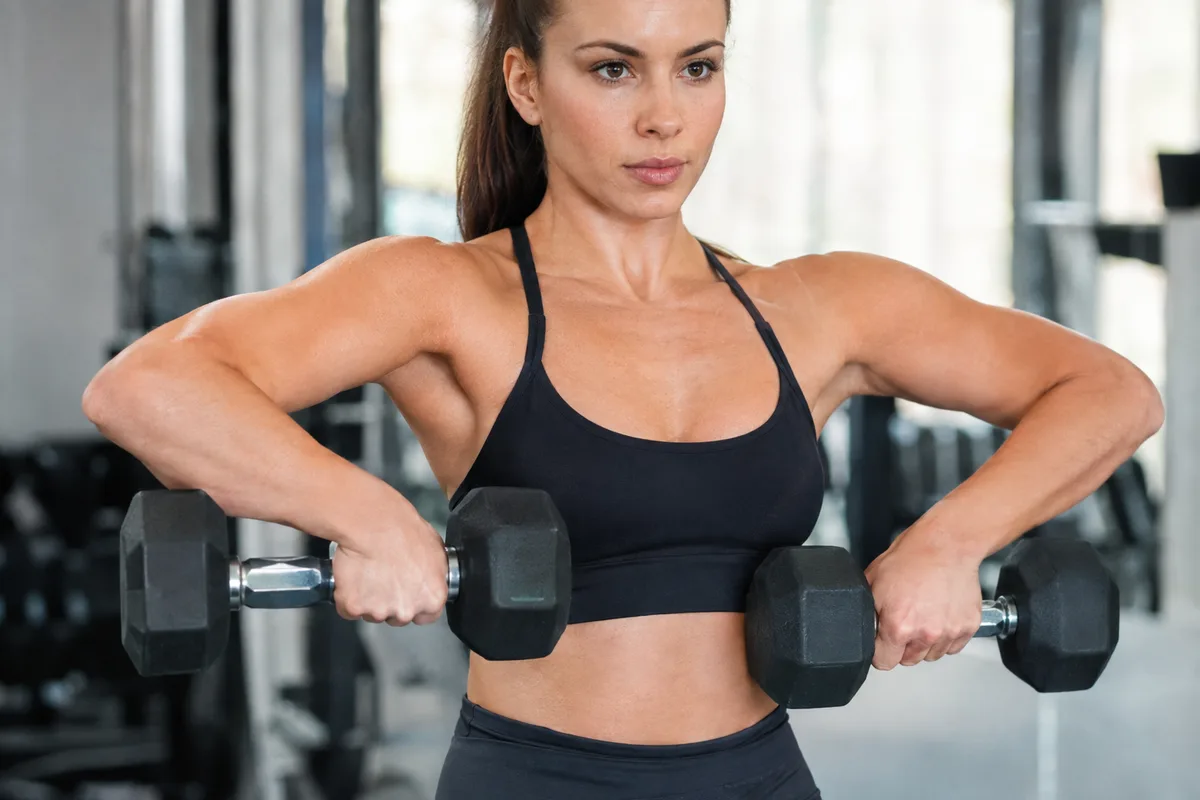
Stop when you reach a comfortable height or when keeping the same posture becomes difficult. Pause briefly without shrugging the weight higher. Lower it slowly to the starting position, then reset before the next repetition.
The upward and downward phases should both look deliberate. If the weight drifts away from you or your body starts rocking, reduce the load or finish the set. The number of repetitions depends on your experience, aim and wider training programme.
- Brace before each pull.
- Lead upwards with the elbows.
- Keep the weight close to the torso.
- Stop within a comfortable range.
- Lower under control.
Avoid the most common mistakes
A heavy load can turn the upright row into a whole-body swing. Bending and straightening the knees or leaning backwards gives the weight momentum, but reduces control. A lighter load usually makes it easier to keep the movement focused.
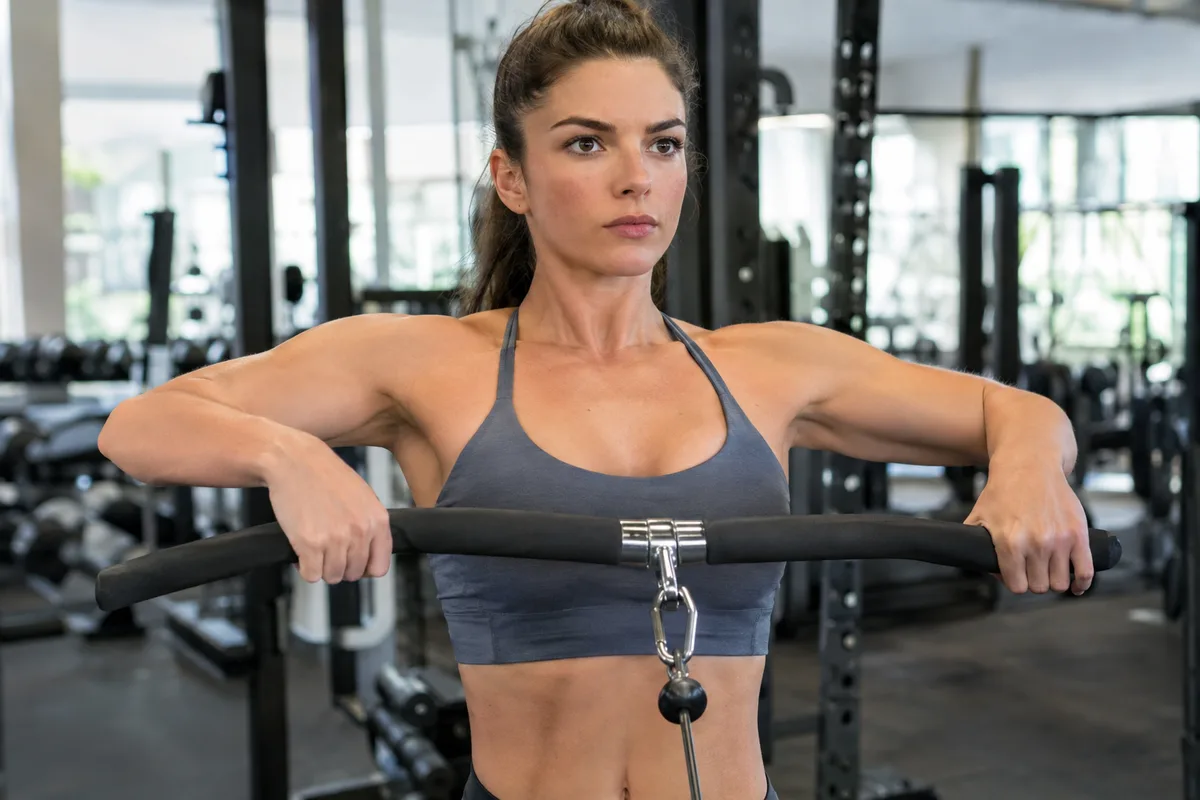
Another common error is pulling as high as possible regardless of comfort. More height does not automatically make the exercise more useful. Stop before your shoulders roll forwards, your wrists bend sharply or the movement feels pinched.
Watch the relationship between your hands and elbows. The elbows should guide the pull, but they do not need to rise dramatically above the shoulders. Keep your wrists broadly in line with your forearms rather than letting the weight hang from bent wrists.
- Do not bounce the weight from the thighs.
- Do not lean back to finish the pull.
- Do not force the elbows higher than feels comfortable.
- Do not let the weight travel far from the body.
- Do not rush the lowering phase.
Choose a version that suits you
Dumbbells allow each arm to find its own path, which can make grip width less restrictive. A barbell keeps both hands fixed in one position, while a cable provides steady resistance through the movement. The best option is the one you can control without forcing your range.
You can also use a wider grip or stop the pull lower. These are adjustments to the same exercise rather than signs that a repetition is incomplete. If the movement remains uncomfortable after changing the load, grip and height, choose another controlled shoulder or upper-back exercise.
Include upright rows where they fit naturally within your programme. Avoid using tiredness as a reason to rush the technique, particularly near the end of a session. Record the equipment, load and comfortable stopping point so you can repeat the same set-up next time.
- Dumbbells for independent arm paths.
- A barbell for a fixed two-handed grip.
- A cable for continuous resistance.
- A wider grip for a different arm position.
- A lower stopping point for a shorter range.