
The best resistance bands for your workouts
The best resistance band is one that suits the movements you want to do and provides manageable resistance. This guide explains the main styles, what to look for and how to use bands alongside food tracking.
What makes a resistance band right for you
There is no single resistance band that is best for every workout. A useful band should suit your chosen movements, feel secure and let you maintain steady control. The right resistance also depends on your current ability and the exercise you are doing.
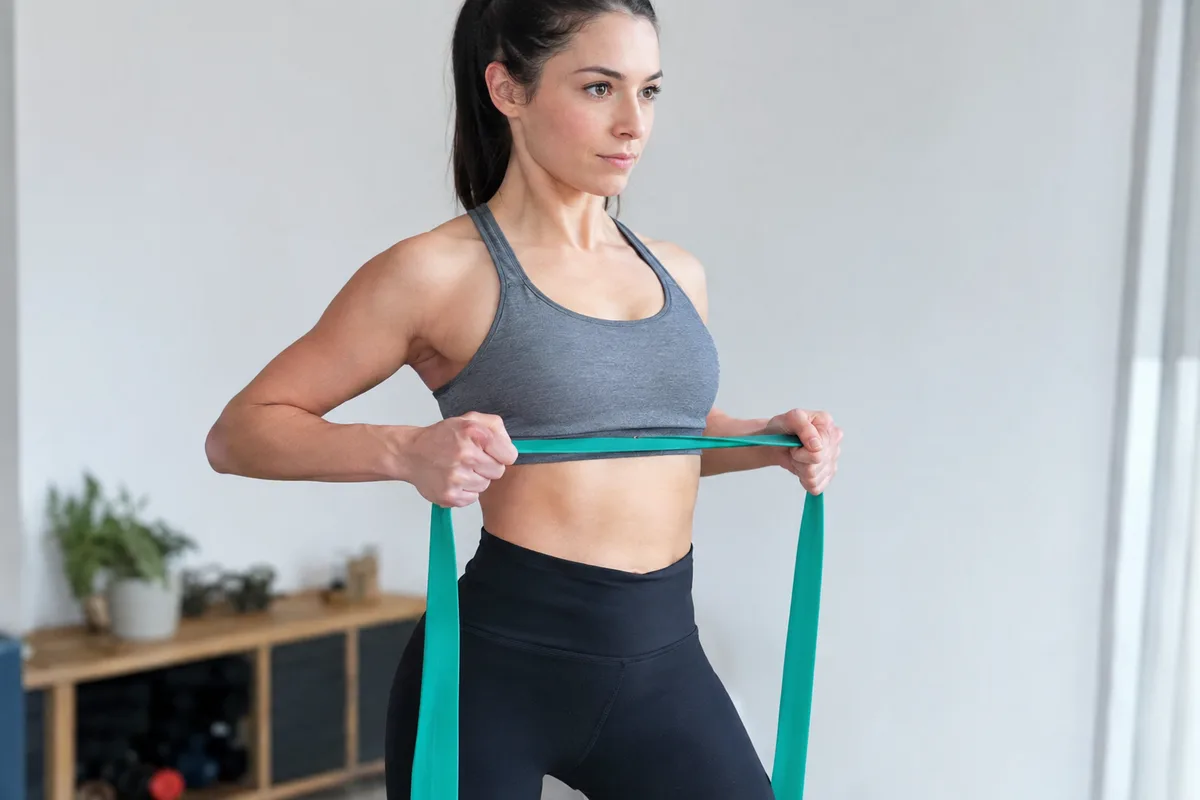
Think first about where and how you plan to train. A compact loop may suit lower-body movements, while a longer band gives you more options for presses, pulls and assisted exercises. Handles can feel familiar, but they are not essential for an effective workout.
Resistance labels are not standard across every manufacturer. A medium band from one range may feel different from a medium band elsewhere, so colour alone is not a reliable guide. Start with a level you can stretch smoothly without jerking or losing your position.
- Choose a style that works for your usual exercises
- Look for a smooth, even stretch
- Check that the band feels secure in your hands or around your legs
- Use a resistance that allows controlled repetitions
The main resistance band styles
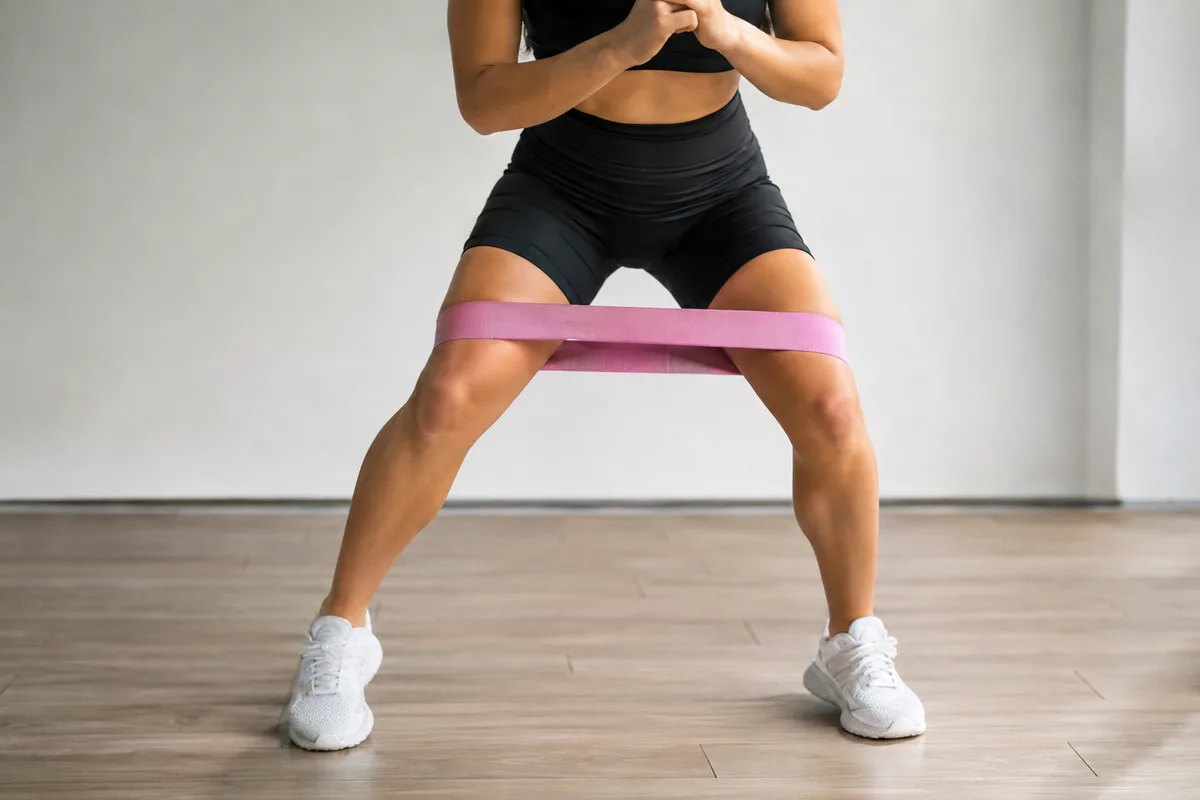
Small loop bands form a continuous circle and are commonly placed above the knees, around the thighs or around the ankles. They work well for side steps, bridges and other lower-body movements. Fabric versions tend to stay flat, while rubber versions are usually easier to stretch through a wider range.
Long loop bands can be held, stood on or secured around a stable anchor. Their length makes them suitable for rows, presses, pull-aparts and assisted bodyweight movements. Different hand positions can shorten or lengthen the working section and change how demanding the exercise feels.
Tube bands usually have handles and may include an anchor for certain movements. The handles can make pulling and pressing more comfortable, particularly when the band would otherwise press into your hands. Flat therapy-style bands have no handles or closed loop, making them simple to grip or tie.
- Small loops for side steps and lower-body work
- Long loops for versatile full-body sessions
- Handled tubes for familiar pulling and pressing movements
- Flat bands for adjustable grips and gentle resistance
How to choose the resistance level
A band becomes harder to stretch as it lengthens, so resistance changes during the movement. This feels different from lifting a fixed load, where the weight itself stays the same. Your starting position and the band's length both affect the challenge.
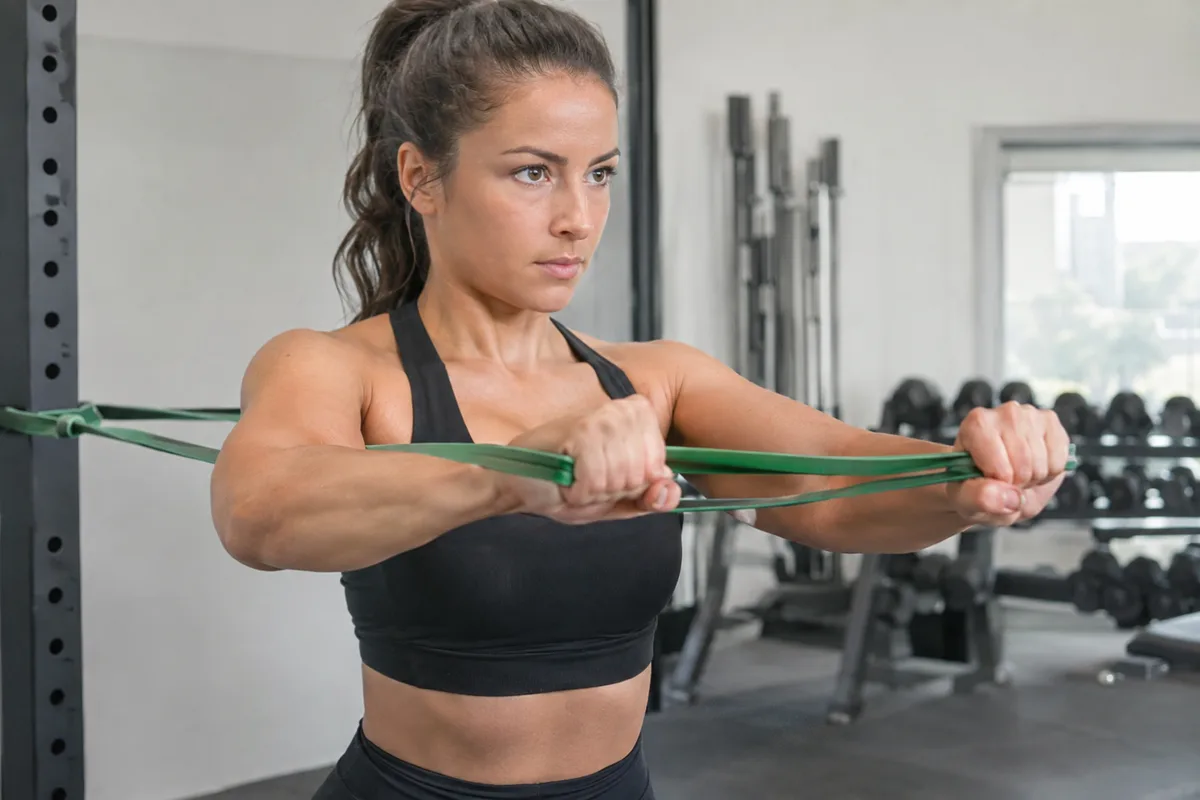
Choose a level that lets you complete each repetition with a steady tempo and a comfortable range of motion. If you have to shorten the movement, hold your breath or snap back to the start, the band may be too strong. If the band remains loose for much of the exercise, it may be too light or poorly positioned.
You may need more than one resistance level because different muscle groups have different capacities. A stronger band might suit a row, while a lighter one may work better for a shoulder movement. The right number of bands depends on the exercises in your programme.
- Begin with light tension in the starting position
- Move without swinging or bouncing
- Pause if the band pulls you out of alignment
- Change the band or your grip when control starts to fade
Features worth checking
The material should feel consistent, without thin patches, cracks or rough joins. Fabric loops can reduce rolling during leg exercises, although they may offer less stretch than rubber. Rubber bands are versatile, but their surfaces should be kept away from sharp edges.
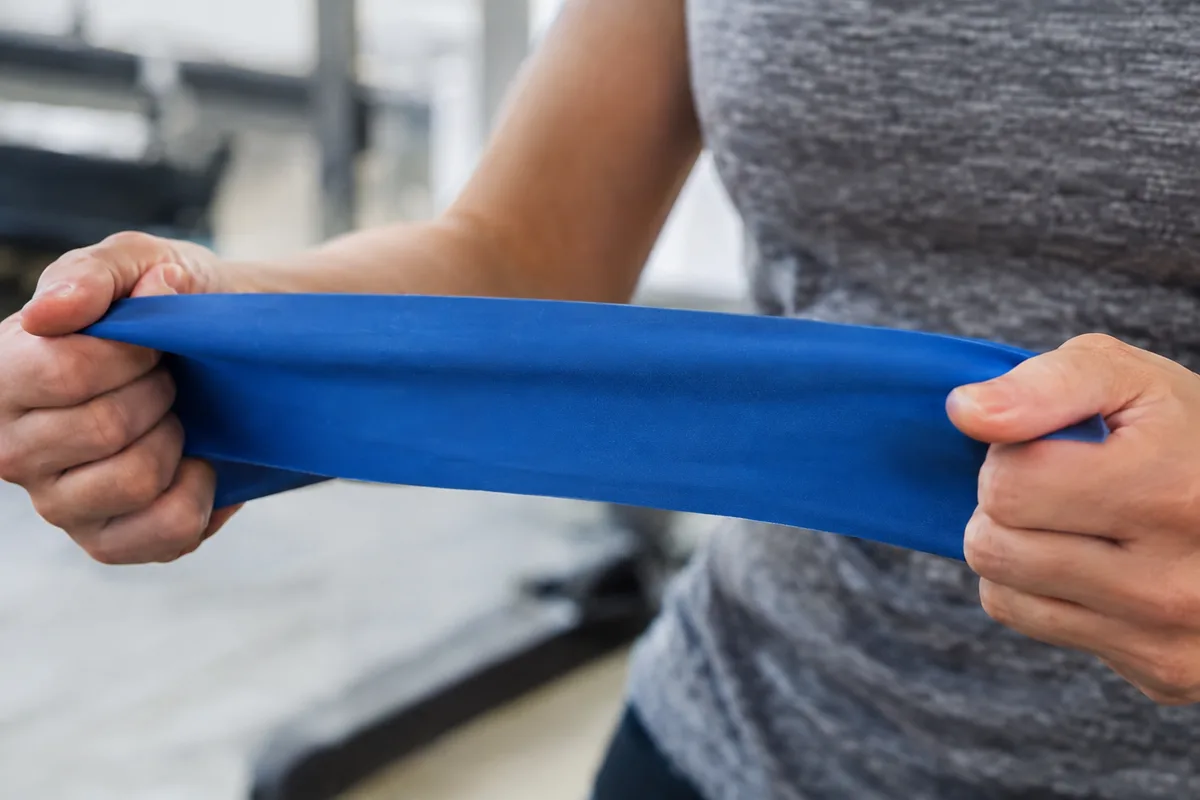
Length matters because it determines which positions and exercises are practical. A long band can often be shortened by changing your grip, while a short loop cannot be made longer. Check that you can reach the intended start and finish positions without forcing the band.
Anchors, handles and clips should remain firmly attached throughout the movement. Any anchor point must be stable and appropriate for the direction of pull. Inspect the complete setup before each session rather than assuming it is secure.
- Even material with no visible damage
- Enough length for the intended range of motion
- Secure handles, seams and attachment points
- A surface that does not slip or roll excessively
Using bands safely and effectively
Check a band before every workout and stop using it if you notice cracks, tears, thinning or damaged stitching. Keep it away from sharp jewellery, rough flooring and pointed furniture. Release tension slowly so the band does not snap back.
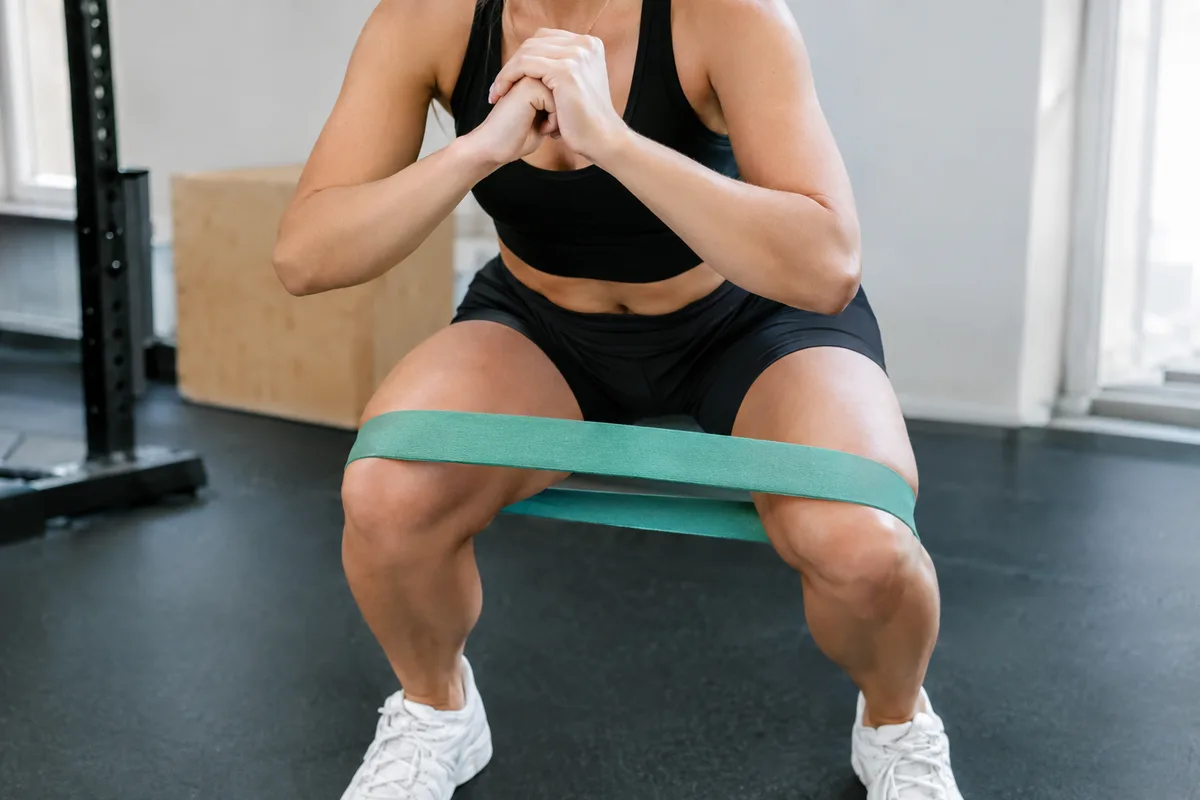
Set up each exercise before adding more tension. Your stance should feel stable, and the band should follow a clear path without rubbing against your face or neck. When anchoring it, pull gently in the intended direction before beginning the full movement.
Progress does not have to mean choosing the strongest band available. You can slow the movement, add a pause, improve your range or complete more controlled repetitions. Change one part at a time so you can tell how the workout has become harder.
- Inspect the band before use
- Test anchors with gentle tension
- Keep each return phase controlled
- Store bands away from heat and direct sunlight
- Replace damaged bands rather than repairing them
How band workouts fit with calorie tracking
Resistance band sessions can support a wider activity routine, but their energy use is difficult to estimate precisely. It varies with the exercises, resistance, pace, rest periods, session length and the person doing the workout. A tracker may provide an estimate, but it should not be treated as an exact figure.
Keep logging food in the consistent way you already use rather than making large changes for one workout. If you record exercise, use the same method each time so your entries are easier to compare. Trends across your routine are generally more useful than trying to calculate the effect of every repetition.
The best band setup is ultimately the one that helps you train with good control and repeat your programme consistently. A small selection of suitable resistance levels is often more practical than choosing bands only by colour or a maximum resistance label. Let the exercises you enjoy and perform well guide your choice.