
How to Choose the Best Punching Bag for Your Training
The best punching bag is one that fits your space, training style and experience. A practical choice should feel stable, comfortable to strike and easy to use regularly.
Start with the way you train
Think about what you want to practise before comparing bags. A heavy hanging bag suits powerful punches and combinations, while a lighter bag moves more and can help with timing, accuracy and footwork.
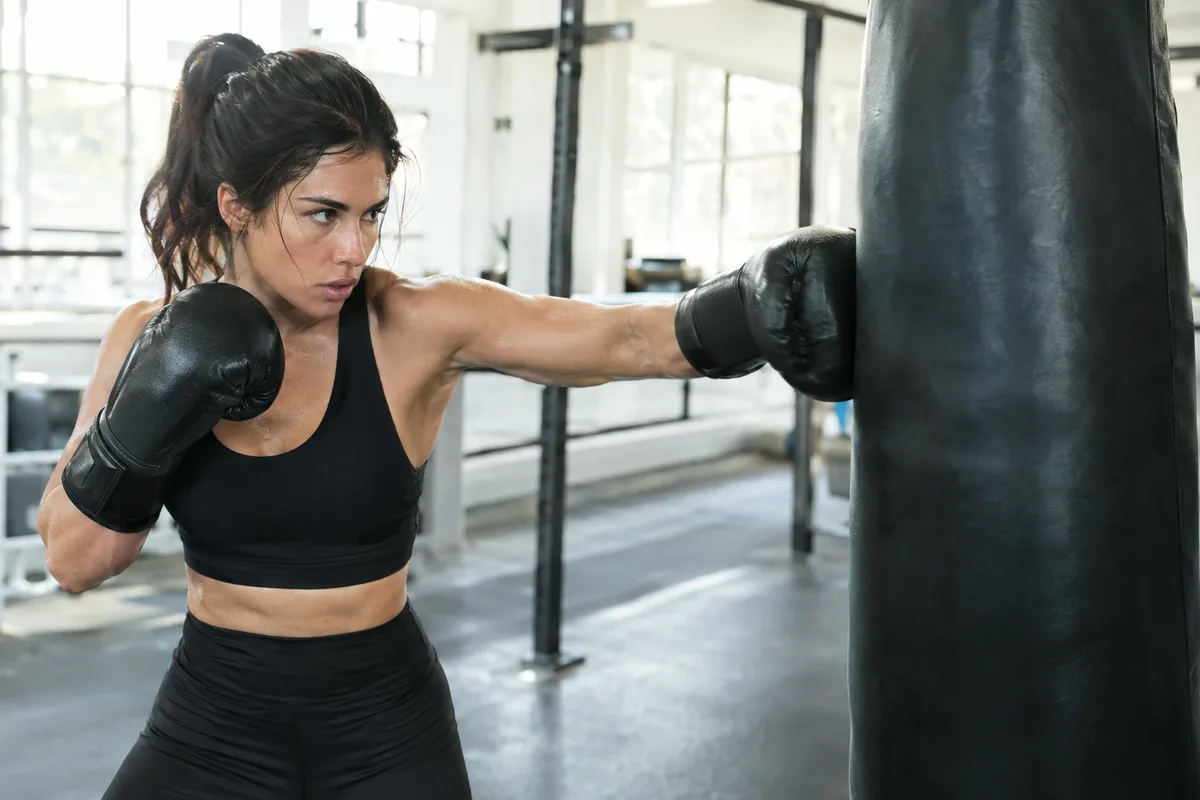
Your usual exercise and food logs can provide useful context. If boxing sessions are part of a wider routine, choose a bag that supports the type and length of training you can realistically maintain rather than one designed for more advanced work.
Choose between hanging and freestanding bags
Hanging bags usually swing naturally and leave clear floor space when removed, but they need a secure fixing point. Check that the ceiling, beam or wall mount is suitable, and get professional guidance if you are unsure.
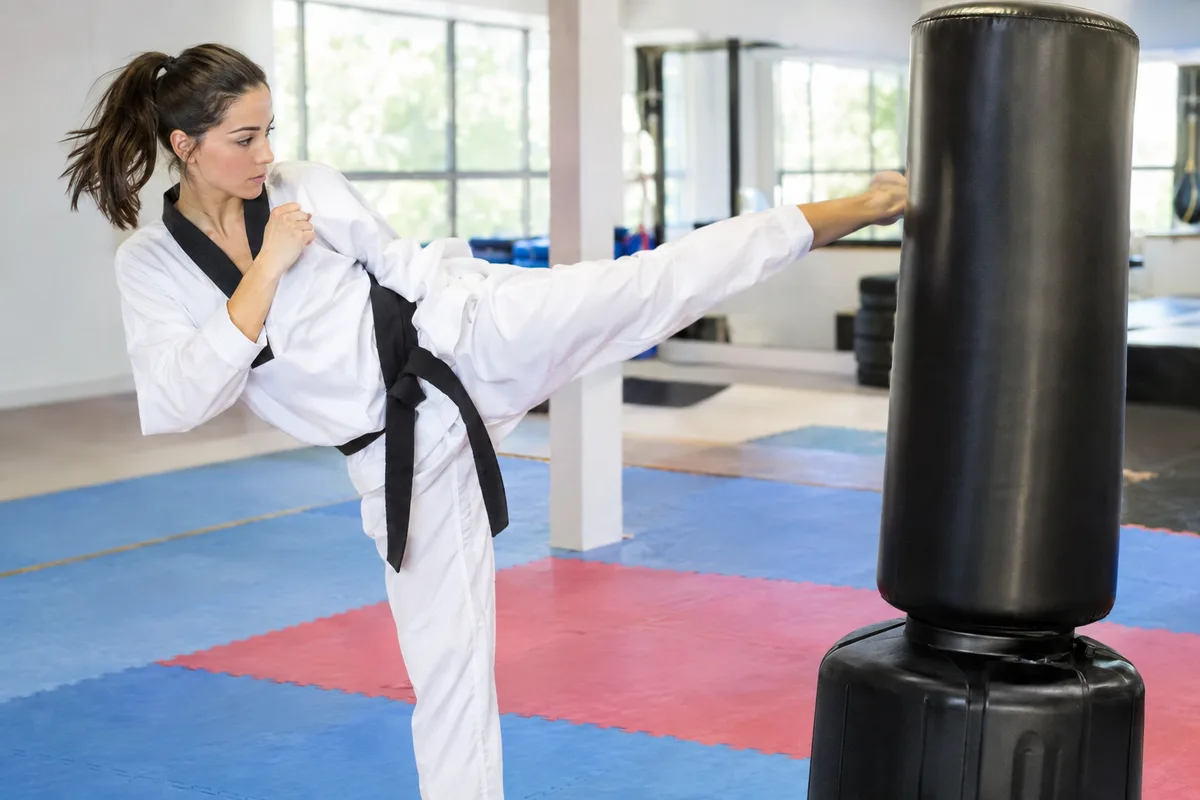
Freestanding bags have a base that sits on the floor, making them useful where permanent fittings are not possible. They can be moved, although the filled base may be cumbersome, and some models shift during forceful combinations.
Look at size, filling and outer material
Bag dimensions and weight affect how it responds to a strike, and the right level depends on the person. A bag that is too light may move excessively, while one that is too firm or heavy may feel unforgiving for a beginner.
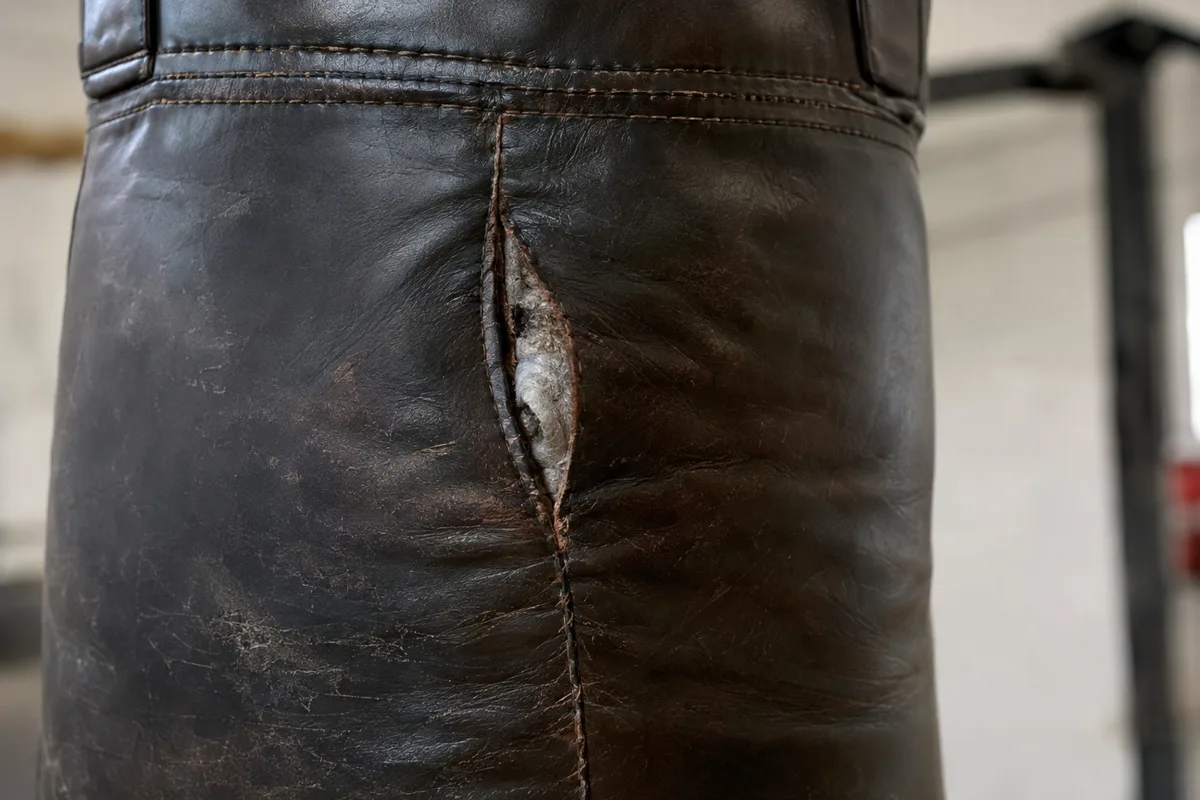
The filling should feel even, without pronounced hard spots. Synthetic outer materials are generally simple to wipe clean, while leather can feel supple but still needs regular care; neat stitching and reinforced hanging points matter with either option.
Check the space and practical details
Measure the training area and allow room to move around the bag safely. Include the bag’s swing or the width of its base, and keep the area clear of furniture, sharp edges and fragile objects.
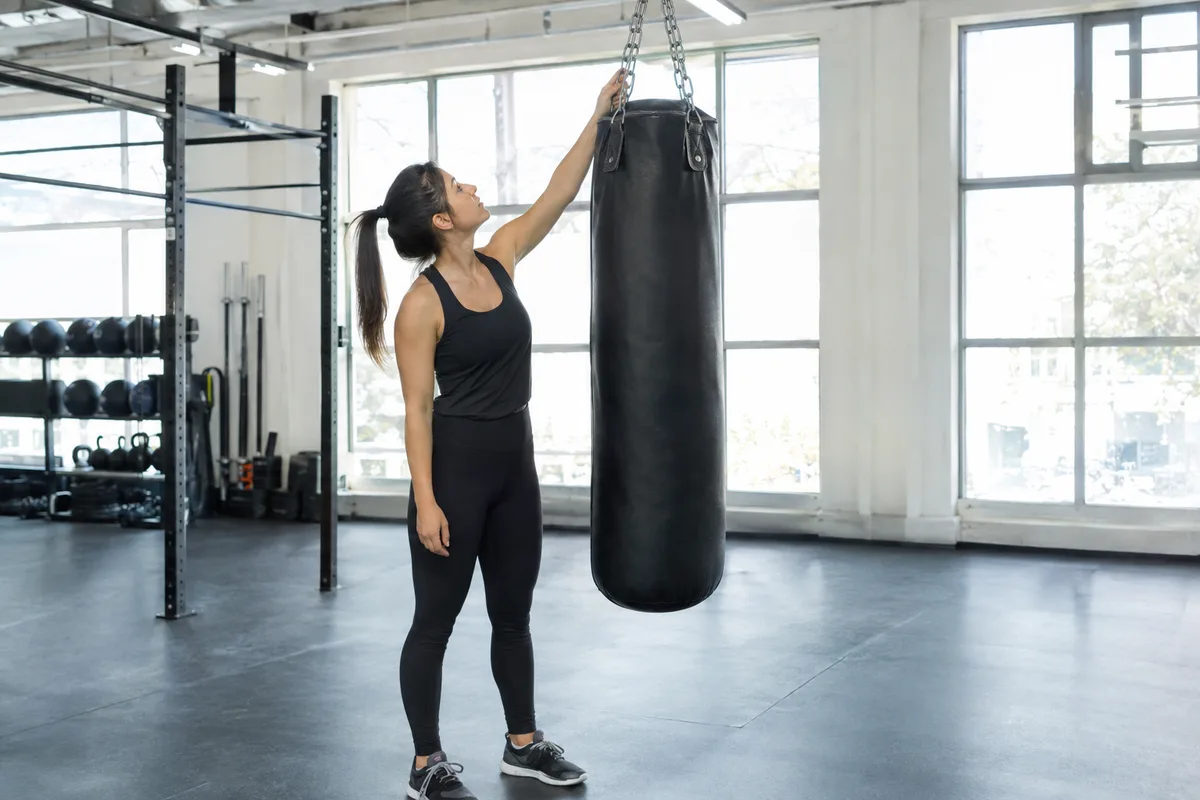
Consider noise, floor protection and how often the bag will need to be moved or stored. Gloves, wraps and controlled technique also help make sessions more comfortable, so begin steadily and record the activity in a consistent way alongside the food intake you already track.