
How to Choose the Best Waterproof Trainers for Your Routine
The best waterproof trainers are the ones that suit your route, pace and usual weather. This guide explains what to look for, how to judge fit and where waterproof footwear has limits.
Start with where you will wear them
Waterproof trainers are designed to keep outside moisture from passing through the upper. They can be useful on wet pavements, muddy paths and damp grass, but different designs suit different settings. A pair made for a smooth commute may not provide the grip or support wanted on an uneven trail.
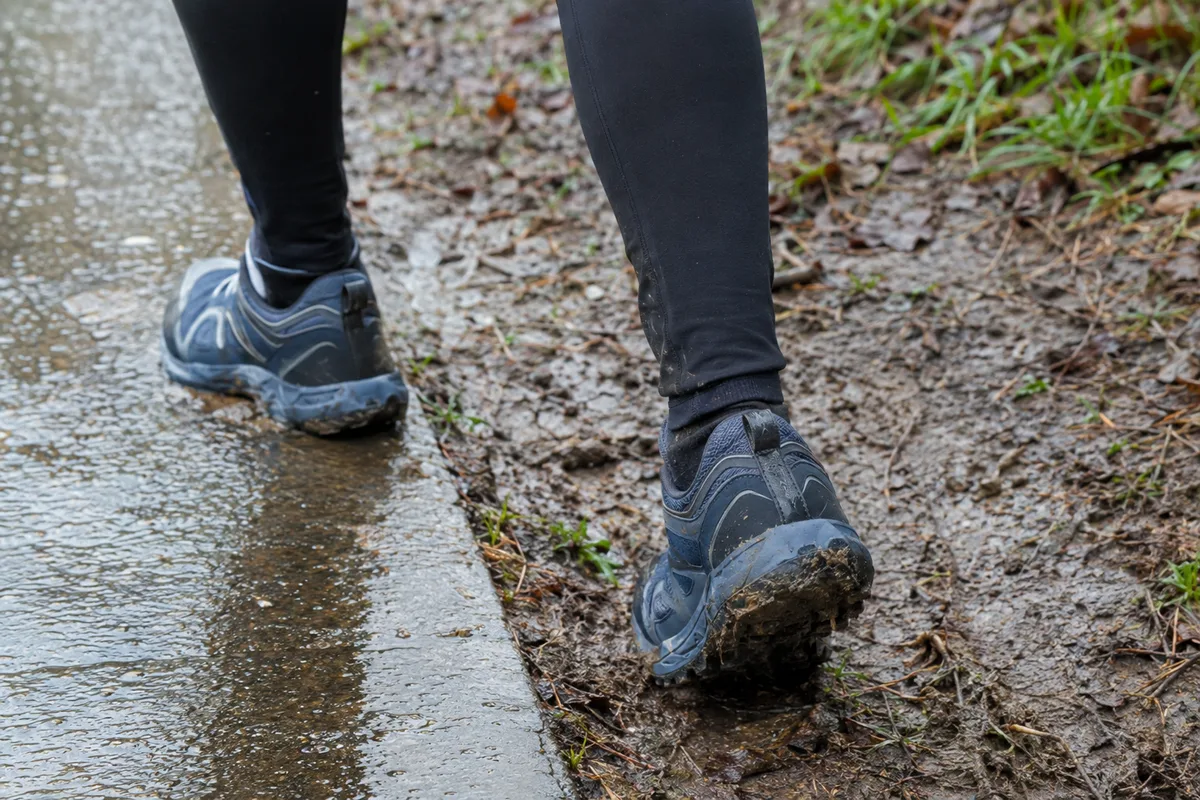
Think about your normal route rather than the harshest conditions you might encounter once. Note the surfaces, depth of puddles and length of time you usually spend outside. This gives you a practical basis for comparing options instead of relying on a waterproof label alone.
- Road and pavement: prioritise flexible cushioning and grip on smooth wet surfaces
- Park paths: look for a tread that can handle damp soil as well as paving
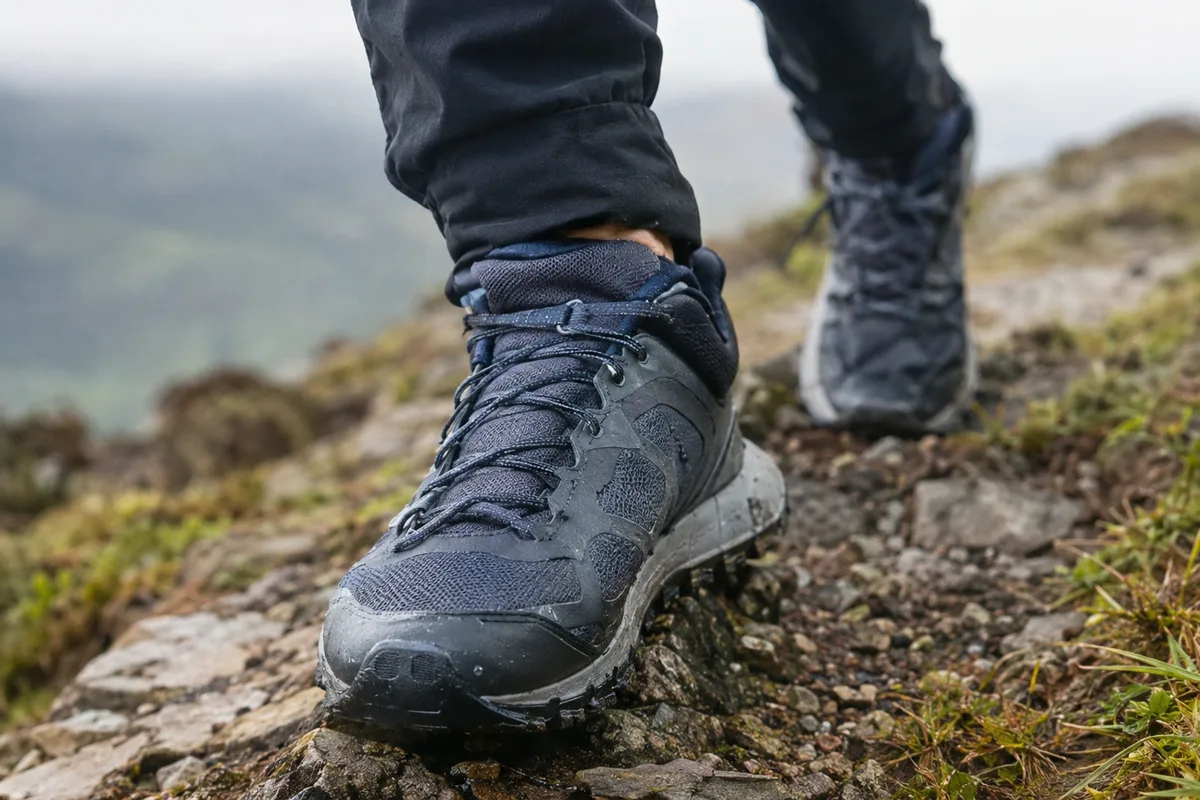
- Uneven trails: consider deeper tread, foot support and a more protective upper
- Daily commuting: check that the trainer feels comfortable for both walking and standing
Understand waterproof and water-resistant designs
Waterproof and water-resistant do not mean the same thing. A waterproof trainer normally uses a membrane or sealed construction intended to block water from entering through the upper. A water-resistant trainer may cope with light splashes but can let moisture through during prolonged rain or deeper puddles.
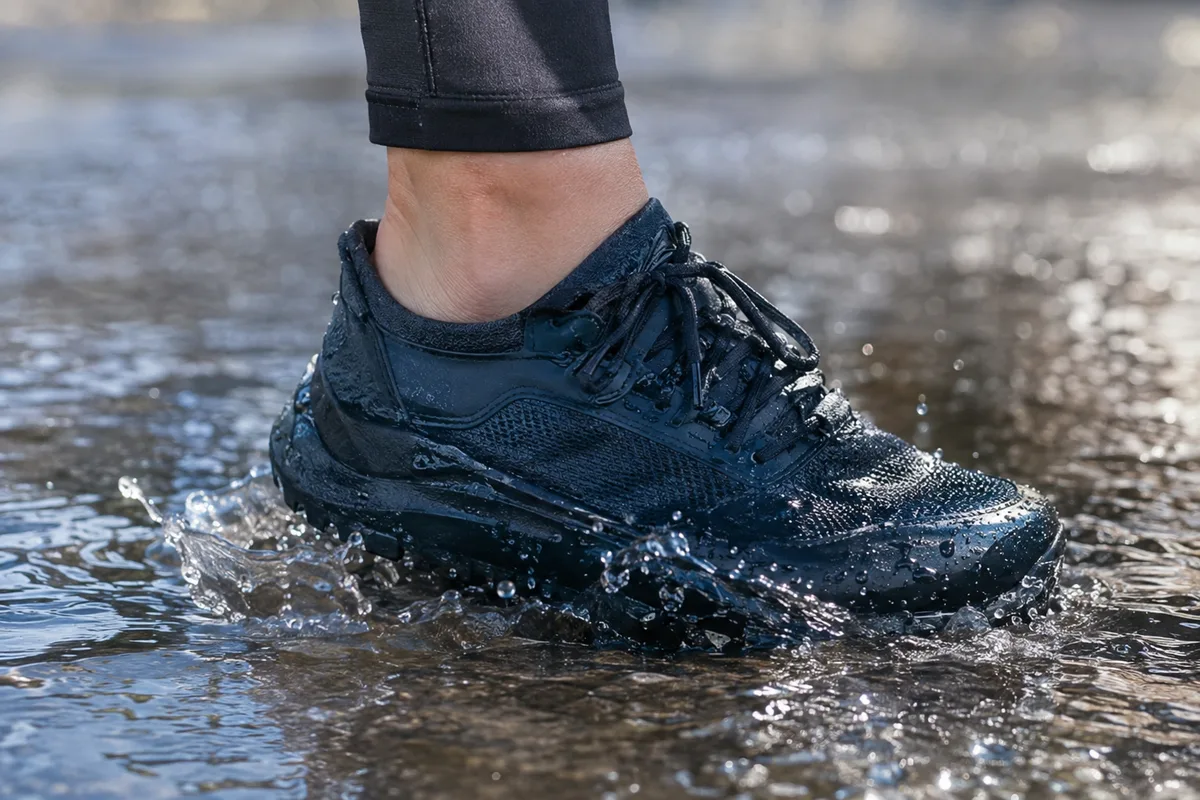
Even a waterproof upper cannot stop water from entering through the opening around your ankle. Low-cut trainers are therefore less useful when water rises above the collar. Stitching, the tongue design and the join between the upper and sole also affect how well the whole shoe keeps water out.
- A gusseted tongue helps reduce gaps around the laces
- Sealed seams limit entry points through the upper
- A raised sole edge can add protection from shallow splashes
- A higher collar offers more coverage but may feel less flexible
Balance weather protection with comfort
A waterproof layer can make a trainer feel warmer than a highly ventilated mesh design. Moisture from your feet still needs somewhere to go, so waterproof does not always mean dry-feeling in every situation. Your pace, the weather and how much your feet perspire will influence comfort.
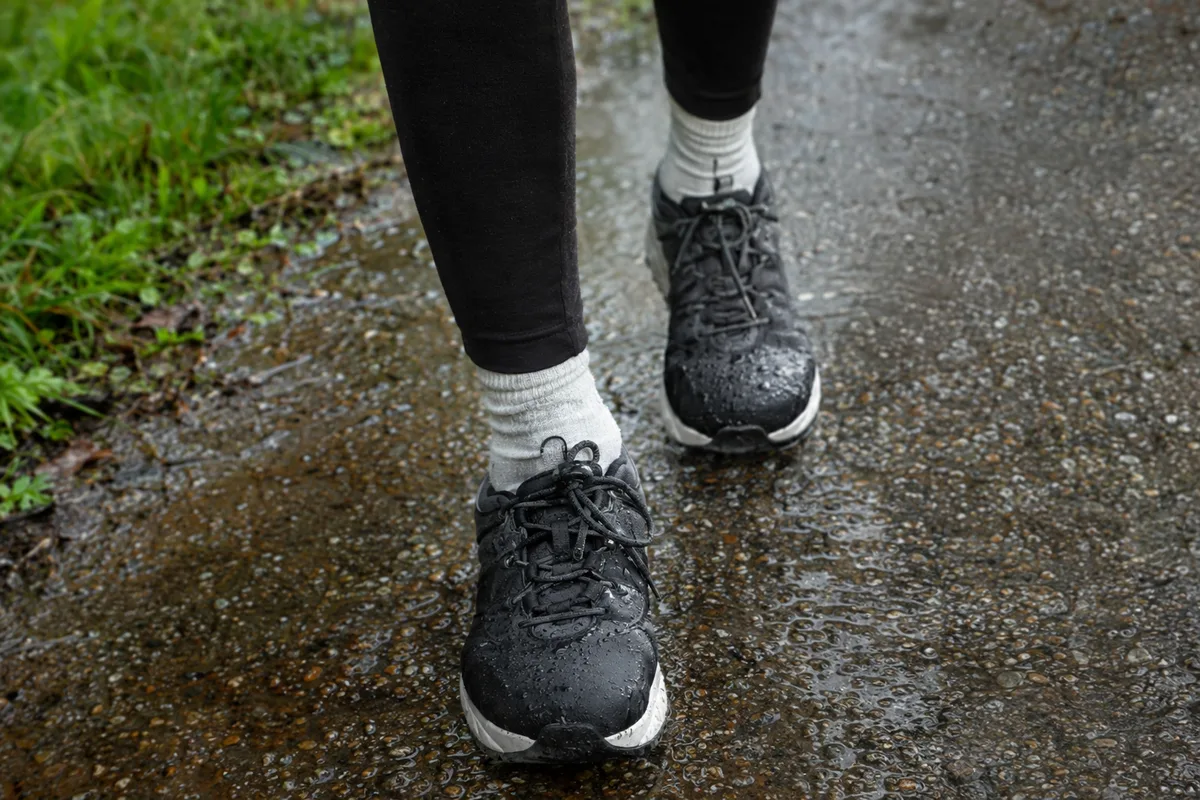
Socks also affect how the trainer feels. A fabric that moves moisture away from the skin may be more comfortable than one that stays damp, while bulky socks can change the fit. Test the intended sock thickness with the trainers and check that your toes can move without your heel lifting.
- Allow room for your toes to spread naturally
- Check for rubbing around the heel and ankle collar
- Walk and bend your foot to find stiff pressure points
- Compare comfort with the socks you normally wear
Check grip on the surfaces you use
Waterproofing keeps moisture out, while the outsole helps you stay steady. These are separate features, so a waterproof upper does not guarantee reliable grip. Examine the tread pattern and the type of surface it appears designed to contact.
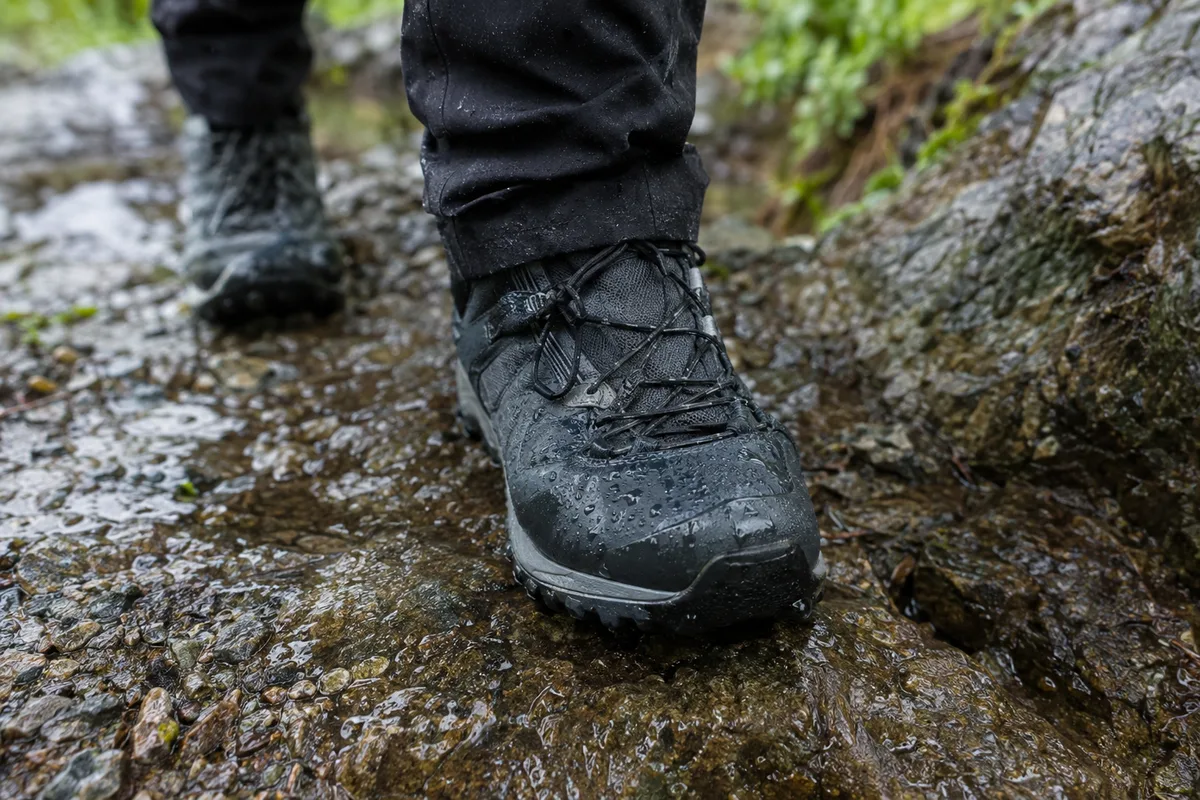
Closely spaced, shallow tread can feel smooth on hard paths but may collect mud. Deeper, widely spaced lugs can clear soft ground more readily, although they may feel less natural on pavement. No outsole removes the need to shorten your stride and move carefully on slippery ground.
- For wet paving, look for broad contact areas and a textured rubber outsole
- For mud, look for deeper lugs with visible spaces between them
- For mixed routes, choose a moderate tread rather than either extreme
- Check that the outsole bends where your foot naturally flexes
Judge fit before relying on the label
Waterproof trainers may feel firmer because their upper contains extra layers. The fit should be secure without squeezing the sides or pressing on the toes. Brand sizing is not fully consistent, so the size printed inside is less important than how the trainer feels in motion.
Feet can take up more room later in the day or after sustained movement. Try walking on a flat surface, turning and stepping downhill if a suitable test area is available. A good fit should hold the heel steadily while leaving enough space at the front for comfortable movement.
- Check both feet because they may not feel identical
- Lace the trainers as you would for a normal outing
- Notice pressure across the widest part of the foot
- Make sure your toes do not touch the front when stepping down
- Avoid assuming that a firm trainer will soften in every tight area
Look after waterproof trainers properly
Mud and grit can remain around seams, tread and flex points, so regular cleaning helps keep the trainers usable. Remove loose dirt with a soft brush, then follow the maker's care instructions for the upper material. Strong heat can affect adhesives and fabrics, so let wet trainers dry naturally in a ventilated place.
Waterproof performance can change as the upper becomes worn or heavily creased. Some materials have specific aftercare requirements, while others only need gentle cleaning. Check the guidance for the exact pair rather than applying a general coating that may alter the colour, finish or breathability.
- Remove mud before it dries into the tread
- Take out removable insoles to help the inside dry
- Loosen the laces and open the tongue for better airflow
- Keep the trainers away from direct heat
- Inspect seams and flex points for visible wear