
How to Choose the Best Greek Yoghurt for You
The best Greek yoghurt depends on what you want from the meal or snack. This guide explains how to compare labels, spot added extras and choose a yoghurt that suits your taste and nutrition goals.
Start with what ‘best’ means for you
There is no single Greek yoghurt that is best for every person or every meal. You might want a filling breakfast, a lighter snack, a creamy dessert or an ingredient for savoury cooking. Decide on the job first, then compare products that can do it.
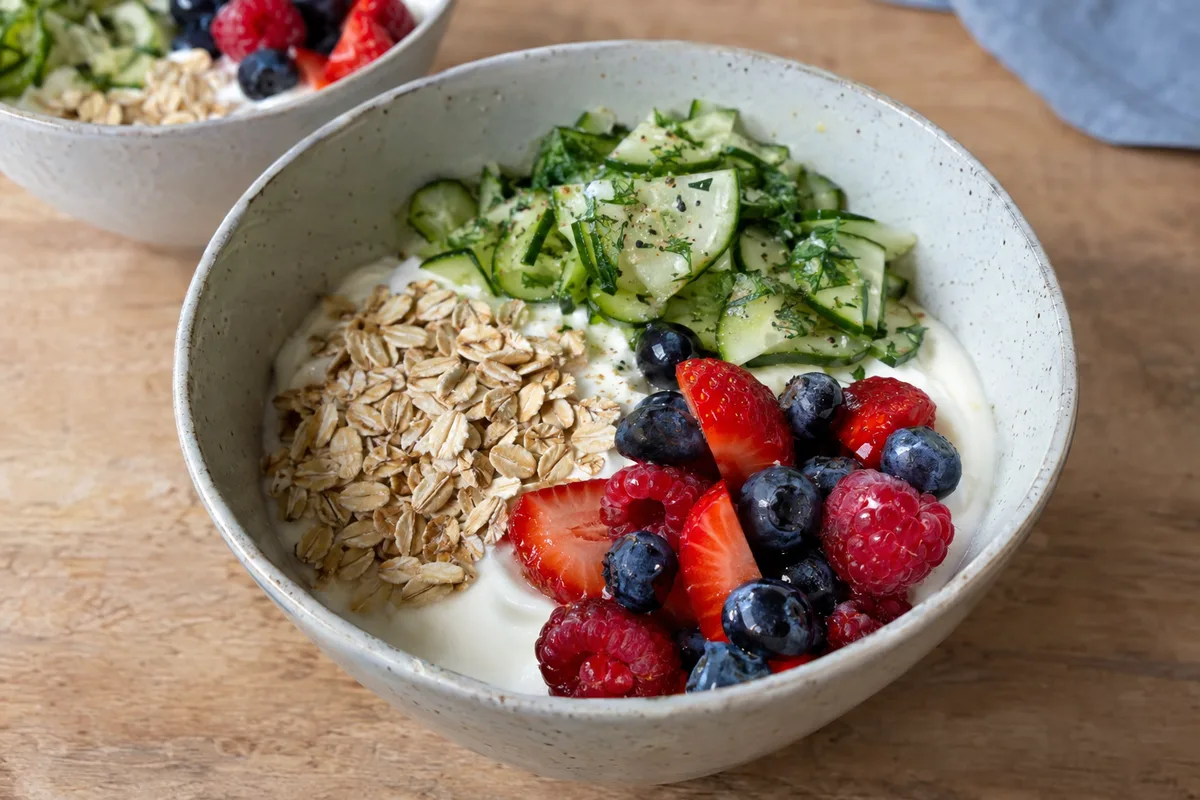
Your food log can show where yoghurt needs to fit. If a meal is already high in fat, you may prefer a lower-fat option, while a plain full-fat yoghurt may bring richness to a lighter meal. Protein, total calories, sweetness and portion size can all matter, but their importance depends on your own targets.
- For breakfast: look for enough protein and a texture you enjoy with fruit or oats
- For a snack: choose a portion that fits comfortably into your daily log
- For dessert: compare flavoured options with plain yoghurt and your own toppings
- For cooking: choose plain yoghurt without sweeteners or dessert flavours
Compare protein and calories on the same basis
Greek yoghurt is strained, which usually makes it thicker and can concentrate its protein. However, the amount varies between products, so the words on the front of the pot are not enough. Use the nutrition panel to compare protein directly.
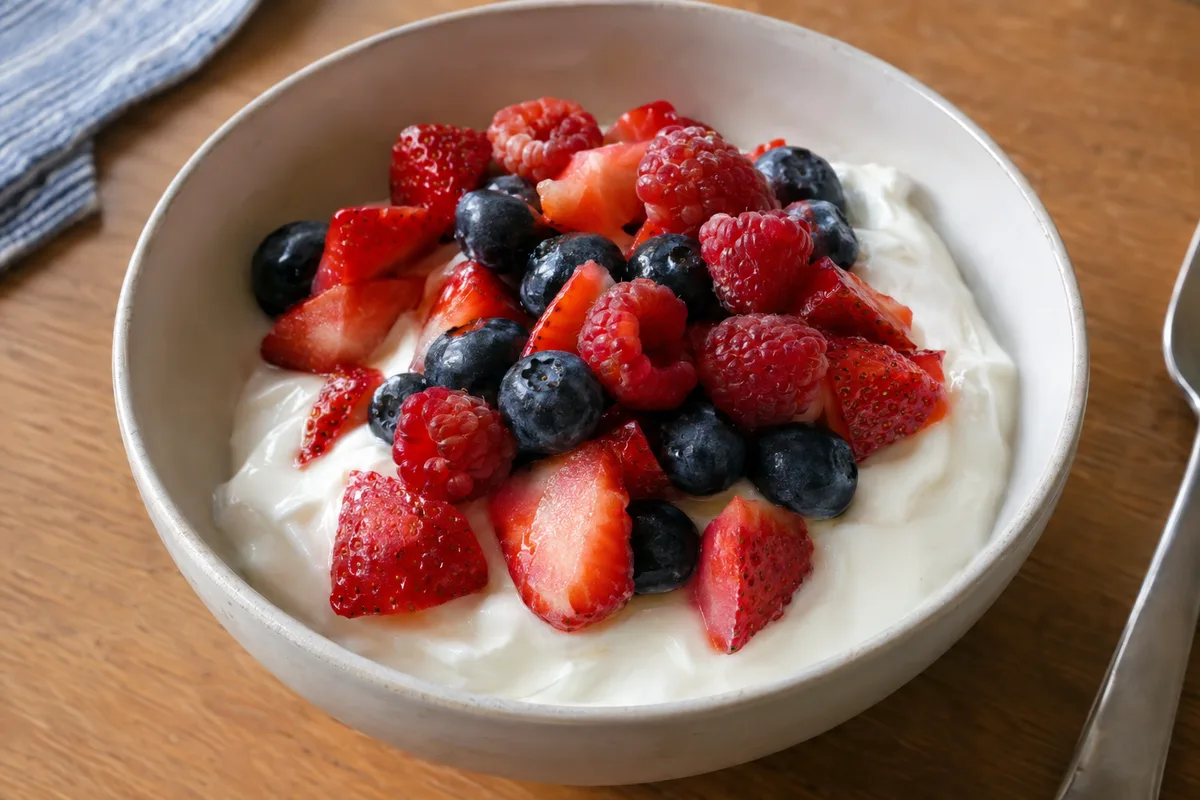
Check figures per 100g when comparing one yoghurt with another, as pot and serving sizes may differ. Then log the amount you actually eat rather than assuming the suggested serving matches your bowl. A higher-protein choice is not automatically better if you dislike the taste or regularly add extras to make it enjoyable.
- Compare protein per 100g across similar products
- Check calories per 100g as well as per serving
- Notice whether the pot contains one serving or several
- Weigh or estimate your usual portion consistently when logging
Choose a fat level that suits the meal
Greek yoghurt ranges from fat-free versions to richer whole-milk varieties. Fat changes the calorie content because it provides more energy per gram than protein or carbohydrate. It also affects thickness, flavour and how satisfying the yoghurt feels to eat.
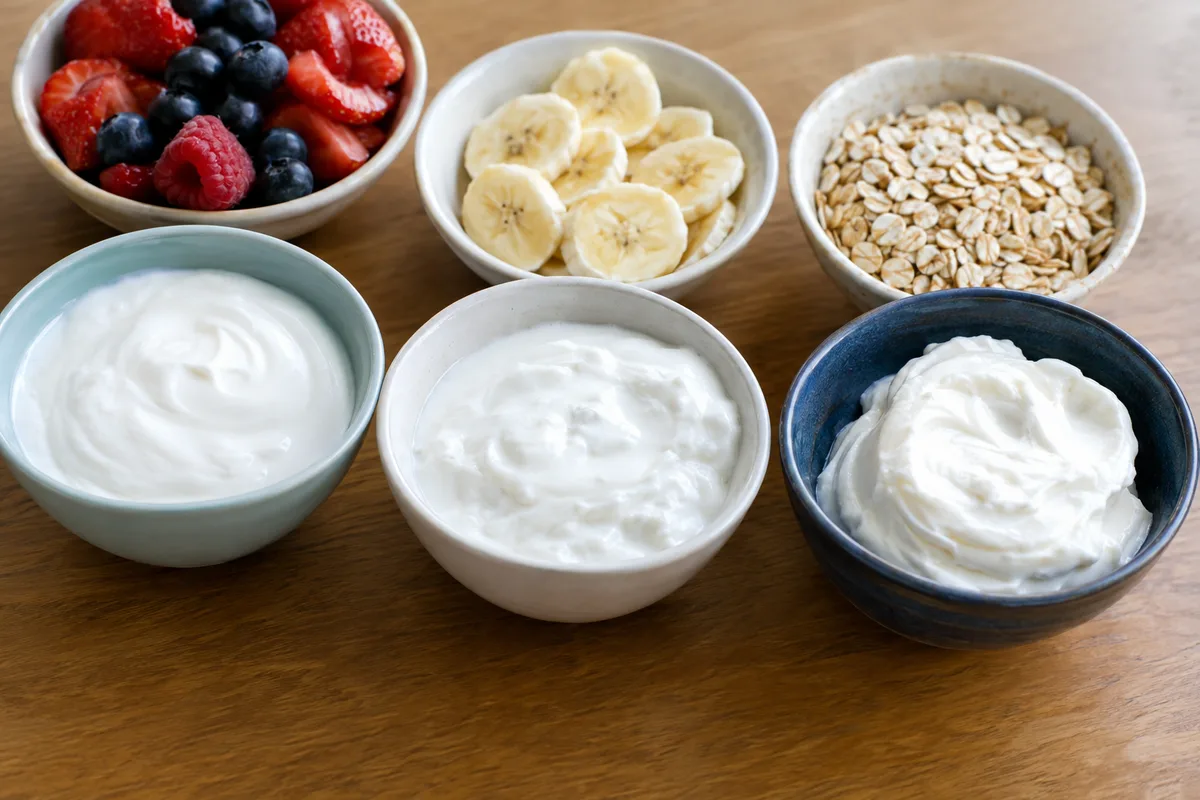
A fat-free yoghurt can leave more room in your log for nuts, seeds or another topping. A fuller-fat yoghurt may need fewer additions because it is naturally creamier. Neither is automatically the better choice, so compare the complete bowl rather than judging the yoghurt alone.
- Fat-free yoghurt with fruit for a lighter bowl
- Lower-fat yoghurt with oats for an everyday breakfast
- Full-fat yoghurt with berries for a richer, simpler serving
- Plain Greek yoghurt used instead of a richer creamy ingredient in savoury food
Look beyond ‘natural’ and check the ingredients
Plain Greek yoghurt often has a short ingredient list, but recipes differ. Some Greek-style products use added milk ingredients or thickeners to create a dense texture rather than relying only on straining. That does not automatically make them unsuitable, but the label tells you what you are actually tracking.
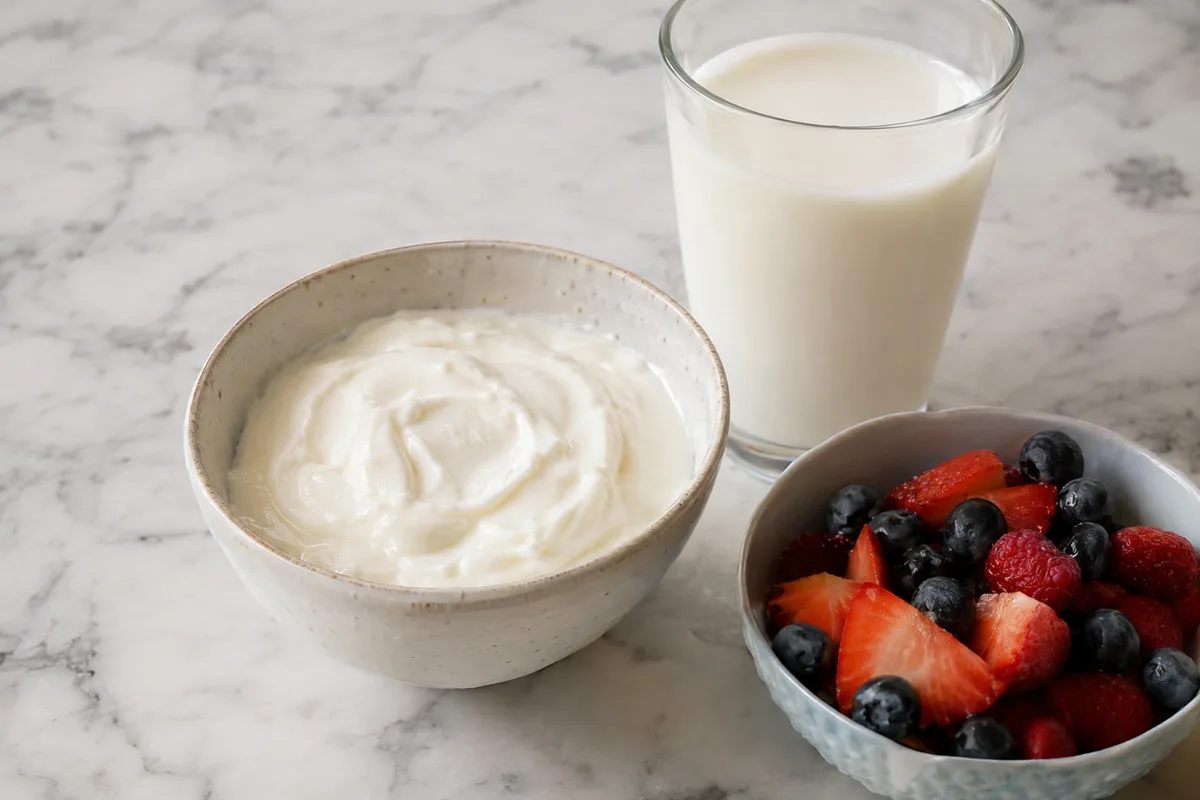
Choose based on the qualities that matter to you, such as a simple recipe, a particular texture or a higher protein content. The term ‘natural’ does not tell you everything about calories, fat or protein. Read the nutrition panel and ingredients together rather than relying on one word on the front.
- Milk and live cultures in a simple plain yoghurt
- Added milk protein used to increase protein or alter texture
- Starch or other thickeners used in some Greek-style yoghurts
- Sweeteners, flavourings or fruit preparations in flavoured varieties
Check sugar without treating all sugar as the same
Plain yoghurt naturally contains some sugar from milk, so a sugar figure above zero does not necessarily mean sugar was added. Flavoured yoghurts may also contain fruit preparations, syrups or other sweet ingredients. The ingredients list helps explain where the sweetness comes from.
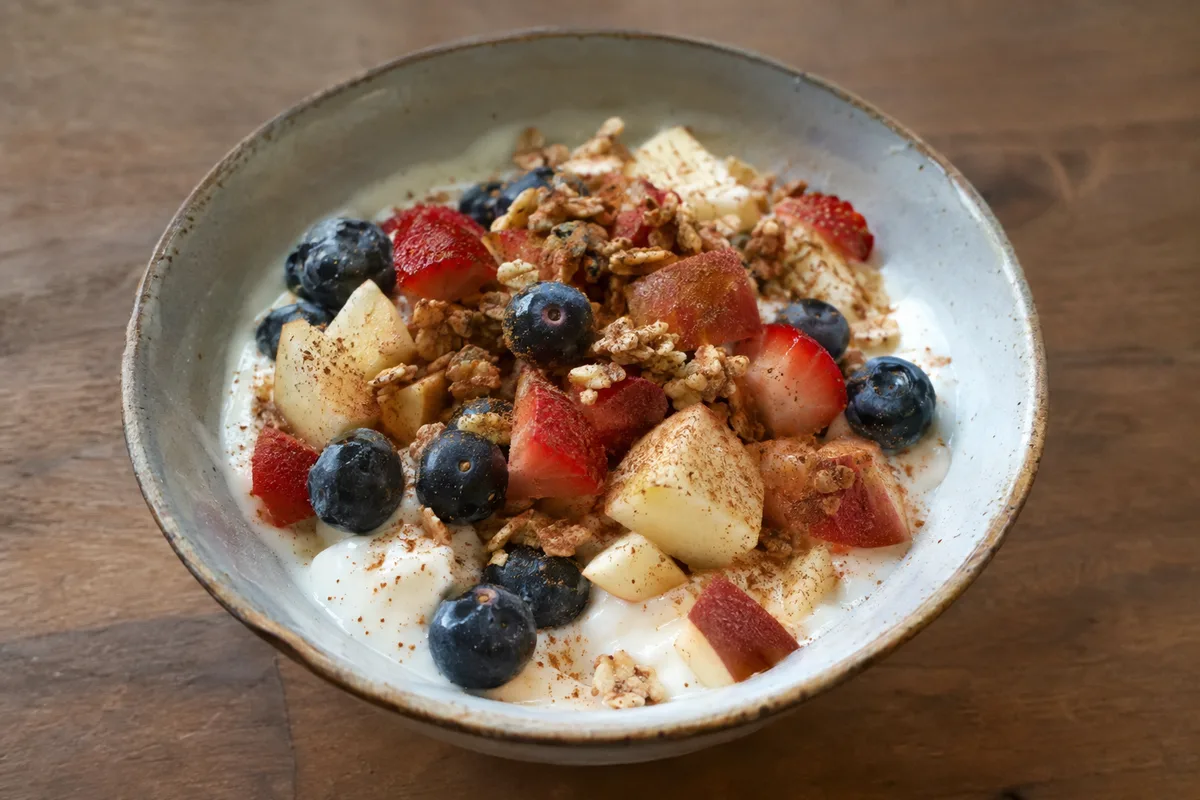
If you want control over sweetness, start with plain yoghurt and add fruit yourself. You can also compare flavoured pots and choose one that fits your preferences and food log. Remember to include honey, granola, dried fruit or other additions, as they can change the bowl more than the yoghurt does.
- Fresh berries for sweetness and fibre
- Chopped apple or pear for crunch
- Cinnamon or vanilla for flavour without a sugary topping
- A measured spoonful of granola when you want extra texture
Build a bowl you will actually enjoy
The best choice on paper is not useful if its sharpness or texture makes you avoid it. Try to balance nutrition targets with taste, convenience and the foods you already like. A yoghurt that works consistently in your routine is often more practical than one chosen for a single label claim.
When tracking, save your usual yoghurt and topping combinations as repeat meals if your food log allows it. Update the entry when you change the product or portion, because similar-looking yoghurts can have different nutrition values. Reviewing the whole meal will give you a clearer picture than focusing on one nutrient.
- For more fibre: add fruit, oats, seeds or chopped nuts
- For more protein: choose a higher-protein yoghurt and check the serving amount
- For more crunch: add a measured topping just before eating
- For savoury flavour: add cucumber, herbs, pepper or lemon