
How to choose the best compression socks for your needs
The best compression socks are comfortable, correctly sized and suitable for when you plan to wear them. This guide explains firmness, length, fabric, fit and the details worth comparing.
What makes a compression sock different
Compression socks are made to apply steady pressure around the foot and leg. Many use graduated compression, meaning they feel firmest near the ankle and gradually less firm higher up. This distinguishes them from ordinary socks that simply feel tight all over.
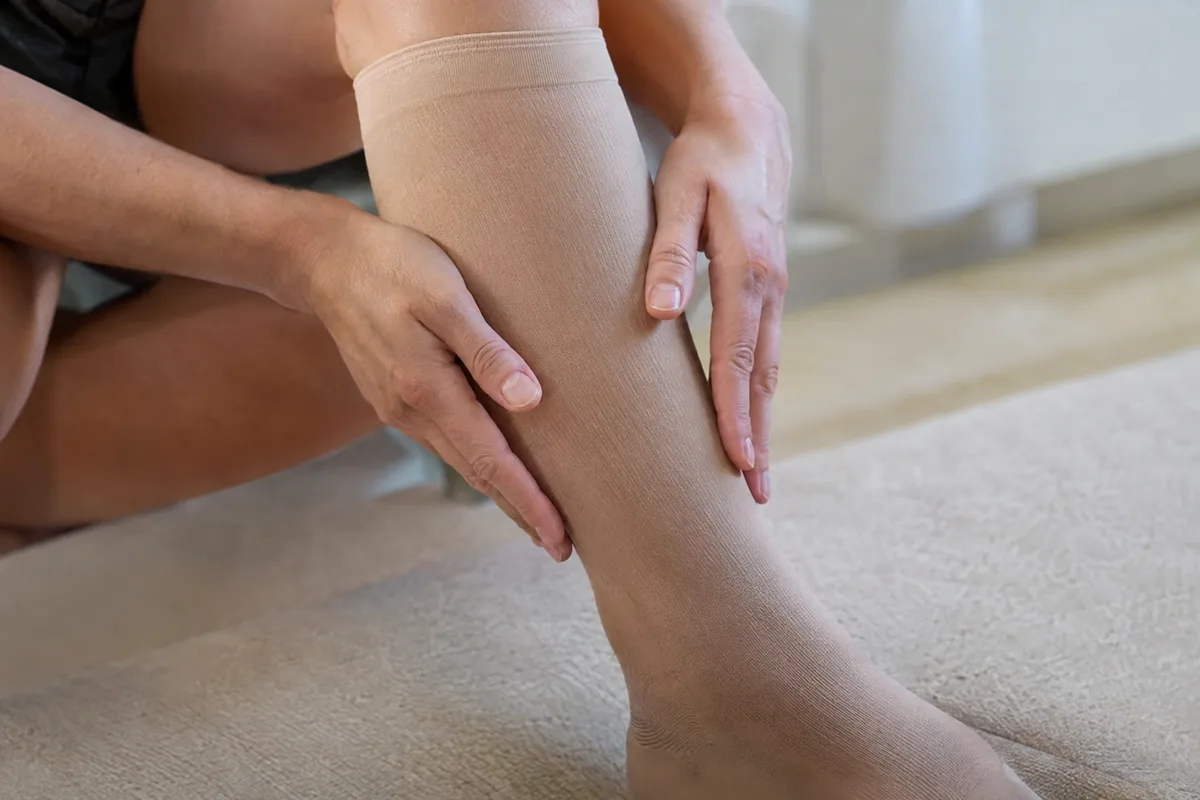
The best option depends on why you want the extra support and how long you expect to wear it. A pair for a long journey may need different features from one worn during a working day or after exercise. Comfort matters because a sock cannot do its job properly if it rolls down, bunches or is removed early.
- Graduated pressure rather than even tightness
- A close fit without painful pinching
- A top band that stays flat
- A heel and toe that sit in the correct places
Match the firmness to the purpose
Compression socks come in different firmness levels, from light everyday support to much stronger pressure. Light or moderate options are generally easier to put on and may suit routine standing, sitting or travel. Stronger is not automatically better, and extra pressure can make a poorly fitting sock more uncomfortable.
Product labels may use categories or a measured pressure range, so compare the stated level rather than relying on words such as firm or supportive. If a particular firmness has been recommended for you, follow that guidance instead of choosing by feel alone. Ask a qualified health professional before using strong compression or if you are unsure whether pressure around the lower leg is appropriate for you.
- Light support for a gentler, less restrictive feel
- Moderate compression for more noticeable support
- Firm compression only when it is suitable for your circumstances
- Consistent labelling that clearly states the compression level
Get the size and length right
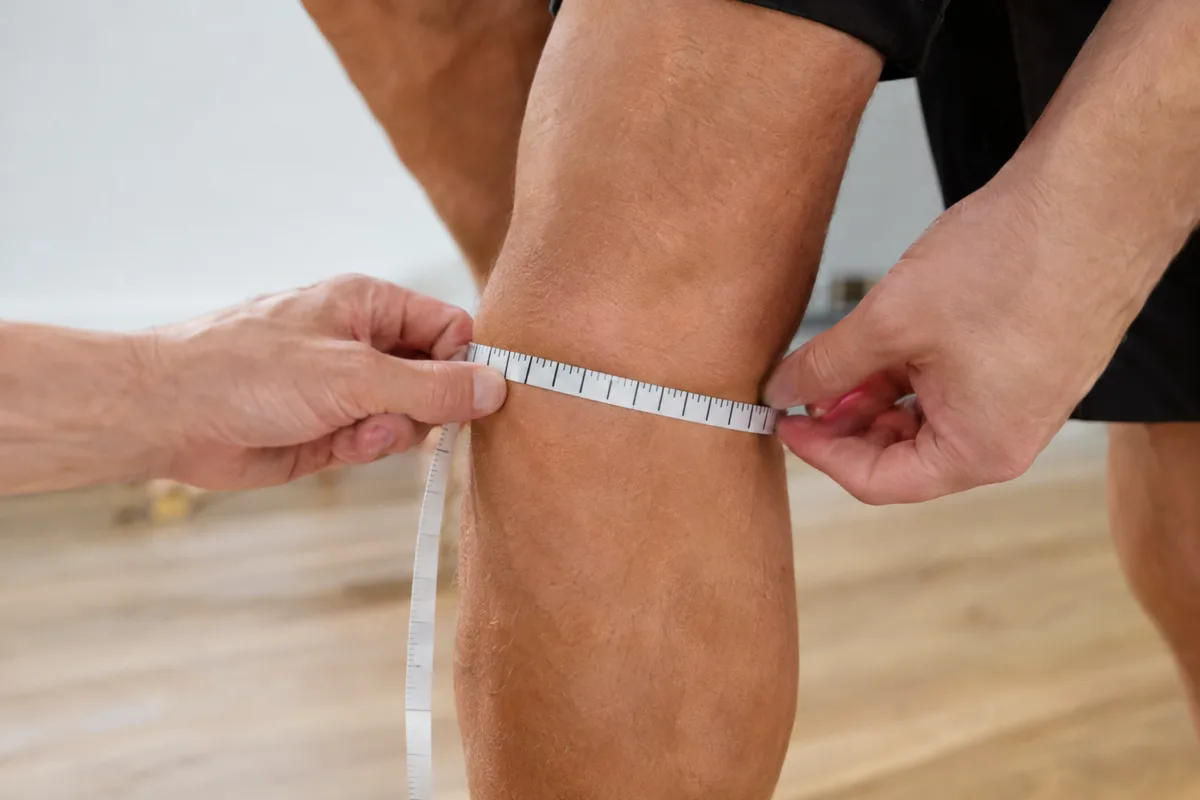
Sizing is usually based on leg measurements rather than normal shoe size alone. Measure according to the maker's guide, as the required points and size boundaries can differ. Measurements are often easiest to take when the legs have not been through a long period of standing or activity.
Knee-high socks are a practical choice for many everyday situations because they are simpler to put on and work with most clothing. Thigh-high and waist-high styles cover more of the leg but need careful sizing to prevent slipping or digging in. Whichever length you choose, the fabric should lie smooth without folds behind the knee or around the ankle.
- Check ankle and calf measurements against the size guide
- Confirm the required leg length measurement
- Use thigh measurements for longer styles
- Do not choose a smaller size simply to get more pressure
Compare fabric and construction
A useful compression sock needs stretch, resilience and enough softness for extended wear. Breathable, moisture-managing fabric may feel more comfortable in warm conditions or during an active day. A thicker knit can add cushioning, while a thinner sock may fit more easily inside close-fitting shoes.
Look closely at the toe seam, heel shape and top band. Raised seams can rub, and a narrow band may leave an uncomfortable mark even when the rest of the sock fits. An open-toe design can provide more room at the front, but it still needs to sit smoothly without curling.
- Smooth seams around the toes
- A shaped heel that does not twist
- A broad, flat top band
- Breathable fabric suited to the season
- Enough cushioning for the intended footwear
Put compression socks on without bunching
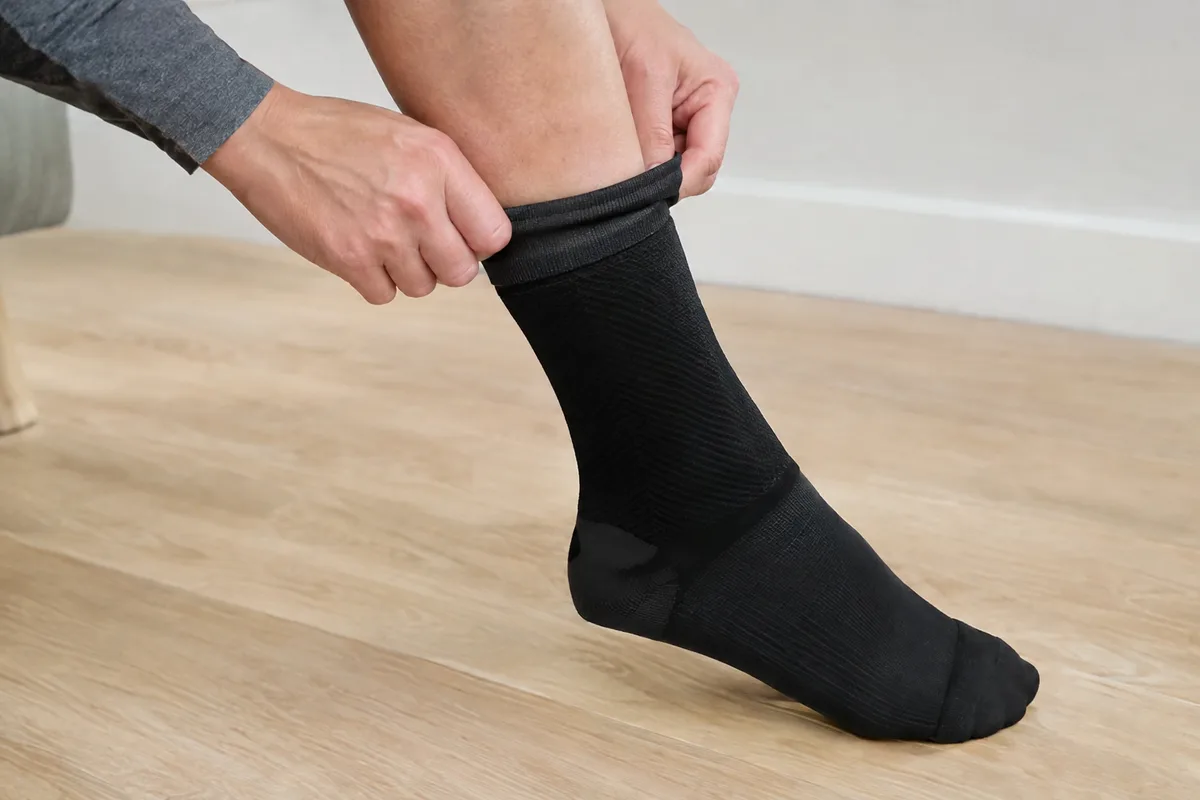
Compression socks are easiest to put on when the fabric is gathered and positioned carefully rather than pulled from the top. Turn the sock partly inside out to the heel, place the foot inside and settle the heel into position. Unroll the remaining fabric gradually up the leg, smoothing it as you go.
Do not fold the top down, as this creates a narrow area of extra pressure. Check that the sock has not twisted and that no creases remain around the ankle. Remove it if you notice persistent pain, numbness, unusual coldness or a marked colour change, and seek appropriate professional advice.
- Start with dry skin and dry socks
- Seat the heel before moving up the leg
- Unroll rather than tug from the top
- Smooth wrinkles with flat hands
- Recheck the fit after moving around
Care and replacement affect performance
Repeated wear stretches the fibres, while washing removes sweat and skin oils that can affect the fabric. Follow the care label, use a gentle wash where directed and avoid heat if the instructions warn against it. Let the socks dry fully before wearing them again.
Check the socks regularly for thinning fabric, loose threads and loss of stretch. A pair that slides down or becomes much easier to pull on may no longer provide the same pressure, although the replacement point depends on the fabric and frequency of use. Rotating between clean pairs can make regular wear and washing easier to manage.
- Wash according to the care label
- Keep rough fastenings away from the knit
- Dry without excessive heat
- Replace socks when their shape or stretch has clearly changed