
Spaghetti alla bolognese a basso contenuto di FODMAP
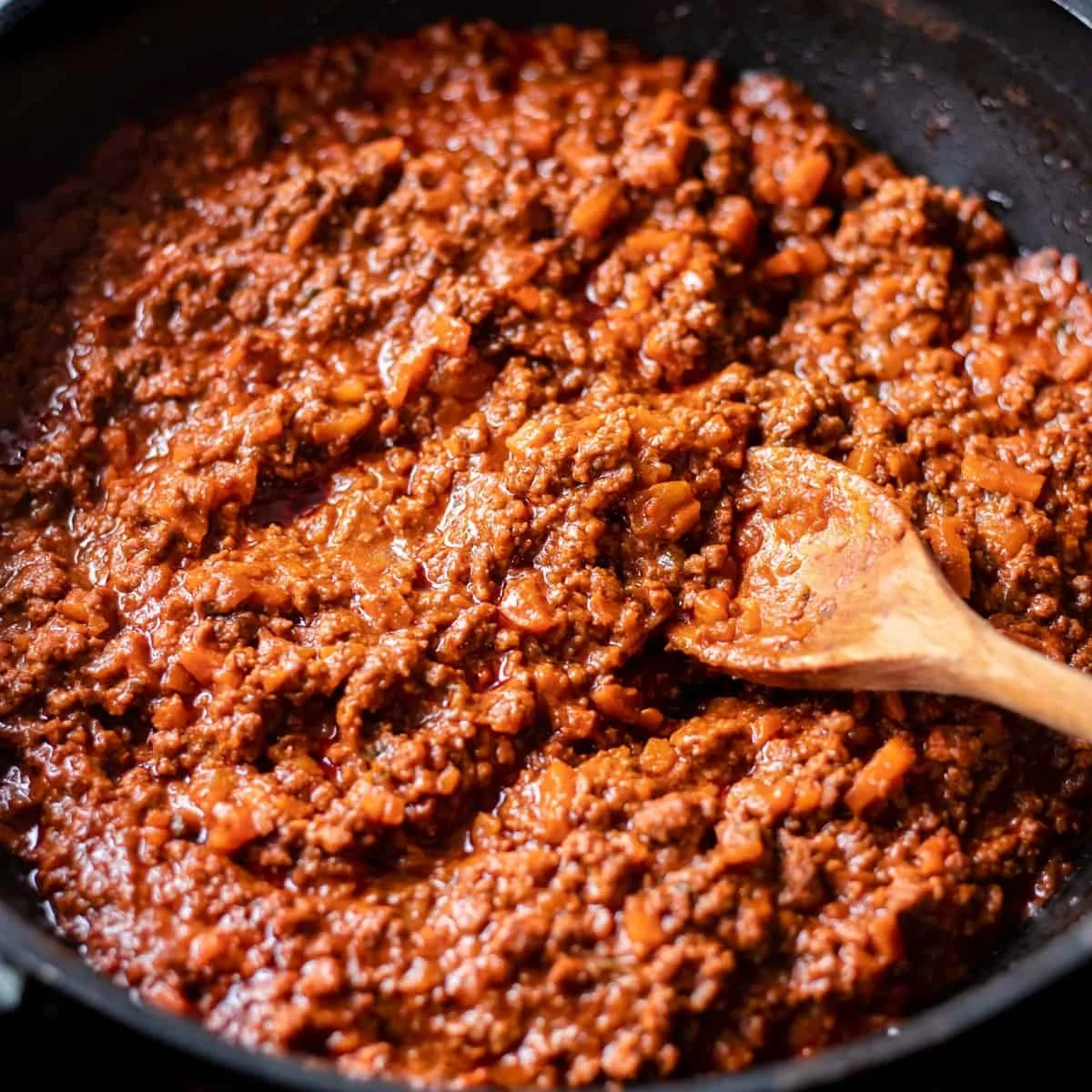
Questi spaghetti alla bolognese a basso contenuto di FODMAP sono ricchi, con una salsa abbondante e densa, molto saporiti, semplici e davvero deliziosi!
Ingredienti
- 1 tbsp garlic infused olive oil
- 1 tbsp unsalted butter
- 17 oz ground pork
- 17 oz ground beef
- 6 oz pancetta (diced)
- 1/2 tsp salt
- 1/4 tsp black pepper
- 5 spring onions (only the green parts) (finely chopped)
- 1 large carrot (finely chopped)
- 1 cup dry red wine
- 1 1/3 cup tomato puree/passata
- 1 cup lactose-free milk
- 1 cup beef broth
Preparazione
- 1
To a large wide pan or a large skillet. Add the oil and butter over medium-high heat. When the butter is melted and bubbly, add the beef, pork, pancetta, salt & pepper. Brown, breaking up the meat while cooking.
- 2
When the meat is browned, add the green parts of the spring onions and carrots, mix well and cook for 3 minutes.
- 3
Add the wine and allow to cook and reduce slightly for about 3 minutes. Add the tomato passata, milk, beef stock and mix well.
- 4
To cook the sauce using the fast-track method, bring the sauce to a simmer then turn down to medium so it bubbles gently. Cook for 20 – 30 minutes (no lid), adding water if the sauce gets too thick for your taste. Stir occasionally
- 5
For the slow simmer option: Once you have all the ingredients in, cover with a lid and simmer on very low for 2 – 2.5 hours, stirring every 30 minutes or so. Then uncover and simmer for 20 minutes to thicken the sauce.
- 6
When done, taste for seasoning and adjust to your taste.
Cucinala con la ricetta originale
Questa ricetta è di glutenfreestories.com. Sul loro sito trovi le foto, le note e i consigli dell’autore: il posto migliore per cucinarla.
Apri la ricetta su glutenfreestories.com