
Turkish rice
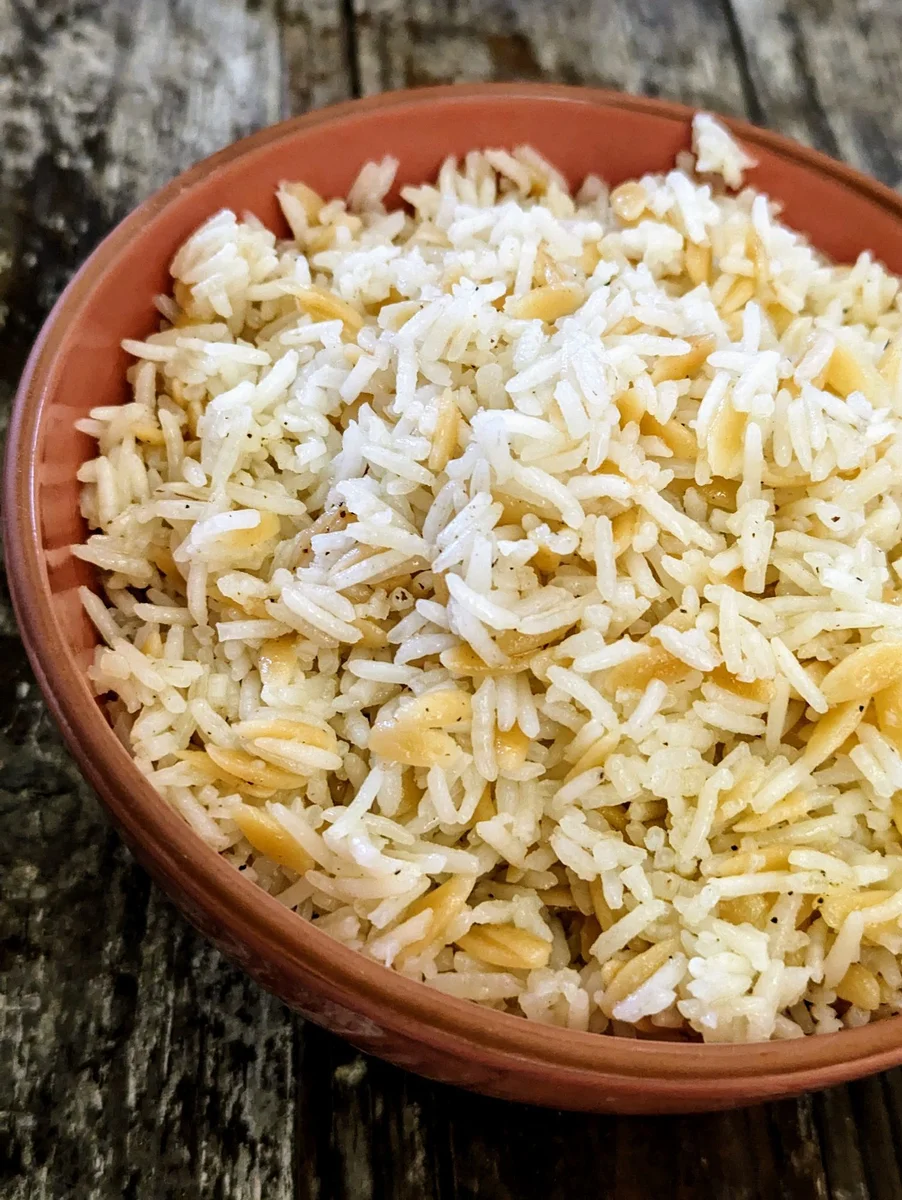
Turkish rice pairs fluffy basmati with toasted risoni for a simple, buttery side dish. It cooks in about 15 minutes and goes well with grilled or roasted mains.
Ingredients
- 30 gbutter
- 60 ml (4 tablespoons)risoni (or broken spaghetti or vermicelli)
- 185 g (1 cup)basmati rice
- 480 ml (2 cups)stock (or water)
- to tastesalt
- to tasteblack pepper
Instructions
- 1
Rinse the rice
Rinse the rice under running water, then drain it once the water runs mostly clear.
- 2
Toast the risoni
Melt the butter in a wok. Add the risoni and toast for a few minutes, until golden.
- 3
Toast the rice
Add the rice and stir well. Season with salt and pepper, then continue toasting.
- 4
Add the stock
Once the liquid from the rice has dried up, stir in the stock and cook for about 10 minutes.
- 5
Fluff and serve
When the liquid has been absorbed and holes begin to appear across the surface, fluff the rice with a fork and serve.
What is Turkish rice?
Turkish rice, often known as şehriyeli pilav, is a pilaf-style dish in which rice cooks with toasted pasta. The pasta adds a savoury, lightly nutty note and a little contrast to the soft grains.
This version uses basmati and risoni, a small rice-shaped pasta. Toasting the pasta and rice in butter before adding stock builds flavour in a short cooking time.
Nutrition and macros by portion
The nutrition label shows one serving as written: 535 calories, 10g protein, 112g carbs, 13g fat.
| Portion | Adjustment | kcal | Protein | Carbs | Fat |
|---|---|---|---|---|---|
| Lighter | Use less butter | 375 kcal | 7g | 78g | 9g |
| This serving | As written | 535 kcal | 10g | 112g | 13g |
| Hungry | Serve a larger portion | 803 kcal | 15g | 168g | 20g |
Most of the carbohydrates come from the basmati rice and risoni, while butter supplies most of the fat; the rice and pasta provide a modest amount of protein. Pair a serving with vegetables and a protein-rich main such as chicken, fish, beans, or tofu for a more balanced plate.
Why rinse the basmati?
Rinsing: Wash the rice until the water is mostly clear, then drain it well. This removes loose surface starch and helps the cooked grains stay distinct.
Drain thoroughly: Excess rinse water can interfere with the initial toasting. Give the rice a moment to drain while you melt the butter.
Toast the pasta carefully
Golden colour: Stir the risoni in the melted butter for a few minutes until evenly golden. Keep it moving so small pieces do not burn before the rest colours.
Broken pasta: If using broken spaghetti or vermicelli instead, keep the pieces small and watch them closely; thin strands can toast quickly.
Get the texture right
Before the stock: Stir the rice through the butter and toasted pasta so the grains are coated. Continue toasting as directed, seasoning as you go.
At the finish: The surface holes and absorbed liquid are cues that the rice is ready to fluff. Use a fork gently to separate the grains without crushing them.
Stock or water?
Stock: It gives the rice a fuller savoury flavour, so taste before adding much salt if your stock is already seasoned.
Water: This keeps the flavour milder and lets the butter and toasted pasta come through. Season to taste before serving.
What to serve with it
Serve the rice alongside grilled chicken, fish, or vegetables, or pair it with a saucy stew. A crisp salad or lightly dressed vegetables add freshness alongside the buttery pilaf.
Recipe notes & tips
- Drain the rinsed rice well before adding it to the wok.
- Stir the risoni frequently so it colours evenly without scorching.
- If using salted stock, add the salt gradually and taste before serving.
- Fluff with a fork once the liquid is absorbed to keep the grains separate.
- Serve soon after cooking for the best texture.
Variations
- Use vermicelli: Break it into short pieces and toast it in the butter until golden.
- Choose broken spaghetti: Snap the strands into small lengths before toasting.
- Add herbs: Fold in chopped parsley just before serving for a fresh finish.
- Use water: Swap the stock for water for a milder-tasting pilaf.
- Add spices: Stir a pinch of cumin into the rice as it toasts for a warm, savoury note.
Common mistakes to avoid
- Burnt risoni: Keep stirring and take the wok off the heat briefly if the pasta colours too quickly.
- Wet rice before toasting: Drain it thoroughly after rinsing so excess water does not hinder browning.
- Uneven browning: Stir the risoni around the wok so the pieces toast evenly.
- Too much salt: Check whether the stock is seasoned before adding salt.
- Mushy grains: Avoid stirring vigorously once the stock is added; fluff gently at the end.
How to store
Cool leftovers promptly and refrigerate in a covered container for up to 2 days. Reheat until steaming hot, adding a small splash of water or stock if the rice has dried out.
Frequently asked questions
Can I use broken spaghetti instead of risoni?
Yes. Break the spaghetti into short pieces and toast them in the butter until golden, keeping a close eye on them because thin pieces brown quickly.
Can I make this with water instead of stock?
Yes, water is listed as an alternative. The result will be milder, so season it to taste.
How do I know when the rice is cooked?
The liquid should be absorbed and small holes should appear across the surface. Fluff with a fork and check that the grains are tender.
Why rinse the basmati first?
Rinsing removes loose surface starch and helps the grains cook up more separately. Drain it well before toasting.
Can I prepare Turkish rice ahead?
It is best served freshly cooked, but you can refrigerate leftovers for up to 2 days. Reheat thoroughly with a splash of water or stock if needed.
Cook it from the original
This recipe comes from funandfood.it. Their page has the author’s own photos, notes and tips — the best place to cook it from.
Open the recipe on funandfood.it