
Gnòch in Còla, Bergamasque “glue gnocchi”
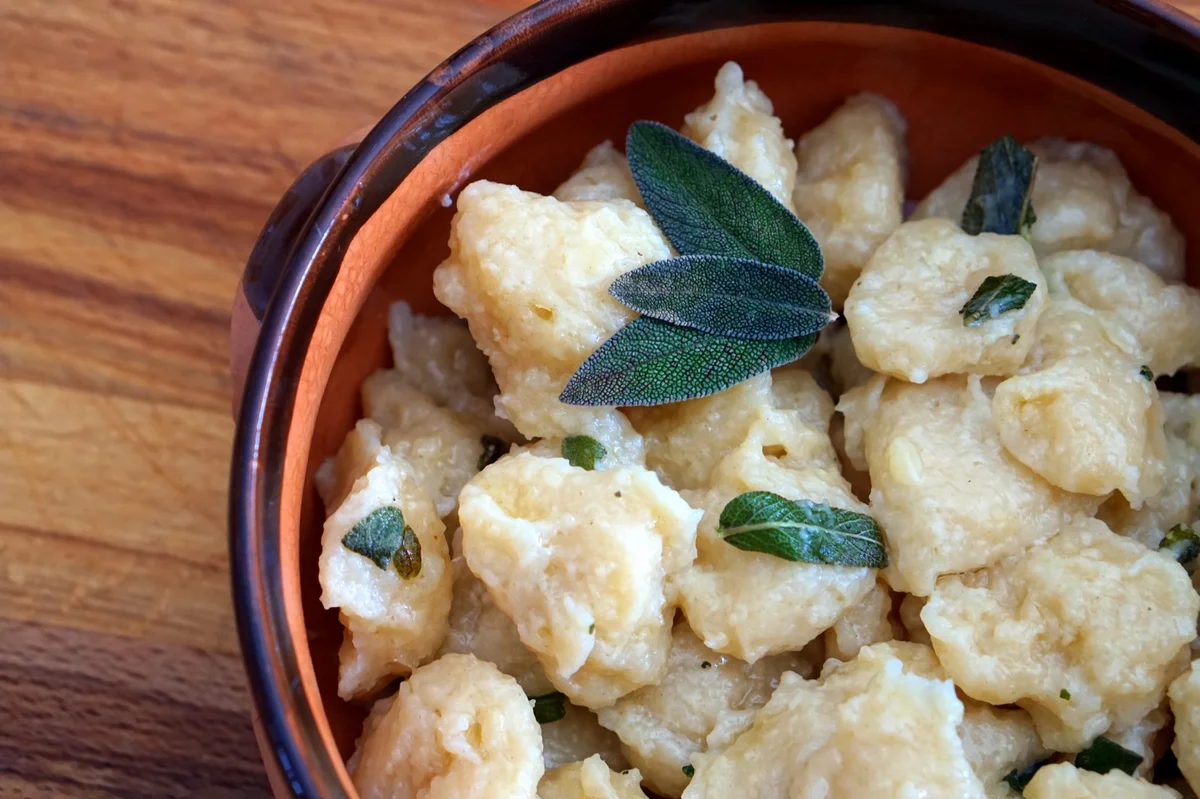
Gnòch in Còla are soft, irregular Bergamasque dumplings made from a sticky flour-and-liquid batter. They cook quickly and are finished with butter and plenty of grated cheese for a simple, comforting meal.
Ingredients
- 200 gplain flour (00)
- 200 mlmilk or water
- 30 gbutter
- to tastegrated Parmesan or Grana Padano
- to tastesage
- to tastesalt
- to tasteblack pepper
Instructions
- 1
Mix the batter
Mix the flour with the milk or water until you have a sticky, glue-like batter.
- 2
Boil the dumplings
Bring a pan of water to the boil and salt it. Use one teaspoon to scoop up a little batter and another to push it into the boiling water. Repeat with the remaining batter.
- 3
Check for doneness
Once the dumplings rise to the surface, cook them for a further 3–4 minutes. Cooking time depends on their size, so taste one to check.
- 4
Toss with butter
Drain the dumplings and return them to the pan. Add the uncooked butter and grated cheese, season with salt and pepper to taste, and serve piping hot.
- 5
Brown sage butter
For an alternative finish, cook the butter in a pan with sage for a few minutes until it turns hazelnut brown. Toss with the dumplings and plenty of grated cheese.
What are Gnòch in Còla?
Gnòch in Còla, also called “glue gnocchi”, are a traditional dumpling associated with Bergamo in northern Italy. Their name refers to the sticky consistency of the flour batter rather than a dough that can be rolled and shaped.
This version keeps the mixture simple and uses a spoon to portion it straight into boiling water. Butter and grated Parmesan or Grana Padano give the plain dumplings a rich, savoury finish.
Nutrition and macros by portion
The nutrition label shows one serving as written: 355 calories, 13g protein, 51g carbs, 12g fat.
| Portion | Adjustment | kcal | Protein | Carbs | Fat |
|---|---|---|---|---|---|
| Lighter | Use water, less butter | 248 kcal | 9g | 36g | 8g |
| This serving | As written | 355 kcal | 13g | 51g | 12g |
| Hungry | Larger dumpling portion | 533 kcal | 20g | 77g | 18g |
Most of the carbohydrates come from the flour, while butter and cheese supply much of the fat; the cheese also contributes protein. For a more balanced plate, serve a moderate portion with a generous side of vegetables or salad.
Getting the batter right
Liquid choice: milk makes the batter richer, while water keeps it more neutral; either is listed in the recipe. Stir the flour and liquid together until the mixture is sticky and cohesive.
Consistency: the batter should cling to the spoon but still fall into the pan with help from a second spoon. The recipe gives no fixed mixing time, so use its sticky texture as your cue.
Shaping and cooking
Small portions: use one teaspoon to scoop and another to release each dumpling into the boiling water. Keeping the spoonfuls modest helps them cook through without making the centre hard to judge.
Boiling water: salt the water before adding the batter and let it return to a steady boil. Take care as you drop each portion in, since the water is hot.
How to tell they are ready
Floating cue: when the dumplings rise to the surface, start counting a further 3–4 minutes, as the recipe directs. Their size affects the timing, so taste one rather than relying on the clock alone.
Texture check: a cooked dumpling should be tender through the middle, not raw or floury. If needed, give the batch a little longer and check again.
Choosing the finish
Quick finish: toss the drained dumplings with butter and grated Parmesan or Grana Padano while hot. The cheese melts into the butter and clings to the uneven surfaces.
Sage option: for a deeper, nutty flavour, cook the butter with sage until it turns hazelnut brown. Keep an eye on it as it browns, then use it with plenty of grated cheese.
Serving the dumplings
Serve them straight away while the butter is glossy and the cheese is warm. A crisp green salad or simply cooked vegetables make a fresh contrast to the soft, buttery dumplings.
Keep the seasoning balanced: taste before adding more salt, since the grated cheese can already be salty. Finish with black pepper to taste.
Recipe notes & tips
- Use a second teaspoon to ease sticky batter into the boiling water.
- Keep the dumplings a similar size so they cook at roughly the same rate.
- Taste one after the extra 3–4 minutes because larger dumplings may need longer.
- Grate the cheese finely so it mixes readily with the hot butter.
- If making sage butter, watch for the colour to turn hazelnut brown and take care not to let it burn.
Variations
- Choose water: use water instead of milk for a less rich batter.
- Use Grana Padano: swap it for Parmesan for a different savoury cheese finish.
- Add sage butter: cook the butter with sage until hazelnut brown before tossing.
- Increase the pepper: add extra black pepper at the table for a sharper finish.
Common mistakes to avoid
- Batter too firm: stir until it becomes sticky and can be pushed off a spoon.
- Oversized dumplings: use small teaspoonfuls so they cook more evenly.
- Skipping the extra cooking: let them cook for 3–4 minutes after they float, then taste one.
- Guessing doneness by floating alone: check a dumpling's centre before draining the batch.
- Burning the butter: watch it closely as it browns with the sage and use it once it reaches a hazelnut colour.
How to store
These dumplings are best served immediately. If you have leftovers, refrigerate them in a covered container and eat within 2 days; reheat gently in a pan with a little butter until hot throughout.
Frequently asked questions
Can I use water instead of milk?
Yes. The recipe allows either milk or water; milk gives a richer result, while water makes a plainer batter.
Why are they called glue gnocchi?
The name refers to the sticky, glue-like consistency of the batter.
How long do the dumplings cook?
After they rise to the surface, cook them for another 3–4 minutes. Size affects the timing, so taste one to check.
Can I make the sage butter finish?
Yes. Cook the butter with sage for a few minutes until it turns hazelnut brown, then toss it with the dumplings and grated cheese.
Which cheese should I use?
Use grated Parmesan or Grana Padano, as in the recipe. Add it to taste.
Cook it from the original
This recipe comes from funandfood.it. Their page has the author’s own photos, notes and tips — the best place to cook it from.
Open the recipe on funandfood.it