
Nonna Rita’s pastiera. Recipe by pastry chef Maria Grazia Cocurullo
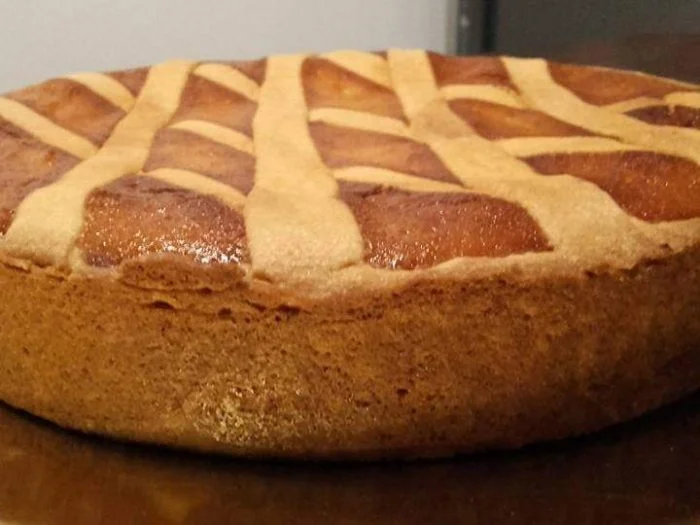
Nonna Rita’s pastiera is a Neapolitan-style tart with a shortcrust pastry shell and a fragrant filling of ricotta, cooked wheat, eggs and custard. This Sorrento-inspired version makes a generous dessert for a family gathering, with citrus and orange blossom giving it a distinctive aroma.
Ingredients
- 400 gplain flour
- 200 gsugar
- 200 glard or butter
- 3eggs
- 1 pinchsalt
- 250 gcooked wheat
- 250 gsugar
- 250 gcow’s milk ricotta
- 4eggs
- to tasteorange blossom water
- 1 pinchpisto spice mix
- to tastecandied citron
- to tasteSorrento IGP lemon zest
- 250 ml milkcustard
Instructions
- 1
Make the pastry
Heap the flour on a work surface and make a well in the centre. Add the 200 g sugar, 3 eggs, lard or butter and salt. Work from the middle, gradually drawing in the flour, until the ingredients come together as pastry.
- 2
Chill the dough
Put the pastry in the fridge for a few hours.
- 3
Mix the filling
Sieve the ricotta and beat it well with the 250 g sugar. Add the 4 eggs one at a time, followed by the cooked, seasoned wheat, the custard, the flavourings and the candied citron cut into small cubes.
- 4
Fill the tin
Line a pastiera tin with the pastry. Pour in the filling and decorate the top with diagonal pastry strips.
- 5
Bake the pastiera
Bake at 180°C for 40–50 minutes.
What is pastiera?
Pastiera is a traditional Italian tart associated with Naples and the surrounding Campania region. Its pastry case holds a rich filling usually built around ricotta, cooked wheat, eggs and fragrant flavourings.
This version is named in memory of Nonna Rita, who made her pastiera on the Sorrento Peninsula with equal amounts of custard, ricotta, sugar and wheat. The combination gives the filling a creamy, substantial texture, while citrus and orange blossom lift its sweetness.
Nutrition and macros by portion
The nutrition label shows one serving as written: 500 calories, 11g protein, 70g carbs, 21g fat.
| Portion | Adjustment | kcal | Protein | Carbs | Fat |
|---|---|---|---|---|---|
| Lighter | Smaller slice with fruit | 350 kcal | 8g | 49g | 15g |
| This serving | As written | 500 kcal | 11g | 70g | 21g |
| Hungry | Larger slice | 750 kcal | 17g | 105g | 32g |
The flour, sugar and cooked wheat supply most of the carbohydrates, while the lard or butter, ricotta, eggs and custard contribute much of the fat and protein. Balance a slice with fresh fruit, or serve it after a lighter meal.
A tender pastry case
Work the pastry from the centre outwards, drawing in the flour gradually so the ingredients combine evenly. Stop once the dough comes together rather than kneading it for a long time.
Chilling it for a few hours helps the pastry firm up before you line the tin. This makes it easier to handle and shape around the filling.
Build a smooth filling
Sieved ricotta: passing it through a sieve first helps remove lumps and gives the filling a more even texture.
Eggs: add them one at a time, mixing each in before adding the next. Then fold in the cooked wheat and custard so they are distributed throughout.
Choose the flavourings
Citrus: Sorrento lemon zest and candied citron bring fresh, aromatic notes to the sweet filling. Cut the citron into small cubes so it is easy to distribute.
Spice and blossom: pisto and orange blossom water give the tart its characteristic fragrant profile. Add the flavourings to taste, as their strength can vary.
Look for a set centre
The pastiera bakes at 180°C for 40–50 minutes. The top should be coloured and the filling should look set rather than liquid in the middle.
Ovens and tins can vary, so use the stated baking time as a guide and check towards the end of the range. Let the tart settle before cutting so the filling holds together more neatly.
Serving and timing
The recipe takes 110 minutes in total, including several hours of chilling the pastry, so allow for that rest when planning. The oven time itself is 40–50 minutes.
Serve a slice on its own or alongside coffee or tea. For a less rich plate, pair it with fresh fruit rather than another creamy dessert.
Recipe notes & tips
- Chill the pastry for the full few hours so it is easier to roll and shape.
- Sieve the ricotta before beating it with the sugar to help avoid lumps.
- Add the eggs to the filling one at a time, mixing between additions.
- Cut the candied citron into small cubes for an even distribution through the filling.
- Begin checking the tart at 40 minutes, as baking can vary between ovens.
- Let the tart settle before slicing for neater portions.
Variations
- Use butter: choose it instead of lard for the pastry if preferred.
- Adjust the blossom: add orange blossom water gradually to suit its strength.
- Vary the citrus: use more or less lemon zest to change the tart’s aromatic balance.
- Change the citron: omit it if you prefer a smoother filling, or use the listed amount to taste.
- Make individual tarts: divide the pastry and filling among smaller tins, checking them early as they may bake faster.
Common mistakes to avoid
- Overworking the pastry: stop mixing as soon as it comes together to help keep it tender.
- Skipping the chill: refrigerate the dough for a few hours so it is easier to handle.
- Lumpy ricotta: sieve it before adding the sugar and eggs.
- Adding eggs all at once: incorporate them one by one for a more even filling.
- Cutting while hot: let the tart settle first so the filling is less likely to collapse.
- Baking by time alone: check for a set centre within the 40–50 minute range.
How to store
Keep the cooled pastiera covered in the fridge and eat within 3 days. Bring a slice to room temperature before serving, or warm it gently in a low oven.
Frequently asked questions
Can I make the pastry ahead?
Yes. The recipe already calls for chilling it for a few hours, and you can prepare it ahead and keep it covered in the fridge until you are ready to line the tin.
What is pisto?
Pisto is a spice mix used in some Italian baking. This recipe uses just a pinch, so add it with the other flavourings.
How do I know when the pastiera is baked?
Bake it at 180°C for 40–50 minutes. Look for a coloured top and a centre that appears set rather than liquid.
Can I use butter instead of lard?
Yes. The pastry ingredients specify 200 g of lard or butter, so either can be used.
Why does the recipe use both ricotta and custard?
They are both part of this version’s filling: ricotta brings a soft, dairy-rich base, while the custard adds further creaminess.
How many portions does it make?
The recipe serves 12.
Cook it from the original
This recipe comes from foodmakers.it. Their page has the author’s own photos, notes and tips — the best place to cook it from.
Open the recipe on foodmakers.it