
Neapolitan pastiera. Recipe by Sonia Peronaci
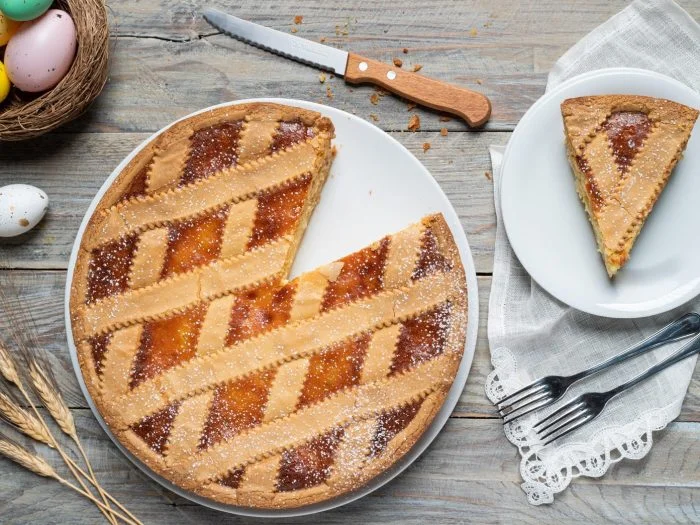
Neapolitan pastiera is a rich Italian tart with a crisp, buttery pastry case and a fragrant filling of cooked wheat, ricotta, citrus and candied fruit. It takes time to chill and rest, but its creamy centre and pastry lattice make it a special dessert to share.
Ingredients
- 250 g00 flour
- 150 gbutter
- 120 gsugar
- 2medium egg yolks
- Zest of ½lemon
- Zest of ½orange
- 1 pinchcoarse salt
- 250 gcooked wheat
- 350 gsheep’s milk ricotta
- 20 gbutter
- 150 mlwhole milk
- 2medium eggs
- 2egg yolks
- 1 podvanilla
- 25 gorange blossom water
- 300 gsugar
- 50 gcandied citron
- 50 gcandied orange
- 1 mediumegg
Instructions
- 1
Make the pastry
Put the diced butter and flour in a food processor and pulse until they look like fine crumbs. Add the sugar, salt and egg yolks, then pulse again. Tip the dough onto a work surface, add the grated lemon and orange zest and knead briefly into a flat disc. Wrap it and chill for 1 hour.
- 2
Cook the wheat
Meanwhile, put the milk, cooked wheat, sugar and 20 g butter in a saucepan. Bring to the boil, stirring, then cook until thickened, for at least 15 minutes. Take the pan off the heat and leave the mixture to cool.
- 3
Mix the filling
When the wheat mixture is cool, add the ricotta, 2 egg yolks, 2 whole eggs, salt, orange blossom water, the seeds scraped from the vanilla pod and the diced candied fruit. Mix until combined.
- 4
Line the tin
Put the pastry on a floured work surface and tap it with a rolling pin to soften it. Roll it to 3–4 mm thick. Wrap it around the rolling pin to lift it, lay it over a buttered and floured tin, then ease it into the base and sides. Trim the excess pastry and keep the trimmings.
- 5
Fill and lattice
Prick the pastry base with a fork. Spoon in the wheat and ricotta filling and level the surface. Bring the pastry trimmings together, roll them out and cut strips to make the traditional lattice on top.
- 6
Bake and rest
Beat the remaining medium egg and brush it over the pastry edges and lattice. Bake in a preheated static oven at 170°C for 60 minutes. Leave the pastiera to cool, then cover it with a glass dome or cling film and refrigerate overnight before serving.
What is Neapolitan pastiera?
Pastiera is a traditional Neapolitan tart, especially associated with Easter. Its filling combines cooked wheat and ricotta with eggs, citrus, candied fruit and orange blossom water, all enclosed in pastry.
This version balances a tender, buttery crust with a filling that sets creamy rather than dry. The lattice is both decorative and a useful way to let the filling bake evenly.
Nutrition and macros by portion
The nutrition label shows one serving as written: 940 calories, 21g protein, 132g carbs, 39g fat.
| Portion | Adjustment | kcal | Protein | Carbs | Fat |
|---|---|---|---|---|---|
| Lighter | Smaller slice, fresh fruit | 658 kcal | 15g | 92g | 27g |
| This serving | As written | 940 kcal | 21g | 132g | 39g |
| Hungry | Larger slice | 1410 kcal | 32g | 198g | 59g |
The wheat and pastry flour provide much of the carbohydrate, while butter, ricotta and egg yolks contribute most of the fat. Ricotta and eggs also supply protein, with sugar and candied fruit adding further carbohydrate. Pair a slice with fresh fruit if you want a less rich finish to the meal.
The pastry needs a chill
Butter and flour: pulsing them first gives the dough a fine, sandy texture before the other ingredients go in. Work the dough only briefly once you add the zest so it stays tender.
Resting time: chill the wrapped dough for an hour before rolling. If it feels firm straight from the fridge, tap it gently with the rolling pin as described, rather than kneading it for a long time.
Thicken the wheat mixture
Gentle stirring: keep the milk, cooked wheat, sugar and butter moving as they come to the boil so the mixture thickens evenly. Allow at least 15 minutes for this stage.
Cool before mixing: the cooked wheat mixture must be cool before you add the ricotta and eggs. This helps the filling combine smoothly without cooking the eggs as they are stirred in.
Build the fragrant filling
Ricotta and eggs: these give the filling its creamy, set texture. Mix them into the cooled wheat thoroughly, then fold in the small pieces of candied citron and orange.
Citrus and vanilla: orange blossom water, vanilla seeds and the pastry’s lemon and orange zest layer in the characteristic aroma. Scrape the seeds from the pod so they are distributed through the filling.
Look for a set centre
Pastry base: prick it with a fork before adding the filling, and level the filling so it bakes consistently. Lay the lattice strips over the top without pressing them down into the mixture.
Bake: the recipe calls for 60 minutes at 170°C in a preheated static oven. The pastry should be baked through and the filling set; allow the tart to cool fully before covering it.
Plan for the overnight rest
Pastiera takes 130 minutes in total according to the recipe, followed by an overnight rest in the fridge. That final rest is part of the method, so make it the day before you plan to serve it.
Serve it as a dessert after a meal, or with coffee or tea. Its rich filling and sweet pastry mean a small slice can be satisfying.
Recipe notes & tips
- Weigh the flour and butter accurately for a pastry that rolls without becoming greasy.
- Keep the pastry covered while it rests so it does not dry out.
- Cut the candied fruit into small, even pieces so it is distributed through the filling.
- Use a floured surface when rolling the pastry, but brush away excess flour before lining the tin.
- Let the tart cool completely before covering it and refrigerating it overnight.
Variations
- More citrus: add extra finely grated zest to the filling for a brighter aroma.
- Candied fruit: use a different balance of citron and orange while keeping the total amount the same.
- Cinnamon: add a little ground cinnamon to the filling for a warm spice note.
- Pastry decoration: cut the lattice strips wider or narrower to change the look of the top.
- Almond finish: scatter a few toasted flaked almonds over each slice when serving.
Common mistakes to avoid
- Overworking the pastry: it can become tough, so knead only briefly after adding the zest.
- Skipping the chill: warm pastry is harder to handle, so give it the full hour in the fridge.
- Stopping the wheat too soon: a thin mixture can make the filling loose, so cook it for at least 15 minutes until thickened.
- Adding eggs to hot wheat: the eggs may start to cook, so let the mixture cool first.
- Cutting the tart too soon: the filling needs time to cool and rest, so refrigerate it overnight before serving.
How to store
Cover the cooled pastiera and keep it in the fridge, as directed, for the overnight rest. Store leftovers covered in the fridge and serve chilled or let a slice come towards room temperature; avoid reheating the whole tart, which can soften the pastry.
Frequently asked questions
Why does pastiera need to rest overnight?
The overnight rest lets the filling settle after baking and gives the flavours time to mingle. The recipe specifies refrigerating it under a glass dome or cling film.
Can I make pastiera a day ahead?
Yes. The method already calls for cooling the baked tart and refrigerating it overnight, so making it the day before serving fits the recipe.
How do I know when the wheat mixture is thick enough?
Cook it for at least 15 minutes, stirring, until it has thickened. It must then cool before the ricotta and eggs are added.
What should I do if the pastry cracks while rolling?
Let it soften slightly and press the crack together with your fingers. Tap it gently with the rolling pin to make it easier to roll, as the method suggests.
Can I leave out the candied fruit?
The candied citron and orange are part of this recipe’s filling and contribute its characteristic flavour. You can change their balance, but leaving them out will make the result less traditional.
Can I freeze pastiera?
Freezing is not specified in the recipe. For the best pastry texture, keep it covered in the fridge and eat it within a few days.
Cook it from the original
This recipe comes from foodmakers.it. Their page has the author’s own photos, notes and tips — the best place to cook it from.
Open the recipe on foodmakers.it