
Chicken Lo Mein Recipe
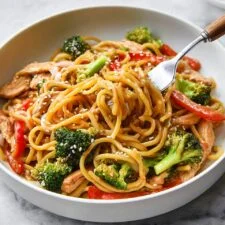
Chicken lo mein brings tender chicken, noodles and colourful vegetables together in a savoury sesame-hoisin sauce. It makes a generous stir-fry for sharing, with familiar takeaway-style flavours and a mix of textures.
Ingredients
- 454 g (1 lb)chicken breasts
- 227 g (8 oz)dried lo mein noodles
- ½onion, finely sliced
- 2bell peppers, finely sliced
- 2carrots, cut into thin matchsticks
- about 360 g (4 cups; about 2 medium crowns)broccoli
- 45 ml (3 tablespoons), dividedsesame oil
- 1 tablespoonminced garlic
- 90 ml (6 tablespoons)soy sauce
- 90 ml (6 tablespoons)sesame oil
- 45 ml (3 tablespoons)hoisin sauce
- 15 ml (1 tablespoon)honey
- ¼ teaspoonground ginger
- ¼ teaspoonfreshly ground black pepper
Instructions
- 1
Mix the sauce
In a small bowl, whisk the soy sauce, sesame oil, hoisin sauce, honey, ground ginger and black pepper until smooth. Set aside.
- 2
Marinate chicken
Cut the chicken breasts into thin strips about 2.5 cm (1 inch) long. Put them in a shallow bowl with 3 tablespoons of the prepared sauce and stir to coat. Marinate at room temperature for 30–60 minutes, or refrigerate for up to 6 hours.
- 3
Cook the noodles
Prepare the noodles according to the packet instructions, boiling until tender but still firm. Drain thoroughly without rinsing.
- 4
Brown the chicken
Lift the chicken from the marinade and drain off excess sauce in a colander. Heat 1 tablespoon of sesame oil in a frying pan over high heat. Add the chicken and stir constantly until no longer pink inside and browned outside, about 10 minutes.
- 5
Cook the vegetables
In a large frying pan or wok, heat 1 tablespoon of sesame oil over high heat. Add the onion, garlic and carrot matchsticks and cook until the onion softens, about 2–5 minutes. Add the peppers, broccoli and another tablespoon of sesame oil. Cover and cook, stirring occasionally, until the vegetables are browned and tender, about 5 minutes.
- 6
Combine and finish
Add the cooked noodles, browned chicken and remaining lo mein sauce to the vegetables. Stir thoroughly, then continue cooking and stirring occasionally until the noodles begin to brown slightly, absorb the sauce and the dish is hot throughout.
- 7
Serve straight away
Take the pan off the heat and serve the lo mein while warm and fresh.
What is chicken lo mein?
Lo mein is a Chinese noodle dish in which cooked noodles are tossed with sauce and other ingredients. This version combines chicken with a generous mix of vegetables and a sesame-hoisin sauce.
The appeal is the balance of springy noodles, savoury sauce and crisp-tender vegetables. Cooking the components before tossing them together helps each one keep its own texture.
Nutrition and macros by portion
The nutrition label shows one serving as written: 450 calories, 24g protein, 44g carbs, 19g fat.
| Portion | Adjustment | kcal | Protein | Carbs | Fat |
|---|---|---|---|---|---|
| Lighter | Use less sesame oil | 315 kcal | 17g | 31g | 13g |
| This serving | As written | 450 kcal | 24g | 44g | 19g |
| Hungry | Larger noodle portion | 675 kcal | 36g | 66g | 29g |
The noodles and honey supply most of the carbohydrates, while sesame oil contributes much of the fat; chicken provides most of the protein. Balance the plate with a side of fresh vegetables, or serve a slightly smaller noodle portion alongside extra greens.
The sauce and seasoning
Sauce base: Soy sauce and hoisin provide savoury depth, while honey adds a little sweetness. Ground ginger and black pepper round out the flavour.
Sesame oil: The recipe uses sesame oil in both the sauce and the pan. Keep track of the divided amount as you cook so it is added at the stages specified.
Marinating the chicken
Thin strips: Cutting the chicken into small, even strips helps it cook quickly and makes it easy to toss through the noodles.
Marinade time: The method gives a room-temperature marinating time of 30–60 minutes or up to 6 hours in the refrigerator. Since the stated total time is 30 minutes, allow extra time if following the full room-temperature marinade.
Getting the noodles right
Firm noodles: Follow the packet instructions and stop cooking when the noodles are tender but still firm. They will cook further in the pan with the sauce.
Drain well: The method calls for draining without rinsing, so the remaining starch can help the sauce cling to the noodles. Avoid leaving excess water in the colander, which can dilute the sauce.
Cooking the vegetables
Start with the firmest: The carrots go in with the onion and garlic, giving them time to soften before the peppers and broccoli are added.
Check for doneness: The vegetables should be tender and browned, rather than limp. Stir occasionally as they cook covered for about 5 minutes.
Finishing the stir-fry
Combine in the pan: Add the noodles, chicken and remaining sauce to the vegetables, then toss thoroughly so the sauce coats the mixture.
Watch the noodles: Continue cooking until they begin to brown slightly and absorb the sauce. Stir often enough to heat everything evenly without breaking up the noodles.
Serving ideas
The dish contains noodles, chicken and several vegetables, so it can be served on its own as a full meal. For a fresh contrast, serve it with a simple cucumber salad or sliced spring onions if you have them.
Bring it to the table straight from the pan while the noodles are hot and the vegetables still have some bite.
Recipe notes & tips
- Have the vegetables sliced and the sauce mixed before heating the pan, as the stir-fry stages move quickly.
- Cut the chicken into evenly sized strips so it cooks at a similar rate.
- Drain the noodles thoroughly to avoid watering down the sauce.
- Keep the vegetables moving occasionally so they brown without sticking.
- Toss the noodles and sauce through the vegetables and chicken until everything is evenly coated.
- Serve promptly to enjoy the noodles while hot and the vegetables before they soften further.
Variations
- More vegetables: Add extra broccoli or peppers while keeping the cooking stages in the same order.
- Milder sauce: Use less ground black pepper for a gentler seasoning.
- More ginger: Increase the ground ginger slightly for a warmer flavour.
- Different noodles: Use another type of wheat noodle if lo mein noodles are unavailable, following its packet cooking time.
- Vegetarian version: Replace the chicken with tofu and cook it until browned before combining with the vegetables.
Common mistakes to avoid
- Overcooking the noodles: Cook them just until tender but firm, as they finish in the pan.
- Skipping the drain: Excess water can dilute the sauce; drain the noodles thoroughly.
- Crowding the chicken: Use a pan large enough for the strips to brown rather than steam.
- Adding vegetables all at once: Start with the onion, garlic and carrots, then add the peppers and broccoli as directed.
- Leaving the final toss too short: Stir until the sauce coats the noodles and the whole dish is hot.
How to store
Refrigerate leftovers in a covered container for up to 3 days. Reheat in a frying pan over medium heat, stirring until piping hot; add a small splash of water if the noodles seem dry.
Frequently asked questions
Can I prepare the chicken ahead?
Yes. The method allows the chicken to marinate in the refrigerator for up to 6 hours. Keep it chilled until you are ready to cook it.
Can I use a different type of noodle?
Yes, another wheat noodle can work if lo mein noodles are unavailable. Cook it according to its packet instructions, stopping when tender but still firm.
How do I know when the chicken is cooked?
The method describes cooking until the strips are browned outside and no longer pink inside, about 10 minutes. Cut into a thicker strip to check the centre if needed.
Can I make the dish less salty?
You can reduce the soy sauce, though this will change the sauce quantity and flavour. Taste as you combine the ingredients before adding any extra seasoning.
Why should I avoid rinsing the noodles?
The method keeps their surface starch, which helps the sauce cling. Drain them well so they do not bring excess cooking water into the stir-fry.
Can I make the recipe in advance?
It is best served just after cooking for the freshest noodle texture. You can slice the vegetables and mix the sauce ahead, then refrigerate them separately.
Cook it from the original
This recipe comes from busyrecipe.com. Their page has the author’s own photos, notes and tips — the best place to cook it from.
Open the recipe on busyrecipe.com