
Lemon-ricotta panna cotta with raspberries
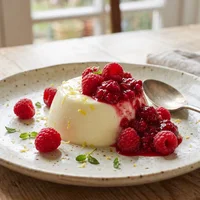
This Italian-style panna cotta combines cream and ricotta with lemon zest and juice, then gets a sharp, fruity finish from a quick raspberry sauce. Make it ahead and serve in glasses for ease, or unmould it for a more formal dessert.
Ingredients
- 250 mldouble cream
- 250 gricotta
- 60 gfine granulated sugar
- Zest and juice of 1organic lemon
- 3gelatine leaves
- 200 gfresh or frozen raspberries
- 2 tbspicing sugar
- A splashlemon juice, for the sauce
Instructions
- 1
Soften the gelatine
Soak the gelatine leaves in cold water for 5 minutes, until soft.
- 2
Warm the cream
Put the cream, sugar and grated lemon zest in a saucepan. Heat over medium heat, stirring, and bring the mixture just to a simmer.
- 3
Dissolve the gelatine
Take the pan off the heat. Squeeze the gelatine leaves well, add them to the warm cream and stir until dissolved.
- 4
Whisk the mixture
Put the ricotta and lemon juice in a large mixing bowl. Gradually pour in the warm cream mixture, whisking until smooth and without lumps.
- 5
Chill the panna cotta
Divide the mixture between 4 greased moulds or glasses. Cover and chill for at least 4 hours, preferably overnight.
- 6
Make the sauce
Put the raspberries, icing sugar and a splash of lemon juice in a small bowl. Roughly mash with a fork. For a warmer sauce, briefly heat it in a small saucepan.
- 7
Serve with raspberries
Take the panna cottas out of the fridge. To unmould, briefly dip a mould in warm water and carefully invert it onto a plate, or serve in the glass. Spoon over the raspberry sauce and serve immediately.
What is panna cotta?
Panna cotta is an Italian chilled dessert whose name means “cooked cream”. Gelatine sets the cream into a soft, delicate pudding that can be served in a glass or turned out onto a plate.
This version adds ricotta for a gently milky flavour and lemon for freshness. The raspberries bring a tart contrast to the creamy base.
Nutrition and macros by portion
The nutrition label shows one serving as written: 422 calories, 9g protein, 34g carbs, 30g fat.
| Portion | Adjustment | kcal | Protein | Carbs | Fat |
|---|---|---|---|---|---|
| Lighter | Use smaller moulds | 295 kcal | 6g | 24g | 21g |
| This serving | As written | 422 kcal | 9g | 34g | 30g |
| Hungry | Serve with extra berries | 633 kcal | 14g | 51g | 45g |
The cream and ricotta provide most of the fat, while the granulated and icing sugars contribute much of the carbohydrate; ricotta supplies most of the protein. Serve a panna cotta with extra fresh berries for a fruitier plate, or follow it with a less rich course.
Why ricotta works here
Ricotta gives the dessert more body and a mild dairy flavour. Whisking it with the lemon juice before gradually adding the warm cream helps the mixture become smooth.
Getting a smooth set
Gelatine: soak the leaves in cold water until soft, then squeeze them thoroughly before stirring them into the warm cream. Keep the pan off the heat while they dissolve.
Mixing: add the warm cream gradually to the ricotta while whisking. This gives you a better chance of avoiding lumps.
The right texture
The cream mixture should only come to a gentle simmer, not a rolling boil. Once chilled, the panna cotta should hold its shape when unmoulded while remaining softly set on the spoon.
Allow time to chill
Give the panna cotta at least 4 hours in the fridge to set; chilling it overnight is the preferred option in the method. Make the raspberry sauce close to serving, or prepare it ahead and keep it chilled.
Serving the dessert
Glasses: serving the panna cotta in its glass avoids the need to unmould it. Spoon the raspberry sauce over just before serving.
Plates: briefly dip each mould in warm water, then invert it carefully. Serve with the raspberry sauce and, if you like, fresh berries alongside.
Recipe notes & tips
- Grate the lemon zest finely so it distributes evenly through the cream.
- Stir the cream as it heats to help dissolve the sugar.
- Squeeze excess water from the softened gelatine before adding it to the cream.
- Whisk continuously as you pour the cream mixture into the ricotta.
- Dip moulds briefly in warm water rather than leaving them to soak.
- Taste the raspberry sauce and adjust the lemon splash to suit the fruit.
Variations
- Use mixed berries: Mash blackberries or chopped strawberries with the raspberries for a mixed-berry topping.
- Add vanilla: Stir a little vanilla into the cream as it warms for a rounder flavour.
- Make it in glasses: Divide the mixture among serving glasses and skip unmoulding.
- Leave the sauce chunky: Mash the raspberries only lightly for more texture.
- Use frozen berries: Thaw them before mashing, or briefly warm them in a saucepan as suggested for the sauce.
Common mistakes to avoid
- Boiling the cream: It only needs to reach a gentle simmer; take it off the heat then.
- Adding dry gelatine: Soak the leaves for 5 minutes and squeeze them before use.
- Leaving gelatine undissolved: Stir it into the warm cream until no pieces remain.
- Whisking too quickly: Pour the cream gradually into the ricotta while whisking to help prevent lumps.
- Unmoulding too soon: Chill for at least 4 hours so the panna cotta has time to set.
- Overheating the mould: Dip it briefly in warm water, then invert carefully.
How to store
Keep covered in the fridge and serve within 2 days for the best texture. Store the raspberry sauce separately if possible, and spoon it over just before serving.
Frequently asked questions
Can I make panna cotta the day before?
Yes. The method prefers an overnight chill, so it is well suited to preparing ahead.
Can I serve it in glasses?
Yes. Divide the mixture among 4 glasses and serve it straight from them; there is no need to unmould.
How do I unmould panna cotta?
Briefly dip the mould in warm water, then invert it carefully onto a plate. If it does not release, dip it briefly again.
Can I use frozen raspberries?
Yes. The recipe allows fresh or frozen raspberries. You can mash them with the icing sugar and lemon juice, or briefly warm the sauce.
How long does panna cotta need to chill?
Chill it for at least 4 hours, preferably overnight, before serving.
Cook it from the original
This recipe comes from cookinglife.eu. Their page has the author’s own photos, notes and tips — the best place to cook it from.
Open the recipe on cookinglife.eu