
Sticky teriyaki rice with salmon
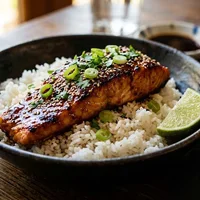
Sticky teriyaki rice pairs tender salmon glazed in a quick soy, mirin and sake sauce with soft japonica rice. It makes a satisfying weeknight dinner, finished with spring onions, sesame and a squeeze of lime.
Ingredients
- 300 gjaponica or sushi rice
- 360 mlwater (for the rice cooker)
- 4 (about 150 g each)salmon fillets, with skin
- to tastesalt and pepper
- 1 tbspsunflower oil
- 60 mlsoy sauce
- 60 mlmirin
- 2 tbspsake (or dry sherry)
- 1 tbspgranulated sugar
- 3spring onions, thinly sliced
- 2 tspsesame seeds
- 1lime, in wedges
Instructions
- 1
Cook the rice
Rinse the rice under cold water until the water runs clear. Add it to the rice cooker with 360 ml water, following the 1:1.2 rice-to-water ratio, and switch the cooker on.
- 2
Make the sauce
While the rice cooks, combine the soy sauce, mirin, sake and sugar in a small saucepan. Warm over medium heat, stirring until the sugar dissolves, then simmer for 3 to 4 minutes until slightly syrupy. Set aside.
- 3
Season the salmon
Pat the salmon fillets dry with paper towels, then season lightly with salt and pepper.
- 4
Sear the fillets
Heat the sunflower oil in a frying pan over medium heat. Cook the salmon skin-side down for 3 minutes, then turn and cook for another 2 minutes.
- 5
Glaze the salmon
Pour the teriyaki sauce into the pan. Cook the salmon for a further 1 to 2 minutes, spooning sauce over the fillets as it lightly caramelises.
- 6
Assemble and serve
Divide the cooked rice between deep bowls or plates and place the salmon on top. Pour over the remaining pan sauce, then garnish with spring onions, sesame seeds and, if liked, lime wedges. Serve immediately.
What is teriyaki salmon?
Teriyaki is a Japanese cooking style in which food is glazed with a glossy sauce, commonly made with soy sauce, mirin and sugar. This Asian-inspired bowl combines that sweet-savoury glaze with salmon and Japanese-style short-grain rice.
Here, the sauce is simmered briefly before it meets the fish, so it can coat the salmon quickly in the pan. Spring onions, sesame and lime add fresh, aromatic finishes.
Nutrition and macros by portion
The nutrition label shows one serving as written: 680 calories, 35g protein, 68g carbs, 21g fat.
| Portion | Adjustment | kcal | Protein | Carbs | Fat |
|---|---|---|---|---|---|
| Lighter | Use less rice | 476 kcal | 25g | 48g | 15g |
| This serving | As written | 680 kcal | 35g | 68g | 21g |
| Hungry | Add extra rice | 1020 kcal | 53g | 102g | 32g |
Most of the carbohydrates come from the rice, while salmon supplies the protein and much of the fat. The oil and the sugar in the glaze add further energy; balance the bowl with steamed greens or cucumber if you want more vegetables alongside it.
Choose the right rice
Rice choice: Japonica or sushi rice cooks up tender and slightly sticky, making it easy to eat with the glazed fish. Rinsing it until the water runs clear removes excess surface starch.
Water ratio: The listed 360 ml water matches the method’s 1:1.2 ratio for 300 g rice. Rice cookers can vary, so use the cooker’s guidance if it calls for a different amount.
Build a quick teriyaki glaze
Sauce base: Soy sauce brings salt and savouriness, while mirin and sugar provide sweetness. Sake adds another layer of flavour; dry sherry is the suggested alternative.
Syrup cue: Simmer the mixture for 3 to 4 minutes, just until it looks slightly syrupy. It will thicken and cling further when spooned over the salmon in the hot pan.
Sear salmon without drying it
Dry surface: Patting the fillets dry helps them sear rather than steam. Season lightly, as the soy-based sauce is already salty.
Doneness cue: Start skin-side down for 3 minutes, then turn for 2 minutes before adding the sauce for another 1 to 2 minutes. The fillets should be cooked to your preferred doneness; thicker pieces may need more time than thinner ones.
Finish and serve the bowls
Sauce coverage: Spoon the glaze over the salmon as it cooks so the surface gets coated. Take care not to let the sugary sauce catch in the pan.
Toppings: Scatter on the spring onions and sesame seeds just before serving for a fresh, lightly crunchy contrast. Lime wedges are optional, but a squeeze can brighten the rich glaze.
What to serve alongside
The rice and salmon make a complete-feeling bowl on their own, with lime to cut through the sweet-savoury sauce. For more colour and crunch, serve with a simple side of steamed greens or sliced cucumber.
Keep any extra side lightly seasoned: the teriyaki glaze and soy sauce already bring plenty of savoury flavour to the plate.
Recipe notes & tips
- Rinse the rice thoroughly before putting it in the cooker.
- Measure the water carefully to match the rice quantity and your cooker’s guidance.
- Use a pan large enough to hold the salmon fillets without crowding them.
- Keep the sauce at a gentle simmer so the sugar dissolves without scorching.
- Spoon the glaze over the salmon repeatedly during its final minutes in the pan.
- Add the lime at the table so everyone can adjust the acidity to taste.
Variations
- Use dry sherry: Swap it for the sake as listed for a similar savoury note.
- Add greens: Serve with steamed broccoli or pak choi alongside the rice.
- Boost the citrus: Grate a little lime zest over the finished bowls.
- Make it less sweet: Reduce the sugar slightly, keeping in mind the sauce may be less syrupy.
- Use skinless salmon: Cook the fillets carefully and turn them gently in the pan.
Common mistakes to avoid
- Skipping the rinse: Excess surface starch can make the rice overly gummy; rinse until the water runs clear.
- Using too much water: The rice can turn soft and wet; measure 360 ml for 300 g rice unless your cooker specifies otherwise.
- Starting with wet salmon: Moisture can hinder browning; pat the fillets dry before seasoning.
- Overcooking the glaze: Sugar can catch and taste bitter; simmer gently and watch for the slightly syrupy cue.
- Adding the sauce too early: It can reduce before the salmon sears; pour it in after the initial cooking on both sides.
- Crowding the pan: The fish may cook unevenly; use a pan that fits the fillets in a single layer.
How to store
Refrigerate leftover salmon, rice and sauce in an airtight container within 2 hours, and use within 2 days. Reheat until steaming hot, adding a splash of water to the rice if needed; the salmon can become drier when reheated.
Frequently asked questions
Can I make this without a rice cooker?
Yes. Cook the rinsed rice in a covered saucepan using the water quantity and method recommended for your rice, until tender.
Can I use frozen salmon?
Thaw it completely in the fridge first, then pat it dry before seasoning and cooking. Cooking time can vary with the thickness of the fillets.
How do I know when the teriyaki sauce is ready?
After 3 to 4 minutes of simmering, it should look slightly syrupy. It will coat the salmon more fully as it cooks in the frying pan.
Can I prepare the sauce ahead?
Yes. Make it ahead and refrigerate it in a covered container, then warm it gently before adding it to the pan with the salmon.
What can I use instead of mirin?
The recipe does not specify a mirin substitute. You can use the listed dry sherry in place of sake, but keep the mirin in the sauce if possible.
Can I use a different type of rice?
Japonica or sushi rice is recommended for its sticky texture. Other rice varieties may need a different amount of water and cooking time, so follow their packet or cooker instructions.
Cook it from the original
This recipe comes from cookinglife.eu. Their page has the author’s own photos, notes and tips — the best place to cook it from.
Open the recipe on cookinglife.eu