
Custard Peach Pie Recipe
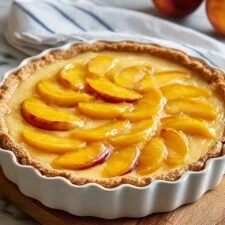
This American-style peach pie layers fresh, sugar-softened peaches beneath a smooth vanilla custard in a flaky pastry crust. It is a lovely make-ahead dessert for summer: chilling gives the filling time to set cleanly for slicing.
Ingredients
- 1 unbaked 23-cm (9-inch)pie crust, homemade or shop-bought
- 240 ml (1 cup)double cream
- 120 ml (½ cup)whole milk
- 3 largeeggs
- 100 g (½ cup)granulated sugar
- 1 tspvanilla extract
- 15 g (2 tbsp)plain flour
- A pinchsalt
- 3–4 (about 450 g; 3 cups)fresh peaches, peeled and sliced
- 2 tbspgranulated sugar, for tossing the peaches
Instructions
- 1
Prepare peaches
Blanch the peaches in boiling water for 30 seconds, then transfer them straight to ice water. Peel and slice them, toss with 2 tablespoons of granulated sugar, and leave them to macerate while they release their juices.
- 2
Prepare the crust
Heat the oven to 190°C (375°F). Fit the unbaked crust into a 23-cm (9-inch) pie dish, crimp the edge, and prick the base lightly with a fork to help prevent bubbling.
- 3
Whisk the custard
Whisk the eggs, 100 g of sugar, flour and a pinch of salt in a bowl until smooth. Gradually whisk in the milk, double cream and vanilla until combined and slightly frothy.
- 4
Assemble the pie
Arrange the macerated peach slices evenly over the crust. Carefully pour the custard over the fruit, filling the gaps without letting it overflow.
- 5
Bake the pie
Bake on the centre rack for 40–50 minutes. The custard should be just set and lightly golden; a knife inserted near the centre should come out mostly clean.
- 6
Cool and chill
Set the pie on a wire rack and let it cool completely. Refrigerate for at least 2 hours so the custard can finish setting.
- 7
Serve the pie
Slice and serve chilled or at room temperature. Dust with icing sugar or add a dollop of whipped cream if desired.
What is peach custard pie?
Peach custard pie is an American dessert that combines fruit, a baked egg-and-cream filling and pastry in one slice. This version pairs fresh peaches with a simple vanilla custard.
Macerating the peaches with sugar draws out some of their juice and sweetens the fruit. Baking them beneath the custard lets the flavours come together, while chilling helps the filling hold its shape.
Nutrition and macros by portion
The nutrition label shows one serving as written: 380 calories, 7g protein, 42g carbs, 21g fat.
| Portion | Adjustment | kcal | Protein | Carbs | Fat |
|---|---|---|---|---|---|
| Lighter | Smaller slice, skip cream | 266 kcal | 5g | 29g | 15g |
| This serving | As written | 380 kcal | 7g | 42g | 21g |
| Hungry | Larger slice | 570 kcal | 11g | 63g | 32g |
The pastry, cream and eggs contribute much of the fat, while the crust, flour, sugar and peaches supply most of the carbohydrates. Eggs and dairy also provide protein. Pair a slice with fresh fruit, or serve a smaller slice after a meal, to balance the plate.
Choosing the peaches
Ripe peaches: Choose fruit that gives slightly when pressed but is not soft or bruised. The brief blanch makes the skins easier to remove before slicing.
Maceration: Toss the slices with the measured sugar and let them stand as directed. If they release a lot of liquid, avoid tipping excess juice into the pie so the custard has a better chance of setting.
Getting the crust ready
Fit and crimp: Set the unbaked pastry into the dish without stretching it, then crimp the edge. A stretched crust can pull back as it bakes.
Prick the base: Lightly fork the base before filling, as the method directs. Keep the holes shallow and spread out rather than tearing the pastry.
Making a smooth custard
Dry ingredients: Whisk the sugar, flour and salt with the eggs first to break up any flour lumps. A smooth starting mixture helps the filling bake evenly.
Add the dairy: Pour in the milk and cream gradually while whisking, then mix in the vanilla. Stop once the custard is combined and lightly frothy rather than whipping it heavily.
How to tell when it is baked
Set centre: Begin checking at 40 minutes, since the recipe gives a 40–50 minute range. The custard should look just set, with a slight golden colour on top.
Knife test: Insert a knife near the centre; it should come out mostly clean. The pie will continue to firm as it cools and chills, so avoid baking until the filling is completely rigid.
Cooling and serving
Cool first: Let the pie cool completely on a wire rack before refrigerating. Chilling it for at least 2 hours gives the custard time to set for neater slices.
Serve it chilled or at room temperature, as preferred. A little icing sugar or whipped cream can be added at the table, though neither is included in the ingredient list.
What to serve alongside
The pie is rich and creamy, so small slices work well after a meal. Fresh fruit alongside it offers a simple contrast without competing with the peach filling.
For a more substantial dessert plate, serve with a spoonful of whipped cream or a scoop of ice cream if you have it. Keep any additional topping separate until serving.
Recipe notes & tips
- Have a bowl of ice water ready before blanching the peaches so you can cool them straight away.
- Use a light hand when pricking the pastry base to avoid making large holes.
- Add the dairy gradually while whisking to help keep the custard smooth.
- Pour the custard carefully and leave room at the top of the crust to prevent spills.
- Use the visual and knife-test cues as well as the stated baking time, since ovens can vary.
- Cool the pie fully before chilling so the custard has time to set before slicing.
Variations
- Use ripe nectarines: Replace the peaches with the same amount of peeled, sliced nectarines.
- Add cinnamon: Whisk a small pinch into the sugar and flour for a gentle spiced note.
- Try almond extract: Replace some of the vanilla with almond extract for a different aroma.
- Use a ready-made crust: Fit a shop-bought unbaked crust into the pie dish as directed.
- Serve with cream: Add whipped cream at the table for a richer serving.
Common mistakes to avoid
- Skipping the ice bath: The peaches keep cooking and are harder to peel; transfer them to ice water straight after blanching.
- Using very wet peaches: Extra juice can make the filling slow to set; let the slices macerate and avoid pouring excess liquid into the pie.
- Overmixing the custard: Too much whisking can make it excessively frothy; stop once it is smooth and lightly bubbly.
- Overfilling the crust: Custard can spill in the oven; pour carefully and leave a little space at the top.
- Baking until completely firm: The custard continues setting as it cools; remove it when just set and lightly golden.
- Cutting while warm: The filling may not hold its shape; cool completely and chill for at least 2 hours.
How to store
Cover and refrigerate the pie for up to 3 days. Serve chilled or let a slice stand briefly at room temperature; reheating is not needed and can soften the custard.
Frequently asked questions
Do I have to peel the peaches?
The method calls for peeled peaches, and blanching them for 30 seconds followed by an ice bath helps loosen the skins. Peel them before slicing and macerating.
Can I use tinned peaches?
Fresh peaches are specified for this recipe. Tinned peaches may add extra liquid, so drain them thoroughly if you use them; the texture and sweetness may differ.
How do I know the custard is done?
It should be just set and slightly golden on top. A knife inserted near the centre should come out mostly clean, and the filling will firm further as it cools.
Can I make the pie ahead?
Yes. The required cooling and minimum 2-hour chill make it practical to prepare ahead; keep it covered in the refrigerator until serving.
Should I serve it cold or at room temperature?
Either is suitable. Chilled slices are firmer, while a slice brought briefly to room temperature will be softer.
Why is my custard still soft?
It may need more time to chill, or it may have been removed before it was just set. Cool it fully, refrigerate for at least 2 hours, and check the centre carefully during baking next time.
Cook it from the original
This recipe comes from busyrecipe.com. Their page has the author’s own photos, notes and tips — the best place to cook it from.
Open the recipe on busyrecipe.com