
Spicy chicken with gochujang and sesame
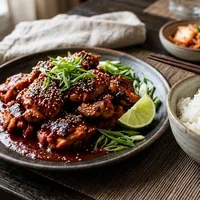
Chicken breast is coated in a punchy gochujang, garlic and sesame marinade, then quickly fried until browned. Serve it with steamed rice and lime for a straightforward Korean-inspired meal with plenty of savoury heat.
Ingredients
- 600 gchicken breast
- 3 tbspgochujang
- 2 tbspsoy sauce
- 1 tbspsesame oil
- 2garlic cloves, finely grated
- 1 tspground ginger
- 1 tbsphoney
- 1 tbsprice vinegar
- 2 tbspsunflower oil (for frying)
- 2 tbspsesame seeds
- 3spring onions, thinly sliced
- 1lime, cut into wedges
- 300 gsteamed white rice (as a side)
Instructions
- 1
Mix the marinade
Stir the gochujang, soy sauce, sesame oil, grated garlic, ground ginger, honey and rice vinegar together in a bowl until smooth.
- 2
Coat the chicken
Cut the chicken breasts into even strips about 2 cm wide. Toss them in the marinade until coated, then leave for at least 20 minutes, or longer if time allows.
- 3
Heat the skillet
Set a skillet over medium-high heat, add a splash of sunflower oil and wait until the oil is very hot.
- 4
Fry in batches
Cook the chicken strips in batches to avoid crowding the pan. Fry for 3 to 4 minutes per side over medium-high heat, until golden brown and cooked through. Do not press the chicken down while it cooks.
- 5
Rest the chicken
Transfer the cooked strips to a plate and let them rest briefly. Fry the remaining chicken in the same way.
- 6
Garnish and serve
Scatter sesame seeds and sliced spring onion over the chicken just before serving. Serve immediately with steamed white rice and lime wedges on the side if you like.
What is gochujang chicken?
Gochujang is a Korean fermented chilli paste with heat, savoury depth and a little sweetness. This quick skillet version uses it as the base of a glossy marinade for strips of chicken breast.
The sesame oil, garlic, ginger, honey and rice vinegar round out the bold paste. Cooking the chicken in batches helps it brown rather than steam.
Nutrition and macros by portion
The nutrition label shows one serving as written: 490 calories, 51g protein, 32g carbs, 21g fat.
| Portion | Adjustment | kcal | Protein | Carbs | Fat |
|---|---|---|---|---|---|
| Lighter | Use less frying oil | 343 kcal | 36g | 22g | 15g |
| This serving | As written | 490 kcal | 51g | 32g | 21g |
| Hungry | Add more steamed rice | 735 kcal | 77g | 48g | 32g |
The rice and honey contribute most of the carbohydrates, while chicken breast provides most of the protein. Sesame oil, sunflower oil and sesame seeds account for much of the fat. Pair the chicken and rice with a generous serving of vegetables to add colour and variety to the plate.
Building the marinade
Gochujang: Stir it thoroughly with the liquids and seasonings until the mixture is smooth, so each strip gets an even coating.
Balance: Honey softens the chilli's sharp edge, while rice vinegar brings a tangy counterpoint. The soy sauce adds savouriness, so there is no need to add extra salt to the marinade.
Cutting and marinating
Even strips: Aim for pieces about 2 cm wide so they cook at a similar rate. If some pieces are much thicker, they may need longer in the pan.
Marinating time: The recipe calls for at least 20 minutes. A longer rest is also fine if you have time, but keep the chicken chilled while it marinates.
Getting a good sear
Hot pan: Heat the skillet before adding the chicken, and wait until the sunflower oil is very hot. This helps the outside colour quickly.
Room to fry: Work in batches rather than packing the pan. Leave the pieces undisturbed while each side cooks, and avoid pressing them down so they can develop a browned surface.
Checking the chicken
Timing: Fry each side for 3 to 4 minutes over medium-high heat, as directed. The exact time depends on the thickness of the strips and how strongly your hob heats the pan.
Doneness: Check that the thickest pieces are cooked through before serving. Resting them briefly on a plate gives you time to finish the remaining batch.
Serving the meal
Rice: Steamed white rice is a mild, filling base for the spicy, savoury chicken. Serve it alongside so it can catch any marinade on the plate.
Fresh finish: Add the sesame seeds and spring onion just before serving for a nutty, fresh garnish. Lime wedges are optional, but a squeeze brings a bright note.
Recipe notes & tips
- Grate the garlic finely so it disperses evenly through the marinade.
- Cut the chicken into similarly sized strips for more even cooking.
- Keep the marinating chicken chilled if leaving it for longer than 20 minutes.
- Heat the oil well before adding each batch of chicken.
- Have the rice and garnishes ready before frying so you can serve the chicken straight away.
Variations
- More heat: Add extra gochujang to the marinade if you want a stronger chilli flavour.
- Citrus finish: Squeeze lime over the chicken at the table for extra tang.
- Vegetable side: Serve with steamed or stir-fried vegetables alongside the rice.
- Rice swap: Use another cooked grain in place of the steamed white rice.
- Extra garnish: Add more sliced spring onion or sesame seeds at serving.
Common mistakes to avoid
- Uneven strips: Cut the chicken to a similar width so thinner pieces do not finish well before thicker ones.
- Crowded skillet: Fry in batches to give the chicken room to brown instead of steam.
- Cool oil: Wait until the sunflower oil is very hot before adding the chicken.
- Pressing the chicken: Leave the pieces alone as they fry so they can form a browned crust.
- Rushing the marinade: Give the chicken at least 20 minutes in the marinade for the intended flavour.
How to store
Refrigerate leftover chicken and rice in an airtight container for up to 3 days. Reheat until piping hot, using a pan or microwave; the chicken may be less crisp after storing.
Frequently asked questions
How spicy is gochujang chicken?
It has a noticeable chilli kick, balanced by honey and the savoury ingredients. Gochujang brands vary, so the heat can differ.
Can I marinate the chicken for longer than 20 minutes?
Yes. The recipe allows a longer marinating time; keep the chicken chilled while it rests.
How do I know when the chicken is cooked through?
Check the thickest strips before serving to make sure they are cooked through. The stated frying time is 3 to 4 minutes per side, but thickness and pan heat affect timing.
Why should I fry the chicken in batches?
A crowded skillet releases moisture and makes it harder for the strips to brown. Batches leave more space around the chicken.
Can I serve it without rice?
Yes. The rice is a side, so you can serve the chicken with another cooked grain or vegetables instead.
Can I make this without sesame seeds?
Yes. Leave them off if needed; the chicken will still have sesame flavour from the sesame oil in the marinade.
Cook it from the original
This recipe comes from cookinglife.eu. Their page has the author’s own photos, notes and tips — the best place to cook it from.
Open the recipe on cookinglife.eu