
Creamy Lemon Cacio e Pepe Recipe
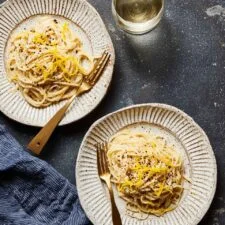
This Italian-inspired pasta pairs spaghetti with a creamy sauce of lemon, butter, Parmesan and Pecorino, finished with plenty of black pepper. It comes together quickly, making it a good choice for a weeknight meal that still feels special.
Ingredients
- 2lemons
- 454 g (1 pound)spaghetti
- al gustokosher salt
- 180 ml (¾ cup)double cream
- 85 g (6 tablespoons)unsalted butter
- 67 g (⅔ cup)finely grated Parmesan cheese
- 33 g (⅓ cup)finely grated Pecorino cheese
- 2 teaspoonsfreshly grated black pepper
Instructions
- 1
Prepare the lemons
Use a vegetable peeler to remove two 5 cm-long strips of lemon peel. Slice them lengthways into fine strands and set aside for serving. Finely grate the remaining zest into a large pot or Dutch oven. Halve the lemons and squeeze out 2–3 tablespoons of juice; set it aside.
- 2
Cook the spaghetti
Bring a large pot of salted water to the boil. Cook the spaghetti, stirring now and then, until very al dente: it should remain slightly firm because it will finish cooking in the sauce.
- 3
Make the sauce
While the pasta cooks, warm the double cream and grated lemon zest in a large frying pan over medium heat until just simmering, about 2 minutes. Reduce the heat to medium-low and stir in the butter continuously until the sauce is creamy and emulsified. If the pasta is not ready, turn off the heat to help keep the sauce together.
- 4
Toss pasta and sauce
Just before the spaghetti reaches al dente, reserve 180 ml (¾ cup) of its cooking water. Add the water to the sauce and return the pan to medium heat. Drain the pasta and transfer it straight into the pan. Toss often, adding the Parmesan and Pecorino gradually so they melt and the sauce thickens. Stir in the lemon juice, taste, then adjust with salt and freshly cracked black pepper.
- 5
Finish and serve
Divide the pasta between bowls. Top with the reserved lemon strands, extra cracked black pepper and, if desired, more grated Parmesan.
What is cacio e pepe?
Cacio e pepe is a Roman pasta dish whose name means cheese and pepper. Traditionally, it relies on pasta, Pecorino Romano and black pepper, brought together with starchy cooking water.
This version adds cream, butter and lemon for a richer, brighter sauce. The lemon’s sharpness balances the dairy, while the two cheeses and pepper keep the dish savoury and recognisably cacio e pepe-inspired.
Nutrition and macros by portion
The nutrition label shows one serving as written: 835 calories, 28g protein, 84g carbs, 41g fat.
| Portion | Adjustment | kcal | Protein | Carbs | Fat |
|---|---|---|---|---|---|
| Lighter | Use less butter | 585 kcal | 20g | 59g | 29g |
| This serving | As written | 835 kcal | 28g | 84g | 41g |
| Hungry | Serve a larger portion | 1253 kcal | 42g | 126g | 62g |
Most of the carbohydrates come from the spaghetti, while the cream, butter and cheeses provide much of the fat; the cheese and pasta contribute protein. Serve a moderate bowl with a green salad or vegetables to add freshness and make the meal more balanced.
Choose the right cheese
Parmesan: finely grate it so it melts readily into the sauce. Coarsely grated cheese is more likely to leave little clumps.
Pecorino: this sheep’s-milk cheese brings a saltier, sharper flavour. Using both cheeses gives the sauce more depth than relying on either one alone.
Keep the sauce smooth
Butter: stir it into the warmed cream over medium-low heat, rather than letting the mixture boil hard. This helps the fat combine with the cream into a cohesive sauce.
Cheese: add it a little at a time while tossing the pasta. A gradual addition gives each handful time to melt before the next goes in.
Use pasta water well
Reserved water: take out 180 ml before draining the spaghetti. Its starch helps the cream, butter and cheese coat the strands rather than sitting separately.
Very al dente pasta: transfer it to the sauce while it is still slightly firm. The final tossing cooks it further and gives the sauce a chance to cling.
Balance lemon and pepper
Lemon zest: finely grate it into the cream to spread its fragrant flavour throughout the sauce. Keep the long strands for the garnish so each bowl has a fresh citrus note.
Lemon juice: stir it in towards the end, then taste before adding salt. Freshly cracked pepper on top adds fragrance and a more pronounced peppery finish.
Serve it straight away
Timing: have the cheese, pepper and lemon juice ready before the pasta finishes cooking. The sauce is easiest to toss and serve while it is hot and fluid.
On the side: a crisp green salad or simply cooked vegetables can add freshness alongside the rich pasta. Serve extra Parmesan at the table if desired.
Recipe notes & tips
- Grate the cheeses finely before the pasta is ready so they can be added without delay.
- Reserve the pasta water just before draining, when it is still hot and starchy.
- Use freshly cracked pepper for a more aromatic finish.
- Keep the lemon strands covered while you prepare the sauce so they do not dry out.
- Taste the sauce after adding the lemon juice before deciding whether it needs more salt.
Variations
- More lemon: add a little extra zest for a sharper citrus note.
- Extra pepper: grind more black pepper over each bowl for a bolder finish.
- Add greens: fold in wilted spinach just before serving.
- Herb finish: scatter chopped parsley over the bowls for a fresh, herbal note.
- Use another pasta: swap spaghetti for a similarly sized long pasta and cook it until very al dente.
Common mistakes to avoid
- Boiling the cream hard: it can make the sauce less cohesive; bring it only to a gentle simmer.
- Adding all the cheese at once: it may clump; add it gradually while tossing.
- Skipping the pasta water: the sauce may not coat the strands well; reserve the stated amount before draining.
- Cooking the spaghetti fully in the pot: it can turn soft as it finishes in the sauce; drain it while still slightly firm.
- Adding lemon juice too early: the flavour can become less fresh; stir it in near the end.
How to store
Refrigerate leftovers in an airtight container for up to 3 days. Reheat gently in a pan with a splash of water, stirring until warmed through; the sauce may be thicker after chilling.
Frequently asked questions
Can I make this without cream?
The cream is part of this version and gives it its rich texture. A traditional cacio e pepe-style sauce instead relies on cheese and starchy pasta water, so leaving out the cream would change the method and result.
Why should the pasta be very al dente?
It continues cooking when tossed with the hot sauce. Draining it while slightly firm helps prevent it becoming overcooked in the pan.
Can I use pre-grated cheese?
Finely grated cheese melts most smoothly, so freshly grating it is preferable. Pre-grated cheese may not blend as easily into the sauce.
How much lemon juice should I use?
The recipe aims for 2–3 tablespoons. Add it near the end and taste, as the lemons can vary in sharpness.
What can I serve with lemon cacio e pepe?
A green salad or simply cooked vegetables make a fresh counterpoint to the creamy pasta. You can also serve it on its own as a main course.
Cook it from the original
This recipe comes from busyrecipe.com. Their page has the author’s own photos, notes and tips — the best place to cook it from.
Open the recipe on busyrecipe.com