
Vegan Miso Risotto
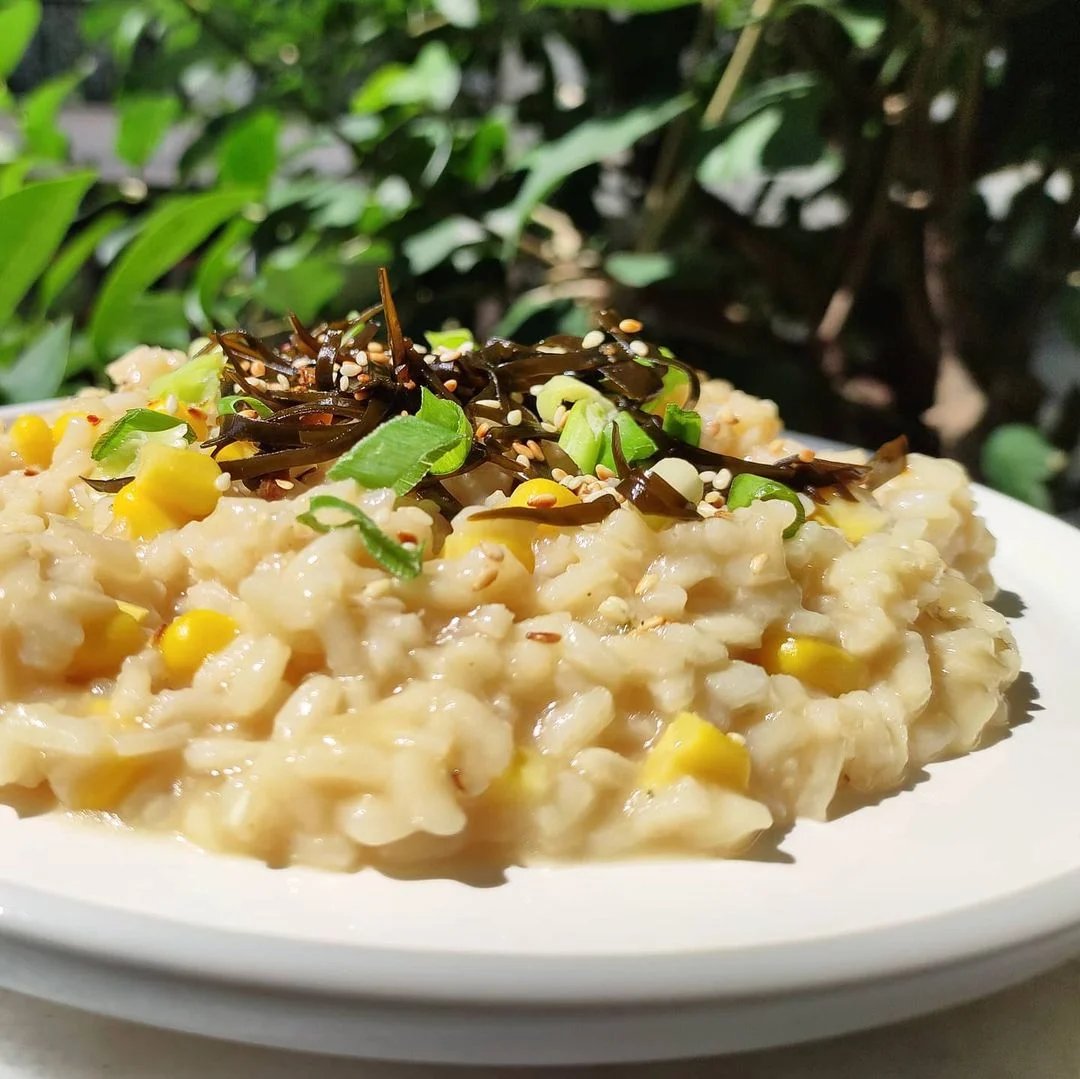
This vegan miso risotto cooks short-grain rice in kombu dashi, then finishes it with white miso and sweetcorn. It is a comforting, savoury one-pot meal with sesame, spring onions and a gentle sea-vegetable flavour.
Ingredients
- 1½ cups (about 300 g)short-grain rice
- 1 tbsp (15 ml)neutral oil
- 1 tsp (5 ml)sesame oil
- 150 g (1 cup)onion, finely diced
- 3 clovesgarlic, minced
- 1 tspdried thyme
- 4 sheets, 15 cm each, soaked in 1.66 litres (7 cups) of water for 4 hourskombu
- 2 tbspwhite miso
- 150 g (1 cup)sweetcorn kernels, fresh or frozen
- 2 tspwhite sesame seeds, toasted
- To tastespring onions, chopped
- To tastesalt, optional
Instructions
- 1
Warm the dashi
Transfer the kombu dashi to a saucepan and keep it at a gentle simmer.
- 2
Heat the oils
Set a large pan over medium-high heat and add the neutral oil and sesame oil.
- 3
Soften the onion
When the oils are hot, add the onion and sauté until translucent. Add the garlic and cook until fragrant.
- 4
Coat the rice
Add the thyme and rice, then stir to combine and cook for 1 minute.
- 5
Cook the first addition
Add 710 ml (3 cups) of warm broth and stir briefly. Cover and cook for 15 minutes, or until the rice has absorbed almost all the liquid.
- 6
Add more broth
Pour in 355 ml (1½ cups) of broth and stir. Cover and cook for another 10 minutes, or until almost all the liquid has been absorbed.
- 7
Mix in the miso
Take the remaining dashi off the heat. Put the miso in a small sieve, lower it into the dashi and stir until the miso dissolves.
- 8
Finish the risotto
Add the miso dashi and corn to the rice. Stir, cover and cook for 5 minutes, or until almost all the liquid has been absorbed.
- 9
Taste and serve
Stir well and taste; add a pinch of salt if needed. Take the pan off the heat, spoon the risotto into plates and garnish with toasted sesame seeds and chopped spring onions.
- 10
Cook leftover kombu
Thinly slice any leftover kombu and add it to a pot with the remaining ingredients. Bring to the boil over medium heat, reduce the heat to low and cook until the kombu is tender, then set aside.
What is vegan miso risotto?
Risotto is an Italian rice dish traditionally made by gradually cooking rice with stock until it turns creamy. This version takes a different route, using Japanese kombu dashi and miso for a savoury, plant-based finish.
Kombu is dried kelp used to flavour broths, while miso is a fermented soybean paste. Short-grain rice releases starch as it cooks, helping the broth cling to the grains without needing dairy.
Nutrition and macros by portion
The nutrition label shows one serving as written: 350 calories, 8g protein, 68g carbs, 6g fat.
| Portion | Adjustment | kcal | Protein | Carbs | Fat |
|---|---|---|---|---|---|
| Lighter | Use less sesame oil | 245 kcal | 6g | 48g | 4g |
| This serving | As written | 350 kcal | 8g | 68g | 6g |
| Hungry | Serve a larger bowl | 525 kcal | 12g | 102g | 9g |
Most of the carbohydrates come from the short-grain rice and sweetcorn; the oils and sesame seeds contribute most of the fat, while the rice, miso and sesame provide some protein. Add a generous serving of greens or salad alongside to round out the plate.
Build a savoury base
Aromatic base: the neutral oil handles the frying, while sesame oil adds a distinct toasted note. Cook the onion until translucent before adding garlic so the aromatics soften without browning too quickly.
Rice coating: stirring the rice with the thyme for a minute helps distribute the flavour before the broth goes in. Keep the heat controlled so the grains toast lightly rather than catch on the pan.
Make the kombu dashi
Soaking: the kombu is soaked in 1.66 litres of water for 4 hours to make the dashi used for cooking the rice. Keep the broth at a gentle simmer while you prepare the other ingredients.
Leftover kombu: the method also says to slice any remaining kombu thinly and cook it in a pot until tender. The final instruction refers to adding it with the rest of the ingredients, so use the remaining ingredients intended for that separate preparation.
Add the broth in stages
First addition: add 710 ml of warm broth, cover the pan and cook for 15 minutes. The recipe relies on the rice absorbing most of this liquid before the next addition.
Second addition: stir in another 355 ml and cook, covered, for 10 minutes. Check the pan as it cooks; the stated times are guides, and the rice should be nearly tender before the miso dashi goes in.
Dissolve miso gently
Miso step: take the remaining dashi off the heat before stirring in the miso. Using a small sieve makes it easier to break up the paste and disperse it evenly.
Final cook: add the miso dashi and sweetcorn, then cook covered for 5 minutes. The rice should be tender and the mixture moist, with most—but not necessarily every drop—of liquid absorbed.
Finish and serve
Garnish: toasted sesame seeds bring a nutty finish, and chopped spring onions add a fresh, gently sharp contrast. Taste before adding salt, since miso can already bring plenty of savoury seasoning.
On the side: serve with a crisp green salad or steamed greens for freshness. A little extra sweetcorn or sliced spring onion can also make each bowl feel more substantial.
Recipe notes & tips
- Keep the dashi at a gentle simmer so it is warm when added to the rice.
- Stir the rice well after each broth addition to help it cook evenly.
- If using frozen sweetcorn, add it straight from the freezer.
- Dissolve the miso off the heat to make it easier to mix through the dashi.
- Taste before adding salt, as the miso may already season the dish.
- Toast the sesame seeds in a dry pan until fragrant, keeping a close eye on them.
Variations
- Add mushrooms: stir in sliced mushrooms with the onion and cook until softened.
- Use brown rice: choose short-grain brown rice, allowing for its longer cooking time and any extra liquid it needs.
- Bring the heat: finish with chilli flakes or a little chilli oil.
- Add greens: fold in spinach during the final few minutes of cooking.
- Boost the sesame: garnish with a drizzle of sesame oil just before serving.
Common mistakes to avoid
- Boiling the dashi hard: keep it at a gentle simmer so it is ready to add without reducing too quickly.
- Adding cold broth: warm the dashi first to keep the rice cooking steadily.
- Cooking uncovered: keep the pan covered for the stated cooking stages so the rice absorbs the broth.
- Adding miso over high heat: take the dashi off the heat before dissolving the paste into it.
- Salting before tasting: check the finished risotto first, then add only a pinch if needed.
- Leaving the rice unattended: check towards the end of each cooking stage to prevent it catching as the liquid absorbs.
How to store
Cool leftovers promptly and store in an airtight container in the fridge for up to 3 days. Reheat in a pan or microwave until piping hot, adding a splash of water if the rice has thickened.
Frequently asked questions
Can I use another type of rice?
Short-grain rice is best for the soft, creamy texture described here. Other rice types may absorb liquid differently, so adjust the cooking time and broth as needed.
Can I make the kombu dashi ahead?
Yes. Prepare it by soaking the kombu in the measured water for 4 hours, then keep it chilled until you are ready to cook.
How do I know when the rice is done?
It should be tender with a little bite, and most of the broth should be absorbed. If the rice is still firm, continue cooking and check it regularly.
Can I use frozen sweetcorn?
Yes. The recipe allows fresh or frozen corn, and frozen kernels can be added at the final cooking stage.
Does the recipe need extra salt?
Not necessarily. Taste after stirring in the miso dashi and add a pinch only if it needs it.
Cook it from the original
This recipe comes from fooooods.com. Their page has the author’s own photos, notes and tips — the best place to cook it from.
Open the recipe on fooooods.com