
Labneh (Yogurt Cheese)
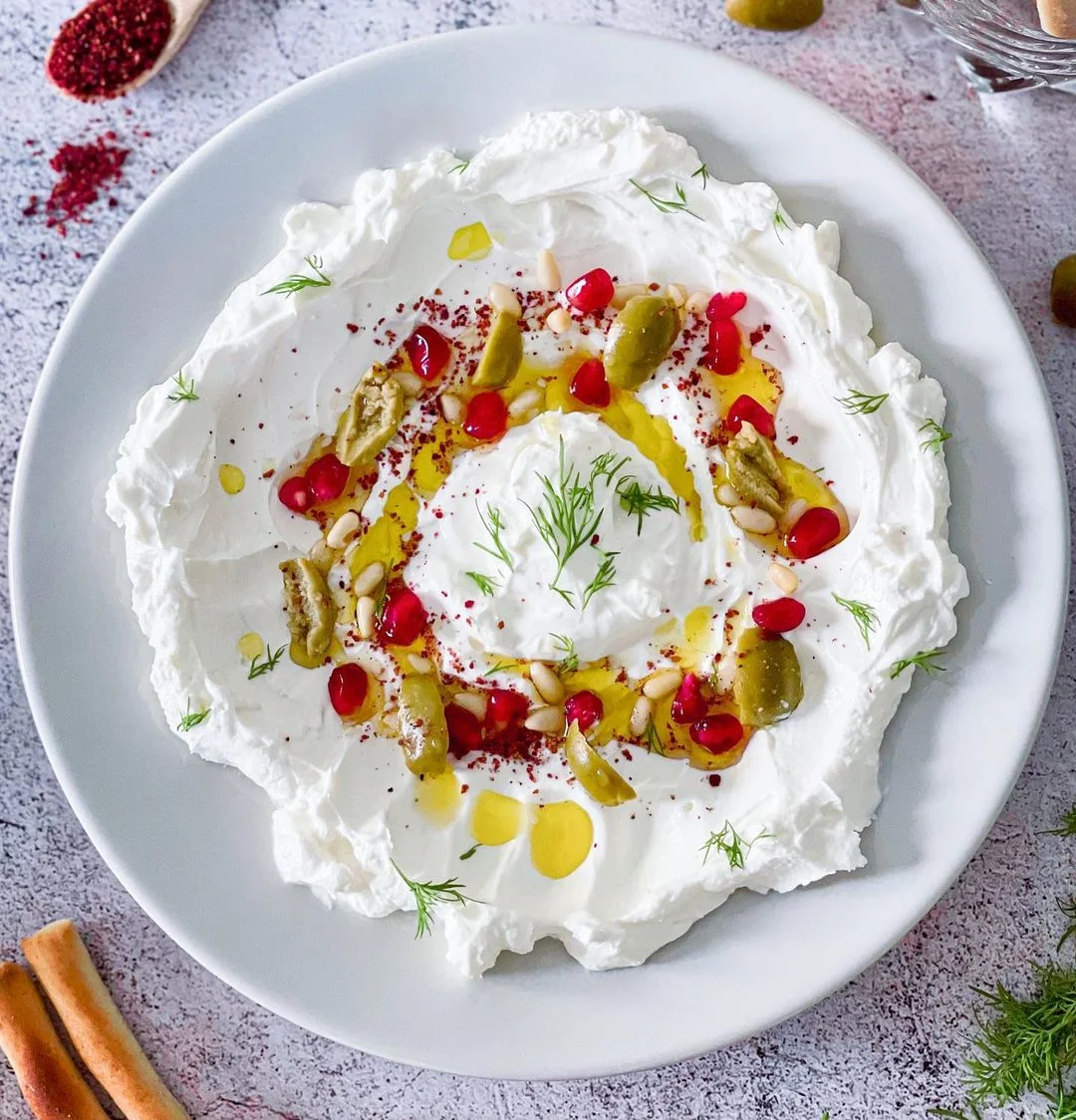
Labneh is thick, tangy strained yoghurt served here with a choice of savoury and sweet-tart garnishes. It takes only a few minutes to prepare before chilling overnight, making it an easy dip or sandwich filling.
Ingredients
- Around 600 g (2 cups)yoghurt (Greek yoghurt was used)
- 2.5 ml (½ tsp)sea salt, or to taste
- As neededcheesecloth, coffee filter or clean kitchen towel
- To tasteolive oil, sumac, pine nuts, olives, pomegranate seeds and fresh herbs, for garnish
Instructions
- 1
Mix yoghurt
Stir the yoghurt and salt together in a bowl, adjusting the salt to your taste.
- 2
Prepare cloth
Spoon the yoghurt mixture into cheesecloth, a coffee filter or a clean kitchen towel.
- 3
Strain overnight
Set the cloth in a strainer over a bowl or tray. Chill overnight while the liquid drains from the yoghurt.
- 4
Add toppings
In the morning, transfer the strained yoghurt to a plate and add your chosen toppings. Serve as a dip or use in sandwiches.
- 5
Store leftovers
Put any leftovers in a tightly sealed container and keep them in the fridge.
What is labneh?
Labneh is yoghurt that has been strained until much of its liquid drains away, leaving a thick, tangy spread. It is commonly associated with Levantine and wider Middle Eastern food traditions.
This simple version relies on Greek yoghurt and an overnight strain, then lets the toppings bring contrast: olive oil adds richness, while sumac, olives, pomegranate and herbs offer savoury, tart or fresh notes.
Nutrition and macros by portion
The nutrition label shows one serving as written: 120 calories, 15g protein, 5g carbs, 5g fat.
| Portion | Adjustment | kcal | Protein | Carbs | Fat |
|---|---|---|---|---|---|
| Lighter | Use less olive oil | 84 kcal | 11g | 4g | 4g |
| This serving | As written | 120 kcal | 15g | 5g | 5g |
| Hungry | Serve with more bread | 180 kcal | 23g | 8g | 8g |
Most of the protein comes from the yoghurt, which also contributes some fat and carbohydrate; the yoghurt's type affects those amounts. Olive oil and pine nuts add most of the extra fat, while bread or vegetables served alongside contribute additional carbohydrates. Balance a serving with vegetables and a protein-rich accompaniment if using it as part of a meal.
Choosing the yoghurt
Greek yoghurt: Its thickness makes it a convenient starting point, and the recipe uses around 600 g. Plain yoghurt works too, though it may need longer to reach a spreadable consistency.
Salt: Mix it into the yoghurt before straining so the seasoning is distributed throughout. Start with the stated amount and adjust to taste.
Straining without cheesecloth
Cloth alternatives: A coffee filter or clean kitchen towel can stand in for cheesecloth. Choose something that lets liquid drain while keeping the yoghurt solids contained.
Set-up: Place the filled cloth in a strainer over a bowl or tray so the draining liquid has somewhere to collect. Keep the whole set-up in the fridge overnight.
Getting the right texture
Drain time: The recipe calls for an overnight chill, which gives the yoghurt time to lose water and thicken. If it still seems looser than you want in the morning, let it strain longer in the fridge.
Doneness: Look for a thick, spoonable yoghurt that holds its shape on a plate. Avoid squeezing the cloth as a shortcut; let the liquid drain through it.
Finishing with toppings
Olive oil: A drizzle lends richness and helps the toppings cling to the surface. Add it just before serving.
Contrast: Sumac, olives, pomegranate seeds, pine nuts and fresh herbs are suggested options rather than a fixed combination. Choose a few that suit how you plan to serve the labneh.
Serving ideas
As a dip: Serve the labneh on a plate with the toppings and offer bread or vegetables alongside. The recipe also suggests using it in sandwiches.
For a fuller meal: Pair it with vegetables and a source of protein, such as beans or eggs, to make a more substantial plate.
Recipe notes & tips
- Use plain yoghurt so its flavour works well with either savoury or tart toppings.
- Set the strainer securely over a bowl or tray before adding the yoghurt.
- Keep the straining set-up chilled overnight, as directed.
- Add the toppings after transferring the strained yoghurt to a serving plate.
- Use a tightly sealed container for any leftovers.
Variations
- Herb finish: Add fresh herbs for a fresh, aromatic topping.
- Sumac accent: Sprinkle on sumac for a tart, savoury note.
- Olive topping: Add olives for a salty contrast.
- Pomegranate finish: Scatter on pomegranate seeds for a tart, juicy accent.
- Pine nut topping: Add pine nuts for a nutty finish.
Common mistakes to avoid
- Skipping the salt: Mix it into the yoghurt before straining so the finished labneh is seasoned throughout.
- Using an unstable strainer: Set it firmly over a bowl or tray before adding the yoghurt.
- Straining at room temperature: Chill the yoghurt overnight while it drains, as the method directs.
- Expecting instant thickness: Allow the full overnight strain, then continue draining in the fridge if needed.
- Adding toppings too early: Finish the labneh on its serving plate so the toppings stay on the surface.
How to store
Keep leftover labneh in a tightly sealed container in the fridge. The recipe does not specify a storage duration, so use it promptly and discard it if its smell or appearance changes. Serve chilled; no reheating is needed.
Frequently asked questions
Can I use ordinary plain yoghurt?
Yes. Greek yoghurt is the version used here, but plain yoghurt can also be strained. It may take longer to become as thick.
What can I use instead of cheesecloth?
The recipe suggests a coffee filter or a clean kitchen towel. Use one that can hold the yoghurt while allowing liquid to drain.
How long should the yoghurt strain?
Chill it overnight, as the method directs. If it is not thick enough for your liking in the morning, let it drain for longer in the fridge.
How do I know when labneh is ready?
It should be thick and spoonable, holding its shape on a plate rather than running like unstrained yoghurt.
How should I serve labneh?
Add your chosen toppings and serve it as a dip or spread it in sandwiches. Bread or vegetables are handy accompaniments.
Cook it from the original
This recipe comes from fooooods.com. Their page has the author’s own photos, notes and tips — the best place to cook it from.
Open the recipe on fooooods.com