
Braised beef cheeks with red wine and root vegetables
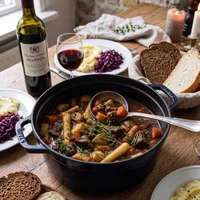
This Dutch-style braise cooks beef cheeks slowly in red wine, stock and root vegetables until the meat is fork-tender. It is a warming make-ahead meal, with a rich sauce that is especially good with mashed potatoes or crusty bread.
Ingredients
- 4 (about 1.2 kg)beef cheeks
- to tastesalt and freshly ground pepper
- 2 tbspolive oil or sunflower oil
- 2onions, roughly chopped
- 3carrots, cut into pieces
- 2parsnips, cut into pieces
- 200 gceleriac, diced
- 4 clovesgarlic, finely chopped
- 2 tbsptomato paste
- 350 mlfull-bodied red wine
- 500 mlbeef stock
- 3bay leaves
- 5 sprigsfresh thyme
Instructions
- 1
Brown the beef
Pat the beef cheeks very dry with kitchen paper and season both sides generously with salt and pepper. Heat a splash of oil in a braising pan over medium-high heat. Brown the cheeks for 2–3 minutes per side, until a deep crust forms, then take them out and set aside.
- 2
Cook the vegetables
Lower the heat slightly. Cook the onion, carrot, parsnip and celeriac in the drippings for about 5 minutes, until they begin to colour.
- 3
Add garlic and paste
Stir in the garlic and tomato paste and cook for 1 minute to soften their raw flavours.
- 4
Reduce the wine
Pour in the red wine and scrape the browned bits from the bottom of the pan. Let it reduce for 3 minutes.
- 5
Add the braising liquid
Return the beef cheeks to the pan and add the beef stock, bay leaves and thyme. The meat should be mostly submerged. Bring the liquid to a boil.
- 6
Braise until tender
Turn the heat down, cover the pan and simmer gently for 3–3½ hours. The cheeks are ready when a fork pierces them easily and the meat falls apart.
- 7
Finish the sauce
Carefully lift out the cheeks and remove the bay leaves and thyme sprigs. For a thicker sauce, simmer the cooking liquid uncovered for a further 10 minutes.
- 8
Season and serve
Return the beef to the sauce, taste and adjust the salt and pepper, then serve straight away. Serve with mashed potatoes or crusty bread to mop up the sauce.
What are braised beef cheeks?
Beef cheeks are a hard-working cut that becomes tender with long, gentle cooking. Braising them in liquid is a familiar way to turn this firm cut into soft, richly flavoured meat.
This Dutch-style version pairs red wine and beef stock with autumn root vegetables. The vegetables build flavour in the pan and become part of the savoury cooking liquid.
Nutrition and macros by portion
The nutrition label shows one serving as written: 760 calories, 62g protein, 26g carbs, 39g fat.
| Portion | Adjustment | kcal | Protein | Carbs | Fat |
|---|---|---|---|---|---|
| Lighter | Trim visible beef fat | 532 kcal | 43g | 18g | 27g |
| This serving | As written | 760 kcal | 62g | 26g | 39g |
| Hungry | Add mashed potatoes | 1140 kcal | 93g | 39g | 59g |
The beef cheeks provide most of the protein and a substantial share of the fat, while the oil adds further fat. The root vegetables and tomato paste contribute carbohydrates, and the wine and stock form the sauce; stock brands can make sodium levels vary considerably. Serve with a generous portion of vegetables alongside, or keep the potato or bread portion moderate if you want a more balanced plate.
Build flavour before braising
Dry cheeks: patting the meat thoroughly dry helps it brown rather than steam. Give each side a few minutes in the hot pan to develop a crust.
Vegetable base: cook the onion, carrot, parsnip and celeriac in the meat drippings until they start to colour. Garlic and tomato paste follow briefly so they contribute flavour without burning.
Why the wine is reduced
Pan fond: after browning the meat and vegetables, the dark bits on the base of the pan hold concentrated flavour. Scrape them up as the wine goes in.
Short reduction: the recipe gives the wine 3 minutes to reduce before stock is added. Keep it at a simmer, then add the cheeks and aromatics.
Keep the braise gentle
Low heat: once the liquid reaches a boil, lower the heat and cover the pan. A quiet simmer for 3–3½ hours gives the cheeks time to become tender without boiling the sauce hard.
Tenderness cue: use a fork to check the meat rather than relying only on the clock. It should pierce easily and fall apart; if it is still firm, continue simmering gently.
Adjust the sauce
Uncovered reduction: remove the cheeks and herbs before reducing the liquid, so the meat does not break up further. Simmer the sauce for up to 10 minutes if you would like it thicker.
Final seasoning: taste after reducing, since the sauce will be more concentrated. Return the beef to the pan so it is coated in the sauce before serving.
What to serve with it
Mashed potatoes: their soft texture makes an easy base for the beef and sauce. Spoon the vegetables and braising liquid over or alongside them.
Crusty bread: use it to mop up the sauce. A simple green vegetable can also round out the plate.
Recipe notes & tips
- Use a pan large enough to brown the cheeks without crowding them.
- Keep the heat high enough to brown the meat, but lower it before cooking the vegetables.
- Scrape the base of the pan well when adding the wine.
- Check that the cheeks are mostly submerged before covering the pan.
- Start checking for tenderness at the 3-hour mark.
- Taste the sauce again after reducing it, before returning the beef.
Variations
- Different roots: swap in another root vegetable in place of one listed, keeping the pieces a similar size.
- More herbs: add another woody herb alongside the thyme for a different herbal note.
- Softer vegetables: cut the roots into larger pieces if you want them to hold their shape through the long braise.
- Thicker sauce: simmer the cooking liquid uncovered for the stated extra 10 minutes.
- Serve over mash: spoon the beef and sauce over mashed potatoes for a heartier serving.
Common mistakes to avoid
- Wet beef: it can steam instead of browning; pat the cheeks very dry before seasoning.
- Crowded pan: the meat may colour unevenly; brown it in batches if the pan is too small.
- Burnt garlic: it can turn bitter; add it with the tomato paste after lowering the heat.
- Hard boil: it can make the braise cook unevenly; reduce the heat after bringing the liquid to a boil.
- Stopping too soon: firm cheeks are not ready; continue the gentle simmer until a fork pierces them easily.
- Over-reducing: the sauce can become too concentrated; reduce it for no more than the recipe's extra 10 minutes, then taste.
How to store
Cool leftovers promptly and refrigerate in a covered container with the sauce for up to 3 days. Reheat gently in a covered pan until piping hot, adding a little stock or water if the sauce has thickened too much.
Frequently asked questions
How do I know when beef cheeks are done?
They should be very tender and fall apart when pierced with a fork. If they are still firm after 3 hours, keep simmering gently and check again.
Can I make this ahead?
Yes. Cool the beef in its sauce, refrigerate it, and reheat gently before serving. The sauce may thicken as it chills.
Can I cook this without red wine?
The recipe relies on red wine for its flavour and braising liquid. You can replace it with additional beef stock, though the finished sauce will taste different.
What if the meat is not covered by the liquid?
It should be mostly submerged as the recipe states. Use a suitably sized pan so the stock and wine can surround the cheeks.
How can I thicken the sauce?
Remove the meat and herbs, then simmer the cooking liquid uncovered for a further 10 minutes. Return the beef to the sauce before serving.
Cook it from the original
This recipe comes from cookinglife.eu. Their page has the author’s own photos, notes and tips — the best place to cook it from.
Open the recipe on cookinglife.eu