
Dairy-Free Grilled Cheese Sandwiches
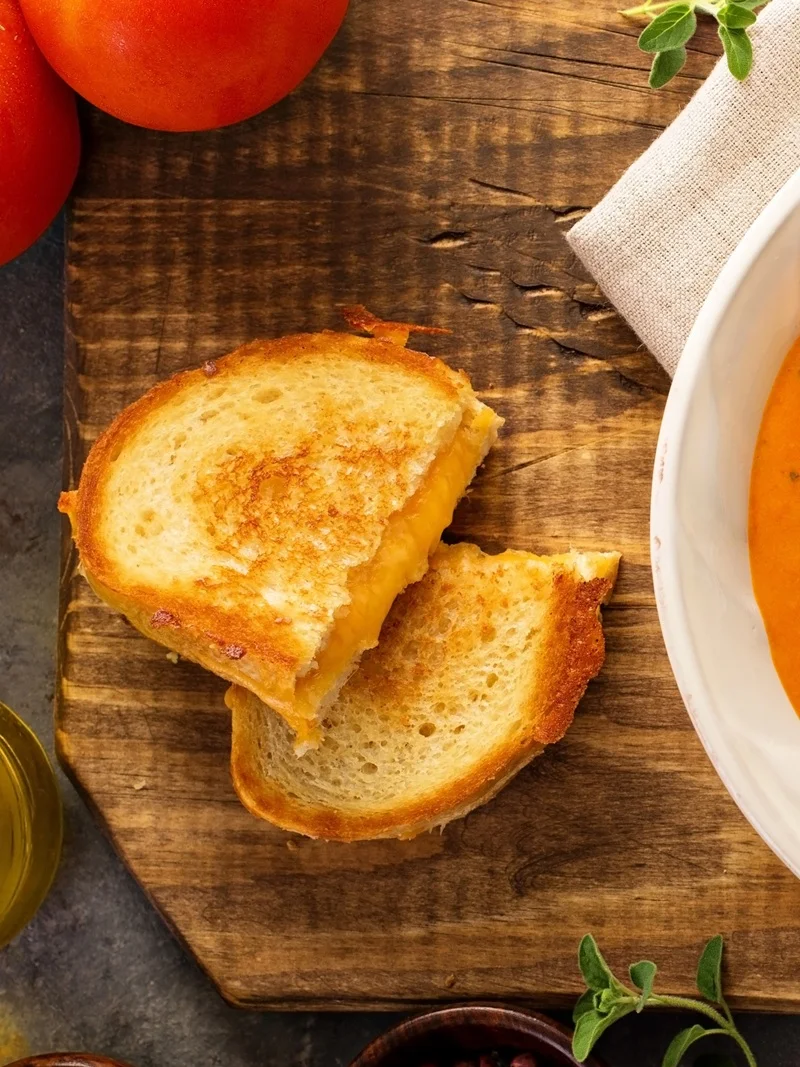
These American-style dairy-free grilled cheese sandwiches pair crisp, golden bread with a savoury homemade filling made from nutritional yeast. They come together in about 20 minutes and are easy to serve with pickles, ketchup or tomato soup.
Ingredients
- 120 ml (½ cup), plus more if neededwater
- About 20 g (⅓ cup)nutritional yeast flakes
- About 30 g (¼ cup)plain flour
- 1garlic clove, crushed or grated
- 2.5 ml (½ teaspoon)salt
- 1.25 ml (¼ teaspoon)mustard powder
- To tastefreshly ground black pepper
- 15 ml (1 tablespoon)olive oil
- As neededdairy-free buttery spread (or oil or mayonnaise)
- 8 slicesdairy-free bread, such as wholemeal or sourdough
Instructions
- 1
Whisk the filling
In a small pan or frying pan, whisk together the water, nutritional yeast, flour, garlic, salt, mustard powder and pepper.
- 2
Cook gently
Set the pan over a low heat and whisk constantly, as you would when making gravy.
- 3
Finish the filling
When the mixture becomes pasty, whisk in the olive oil. Turn off the heat, then whisk in a little more water if it seems too dry.
- 4
Spread the bread
Spread dairy-free buttery spread on one side of each bread slice. Alternatively, use mayonnaise or brush the bread with olive oil.
- 5
Assemble sandwiches
Spread the dairy-free cheese filling over the unbuttered side of four slices. Top with the remaining slices, with their buttered sides facing out, to make four sandwiches.
- 6
Fry until golden
Cook the sandwiches in a frying pan over a medium-low heat until golden brown on each side.
- 7
Slice and serve
Cut the sandwiches in half and serve.
What are dairy-free grilled cheese sandwiches?
Grilled cheese is an American comfort-food sandwich, traditionally made by melting cheese between slices of buttered bread in a pan. This version replaces dairy cheese with a quick, savoury filling based on nutritional yeast.
The flour thickens the filling, while gentle cooking and steady whisking help it turn pasty enough to spread. Crisp bread and a warm, savoury centre make these sandwiches a good option for a quick lunch.
Nutrition and macros by portion
The nutrition label shows one serving as written: 297 calories, 15g protein, 35g carbs, 11g fat.
| Portion | Adjustment | kcal | Protein | Carbs | Fat |
|---|---|---|---|---|---|
| Lighter | Use less buttery spread | 208 kcal | 10g | 24g | 8g |
| This serving | As written | 297 kcal | 15g | 35g | 11g |
| Hungry | Add another sandwich | 446 kcal | 22g | 52g | 17g |
The bread and flour provide most of the carbohydrates, while the olive oil and buttery spread contribute fat. Nutritional yeast adds protein, with some also coming from the bread. Serve a sandwich with tomato soup or pickles for a more rounded plate.
Why nutritional yeast works here
Nutritional yeast: Its savoury flavour gives the filling a cheesy character without dairy. Whisk it in with the flour and seasonings so it is distributed evenly.
Getting the filling consistency right
Low heat: Keep the pan low and whisk continuously as the mixture thickens. This helps prevent lumps and keeps the flour from catching on the bottom.
A little extra water: The filling should be pasty but spreadable. If it feels too dry after the oil is added, whisk in water a little at a time.
Building a crisp sandwich
Spread outside: Coat one side of each slice, then assemble with the coated sides facing out. This helps the bread brown in the pan.
Fill inside: Put the savoury mixture on the uncoated side of four slices and spread it over the bread before adding the tops. Keep the filling inside the bread rather than near the edges.
How to tell when they are ready
Look for bread that is golden brown on both sides. The method gives no fixed frying time, so check the colour as the sandwiches cook over medium-low heat.
If the bread is browning before the filling is warm, lower the heat and continue cooking gently.
What to serve alongside
Tomato soup: A bowl of dairy-free tomato soup makes a warming accompaniment and is suggested as one way to serve these sandwiches.
Pickles and ketchup: These are another suggested pairing, adding a sharp or tangy contrast to the savoury filling.
Recipe notes & tips
- Whisk the filling continuously as it cooks to help keep it smooth.
- Add extra water gradually so the filling stays thick enough to spread.
- Use medium-low heat to give the bread time to brown without scorching.
- Spread the filling across the bread, keeping it away from the edges.
- Have the soup, ketchup or pickles ready before you fry the sandwiches.
Variations
- Use sourdough: Choose dairy-free sourdough for a tangy bread option.
- Try wholemeal bread: Use dairy-free wholemeal slices for a heartier sandwich.
- Swap the coating: Use mayonnaise or brush the bread with olive oil instead of buttery spread.
- Add extra mustard: Increase the mustard powder slightly for a more pronounced mustard note.
- Serve with tomato soup: Pair the sandwiches with dairy-free tomato soup for a dipping meal.
Common mistakes to avoid
- Cooking the filling over high heat: It can thicken unevenly; keep the pan over low heat and whisk constantly.
- Stopping before it turns pasty: The filling may be difficult to spread; continue whisking until it thickens.
- Adding too much water at once: The filling can become runny; whisk in extra water a little at a time.
- Putting spread on the wrong sides: The outsides may not brown as intended; coat the sides that face out when assembled.
- Frying too quickly: The bread can darken before the centre warms; cook over medium-low heat.
How to store
Store leftover sandwiches in an airtight container in the fridge for up to 2 days. Reheat in a frying pan over a low heat until warmed through and crisp again; the bread may soften slightly in storage.
Frequently asked questions
Can I make the filling ahead?
The method prepares it immediately before assembling the sandwiches. If you make it ahead, refrigerate it and stir it before spreading; add a little water if it has become too thick.
Can I use a different dairy-free spread?
Yes. The recipe also suggests mayonnaise or olive oil for coating the bread. Use dairy-free mayonnaise if you need to avoid dairy.
What bread works best?
Dairy-free wholemeal or sourdough are suggested options. Choose slices sturdy enough to hold the filling and cook in the pan.
Why is the filling lumpy?
It may not have been whisked continuously as it thickened. Keep the heat low and whisk steadily while cooking the mixture.
Can I serve these with something other than soup?
Yes. Ketchup and pickles are suggested accompaniments, or serve the sandwiches with another side you enjoy.
Cook it from the original
This recipe comes from godairyfree.org. Their page has the author’s own photos, notes and tips — the best place to cook it from.
Open the recipe on godairyfree.org