
Creamy Italian Sausage Rigatoni Recipe
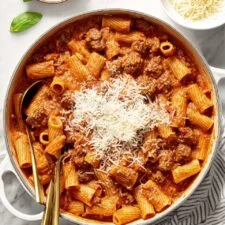
Rigatoni is coated in a creamy tomato sauce with Italian sausage, garlic and basil, then finished with Parmesan. It makes a hearty, comforting pasta dinner in about 20 minutes.
Ingredients
- 340 g (12 oz)rigatoni
- 120 ml (½ cup)pasta water
- to tastekosher salt
- to tasteblack pepper
- 15 ml (1 tablespoon)olive oil
- 6 clovesgarlic, minced
- 15 ml (1 tablespoon)Italian seasoning
- 454 g (1 pound)ground Italian sausage
- 794 g (28 oz can)crushed tomatoes
- 180 ml (¾ cup)heavy cream
- 60 ml (¼ cup), plus more for garnishfresh basil, chopped
- for garnishshredded Parmesan
Instructions
- 1
Cook the rigatoni
Bring a large pot of salted water to the boil. Cook the rigatoni according to the packet directions until al dente, usually 10–12 minutes. Before draining, reserve 120 ml (½ cup) of the cooking water.
- 2
Start the sauce
While the pasta cooks, warm the olive oil in a large frying pan over medium heat. Add the minced garlic and Italian seasoning and cook for about 1 minute, until fragrant but not browned.
- 3
Brown the sausage
Add the ground Italian sausage and break it up with a spoon as it cooks. Fry for about 5–7 minutes, until browned and cooked through.
- 4
Simmer the tomatoes
Pour in the crushed tomatoes and stir to combine. Simmer the sauce for about 5 minutes so the flavours come together.
- 5
Add cream and basil
Turn the heat to low and stir in the heavy cream and chopped basil. Season with kosher salt and black pepper to taste, then warm the sauce through for about 2 minutes.
- 6
Toss with pasta
Add the drained rigatoni to the pan and stir gently to coat. Gradually add the reserved pasta water, a little at a time, until the sauce loosens and clings to the pasta.
- 7
Garnish and serve
Divide the pasta between plates and top with extra chopped basil and shredded Parmesan. Serve straight away for the best texture.
What is creamy Italian sausage rigatoni?
Rigatoni is a ridged, tube-shaped pasta that holds thick sauces particularly well. This Italian-inspired version pairs it with sausage, tomatoes and cream for a rich, savoury weeknight meal.
The recipe draws on familiar Italian ingredients rather than one specific regional preparation. Browning the sausage before adding tomatoes builds flavour, while basil gives the creamy sauce a fresh finish.
Nutrition and macros by portion
The nutrition label shows one serving as written: 450 calories, 15g protein, 38g carbs, 25g fat.
| Portion | Adjustment | kcal | Protein | Carbs | Fat |
|---|---|---|---|---|---|
| Lighter | Less cream, more tomatoes | 315 kcal | 11g | 27g | 18g |
| This serving | As written | 450 kcal | 15g | 38g | 25g |
| Hungry | Larger pasta portion | 675 kcal | 23g | 57g | 38g |
The pasta and tomatoes provide most of the carbohydrates, while the sausage contributes much of the protein and fat. Cream and olive oil add further fat, and Parmesan adds more depending on how much is used. Pair a serving with salad or vegetables for a more balanced plate.
Why rigatoni works here
Ridged tubes: the grooves and hollow centres catch pieces of sausage and sauce. Cook the pasta just to al dente so it keeps its shape when tossed in the pan.
Pasta water: the starchy cooking liquid helps loosen the sauce without making it watery. Add it gradually and stop when the sauce coats the rigatoni evenly.
Building flavour in the sauce
Garlic and seasoning: cook them briefly in olive oil until fragrant, but take care not to brown the garlic, which can turn bitter.
Sausage: break it into small pieces as it browns so it distributes throughout the sauce. Let it cook through before adding the tomatoes.
Getting the texture right
Tomato simmer: give the crushed tomatoes about 5 minutes on the heat to blend with the browned sausage. The sauce should bubble gently rather than reduce heavily.
Cream finish: lower the heat before stirring in the cream and basil, then warm for about 2 minutes. A gentle heat helps keep the sauce smooth.
Timing the pasta and sauce
Start the sauce while the rigatoni boils so both are ready at roughly the same time. Check the packet timing, since shapes and brands can vary.
Reserve the pasta water just before draining; once the pasta is drained, the opportunity is gone. Toss the rigatoni with the sauce while both are hot.
What to serve alongside
A crisp green salad or simply dressed leaves can balance the richness of the cream and sausage. Roasted or steamed vegetables also make a good accompaniment.
Serve with extra Parmesan and basil at the table. If offering bread, keep it alongside rather than stirring it into the sauce.
Recipe notes & tips
- Salt the pasta water before adding the rigatoni so the pasta is seasoned as it cooks.
- Reserve the pasta water before draining, and add it to the sauce in small splashes.
- Use a large frying pan so the sausage browns rather than steams.
- Keep the garlic moving in the pan and take it off the heat if it begins to brown.
- Taste the sauce before adding salt, as sausage and Parmesan can both be salty.
- Add the basil near the end to keep its flavour fresh.
Variations
- Spicy sausage: use hot Italian sausage for a more peppery, fiery sauce.
- Extra vegetables: stir in wilted spinach near the end of cooking.
- Mushroom addition: brown sliced mushrooms before cooking the sausage.
- Herb swap: use chopped parsley instead of some or all of the basil.
- Cheese finish: add a little grated Parmesan to the sauce as well as using it for garnish.
Common mistakes to avoid
- Overcooked pasta: stop at al dente, since the rigatoni will be tossed in the hot sauce.
- Burnt garlic: cook it only until fragrant, about 1 minute, before it takes on colour.
- Pale sausage: avoid overcrowding the pan and let the meat brown before stirring in the tomatoes.
- Sauce too thick: add reserved pasta water a little at a time until it coats the pasta.
- Sauce too loose: add less pasta water and let the coated pasta sit briefly in the pan to thicken.
- Cream on high heat: lower the heat before adding it to help keep the sauce smooth.
How to store
Refrigerate leftovers in an airtight container for up to 3 days. Reheat gently in a saucepan or microwave, adding a splash of water or cream if the sauce has thickened; the pasta is best freshly cooked.
Frequently asked questions
Can I use a different pasta shape?
Yes. Penne or another short, sturdy pasta works well because it can hold the sausage and sauce. Follow the packet timing and reserve some cooking water.
Can I make the sauce ahead?
You can prepare the sausage and tomato sauce ahead and refrigerate it for up to 3 days. Reheat it gently, then add the cream and basil before tossing with freshly cooked pasta.
How do I know the sausage is cooked through?
Break the sausage into small pieces and cook until browned throughout with no raw-looking centre. The recipe allows about 5–7 minutes, depending on the pan and size of the pieces.
Can I leave out the cream?
You can, though the sauce will be less creamy. Use a little pasta water to help the tomatoes coat the rigatoni.
Why is pasta water added to the sauce?
Its starch helps the sauce cling to the pasta and makes it easier to adjust the consistency. Add it gradually rather than pouring in the full amount at once.
Can I freeze this pasta?
The sauce can be frozen, though cream-based sauces may change texture slightly after thawing. For the best result, freeze the sauce separately and cook the rigatoni fresh.
Cook it from the original
This recipe comes from busyrecipe.com. Their page has the author’s own photos, notes and tips — the best place to cook it from.
Open the recipe on busyrecipe.com