
Beef Soup With Mung Beans
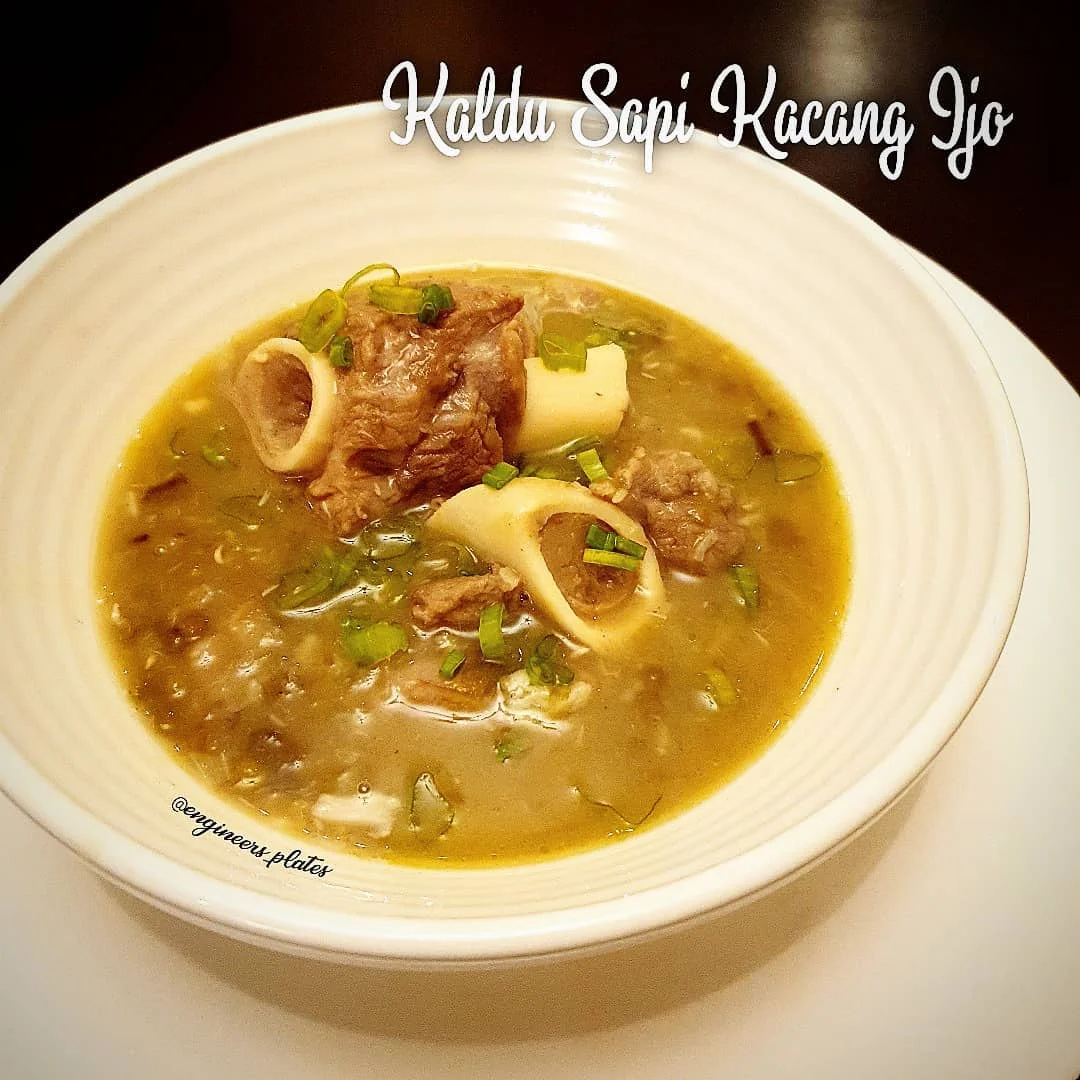
This is a hearty beef and mung bean soup, simmered until the meat is tender and the beans soft. It makes a warming one-pot meal, with ginger, garlic and spring onions bringing freshness to the rich broth.
Ingredients
- 1 kg (half bone-in, half boneless)beef
- 200 g (1 cup), soaked in water for about 3 hoursmung beans
- to tastespring onions, sliced
- 3 litreswater
- 3 cm, crushedginger
- to tastecooking oil
- 1 mediumonion
- 9 clovesgarlic
- 1 tspwhite pepper powder
- to tastesugar
- to tastesalt
Instructions
- 1
Sauté the spices
Heat cooking oil and sauté the mashed spices until fragrant.
- 2
Boil the water
Pour in the water and bring it to the boil.
- 3
Add the beef
Add the beef and crushed ginger. Stir, then bring the liquid back to the boil.
- 4
Cook the beans
Add the soaked mung beans and cook until the beef is tender and the beans have softened.
- 5
Season and serve
Add salt, sugar, white pepper and sliced spring onions, then stir. Turn off the heat and serve.
What is beef soup with mung beans?
It is a substantial soup in which beef and mung beans simmer together in a ginger-scented broth. The recipe does not specify a regional origin, so it is best understood as a simple home-style preparation.
Using both bone-in and boneless beef gives the pot a mix of broth-building bones and pieces of meat to eat. Mung beans make the soup more filling and soften as they cook.
Nutrition and macros by portion
The nutrition label shows one serving as written: 570 calories, 49g protein, 35g carbs, 25g fat.
| Portion | Adjustment | kcal | Protein | Carbs | Fat |
|---|---|---|---|---|---|
| Lighter | Use leaner beef, less oil | 399 kcal | 34g | 25g | 18g |
| This serving | As written | 570 kcal | 49g | 35g | 25g |
| Hungry | Larger bowl with rice | 855 kcal | 74g | 53g | 38g |
The mung beans provide much of the soup’s carbohydrate, while the beef supplies most of its protein and a large share of its fat. The amount of salt and cooking oil is unspecified, so the actual sodium and fat can vary; serve with vegetables or a fresh side to balance the plate.
Choosing the beef
Bone-in beef: include the bones in the pot as the broth cooks; remove them before serving if you prefer.
Boneless beef: the recipe does not specify a cut, so choose a cut suitable for simmering and cut it into manageable pieces if needed.
Preparing the mung beans
Soaking: leave the beans in water for about 3 hours, as stated in the recipe, then drain them before adding them to the soup.
Softness: cook until the beans have softened, checking them alongside the beef rather than relying on an exact time, which the recipe does not provide.
Building the broth
Aromatics: sauté the mashed spices until fragrant before adding the water. This lets their aroma develop in the oil before the liquid goes into the pot.
Ginger: add it with the beef, as directed, so it simmers in the broth during cooking.
Checking when it is ready
Beef: it should be tender enough to eat comfortably; continue simmering if it is still firm.
Beans: they should be softened but still hold their shape if you want a clearer broth. Stir gently towards the end to avoid breaking them up.
Serving the soup
Finish with the sliced spring onions and serve while hot. A bowl of rice or plain bread can make the meal more substantial, though neither is part of the listed recipe.
Recipe notes & tips
- Drain the mung beans after their 3-hour soak before adding them to the pot.
- Sauté the mashed spices until fragrant, but avoid letting them scorch.
- Keep the soup at a steady simmer after it comes to the boil.
- Check the beef and beans for tenderness as they cook, since the recipe gives no cooking time.
- Taste before serving and add salt and sugar gradually.
Variations
- Fresh chilli: add sliced chilli at the table for extra heat.
- More greens: stir in leafy greens near the end and cook until just wilted.
- Extra ginger: add a little more crushed ginger for a stronger warming note.
- Rice accompaniment: serve the soup with cooked rice for a more filling meal.
Common mistakes to avoid
- Skipping the soak: the beans may take longer to soften; soak them for about 3 hours as specified.
- Boiling too fiercely: the broth can become cloudy and the beans may break up; lower the heat to a steady simmer after boiling.
- Scorching the spices: burnt aromatics can taste bitter; sauté them only until fragrant.
- Serving before the beef is tender: keep simmering until the meat is comfortably tender.
- Adding too much seasoning at once: salt and sugar are to taste, so adjust them gradually.
How to store
Cool leftovers promptly and refrigerate in a covered container for up to 3 days. Reheat gently in a saucepan until steaming hot, adding a little water if the soup has thickened.
Frequently asked questions
How long should I soak the mung beans?
Soak them in water for about 3 hours, as specified in the recipe. Drain them before adding them to the soup.
How long does the soup need to cook?
The recipe does not give a cooking time. Simmer until both the beef is tender and the mung beans have softened.
Can I use only boneless beef?
The recipe uses half bone-in beef and half boneless, but it does not give a substitution method. Using only boneless beef will still provide pieces of meat, though the broth may be less rich.
Can I make the soup ahead?
Yes. Refrigerate it in a covered container for up to 3 days and reheat it gently until steaming hot.
What can I serve with it?
Rice or plain bread makes a suitable accompaniment. A fresh vegetable side also works well alongside the rich soup.
Cook it from the original
This recipe comes from fooooods.com. Their page has the author’s own photos, notes and tips — the best place to cook it from.
Open the recipe on fooooods.com