
Foolproof Fluffy Soufflé Omelette Recipe
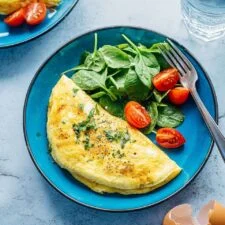
A French-style omelette made airy by folding whipped egg whites with seasoned yolks and cheddar. It cooks quickly in butter and makes a light-textured breakfast or brunch for one.
Ingredients
- 3 largeeggs
- 1.25 ml (¼ tsp)salt
- 28 g, dividedshredded cheddar cheese
- 28 gbutter
Instructions
- 1
Separate the eggs
Put the egg whites and yolks into separate bowls, taking care not to let any yolk get into the whites.
- 2
Whip the whites
In a large, clean bowl, beat the egg whites with a mixer or whisk until stiff peaks form.
- 3
Beat the yolks
Whisk the yolks with the salt in a small bowl for about 30 seconds, until pale and creamy.
- 4
Fold in cheese
Gently fold the yolks into the whipped whites with a rubber spatula, keeping as much air in the mixture as possible. Fold in half of the cheddar until evenly combined.
- 5
Cook the omelette
Melt the butter in a large sauté pan over medium-low heat. Pour in the egg mixture and spread it into an even circle. Cover and cook for approximately 3 to 5 minutes, until the base is golden and the top is just barely set. Sprinkle the remaining cheddar over the top and let it melt.
- 6
Fold in half
Carefully slide the omelette halfway off the pan onto a plate, then fold the part still in the pan over the portion on the plate.
- 7
Serve immediately
Season with salt and pepper to taste, then serve straight away for the best texture and flavour.
What is a soufflé omelette?
A soufflé omelette is an airy take on the classic French omelette, made by separating eggs and whipping the whites before combining them with the yolks. The beaten whites give the cooked egg its puffed, soft texture.
This version folds cheddar into the mixture and cooks it gently in butter. The cheese adds savoury richness without making the method complicated.
Nutrition and macros by portion
The nutrition label shows one serving as written: 530 calories, 26g protein, 2g carbs, 47g fat.
| Portion | Adjustment | kcal | Protein | Carbs | Fat |
|---|---|---|---|---|---|
| Lighter | Use less butter and cheddar | 371 kcal | 18g | 1g | 33g |
| This serving | As written | 530 kcal | 26g | 2g | 47g |
| Hungry | Serve with toast | 795 kcal | 39g | 3g | 71g |
Most of this serving’s carbohydrates come from the small amount in the eggs and cheddar; the eggs and cheese provide the protein, while butter, egg yolks and cheddar contribute most of the fat. Pair it with tomatoes or a green salad for a fresh contrast and a more balanced plate.
Why separate the eggs?
Clean whites: even a trace of yolk can make the whites harder to whip, so separate the eggs carefully and use a clean bowl and whisk.
Stiff peaks: beat until the whites hold their shape when the whisk is lifted. This trapped air is what helps the omelette turn out fluffy.
How to fold without losing air
Yolks first: fold them into the whipped whites gently with a rubber spatula, lifting from the bottom and turning the mixture over rather than stirring.
Cheddar next: fold in half of the cheese just until it is distributed. Overmixing can knock air out of the egg mixture.
Cooking gently
Steady heat: medium-low heat gives the base time to turn golden while the upper part sets. Keep the pan covered during the 3 to 5 minutes of cooking.
Doneness cue: the bottom should be golden and the top just barely set before you add the remaining cheese. The omelette is delicate, so avoid waiting for the top to become firm.
Folding and serving
Use a plate: slide the omelette halfway out of the pan, then fold the pan-side portion over the part on the plate. This supported fold is less likely to break than lifting the whole omelette at once.
Serve promptly: the airy texture is at its best straight from the pan. Toast, dressed leaves or sliced tomatoes make simple accompaniments.
A note on the ingredients
Cheddar: divide it as directed, using half inside the omelette and the rest on top to melt during cooking.
Butter: it coats the pan and contributes a rich flavour; melt it over medium-low heat before adding the egg mixture.
Recipe notes & tips
- Separate each egg over a small bowl first so a broken yolk does not spoil the whites already collected.
- Make sure the bowl and whisk for the whites are clean and dry.
- Use a broad spatula to fold the yolks and cheese through the whites with as few strokes as possible.
- Keep the pan covered while the omelette cooks so the top can set gently.
- Have a plate ready before cooking is finished, as the omelette is easiest to fold and serve straight away.
Variations
- Add herbs: fold chopped chives or parsley into the mixture with the cheddar.
- Try another cheese: swap the cheddar for grated Gruyère or Comté.
- Add mushrooms: cook sliced mushrooms separately and serve them alongside the omelette.
- Serve with greens: add a handful of dressed leaves for a fresh side.
- Add a little spice: season with black pepper or a pinch of paprika before serving.
Common mistakes to avoid
- Yolk in the whites: separate the eggs carefully, as yolk can stop the whites whipping properly.
- Under-whipped whites: beat until stiff peaks form so the omelette can hold its airy structure.
- Stirring instead of folding: use a spatula and gentle lifting motions to retain as much air as possible.
- Heat too high: cook over medium-low heat so the base does not brown before the top begins to set.
- Waiting for a firm top: add the remaining cheese when the top is just barely set to avoid overcooking.
- Lifting the whole omelette: slide it onto a plate halfway before folding to support the delicate egg.
How to store
This omelette is best eaten immediately, when its texture is most airy. If needed, refrigerate leftovers in a covered container and eat within 1 day; reheat gently in a covered pan over low heat, though it will lose some of its fluffiness.
Frequently asked questions
How do I know when the egg whites are whipped enough?
They should form stiff peaks that hold their shape when you lift the whisk. Stop once they reach this stage to avoid overbeating.
Can I make the mixture ahead?
It is best to whip and fold the eggs just before cooking, because the mixture can lose air as it stands.
Can I use a hand whisk instead of a mixer?
Yes. A hand whisk works, though it takes more effort; keep whisking until the whites form stiff peaks.
Can I cook this in a non-stick pan?
Yes. A large non-stick sauté pan is suitable; melt the butter in it over medium-low heat before adding the egg mixture.
Why did my omelette collapse?
It may have lost air during mixing or while standing, or it may have been overcooked. Fold gently and serve as soon as it is cooked.
Can I make this for more people?
The recipe is written for one serving. For multiple servings, cook separate omelettes rather than crowding several portions into one pan.
Cook it from the original
This recipe comes from busyrecipe.com. Their page has the author’s own photos, notes and tips — the best place to cook it from.
Open the recipe on busyrecipe.com