
Creamy tomato-mascarpone pasta with basil
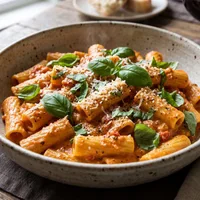
This creamy tomato-mascarpone pasta pairs sweet, gently simmered tomatoes with rich mascarpone and fresh basil. It is a straightforward Italian-inspired meal for a quick, comforting dinner.
Ingredients
- 400 gpasta, such as rigatoni or pappardelle
- 1 can (400 g)peeled tomatoes
- 150 gmascarpone
- 1onion, finely chopped
- 2 clovesgarlic, finely chopped
- 2 tbspolive oil
- 1 tspsugar
- to tastesalt and freshly ground black pepper
- 1 handfulfresh basil leaves
- 50 gfreshly grated Parmesan
Instructions
- 1
Cook the pasta
Bring a large pot of well-salted water to the boil over high heat. Cook the pasta until al dente, following the packet instructions. Before draining, reserve about 240 ml (1 cup) of the cooking water.
- 2
Soften the onion
While the pasta cooks, heat a splash of olive oil in a deep frying pan over medium heat. Finely chop the onion if needed, then sauté it for 3–4 minutes, until translucent. Add the garlic and cook for a further minute.
- 3
Simmer the tomatoes
Add the peeled tomatoes and roughly crush them with a wooden spoon. Stir in a pinch of sugar, salt and pepper, then simmer gently for 10 minutes, until the sauce has thickened slightly.
- 4
Stir in mascarpone
Mix the mascarpone into the tomato sauce until fully incorporated. If the sauce seems too thick, loosen it with a splash of the reserved pasta water. Taste and adjust the seasoning.
- 5
Toss the pasta
Add the drained pasta straight to the sauce and toss until coated. Keep it over low heat for another minute so the pasta can take up some of the sauce.
- 6
Finish and serve
Divide the pasta among deep plates. Top with freshly grated Parmesan, torn basil leaves, a twist of pepper and a thin drizzle of olive oil. Serve immediately.
What is tomato-mascarpone pasta?
This is a creamy tomato pasta: pasta is coated in a tomato sauce enriched with mascarpone, then finished with Parmesan and fresh basil. It draws on familiar Italian ingredients, though this recipe is best understood as a simple Italian-inspired home-cooked dish rather than a formal regional speciality.
Tomatoes bring sweetness and acidity, while mascarpone softens their sharpness and gives the sauce a smooth, rich texture. Adding the pasta directly to the pan helps the sauce cling to every piece.
Nutrition and macros by portion
The nutrition label shows one serving as written: 610 calories, 22g protein, 79g carbs, 23g fat.
| Portion | Adjustment | kcal | Protein | Carbs | Fat |
|---|---|---|---|---|---|
| Lighter | Use less mascarpone | 427 kcal | 15g | 55g | 16g |
| This serving | As written | 610 kcal | 22g | 79g | 23g |
| Hungry | Serve a larger portion | 915 kcal | 33g | 119g | 35g |
Most of the carbohydrates come from the pasta, while mascarpone and olive oil provide much of the fat. Pasta, Parmesan and mascarpone contribute protein, too. Serve with a green salad or extra vegetables to round out the plate.
Choose pasta that holds the sauce
Rigatoni: its ridges and hollow centre catch the creamy tomato sauce, making it a practical choice for a thick coating.
Pappardelle: broad ribbons give the sauce plenty of surface to cling to. Whichever shape you use, cook it just to al dente before finishing it in the pan.
Build flavour gently
Onion first: cook it until translucent rather than browned, so it becomes sweet and tender without dominating the sauce.
Garlic next: a minute is enough to release its aroma; longer cooking can make it bitter. Once the tomatoes go in, crush them roughly for a sauce that still has some texture.
Keep the sauce silky
Mascarpone: stir it in after the tomatoes have simmered, mixing until no streaks remain. Keep the heat gentle as you combine it with the sauce.
Pasta water: add a little at a time if the sauce is too thick. The starchy water helps loosen it while keeping it cohesive, so start with a small splash rather than pouring in the full amount.
Check the pasta and sauce
Al dente: use the packet timing as a guide, then taste a piece before draining. It should be tender with a slight bite, as it will spend another minute in the sauce.
Coating: the sauce should cling to the pasta rather than pool thinly at the bottom of the pan. Toss over low heat for a minute, adding a little reserved water if needed.
Finish and serve straight away
Basil: tear the leaves over the plated pasta so their fresh aroma remains prominent. Parmesan adds a savoury finish, and a little black pepper brings gentle warmth.
Serve it hot in deep plates, on its own or alongside a crisp green salad. Add bread if you would like something to mop up the sauce.
Recipe notes & tips
- Salt the pasta water generously so the pasta is seasoned from within.
- Reserve the pasta water before draining, and keep it nearby while you finish the sauce.
- Taste the tomato sauce before adding the pasta, then adjust the salt and pepper.
- Add pasta water in small splashes to avoid making the sauce too thin.
- Tear the basil by hand just before serving for a fresh finish.
Variations
- Add chilli: stir a pinch of chilli flakes into the onion and garlic for gentle heat.
- Use cherry tomatoes: halve them and simmer until soft for a sweeter, chunkier sauce.
- Add spinach: stir in a few handfuls near the end until just wilted.
- Try another pasta shape: shells or fusilli also catch the creamy sauce well.
- Finish with lemon: add a little finely grated zest at the end for a fresher note.
Common mistakes to avoid
- Browning the garlic: it can turn bitter; add it after the onion and cook for only a minute.
- Skipping the pasta water: the sauce may cling less well; reserve some before draining.
- Adding all the water at once: the sauce can become too loose; stir in small splashes as needed.
- Overcooking the pasta: it softens further in the sauce; drain it while it still has a slight bite.
- Boiling the sauce after adding mascarpone: high heat can make it less smooth; combine it gently over low heat.
How to store
Keep leftovers in an airtight container in the fridge for up to 3 days. Reheat gently in a pan with a splash of water, stirring until hot; the sauce may thicken as it cools.
Frequently asked questions
Can I make the sauce ahead?
You can prepare the tomato sauce ahead and chill it in a covered container for up to 3 days. Reheat it gently, stir in the mascarpone, then cook the pasta and combine just before serving.
Can I use a different pasta shape?
Yes. Rigatoni and pappardelle are suggested, but other shapes that hold sauce, such as fusilli or shells, work too. Follow the packet instructions for cooking time.
What can I use instead of mascarpone?
Cream cheese can give the sauce a creamy texture, though its flavour is tangier. Stir it in gently and loosen the sauce with pasta water if needed.
How do I stop the sauce from becoming too thick?
Stir in reserved pasta water a splash at a time until the sauce coats the pasta smoothly. The starch in the water helps bring the sauce together.
Can I freeze this pasta?
It is best freshly made, as the creamy sauce may change texture after freezing and thawing. If freezing is necessary, cool it promptly and reheat gently after thawing in the fridge.
Cook it from the original
This recipe comes from cookinglife.eu. Their page has the author’s own photos, notes and tips — the best place to cook it from.
Open the recipe on cookinglife.eu