
Garlic Rosemary Rack of Lamb Recipe
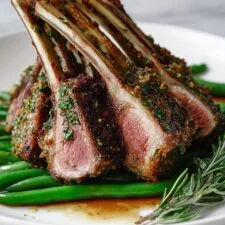
These rosemary-and-garlic-coated lamb racks are roasted until rosy and tender, then sliced into individual chops. Lemon brightens the savoury herb crust, making this an impressive centrepiece that is straightforward to prepare.
Ingredients
- 60 ml (¼ cup)fresh rosemary leaves
- 4 clovesgarlic, roughly chopped
- 20 ml (4 teaspoons)kosher salt
- 2.5 ml (½ teaspoon)ground black pepper
- Zest of 1 medium lemonlemon
- 15 ml (1 tablespoon)freshly squeezed lemon juice
- 45 ml (3 tablespoons)extra virgin olive oil
- 2 racks, about 800–900 g (1¾–2 lb) eachlamb, frenched
Instructions
- 1
Make the paste
Put the rosemary, garlic, salt, pepper and lemon zest in a food processor fitted with a steel blade. Pulse until finely chopped. Add the lemon juice and olive oil, then blend until the paste is smooth and evenly combined.
- 2
Season the lamb
Set the racks fat side up, with the ribs curving downwards, in a roasting pan or on a rimmed baking sheet. Rub the paste generously over the whole surface of each rack. Leave at room temperature for 1 hour so the lamb can take on the flavours and lose its chill.
- 3
Heat the oven
About 30 minutes before roasting, position a rack in the centre of the oven and preheat it to 232°C (450°F). Keep it at this temperature for at least 10 minutes to ensure it is evenly heated.
- 4
Roast the lamb
Roast the racks in the preheated oven for about 25 minutes for medium-rare. If your oven heats unevenly, turn the pan 180 degrees halfway through. Watch closely, as cooking beyond medium can dry out the lamb.
- 5
Rest and serve
Take the racks out of the oven and loosely cover them with foil. Rest for 15 minutes so the juices can redistribute. Use a sharp chef’s knife to slice between the ribs into individual chops, then serve warm or at room temperature on a platter or board.
What is garlic rosemary rack of lamb?
A rack of lamb is a set of ribs joined by a tender strip of meat, often trimmed and frenched to expose the bones. Lamb racks are popular in Mediterranean cooking, where herbs, garlic and olive oil are natural partners for the meat.
Here, rosemary and garlic form an aromatic paste, while lemon zest and juice add a fresh, sharp note. A hot oven browns the outside quickly, and resting helps keep the sliced chops juicy.
Nutrition and macros by portion
The nutrition label shows one serving as written: 570 calories, 42g protein, 1g carbs, 43g fat.
| Portion | Adjustment | kcal | Protein | Carbs | Fat |
|---|---|---|---|---|---|
| Lighter | Trim visible lamb fat | 399 kcal | 29g | 1g | 30g |
| This serving | As written | 570 kcal | 42g | 1g | 43g |
| Hungry | Add another chop | 855 kcal | 63g | 2g | 65g |
Lamb provides most of the protein and fat, while the olive oil adds further fat; the small amount of carbohydrate comes mainly from the garlic and lemon. Pair a chop or two with plenty of vegetables and a moderate serving of potatoes or another grain for a more balanced plate.
Why use a herb paste?
Even coating: Blending the rosemary, garlic, salt, pepper, lemon and oil makes a paste that clings to the curved surface better than loose herbs. Pulse the ingredients before adding the wet ingredients so the rosemary and garlic are finely chopped.
Choosing the lamb
Frenched racks: Ask a butcher to trim the rib bones if they are not already exposed. Similar-sized racks are helpful because they are more likely to roast at a similar rate.
Getting the roasting right
Room-temperature rest: The recipe allows the seasoned lamb to stand for 1 hour before roasting. Keep it in a cool kitchen and do not leave it out longer than needed.
Even heat: Preheating the oven to 232°C and maintaining that temperature for at least 10 minutes helps the racks roast consistently. Turn the pan halfway through if one side of your oven runs hotter.
How to judge doneness
Timing: About 25 minutes is the recipe’s guide for medium-rare, but racks can vary in size and ovens in performance. For a more precise check, use a meat thermometer in the thickest part without touching bone, and follow your preferred safe-temperature guidance.
Resting: The lamb continues to cook slightly after it leaves the oven. A 15-minute rest also makes it easier to slice without losing as much juice.
Serving the chops
Slice between the ribs with a sharp knife, keeping each chop intact. Serve with roast potatoes, green vegetables or a crisp salad to make a balanced plate, and spoon over any juices from the resting pan.
Recipe notes & tips
- Pat the lamb dry before spreading on the paste so it adheres well.
- Use a small spatula or your hands to work the paste around the sides as well as the top.
- Keep the racks similar in size so their roasting times are closer.
- Use a thermometer in the thickest part of the meat for a doneness check.
- Let the lamb rest for the full 15 minutes before slicing.
- Cut between the ribs with a sharp knife for neat individual chops.
Variations
- Add thyme: Blend a little fresh thyme with the rosemary for another herbal note.
- More citrus: Add a little extra lemon zest to make the paste brighter.
- Add mustard: Blend a small spoonful of Dijon mustard into the paste for a tangy edge.
- Peppery crust: Increase the black pepper slightly for a more pronounced bite.
- Serve with salsa verde: Add a fresh herb sauce at the table for contrast.
Common mistakes to avoid
- Coarse paste: Pulse the rosemary and garlic until finely chopped before adding the oil and juice.
- Uneven coating: Rub the paste over the sides and ends of each rack as well as the top.
- Unheated oven: Allow the oven to reach 232°C and remain at temperature for at least 10 minutes.
- Overcooking: Treat 25 minutes as a guide and check the thickest part rather than relying on time alone.
- Skipping the rest: Leave the racks covered loosely for 15 minutes before cutting.
- Ragged slices: Use a sharp knife and cut carefully between the ribs.
How to store
Refrigerate leftover lamb in an airtight container within 2 hours and eat within 3 days. Reheat gently, covered, in a low oven until warmed through, or enjoy the slices cold; reheating for too long can dry them out.
Frequently asked questions
Can I prepare the paste ahead of time?
Yes. Make it ahead and refrigerate it in a covered container, then bring it out when you are ready to season the lamb.
Can I season the lamb for longer than 1 hour?
You can season it in advance and keep it covered in the fridge. Bring it out only for the recipe’s 1-hour room-temperature rest before roasting.
How do I know when the lamb is medium-rare?
The recipe gives about 25 minutes as a guide, but the best check is a thermometer in the thickest part of the meat, away from the bone.
Should I cover the lamb while it roasts?
No, roast it uncovered so the outside can brown. Loosely tent it with foil only after removing it from the oven.
Can I roast the racks on a baking sheet?
Yes. Use a rimmed baking sheet, as the method specifies, or a roasting pan large enough to hold both racks without crowding.
Can I serve the lamb at room temperature?
Yes. After the 15-minute rest, slice the racks and serve warm or at room temperature, as preferred.
Cook it from the original
This recipe comes from busyrecipe.com. Their page has the author’s own photos, notes and tips — the best place to cook it from.
Open the recipe on busyrecipe.com