
Gluten-free potato gnocchi with sage-butter sauce and Parmesan
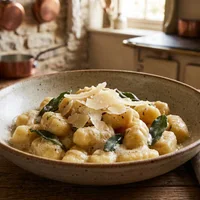
These soft, homemade potato gnocchi use rice flour and potato starch instead of wheat, then take on crisp sage butter and freshly grated Parmesan. They make a comforting Italian-style meal from a short list of ingredients.
Ingredients
- 800 gfloury potatoes (e.g. Bildtstar or Eigenheimer)
- 100 g, plus extra for dustingrice flour
- 40 gpotato starch
- 1 mediumegg
- to tastesalt and freshly ground black pepper
- 60 gbutter
- 10fresh sage leaves
- 50 gParmesan, freshly grated
Instructions
- 1
Cook the potatoes
Boil the potatoes in their skins in plenty of salted water until tender, about 25 minutes. Drain and leave them to cool slightly.
- 2
Mash and steam
Peel the potatoes and press them straight through a potato ricer, or mash them very finely. Leave the potato to steam for at least 5 minutes so excess moisture can escape.
- 3
Make the dough
Make a well in the potato, then add the egg, rice flour, potato starch and a pinch of salt. Knead briefly until the dough comes together, using as little extra flour as possible to avoid tough gnocchi.
- 4
Shape the gnocchi
Divide the dough into equal portions. On a surface lightly dusted with rice flour, roll each portion into a log about 1.5 cm thick and cut it into 2 cm pieces. If you like, press each piece lightly with a fork to make ridges, then arrange the gnocchi separately on a floured plate.
- 5
Boil the gnocchi
Bring a large pan of well-salted water to the boil. Cook the gnocchi in batches and lift them out with a slotted spoon as soon as they float to the surface.
- 6
Make sage butter
Melt the butter in a frying pan over a medium heat. Add the sage leaves and fry for about 2 minutes, until crisp; let the butter turn lightly brown if you want a nuttier flavour.
- 7
Finish and serve
Add the cooked gnocchi to the pan and sauté for 1–2 minutes, until lightly golden. Season with salt and pepper, divide between deep plates, grate plenty of Parmesan over the top and serve straight away.
What are potato gnocchi?
Gnocchi are small Italian dumplings, often made with potato and shaped by hand. Their exact forms and recipes vary across Italy, but potato gnocchi are especially known for their tender, pillowy texture.
This version replaces wheat flour with rice flour and potato starch. The sage-butter finish and Parmesan keep the flavours classic while letting the potato remain the focus.
Nutrition and macros by portion
The nutrition label shows one serving as written: 458 calories, 12g protein, 65g carbs, 17g fat.
| Portion | Adjustment | kcal | Protein | Carbs | Fat |
|---|---|---|---|---|---|
| Lighter | Less butter, more greens | 321 kcal | 8g | 46g | 12g |
| This serving | As written | 458 kcal | 12g | 65g | 17g |
| Hungry | Larger gnocchi portion | 687 kcal | 18g | 98g | 26g |
Potatoes, rice flour and potato starch provide most of the carbohydrates; butter supplies much of the fat, while the egg and Parmesan contribute protein. Balance a serving with a green salad or vegetables, and bear in mind that the sodium will vary with the salt used in the cooking water and at the table.
Choose the right potatoes
Floury potatoes: their drier, starchier texture makes a workable dough without needing as much flour. The recipe names Bildtstar and Eigenheimer as examples.
Steam them well: after ricing or mashing, give the potato at least 5 minutes for moisture to evaporate. A drier base helps keep the dough soft rather than sticky.
Handle the dough gently
Mix briefly: knead only until the ingredients come together. Overworking the dough or adding too much rice flour can make the cooked gnocchi dense or tough.
Dust lightly: use a little rice flour on the work surface and plate to prevent sticking, rather than incorporating extra flour into the dough.
Shape for even cooking
Keep the pieces consistent: logs about 1.5 cm thick, cut into 2 cm pieces, give the gnocchi a similar size and cooking time.
Fork ridges: pressing each piece lightly is optional. The ridges give the gnocchi a traditional look and provide little grooves for the butter to cling to.
Watch the cooking cues
Boil in batches: plenty of room in the pan makes it easier to see when each dumpling rises. Lift the gnocchi out as soon as they float, as specified in the method.
Brown the butter gently: fry the sage for about 2 minutes, until crisp. A lightly browned butter adds a nutty note; keep the heat moderate so it does not burn.
Serve straight from the pan
The brief sauté gives the boiled gnocchi a lightly golden exterior and lets them pick up the sage butter. Finish with freshly grated Parmesan while they are hot.
Serve as a main course with a crisp green salad or simply cooked vegetables alongside. These are best enjoyed immediately, while the gnocchi are soft and the sage is crisp.
Recipe notes & tips
- Rice the potatoes while they are still warm so they pass through the ricer easily.
- Let the mashed potato steam for the full 5 minutes before mixing the dough.
- Keep a light hand when kneading and dusting to help the gnocchi stay tender.
- Arrange shaped gnocchi separately so they do not stick together.
- Cook the gnocchi in batches rather than crowding the pan.
- Grate the Parmesan just before serving for the freshest flavour.
Variations
- More herbs: add a little chopped parsley to the finished gnocchi.
- Extra pepper: finish with freshly cracked black pepper alongside the Parmesan.
- Browned butter: let the butter become lightly golden before adding the gnocchi for a nuttier taste.
- Crisp finish: sauté the boiled gnocchi for a little longer, watching for a lightly golden surface.
- Vegetable side: serve with sautéed greens or seasonal vegetables for a more substantial plate.
Common mistakes to avoid
- Wet potato: skipping the steaming time can make the dough sticky; let it steam for at least 5 minutes.
- Too much flour: adding lots of flour can toughen the gnocchi; use only enough for handling and dusting.
- Overworking the dough: prolonged kneading can make the dumplings dense; stop as soon as the dough holds together.
- Crowded pan: cooking too many gnocchi at once makes them harder to lift; boil them in batches.
- Overcooked sage: leaving the leaves in the pan too long can burn them; fry for about 2 minutes until crisp.
How to store
For the best texture, serve the gnocchi immediately. If you have leftovers, refrigerate them in a covered container and eat within 2 days; reheat gently in a frying pan with a little butter until hot throughout.
Frequently asked questions
How do I know when the gnocchi are cooked?
The recipe uses the floating cue: lift them out with a slotted spoon as soon as they rise to the surface.
Can I make the gnocchi without a potato ricer?
Yes. Mash the potatoes very finely instead, taking care to avoid lumps.
Do I have to shape the ridges with a fork?
No, that step is optional. The gnocchi can be cooked as plain cut pieces.
Can I prepare the gnocchi ahead?
You can shape them before cooking and keep them separated on a lightly floured plate for a short time. Cook them in batches when you are ready to serve.
Why has my dough become sticky?
The potatoes may still hold too much moisture. Let the mashed potato steam for at least 5 minutes, and use only a light dusting of rice flour while shaping.
Can I freeze the gnocchi?
The method does not specify freezing. For the most reliable texture, cook and serve them fresh.
Cook it from the original
This recipe comes from cookinglife.eu. Their page has the author’s own photos, notes and tips — the best place to cook it from.
Open the recipe on cookinglife.eu